
Few desserts perfectly capture the feeling of modern Balkan fusion baking quite like this Dubai chocolate banitsa recipe. It combines the flaky layers of traditional Balkan-style banitsa with rich pistachio cream, melted chocolate, crispy kataifi pastry, and buttery filo dough to create a dessert that feels luxurious, dramatic, and surprisingly comforting at the same time.
This dessert became especially popular after the viral Dubai chocolate trend exploded across social media. The combination of pistachio cream, toasted kataifi, and silky chocolate immediately reminded many Balkan families of familiar textures found in baklava, banitsa, and syrup-soaked pastries. This version blends both worlds together into one crispy, creamy dessert that looks impressive but is actually very achievable at home.
If you enjoy viral pistachio desserts, you may also love this Dubai Chocolate Strawberries Recipe, which uses the same chocolate-pistachio flavor combination in a fresh and easy party-style dessert.
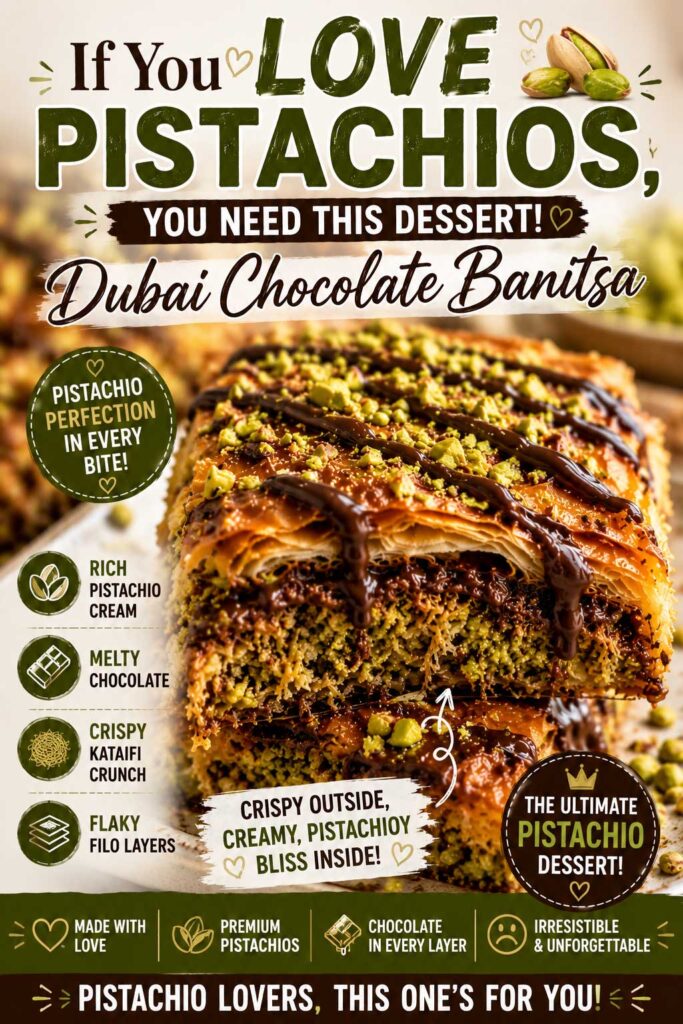
The contrast of textures is what makes this dessert unforgettable. The top becomes deeply golden and flaky, the center stays creamy and rich, and the crispy kataifi adds that signature crunch people instantly recognize from Dubai chocolate bars.
In many Balkan homes, desserts like this rarely last long once sliced. Someone usually “just tries a small piece” near the kitchen counter before quietly coming back for another.
Why You Will Love This Dubai Chocolate Banitsa Recipe
Incredible Texture In Every Bite
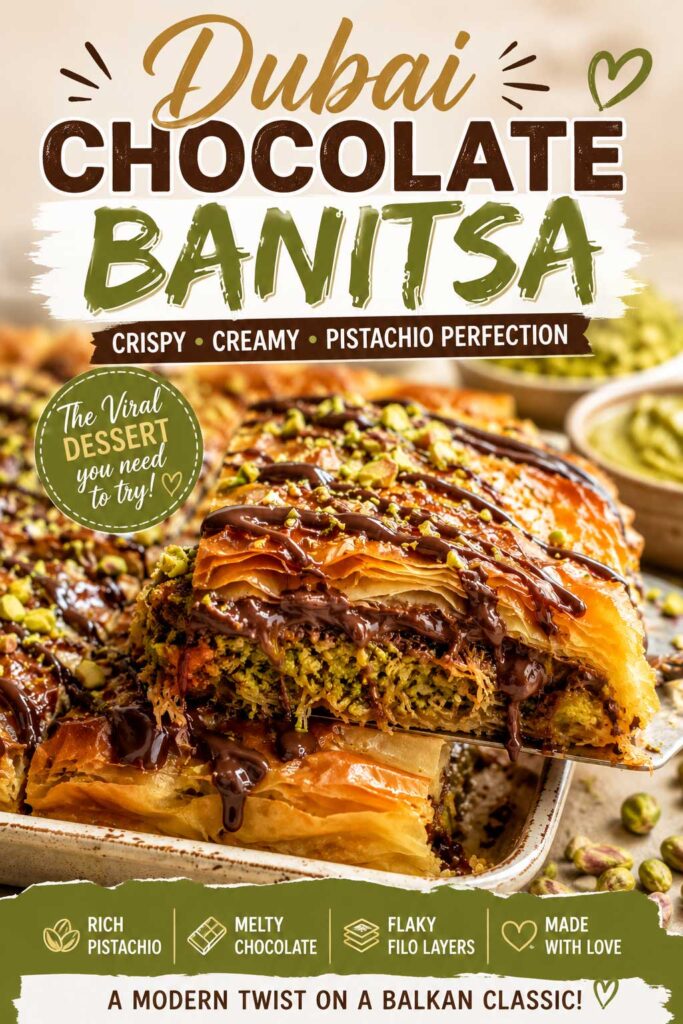
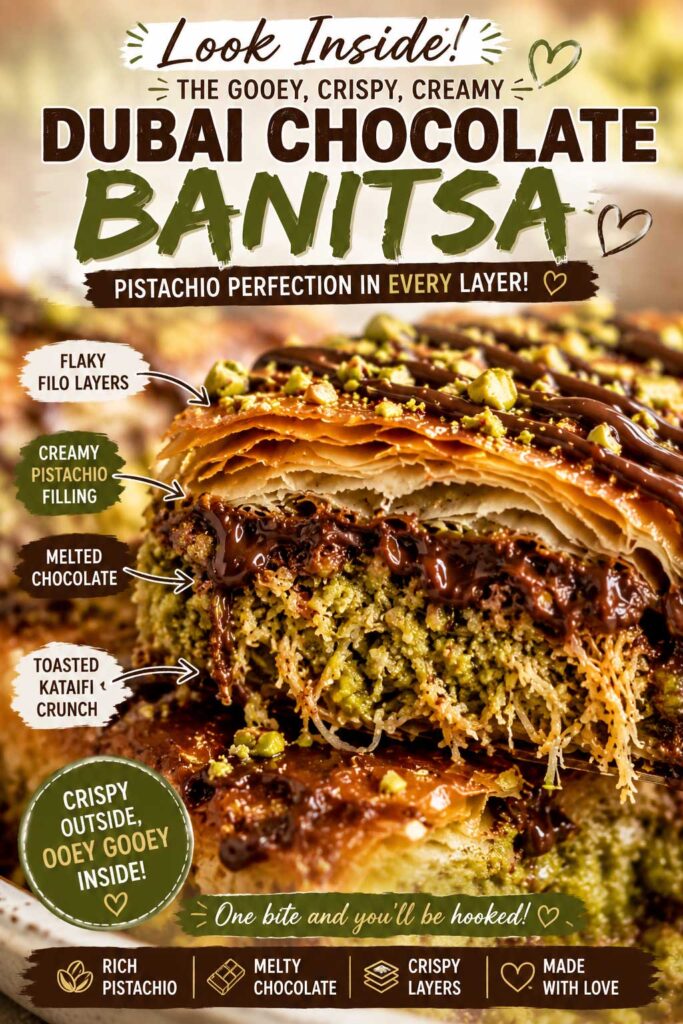
This dessert stands out because it combines several textures and flavors into one dramatic pastry. Every bite gives you crispy buttery filo dough, creamy pistachio filling, melted chocolate layers, and crunchy toasted kataifi all at the same time.
That contrast is one of the biggest reasons Dubai chocolate desserts became so popular online. The pastry feels rich and luxurious while still staying light enough to keep eating piece after piece.
A Dessert That Feels Both Modern And Nostalgic
One of the most interesting things about Dubai chocolate banitsa is how it blends trendy modern dessert flavors with traditional Balkan pastry techniques. The pistachio cream and crispy kataifi give it that viral Dubai dessert feel, while the flaky filo layers still feel comforting and familiar like homemade banitsa or baklava.
The result somehow feels both modern and nostalgic at the same time.
That mix of comfort and tradition is also what makes recipes like Bulgarian Mekitsi Recipe so beloved in Balkan home kitchens.
Rich Without Feeling Too Heavy
Unlike many syrup-soaked pastries, this dessert feels slightly lighter and crispier while still tasting incredibly rich. The crunchy layers and toasted kataifi help balance the creamy filling so the dessert never becomes overly dense.
Serving it with strong coffee or tea makes the balance even better.
Perfect For Special Occasions
Dubai chocolate banitsa also photographs beautifully and instantly looks impressive on the table. It works especially well for holiday dessert spreads, birthdays, Ramadan gatherings, Eid celebrations, brunch tables, dinner parties, and coffee nights with friends and family. The glossy chocolate, golden pastry, and pistachio filling create the kind of dessert people notice immediately the moment it is served.
What Is Dubai Chocolate Banitsa?
A Modern Fusion Of Balkan And Dubai Desserts
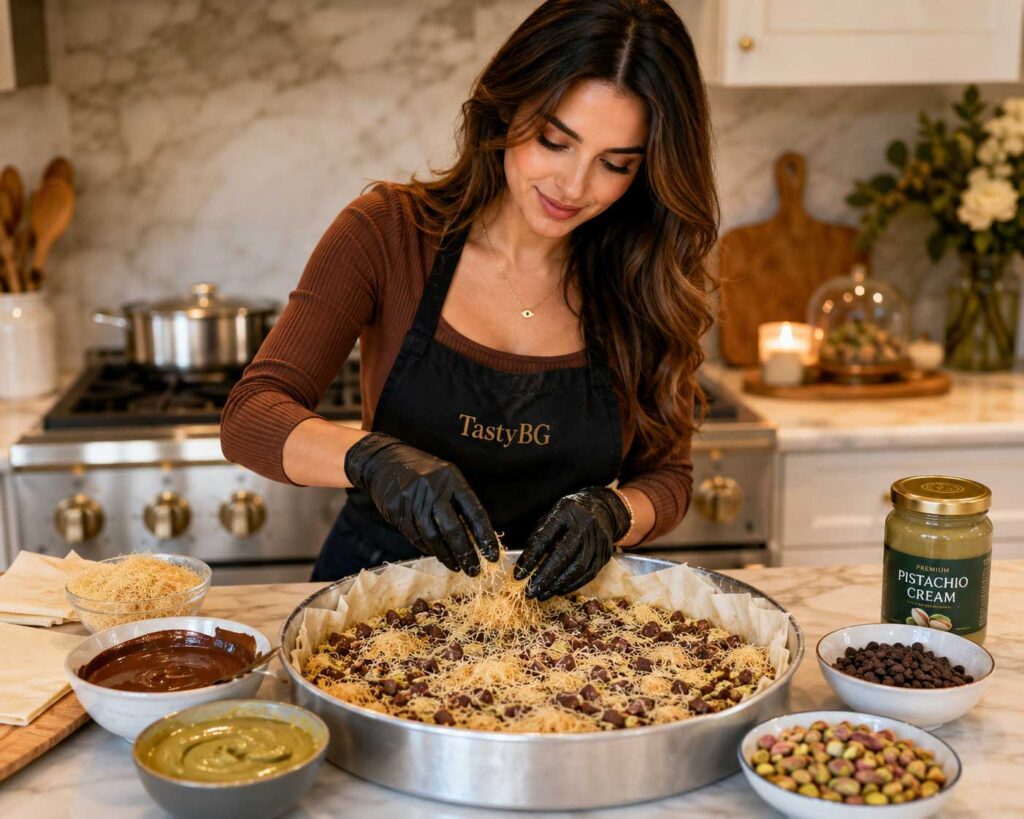
Dubai chocolate banitsa is a modern fusion dessert inspired by the viral Dubai chocolate pistachio bars that became massively popular online for their rich pistachio filling, crispy kataifi texture, and luxurious chocolate layers.
This dessert takes those trendy flavors and combines them with the flaky layered structure of traditional Balkan banitsa.
How It Differs From Traditional Banitsa
Traditional Bulgarian banitsa is usually savory and commonly filled with cheese, eggs, yogurt, spinach, or pumpkin depending on the region and season. Dubai chocolate banitsa transforms the classic pastry into a rich dessert by using pistachio cream, melted chocolate, toasted kataifi pastry, and buttery filo dough instead of savory fillings.
The result feels modern while still keeping the comforting texture and layered pastry style that banitsa is known for.
For another sweet filo pastry with strong Bulgarian roots, this Bulgarian Tikvenik Recipe shows how traditional Balkan desserts often use simple layered pastry in delicious ways.
What It Tastes Like
The final dessert feels almost like a cross between banitsa, baklava, viral Dubai chocolate bars, and pistachio pastry rolls all in one bite.
The crispy toasted kataifi creates the signature Dubai-style crunch while the filo layers keep the Balkan pastry identity alive. Combined with creamy pistachio filling and melted chocolate, the dessert becomes rich, crispy, nutty, buttery, and deeply satisfying at the same time.
One of the reasons people love it so much is because every bite combines multiple textures instead of tasting one-dimensional or overly sweet.
Ingredients For Dubai Chocolate Banitsa

One of the reasons this Dubai chocolate banitsa recipe has become so popular is that it uses a relatively simple list of ingredients while delivering a bakery-style result. The combination of crispy filo dough, creamy pistachio filling, toasted kataifi, and rich chocolate creates multiple layers of flavor and texture without requiring complicated techniques.
Most of the ingredients can be found in larger grocery stores, Middle Eastern markets, Mediterranean shops, or online. Once combined, they create the signature crunchy, creamy, and chocolatey experience that made Dubai chocolate desserts famous around the world.
For The Banitsa
- 1 package filo dough
- 200 g kataifi pastry
- 1 cup pistachio cream
- 1 ½ cups chocolate chips or chopped chocolate
- ½ cup butter, melted
- 2 tablespoons sugar
- 1 teaspoon vanilla extract
Optional Toppings
- Crushed pistachios
- Melted dark chocolate drizzle
- Powdered sugar
- Edible gold flakes
- Sea salt flakes
Ingredient Notes
The quality of the pistachio cream and chocolate will have the biggest impact on the final flavor. A pistachio cream with a high pistachio content creates a richer nutty taste and a more vibrant green color, while good-quality chocolate melts more smoothly throughout the filling.
Kataifi pastry is the ingredient responsible for the signature crunch that makes Dubai chocolate desserts so distinctive. After being toasted in butter, it develops a deep golden flavor and crispy texture that contrasts beautifully with the creamy filling.
For the best results, allow the filo dough to thaw completely before assembling the pastry and keep it covered with a slightly damp towel while working to prevent it from drying out.
Affiliate Disclosure: This article may contain affiliate links. If you purchase through these links, I may earn a small commission at no additional cost to you.
Essential Ingredients & Baking Tools For Dubai Chocolate Banitsa
If you plan to make Dubai chocolate banitsa at home, a few specialty ingredients and baking tools can make the process much easier while helping you achieve bakery-style results.
| Product | Why It Helps | Check Price On Amazon |
|---|---|---|
| Ceramic Baking Dish | Creates even golden baking | Check Price |
| Silicone Pastry Brush | Perfect for buttering filo | Check Price |
| Pistachio Cream Spread | Essential for authentic flavor | Check Price |
| Nonstick Skillet | Best for toasting kataifi | Check Price |
| Airtight Dessert Containers | Helps preserve crisp texture | Check Price |
Best Chocolate To Use
Dark Chocolate For Richer Flavor
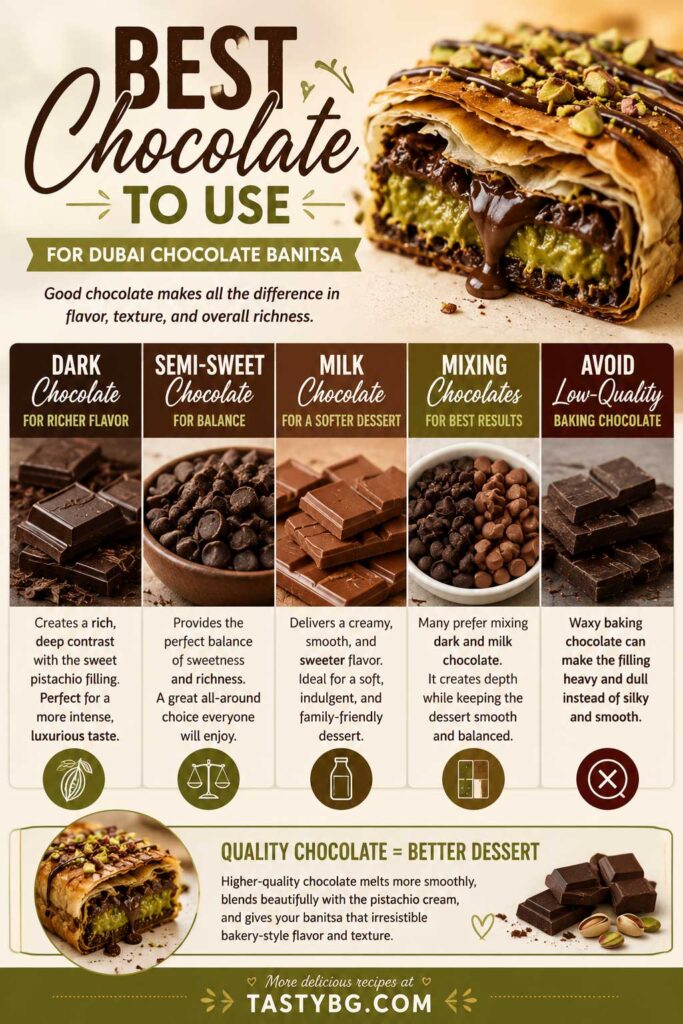
Good chocolate makes a major difference in this dessert because the chocolate flavor sits at the center of every bite. Dark chocolate creates the richest contrast against the sweet pistachio cream and buttery filo pastry, giving the dessert a deeper and more balanced flavor overall.
Many people prefer dark chocolate because it keeps the dessert from becoming overly sweet while adding a more luxurious bakery-style finish.
Semi-Sweet Chocolate For Balance
Semi-sweet chocolate is one of the safest and most balanced options for Dubai chocolate banitsa. It provides enough sweetness for dessert while still keeping some richness and depth.
This option works especially well if serving the pastry to a larger group because it usually appeals to both dark chocolate and milk chocolate lovers.
Milk Chocolate For A Softer Dessert
Milk chocolate creates a creamier and sweeter filling with a softer overall flavor profile. This version feels more indulgent and dessert-like, especially when paired with extra pistachio cream or chocolate drizzle on top.
Many families enjoy using milk chocolate when making this dessert for holidays or special occasions because it feels especially comforting and rich.
Mixing Chocolates Together
Many people actually prefer mixing dark and milk chocolate together because the pistachio cream already adds sweetness on its own. Combining both chocolates creates more depth while still keeping the dessert smooth and approachable.
That balance usually creates the most bakery-style flavor.
Avoid Low-Quality Baking Chocolate
Avoid overly waxy baking chocolate if possible because it can make the filling feel dense and heavy instead of silky and melted. Higher-quality chocolate melts more smoothly and creates a much richer final texture throughout the pastry.
Why Kataifi Is Important
The Signature Crunch Behind Dubai Chocolate Desserts
Kataifi pastry is one of the defining ingredients in modern Dubai chocolate desserts and plays a huge role in what makes them feel so unique and luxurious. The thin shredded pastry creates the crispy texture and dramatic crunch that people instantly recognize from viral pistachio chocolate bars and bakery-style Middle Eastern desserts.
Without kataifi, the dessert loses much of its signature Dubai chocolate identity and becomes softer and more similar to a traditional chocolate filo pastry.
Kataifi pastry is widely used throughout Middle Eastern and Mediterranean baking traditions and is traditionally made from finely shredded filo dough.
The Flavor It Adds
When toasted properly in butter, kataifi develops a deep golden flavor that tastes almost caramelized and slightly nutty. That toasted richness balances beautifully against the creamy pistachio filling and melted chocolate layers.
The smell alone usually fills the kitchen with that unmistakable pastry-shop aroma that makes the dessert feel special before it even comes out of the oven.
Why Texture Contrast Matters
One of the reasons Dubai chocolate desserts became so popular online is the combination of textures in every bite. The crispy kataifi contrasts against the smooth pistachio cream and soft melted chocolate, creating a dessert that feels both rich and exciting to eat.
That crunchy texture is what gives Dubai chocolate banitsa its dramatic bakery-style bite instead of feeling dense or overly soft.
How To Make Dubai Chocolate Banitsa
Before you start assembling the pastry, it helps to prepare all of your ingredients and the work area. Dubai chocolate banitsa comes together by layering buttery filo dough with creamy pistachio filling, toasted kataifi pastry, and rich chocolate, creating the signature contrast of crispy, crunchy, and creamy textures that made Dubai chocolate desserts so popular.
While the finished pastry looks impressive, the process is surprisingly simple when taken one step at a time. Follow the recipe card below for the exact measurements and step-by-step instructions.
Dubai Chocolate Banitsa Recipe

This Dubai chocolate banitsa recipe combines flaky filo pastry, creamy pistachio filling, crispy toasted kataifi, and melted chocolate into a rich viral dessert inspired by Balkan pastries and modern Dubai chocolate flavors.
For The Banitsa
- 1 package filo dough (16 oz)
- 200 g kataifi pastry (chopped)
- 1 cup pistachio cream
- 1½ cups semi-sweet or dark chocolate chips (divided)
- ½ cup unsalted butter (melted)
- 2 tablespoons sugar
- 1 teaspoon vanilla extract
Optional Toppings
- Crushed pistachios
- Melted chocolate drizzle
- Powdered sugar
- Edible gold flakes
- Flaky sea salt
Step 1: Toast The Kataifi
- Heat a skillet over medium heat and add a small amount of the melted butter. Add the kataifi pastry and toast until golden brown and crispy, stirring frequently. Remove from heat and allow to cool.
Step 2: Make The Filling
- In a mixing bowl, combine the toasted kataifi, pistachio cream, sugar, vanilla extract, and half of the chocolate chips. Stir until evenly combined.
Step 3: Prepare The Baking Dish
- Preheat your oven to 350°F (175°C). Lightly butter a 9×13-inch baking dish.
Step 4: Layer The Filo
- Lay several sheets of filo dough in the baking dish, brushing each layer lightly with melted butter. Keep the remaining filo covered with a slightly damp towel while working.
Step 5: Add The Filling
- Spread a portion of the pistachio-kataifi mixture over the filo layers and sprinkle some of the remaining chocolate chips on top.
Step 6: Repeat The Layers
- Continue layering filo, butter, filling, and chocolate until all ingredients have been used, finishing with several layers of buttered filo on top.
Step 7: Bake
- Bake for 35–45 minutes, or until the top is deeply golden brown and crisp.
Step 8: Cool And Garnish
- Allow the banitsa to cool for 15–20 minutes before slicing. Garnish with crushed pistachios, melted chocolate drizzle, powdered sugar, or edible gold flakes if desired.
Step 9: Serve
- Serve warm or at room temperature with Turkish coffee, espresso, mint tea, or vanilla ice cream.
- Keep filo dough covered with a damp towel while assembling so it does not dry out.
- Dark chocolate creates a more balanced dessert while milk chocolate makes it sweeter.
- Oven reheating keeps the pastry crisp much better than microwaving.
- Freshly baked filo should shatter slightly when sliced for the best bakery-style texture.
Tips For Crispy Banitsa Layers
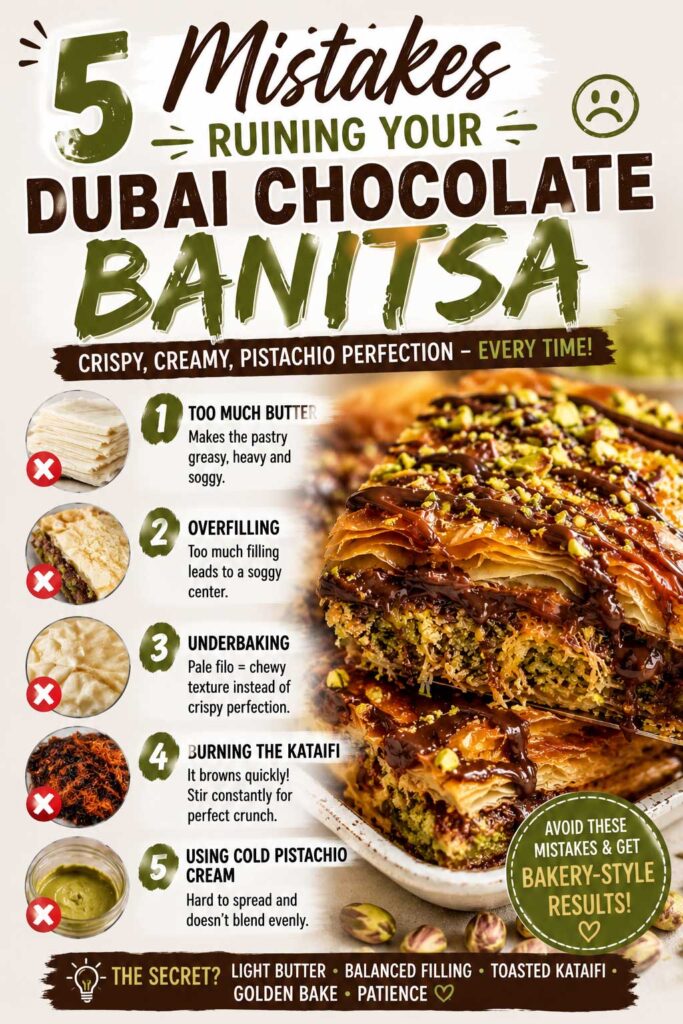
Do Not Use Too Much Butter
One of the biggest mistakes with filo desserts is overusing butter between the layers. While butter helps create crispiness and flavor, too much can make the pastry feel greasy and heavy instead of light and flaky.
The goal is to lightly coat the filo rather than soak it.
Brush The Filo Lightly
Using a pastry brush helps spread the butter evenly without oversaturating the layers. A thin coating is enough to help the filo crisp beautifully in the oven while still keeping the layers delicate and airy.
Many bakery-style pastries actually use less butter than most people expect.
Bake Until Deeply Golden
Proper baking time is essential for achieving crisp texture. Pale filo often tastes chewy and soft rather than crispy and flaky.
The top should become deeply golden brown and slightly firm to the touch. That darker golden color usually means the layers underneath have crisped properly as well.
Allow Steam To Escape
After baking, allow the banitsa to rest uncovered for several minutes so excess steam can escape. Trapped steam softens the pastry quickly and reduces the crispy texture you worked to create.
The crispier the top becomes, the better the contrast with the creamy pistachio filling and melted chocolate inside.
Common Mistakes To Avoid
Overfilling The Pastry
One of the biggest mistakes when making Dubai chocolate banitsa is adding too much filling between the filo layers. While it may seem tempting to load it with extra pistachio cream and chocolate, too much filling can trap moisture and make the center soggy instead of crispy.
Keeping the layers balanced creates a much better texture and allows the filo to bake properly.
Underbaking The Pastry
Filo pastries need enough baking time to fully crisp and develop deep golden color. Removing the banitsa too early often leaves the top pale and slightly chewy rather than flaky and crisp.
The best versions usually bake a little longer than people initially expect. The top should look deeply golden and feel crisp when lightly tapped.
Burning The Kataifi
Kataifi pastry browns very quickly once it hits the pan. If left unattended even briefly, it can go from golden and crispy to bitter and burnt.
Stir constantly while toasting and reduce the heat if necessary. Properly toasted kataifi should smell buttery and nutty rather than dark or smoky.
Using Cold Pistachio Cream
Cold pistachio cream tends to spread unevenly and can tear delicate filo layers during assembly. Room-temperature pistachio cream spreads much more smoothly and helps create even layers throughout the pastry.
This small detail makes the assembly process noticeably easier and improves the final texture of the dessert.
Variations of Dubai Chocolate Banitsa
Nutella Version
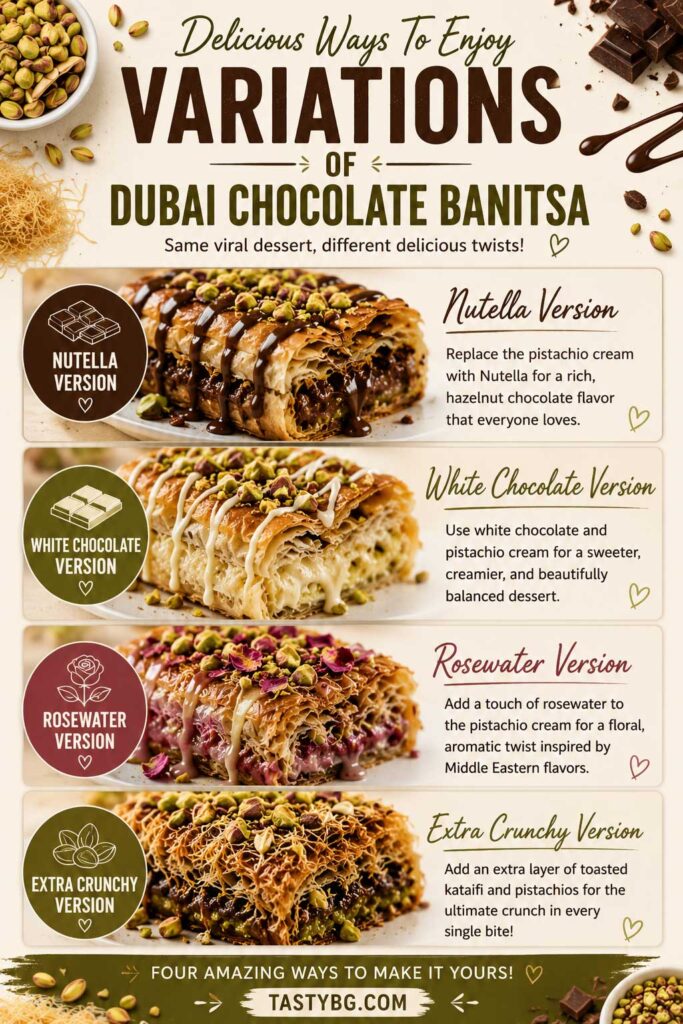
For an even richer chocolate flavor, replace part of the pistachio cream with Nutella. This version becomes creamier, softer, and more dessert-like while still keeping the crispy filo texture that makes banitsa so satisfying.
White Chocolate Version
Using melted white chocolate instead of dark chocolate creates a sweeter and more luxurious dessert. The creamy sweetness pairs beautifully with pistachios and gives the filling an almost bakery-style truffle flavor that many people love during holidays and special occasions.
Rosewater Version
Adding a very small amount of rosewater gives the dessert a subtle Middle Eastern-inspired aroma that works beautifully with pistachios and chocolate. A little goes a long way, so only a tiny amount is needed to add elegance without overpowering the pastry.
Extra Crunchy Version
For even more texture, increase the amount of toasted kataifi inside the filling and on top of the pastry. Some families intentionally add extra because everyone ends up fighting over the crispiest sections once the dessert is sliced.
The contrast between crunchy kataifi, flaky filo, and creamy pistachio filling is one of the biggest reasons this dessert became so popular online.
What To Serve With Dubai Chocolate Banitsa
Best Coffee Pairings
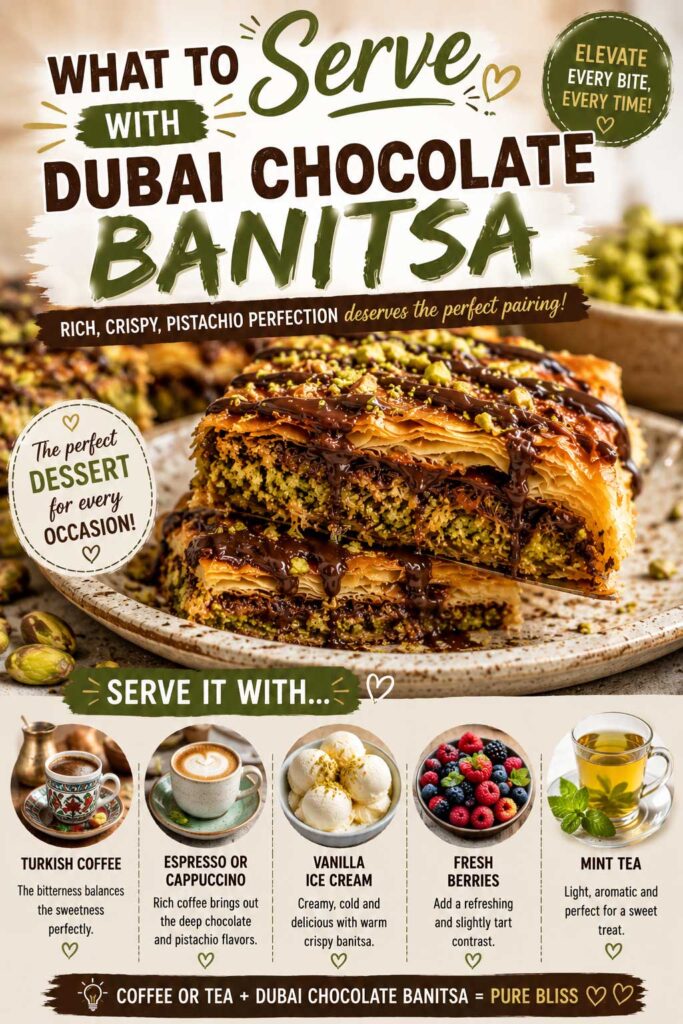
Dubai chocolate banitsa pairs especially well with strong coffee drinks that balance the richness of the pistachio cream and melted chocolate. Many people love serving it with Turkish coffee, espresso, cappuccino, or traditional Balkan-style coffee because the slight bitterness cuts through the sweetness beautifully and keeps the dessert from feeling too heavy.
Turkish coffee remains one of the most iconic coffee traditions in the region and pairs beautifully with rich pistachio desserts.
If you love pairing rich desserts with strong coffee, this Turkish Coffee Recipe makes a beautiful match for the chocolate and pistachio flavors.
Tea Pairings
Mint tea works especially well with this dessert because the freshness contrasts nicely with the buttery filo and creamy filling. Black tea and lightly sweetened herbal teas also create a cozy pairing, particularly during colder months or holiday gatherings.
Ice Cream And Fruit Pairings
For a more luxurious dessert presentation, many people serve Dubai chocolate banitsa with vanilla ice cream, fresh berries, crushed pistachios, or extra chocolate drizzle. Strawberries and raspberries pair particularly well because their slight tartness balances the richness of the pastry layers and pistachio filling.
For an extra special dessert plate, serve a slice with berries and a scoop of Chocolate Gelato Recipe on the side.
Holiday And Party Serving Ideas
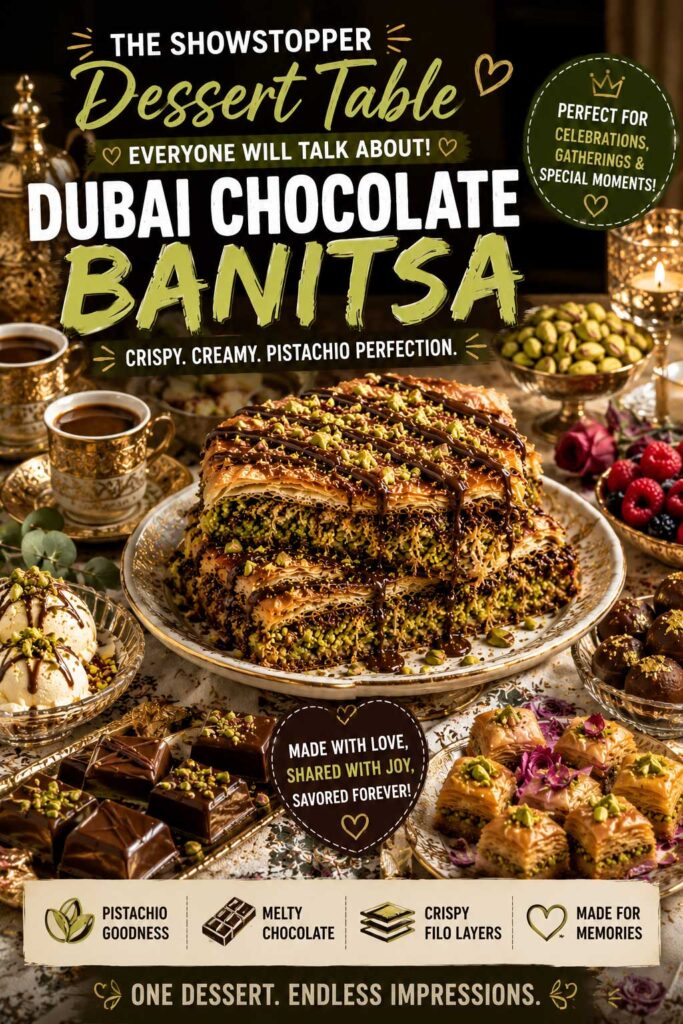
This dessert also looks incredibly impressive as part of a larger dessert spread for holidays, Ramadan gatherings, Eid tables, brunches, dinner parties, or coffee nights with friends and family. The flaky golden layers and glossy chocolate topping instantly make the table feel more elegant and festive.
Pistachios are prized throughout Mediterranean and Middle Eastern cuisines and are often featured in celebration desserts because of their rich flavor and vibrant color.
For more festive dessert inspiration, explore these Easy Balkan Sweet Recipes before planning your next holiday table.
Serving Essentials For A Bakery-Style Dessert Experience
Serving this dessert becomes even more impressive when paired with beautiful coffee service pieces and dessert accessories that elevate the presentation.
| Product | Why It Helps | Check Price On Amazon |
|---|---|---|
| Turkish Coffee Cups | Classic pairing for rich desserts | Check Price |
| Dessert Plates Set | Elegant presentation | Check Price |
| Glass Cake Stand | Perfect for holidays and parties | Check Price |
| Pistachio Storage Container | Keeps nuts fresh longer | Check Price |
| Espresso Machine | Ideal coffee pairing companion | Check Price |
Storage Tips
How To Store Dubai Chocolate Banitsa
Store leftovers covered at room temperature for up to 1 day or refrigerated for up to 4 days. Because the dessert contains pistachio cream and chocolate filling, refrigeration is usually the safest option for longer freshness.
The filo layers will naturally soften slightly in the refrigerator, but the flavor often becomes even richer the next day as the filling settles.
When storing homemade pastries, following basic food-safety refrigeration guidelines helps maintain both freshness and quality.
Best Way To Reheat It
For the best texture, reheat the pastry briefly in the oven, avoid microwaving whenever possible, and keep it uncovered while reheating so the filo can crisp again. Even a few minutes in the oven can restore much of the flaky texture.
Can You Eat It Cold?
Yes. Cold leftovers actually taste surprisingly good straight from the fridge because the pistachio filling firms slightly and develops an almost truffle-like texture.
Some people even prefer the chilled version with coffee because the chocolate and pistachio flavors become deeper and more concentrated.
Can You Freeze Dubai Chocolate Banitsa?
Yes. Dubai chocolate banitsa freezes surprisingly well, especially when wrapped properly.
You can freeze either fully baked slices or the unbaked assembled pastry. Both methods work well when wrapped properly.
For the best results, wrap the pastry tightly in plastic wrap and then an additional layer of foil or place it inside an airtight freezer-safe container. This helps prevent freezer burn and keeps the filo from drying out.
When ready to serve, reheat the banitsa in the oven until hot and crispy again. Oven reheating works much better than microwaving because it helps restore the flaky texture of the filo and the crunch of the kataifi.
Many people actually keep individual slices frozen because they reheat beautifully for quick desserts, coffee breaks, or unexpected guests.
Is Dubai Chocolate Banitsa Very Sweet?
It depends heavily on the type of chocolate you use and the sweetness level of the pistachio cream.
Using dark chocolate creates a richer and more balanced dessert because the slight bitterness offsets the sweetness of the filling and flaky pastry layers. Milk chocolate creates a creamier and sweeter result that feels more indulgent and dessert-like.
Many people enjoy using a combination of both dark and milk chocolate because it creates deeper flavor without becoming overly sweet.
Traditional Balkan desserts also tend to balance sweetness differently than many modern American desserts. Instead of dramatically reducing sugar, they are often served alongside strong coffee, espresso, Turkish coffee, or unsweetened tea to create contrast and keep the dessert from feeling too heavy.
That balance between rich pastry and bitter coffee is one of the reasons desserts like this feel satisfying rather than overwhelming.
The Secret To Bakery-Style Texture
The biggest secret behind truly incredible Dubai chocolate banitsa is texture contrast. Every bite should combine crispy filo layers, crunchy toasted kataifi, smooth pistachio cream, and melted chocolate throughout the filling. That combination creates the dramatic bakery-style bite people love in viral Dubai desserts.
Freshly baked filo also matters enormously. The top should become deeply golden and shatter slightly when sliced rather than bending or turning soft. Many bakery-style pastries achieve that signature crunch by baking slightly longer than most home cooks expect.
The contrast between the crispy exterior and rich creamy filling is what makes this dessert feel luxurious instead of simply sweet.
Frequently Asked Questions About This Dubai Chocolate Banitsa Recipe
Can I Use Store-Bought Pistachio Cream?
Yes. Store-bought pistachio cream works perfectly for this recipe.
Higher-quality pistachio cream usually creates better flavor, smoother texture, and a richer green color. Some brands also contain a higher percentage of real pistachios, which gives the filling a deeper nutty taste and less artificial sweetness.
Can I Make Dubai Chocolate Banitsa Ahead Of Time?
Yes.
You can fully assemble the pastry several hours ahead of baking and keep it refrigerated until ready to cook. Many people actually prefer this method because it allows the layers to settle slightly before baking.
For the crispiest texture, bake it fresh shortly before serving.
What Is The Difference Between Banitsa And Baklava?
Traditional Balkan banitsa is usually savory and commonly filled with cheese, eggs, pumpkin, or yogurt-based mixtures, while baklava is sweeter, syrup-soaked, and heavily nut-based.
Dubai chocolate banitsa sits somewhere between both desserts. It keeps the flaky filo structure of banitsa while borrowing the pistachio richness, crunch, and luxurious sweetness often associated with baklava and Middle Eastern pastries.
Can I Use Puff Pastry Instead Of Filo Dough?
Filo dough works best for authentic crispy layers and the classic shattering texture this dessert is known for. Puff pastry creates a much thicker, softer, and more buttery result that feels completely different from traditional filo-based pastries.
While puff pastry can still taste good, it will not create the same delicate crispy texture that makes Dubai chocolate banitsa so impressive.
More Mediterranean Desserts You May Enjoy
If you enjoy crispy pastries, pistachio desserts, and Mediterranean sweets, you may also enjoy:
- Dubai Chocolate Strawberries
- Dubai Chocolate Baklava Rolls
- Sicilian Cannoli Recipe
- Chocolate Gelato Recipe
- Easy Balkan Sweet Recipes
Final Thoughts On Dubai Chocolate Banitsa
Dubai chocolate banitsa is one of those desserts that feels instantly impressive the moment it comes out of the oven. The flaky golden layers, creamy pistachio filling, and crispy kataifi create the kind of texture people remember after the first bite.
If this dessert made you love the Dubai chocolate trend even more, try this Dubai Chocolate Cheesecake Recipe next for another rich pistachio-chocolate treat.
It also perfectly captures the modern Balkan kitchen style many families now love — traditional pastry techniques mixed with trendy flavors from around the world.
The combination somehow feels both nostalgic and completely new at the same time.
If you enjoy modern Mediterranean desserts and Balkan-inspired pastries, this recipe deserves a permanent place in your dessert rotation.
Did You Make This Dubai Chocolate Banitsa Recipe?
If you enjoyed this Dubai chocolate banitsa recipe, be sure to explore more Mediterranean, Balkan, and viral dessert recipes here on TastyBG. From traditional family pastries and homemade sweets to modern pistachio-filled creations inspired by the latest food trends, you’ll find plenty of delicious recipes made with simple ingredients and unforgettable flavors.
For an impressive dessert spread, try serving your Dubai Chocolate Banitsa alongside Dubai Chocolate Strawberries, Chocolate Gelato, Turkish Coffee, or other sweet favorites featured throughout the site.
If you love creative desserts that combine traditional Balkan baking with modern global flavors, be sure to explore more dessert recipes from across the Mediterranean and Balkans for even more inspiration.
If you make this recipe, tag @tastybg_ on Instagram and use #tastybg to share your homemade Dubai Chocolate Banitsa with us. We’d love to see your crispy filo layers, creamy pistachio filling, and chocolatey creations!