
Bulgarian Tikvenik Recipe is one of the most beloved autumn and winter desserts in Bulgaria. Made with flaky filo pastry, sweet grated pumpkin, walnuts, cinnamon, and sugar, this traditional Bulgarian pumpkin pastry has been bringing families together for generations.
There are certain desserts that instantly feel like autumn in Bulgaria, and Tikvenik is one of them. The smell of roasted pumpkin, cinnamon, toasted walnuts, and buttery filo pastry filling the kitchen is something many Bulgarians associate with colder weather, family gatherings, and long cozy evenings at home.
This Bulgarian Tikvenik Recipe features thin layers of filo dough wrapped around a sweet filling of grated pumpkin, sugar, walnuts, and warm spices. Some families prepare it in long spiral coils inside a round baking tray, while others roll it into straight pastry logs similar to strudel. Either way, the final result becomes beautifully crispy on the outside while soft, fragrant, and slightly caramelized inside.
If you enjoy traditional Bulgarian pastries, you may also love this classic Bulgarian Banitsa recipe made with flaky filo layers and savory filling.
Unlike overly sweet pumpkin desserts, authentic Bulgarian Tikvenik keeps the pumpkin flavor balanced and natural. The walnuts add richness, the cinnamon brings warmth, and the flaky layers create the signature texture that makes this dessert impossible to stop eating.
For many Bulgarian families, Tikvenik appears most often during autumn and winter holidays. It is especially common around Christmas fasting periods because traditional versions can easily be made dairy-free and egg-free while still tasting incredibly rich and satisfying.
Once you try homemade Tikvenik fresh from the oven with powdered sugar on top, it quickly becomes one of those recipes that feels comforting every single time.
Why Bulgarian Tikvenik Feels Different From Other Pumpkin Desserts
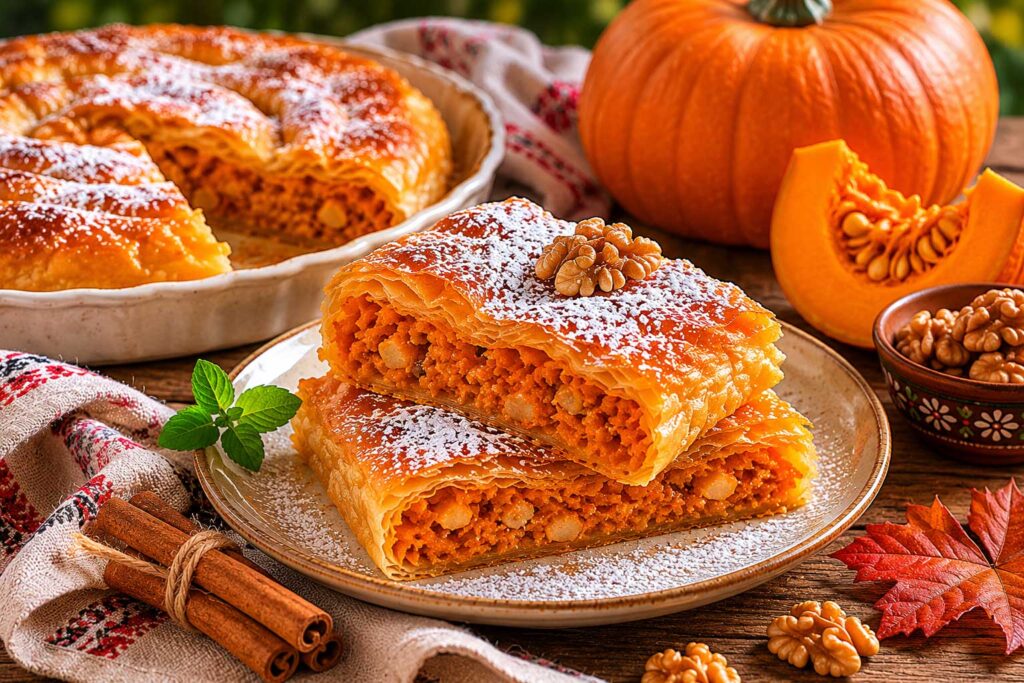
Many pumpkin pastries around the world are creamy, dense, or heavily spiced. Bulgarian Tikvenik is lighter, crispier, and much more focused on texture.
Unlike many modern pumpkin treats, this Bulgarian pumpkin dessert relies on simple ingredients and traditional baking techniques.
The thin layers of filo dough create delicate crunch while the filling stays soft and naturally sweet. Instead of pumpkin puree, Bulgarians traditionally use freshly grated pumpkin, which gives the pastry a more rustic texture and fresher flavor.
Another major difference is the walnut filling. Walnuts are deeply rooted in Balkan desserts and add earthy richness that balances the sweetness perfectly.
Tikvenik also feels less heavy than many Western pumpkin desserts because the filling is not overloaded with cream, condensed milk, or excessive spices.
The result is something that tastes homemade, cozy, and surprisingly light despite its rich flavor.
The History of Tikvenik in Bulgarian Homes
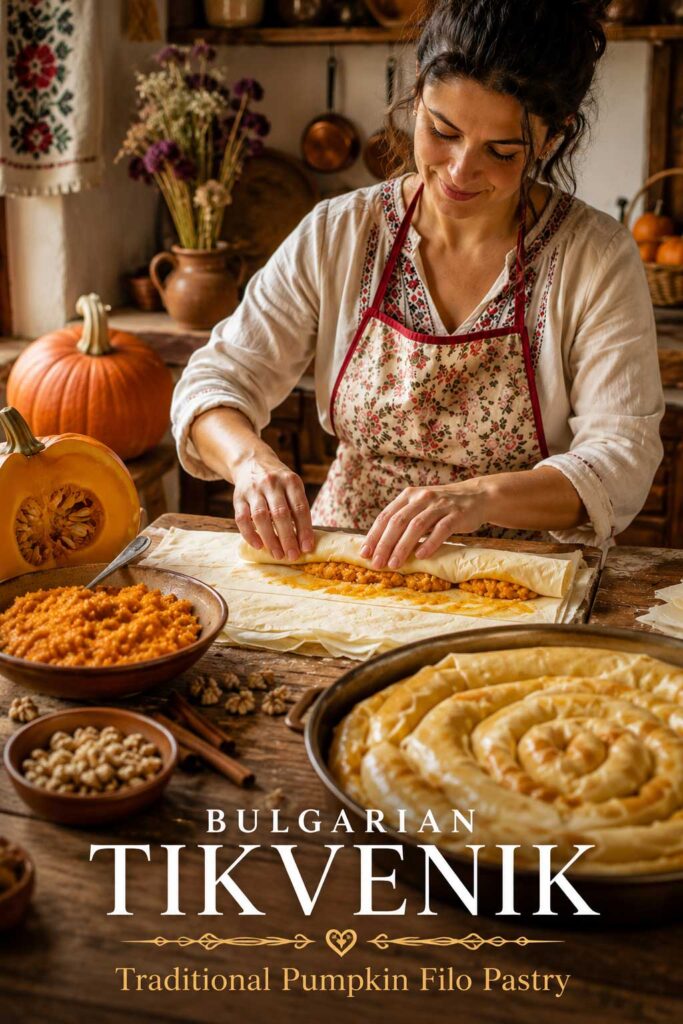
Tikvenik comes from the Bulgarian word “tikva,” meaning pumpkin. This traditional pastry has been prepared across Bulgaria for generations, especially in rural villages where pumpkins were harvested during autumn and carefully stored throughout winter.
Because pumpkins lasted well for long periods without refrigeration, they became an important ingredient during colder months. Bulgarian families used them in soups, baked dishes, jams, and sweet pastries like Tikvenik.
Many visitors experiencing Tikvenik for the first time describe it as a Bulgarian pumpkin strudel, although its traditional pumpkin and walnut filling gives it a distinctly Bulgarian character.
Over time, Tikvenik became closely connected to autumn and winter family traditions. The pastry gained even more popularity during Christmas fasting periods because it could easily be prepared without meat, eggs, or dairy products. Many older Bulgarian grandmothers still make traditional fasting versions using only sunflower oil instead of butter.
Today, Tikvenik remains one of the most nostalgic Bulgarian desserts and is commonly served during seasonal gatherings and family celebrations.
Autumn Gatherings
Tikvenik is especially popular during pumpkin harvest season when fresh sweet pumpkins are widely available.
Christmas Holidays
Many Bulgarian households prepare Tikvenik during winter holidays alongside other traditional pastries and festive meals.
Name Days and Family Celebrations
The pastry often appears during family visits, celebrations, and large homemade dinner gatherings.
Weekend Baking Traditions
Some families continue making Tikvenik simply as a cozy weekend dessert during colder months.
For many Bulgarians, the smell of baked pumpkin, cinnamon, and crispy filo pastry instantly brings back memories of childhood kitchens and homemade holiday meals. Many families still say the hardest part of making Tikvenik is waiting for it to cool before cutting the first slice. The aroma filling the kitchen is often enough to convince someone to sneak a piece while it’s still warm.
Sweet and savory pastries have always been important in Bulgarian home cooking, from holiday desserts like Tikvenik to everyday classics such as Bulgarian Mekitsi.
Ingredients for Authentic Bulgarian Tikvenik
One of the reasons Bulgarian Tikvenik has remained popular for generations is its simplicity. The traditional recipe relies on a handful of affordable ingredients that come together to create a dessert full of comforting autumn flavor.
Pumpkin
Fresh grated pumpkin is the star ingredient and gives Tikvenik its naturally sweet flavor and soft texture. Most Bulgarian home cooks prefer fresh pumpkin over canned puree because it creates a lighter, more authentic filling.
Walnuts
Walnuts add richness, texture, and the distinctive nutty flavor found in many traditional Bulgarian desserts. Lightly toasting them before baking can enhance their aroma even further.
Cinnamon
Cinnamon provides the warm fragrance that many Bulgarians associate with autumn baking and holiday traditions.
Filo Dough
Thin sheets of filo dough create the flaky crispy layers that make Tikvenik so irresistible. Store-bought filo dough works perfectly for most home bakers.
Sugar and Butter
A small amount of sugar balances the pumpkin’s natural sweetness, while butter or sunflower oil helps the pastry become golden and crisp during baking.
Affiliate Disclosure: This article may contain affiliate links. If you purchase through these links, I may earn a small commission at no additional cost to you.
Essential Tools For Making Bulgarian Tikvenik
Making homemade Bulgarian Tikvenik is much easier when you have the right baking tools. These kitchen essentials help create flaky pastry layers, evenly grated pumpkin, and bakery-quality results every time.
| Product | Why It Helps | Check Price |
|---|---|---|
| Box Grater | Quickly grates fresh pumpkin for authentic texture | Check Price on Amazon |
| Large Mixing Bowl | Makes combining pumpkin and walnut filling easier | Check Price on Amazon |
| Pastry Brush | Helps evenly coat filo layers with butter or oil | Check Price on Amazon |
| Nonstick Baking Pan | Promotes even baking and easier cleanup | Check Price on Amazon |
| Silicone Baking Mat | Prevents sticking while handling pastry | Check Price on Amazon |
Best Pumpkin Types for Tikvenik
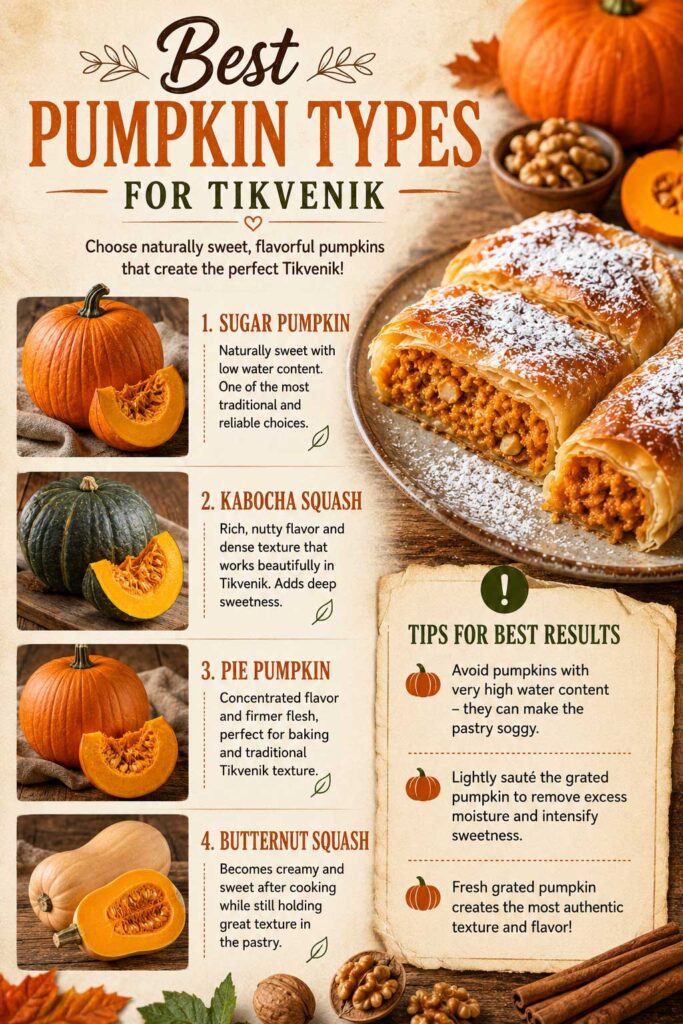
The best Tikvenik comes from naturally sweet pumpkins that are flavorful without containing too much water. The texture of the pumpkin makes a major difference because excess moisture can soften the filo pastry and prevent it from becoming crispy.
Sugar Pumpkin
Sugar pumpkins are one of the most traditional and reliable choices for Tikvenik because they are naturally sweet and less watery than large carving pumpkins.
Kabocha Squash
Kabocha squash creates especially rich flavor with slightly nutty sweetness and dense texture that works beautifully inside filo pastry.
Pie Pumpkin
Pie pumpkins are commonly used for baking because they contain concentrated pumpkin flavor and firmer flesh.
Butternut Squash
Some modern home cooks use butternut squash because it becomes naturally creamy and sweet after cooking while still holding good texture.
Avoid pumpkins with very high water content because they can create soggy pastry during baking.
Many Bulgarian home cooks lightly sauté the grated pumpkin before assembling the Tikvenik. This helps remove extra moisture while also intensifying the natural sweetness and flavor of the filling.
For more background on pumpkin varieties and baking uses, the University of Illinois Extension has a helpful pumpkin guide.
How To Make Bulgarian Tikvenik
Making homemade Bulgarian Tikvenik is much easier than many people expect. While the finished pastry looks impressive, the process mainly involves preparing a simple pumpkin filling, rolling it inside layers of filo dough, and baking until golden and crispy.
This Bulgarian filo pastry recipe uses thin layers of dough that become wonderfully crisp during baking.
Each filo pumpkin roll can be baked individually or arranged in a spiral shape inside a round baking pan.
The key is to balance the sweet pumpkin mixture with thin, flaky pastry layers so every bite delivers the traditional texture and flavor that have made Tikvenik a favorite in Bulgarian homes for generations. Follow the step-by-step instructions below to create an authentic Bulgarian Tikvenik with perfectly crisp pastry and a warm, fragrant pumpkin filling.
Bulgarian Tikvenik Recipe
Traditional Bulgarian Tikvenik is a flaky pumpkin filo pastry filled with sweet grated pumpkin, walnuts, cinnamon, and sugar. This comforting Bulgarian dessert is especially popular during autumn and winter holidays and is loved for its crispy layers and warm homemade flavor.
For the Filling
- 2 pounds grated pumpkin
- 1 cup sugar
- 1 cup chopped walnuts
- 1 tsp ground cinnamon
- ½ tsp nutmeg (optional)
- 2 tbsp vegetable oil or melted butter
For the Pastry
- 1 package filo dough
- ½ cup melted butter or sunflower oil for brushing
For Serving
- Powdered sugar for dusting
Preheat the oven to 375°F.
- Grate the pumpkin using the large side of a box grater.
- Heat 2 tablespoons oil or butter in a large skillet over medium heat. Add the grated pumpkin and cook for about 5 to 7 minutes to remove excess moisture.
- Stir in the sugar, walnuts, cinnamon, and nutmeg if using. Remove from heat and allow the filling to cool slightly.
- Lay one sheet of filo dough on a clean surface and lightly brush with melted butter or oil. Place another sheet on top.
- Spread a thin layer of pumpkin filling along one edge of the filo.
- Roll tightly into a long log.
- Repeat with remaining filo and filling.
- Arrange the rolls in a greased baking dish either straight or coiled into a spiral.
- Brush the tops generously with melted butter or oil.
- Bake for 35 to 45 minutes or until deeply golden and crispy.
- Allow the Tikvenik to cool slightly before slicing.
- Dust with powdered sugar before serving.
- Fresh grated pumpkin creates the most authentic texture.
- Avoid overly watery pumpkins because they can soften the pastry.
- Toasted walnuts add deeper flavor.
- Tikvenik tastes wonderful slightly warm with coffee or tea.
Why Fresh Pumpkin Works Better Than Pumpkin Puree
One of the biggest differences between authentic Tikvenik and shortcut versions comes down to texture. Traditional Bulgarian Tikvenik uses freshly grated pumpkin rather than pumpkin puree, and the result feels much lighter, crispier, and more rustic.
Keeps the Filling Lighter
Fresh grated pumpkin stays fluffy and soft inside the pastry instead of turning dense or heavy during baking.
Prevents Mushy Pastry
Pumpkin puree often contains far more moisture, which can soften the filo layers and reduce crispiness.
Adds Natural Sweetness
Fresh pumpkin develops deeper natural sweetness while roasting inside the pastry, especially when combined with cinnamon and walnuts.
Creates Traditional Texture
Authentic Tikvenik has visible strands of soft pumpkin throughout the filling rather than a completely smooth puree-like consistency.
Roasts Beautifully Inside the Filo
As the pastry bakes, the grated pumpkin lightly caramelizes and blends beautifully with the crispy filo layers.
Pumpkin puree can easily become too wet and dense for proper Tikvenik texture, which is why many Bulgarian grandmothers still grate fresh pumpkin by hand for the most authentic result.
Traditional pumpkin desserts remain popular throughout the Balkans, especially during autumn baking season when homemade pastries such as Kozunak and family recipes take center stage.
Common Tikvenik Mistakes That Ruin Texture
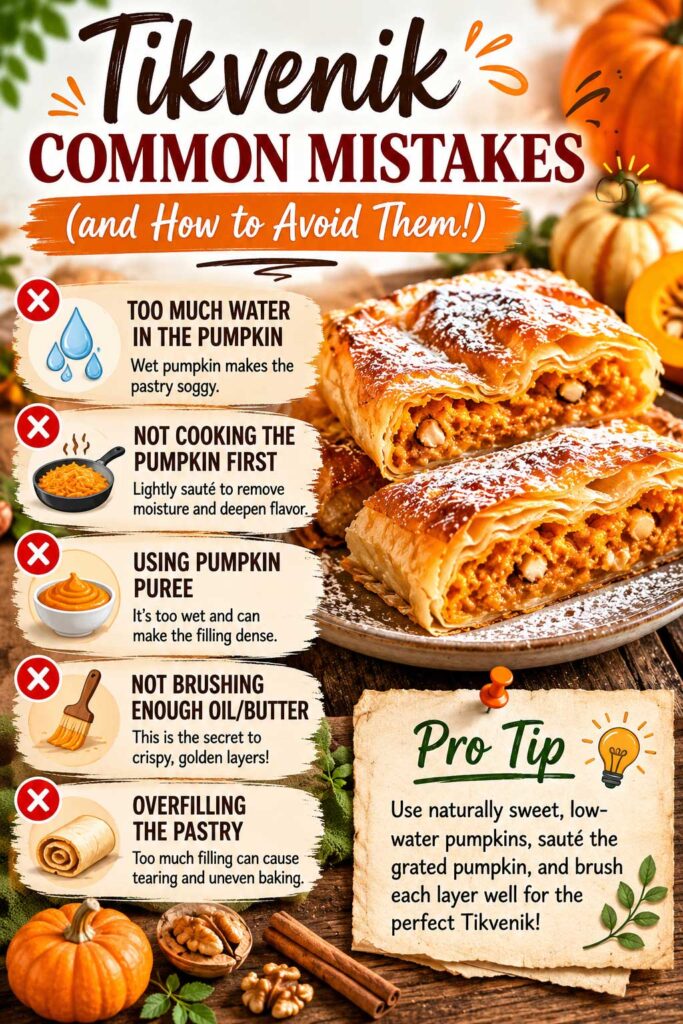
Using Wet Pumpkin
Excess moisture is one of the biggest reasons Tikvenik turns soggy instead of crisp. Cooking the grated pumpkin briefly before rolling helps remove extra liquid and creates better texture after baking.
Overfilling the Rolls
Too much filling can tear the delicate filo dough and prevent the pastry from baking evenly. A thinner balanced layer creates crispier rolls and a much better flaky texture.
Not Brushing Enough Butter or Oil
Filo pastry needs light layers of butter or oil between the sheets to become golden and crispy. Without enough moisture, the pastry can turn dry, brittle, and unevenly baked.
Baking at Low Temperature
Tikvenik needs strong oven heat to properly crisp the filo layers. Lower temperatures often create pale soft pastry instead of the golden flaky texture traditional Tikvenik is known for.
Pro Tips for Crispy Bakery-Style Tikvenik
Let the Filling Cool Before Rolling
Hot pumpkin filling softens filo dough very quickly and can cause tearing while rolling. Allowing the filling to cool slightly makes the pastry much easier to handle and helps maintain crisp flaky layers.
Toast the Walnuts First
Lightly toasted walnuts create deeper flavor and stronger aroma. Even a few minutes in a dry pan or oven helps bring out the rich nutty taste that makes traditional Tikvenik feel more authentic.
Use Thin Even Layers of Filling
Overfilling the pastry can make the rolls heavy and harder to bake evenly. Thin balanced layers create the ideal crispy pastry-to-filling ratio and help the Tikvenik stay flaky instead of soggy.
Rest Before Slicing
Allowing Tikvenik to cool slightly after baking helps the filling settle and keeps the slices cleaner. Fresh from the oven, the filling is much softer and the pastry can break apart more easily.
Delicious Tikvenik Variations Across Bulgaria
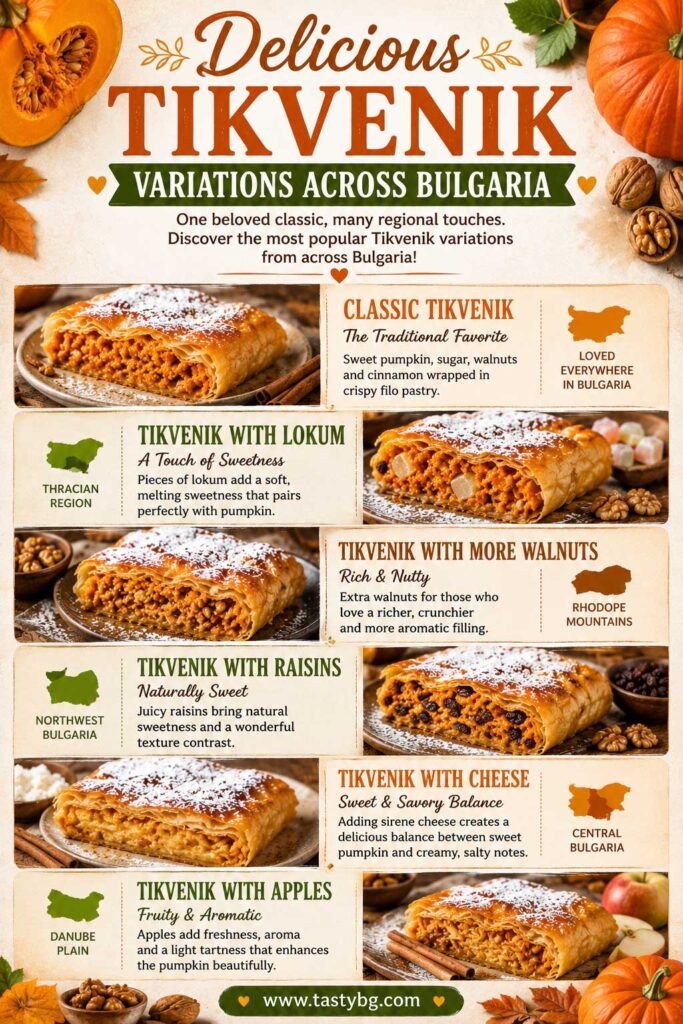
Different Bulgarian regions prepare Tikvenik slightly differently, and many families proudly protect their own version passed down through generations. While the classic pumpkin, walnut, and cinnamon filling remains the foundation, small regional touches create noticeable differences in flavor and texture.
Tikvenik remains one of the most recognizable examples of a traditional Balkan pumpkin pastry enjoyed throughout the region.
Tikvenik With Raisins
Some Bulgarian families add raisins to the filling for extra sweetness and chewy texture. The raisins soften during baking and pair beautifully with pumpkin and walnuts.
Extra Spiced Tikvenik
Certain regions prefer stronger spice flavor by adding extra cinnamon, cloves, nutmeg, or even a small amount of vanilla to the filling.
Honey-Topped Tikvenik
Instead of powdered sugar, some people drizzle warm honey over freshly baked Tikvenik for deeper sweetness and richer aroma.
Vanilla Powdered Sugar Version
A popular bakery-style variation mixes vanilla sugar into the powdered sugar before dusting the pastry.
Thick Village-Style Tikvenik
Traditional village versions are often rolled thicker with more filling and slightly less delicate filo layering, creating a heartier pastry.
Dairy-Free Fasting Tikvenik
During fasting periods, many Bulgarian households prepare Tikvenik entirely with sunflower oil instead of butter. These versions still become beautifully crispy and flavorful.
Apple and Pumpkin Tikvenik
Some families mix small pieces of apple into the pumpkin filling for extra sweetness, moisture, and slightly fruitier flavor.
The apples soften during baking and add subtle fruity sweetness that pairs beautifully with cinnamon and walnuts.
What To Serve With Bulgarian Tikvenik
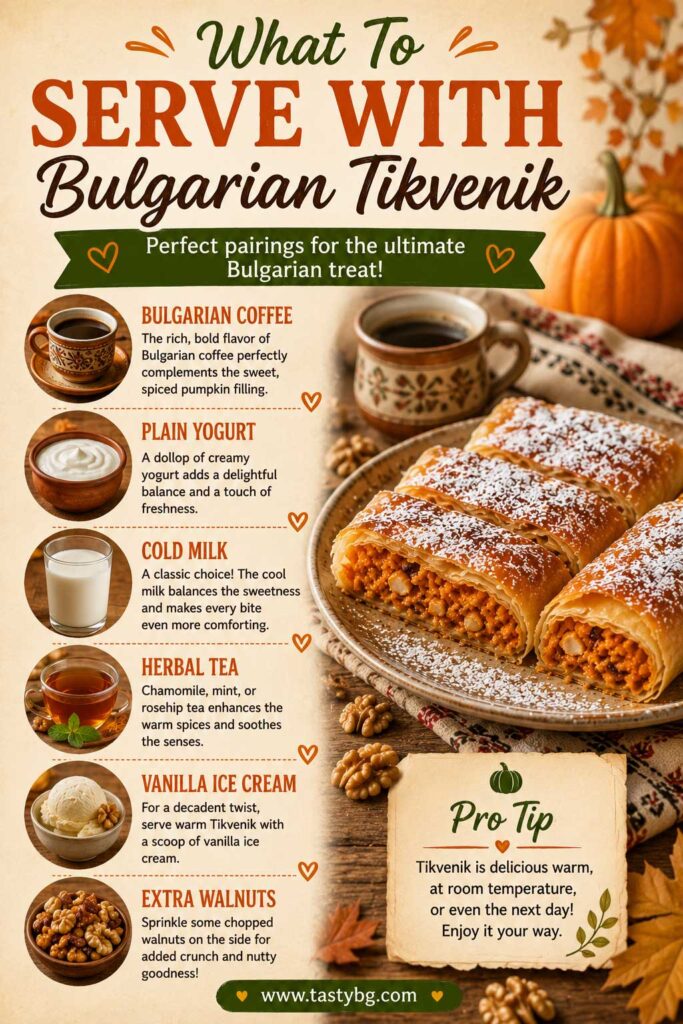
Tikvenik is delicious on its own, but the right drink or topping can make it feel even more special. Whether served after a holiday meal or enjoyed during a quiet autumn afternoon, these traditional pairings complement the sweet pumpkin filling beautifully.
For a full Bulgarian-style table, serve Tikvenik after comforting dishes like Bulgarian Bob Chorba or Bulgarian Mish Mash.
The sweet combination of pumpkin and walnuts is one reason many people compare Tikvenik to a traditional pumpkin and walnut strudel.
Turkish Coffee
Strong Turkish coffee balances the sweetness of Tikvenik perfectly. Many Bulgarians enjoy this pairing during afternoon coffee breaks or holiday gatherings.
Bulgarian Herbal Tea
Traditional Bulgarian herbal teas made with mountain herbs, mint, chamomile, or rosehip create a warm and comforting combination alongside pumpkin pastry.
For herbal tea pairings, BulgarianTea.com has more information about traditional Bulgarian teas and mountain herbs.
Warm Milk
A simple glass of warm milk makes Tikvenik feel especially nostalgic and comforting during colder evenings.
Cappuccino or Latte
Creamy coffee drinks pair beautifully with the crispy filo layers and soft pumpkin filling, especially for breakfast or brunch.
Vanilla Ice Cream
Cold vanilla ice cream melting over slightly warm Tikvenik creates a rich dessert-style presentation that many guests love.
Honey Drizzle
A light drizzle of honey adds extra sweetness and enhances the natural flavor of the pumpkin and walnuts.
Whipped Cream
Fresh whipped cream gives the pastry a softer and more decadent finish without overpowering the traditional flavors.
Many Bulgarians enjoy Tikvenik slightly warm while sitting with family during cold autumn and winter evenings.
If you enjoy Balkan food culture, you can explore more traditional regional dishes on BalkanRecipes.
Favorite Baking And Serving Accessories For Tikvenik
If you love traditional Bulgarian desserts, a few simple serving and baking accessories can make Tikvenik look even more impressive when serving family and guests.
| Product | Why It Helps | Check Price |
|---|---|---|
| Cake Stand With Dome | Beautiful presentation for holidays and gatherings | Check Price on Amazon |
| Powdered Sugar Duster | Creates a professional bakery-style finish | Check Price on Amazon |
| Dessert Plates Set | Perfect for serving individual slices | Check Price on Amazon |
| Glass Storage Containers | Keep leftover Tikvenik fresh longer | Check Price on Amazon |
| Electric Tea Kettle | Ideal for serving tea alongside Tikvenik | Check Price on Amazon |
How To Store Bulgarian Tikvenik Properly
Proper storage is important if you want your Bulgarian Tikvenik Recipe to stay crisp and flavorful for several days.
Tikvenik stores surprisingly well, which is one reason many Bulgarian families prepare large trays during autumn and holiday season gatherings.
Room Temperature Storage
At room temperature, Tikvenik can stay fresh for up to 2 days when loosely covered with foil or a clean kitchen towel. This helps preserve some of the crisp texture without trapping too much moisture.
Refrigerator Storage
For longer storage, keep Tikvenik in the refrigerator for up to 5 days. The filo layers will soften slightly over time, but the flavor often becomes even richer the next day as the pumpkin, cinnamon, and walnuts continue blending together.
Freezer Storage
Tikvenik also freezes very well for up to 2 months. Many people freeze individual portions so they can reheat small slices whenever they want a quick homemade dessert.
Best Way To Reheat Tikvenik
For the best texture, reheat Tikvenik briefly in the oven until the pastry crisps again. Avoid microwaving if possible because the steam softens the delicate filo layers and removes much of the signature crispiness.
For general food storage safety, the USDA food safety guide is a reliable reference.
Why Tikvenik Became Part of Bulgarian Holiday Traditions

For many Bulgarian families, Tikvenik represents far more than a simple pumpkin dessert. The aroma of baked pumpkin, cinnamon, toasted walnuts, and crisp filo pastry instantly signals the arrival of autumn, colder evenings, and the beginning of holiday season traditions.
Tikvenik became deeply connected to Bulgarian family life because it was affordable, filling, and easy to prepare using ingredients many households already had during pumpkin harvest season. Pumpkins stored well throughout autumn and winter, making them especially valuable in traditional village kitchens.
The pastry also became closely tied to Christmas fasting periods since many versions could be prepared entirely with oil instead of butter, allowing families to enjoy something sweet while following traditional fasting meals.
To better understand Bulgarian Christmas and fasting traditions, Bulgaropedia offers helpful cultural background on Bulgarian holiday customs.
For many Bulgarians, Tikvenik still brings memories of grandmother’s kitchens, warm tea on cold evenings, holiday gatherings, and trays of homemade pastries cooling near the window. Even today, many people say autumn does not truly feel complete until homemade Tikvenik appears on the table.
Frequently Asked Questions About Bulgarian Tikvenik
Below are answers to some of the most common questions readers have about this Bulgarian Tikvenik Recipe.
What does Tikvenik mean?
Tikvenik comes from the Bulgarian word “tikva,” which means pumpkin. The dessert is essentially a traditional Bulgarian pumpkin pastry made with filo dough and sweet pumpkin filling.
Can Tikvenik be made vegan?
Yes. Many traditional Bulgarian fasting versions are naturally vegan and use oil instead of butter. These versions are especially popular during Christmas fasting periods.
For more dairy-free inspiration, explore these easy Balkan sweet recipes that fit beautifully into holiday baking.
Can I use store-bought filo dough?
Absolutely. Most modern home cooks use packaged filo dough because it saves significant preparation time while still creating authentic crispy layers.
Why is my Tikvenik soggy?
The most common reason is excess moisture in the pumpkin filling. Cooking the grated pumpkin slightly before assembling helps remove extra liquid and creates crispier pastry.
Can Tikvenik be frozen?
Yes. Tikvenik freezes very well both before and after baking. Many families prepare extra rolls during autumn and freeze them for later.
Is Tikvenik served hot or cold?
Tikvenik is usually served slightly warm or at room temperature. Many people also enjoy it cold the next morning with coffee or tea.
What walnuts work best for Tikvenik?
Raw walnuts lightly toasted before baking create the best flavor. Toasting helps deepen the nutty aroma and gives the filling richer Balkan-style flavor.
Why Bulgarian Tikvenik Still Feels Like Home
Traditional Bulgarian Tikvenik is one of those desserts that instantly creates warmth and nostalgia. The crispy filo pastry, sweet pumpkin filling, walnuts, and cinnamon combine into something that feels both rustic and comforting at the same time.
Unlike overly rich pumpkin desserts, Tikvenik stays balanced, flaky, and surprisingly light while still delivering deep autumn flavor.
Whether you prepare it for holidays, family gatherings, or simply because you love cozy Balkan baking traditions, homemade authentic Tikvenik always brings the feeling of a true Bulgarian kitchen straight to the table.
This Bulgarian Tikvenik Recipe continues to be one of Bulgaria’s most beloved homemade desserts.
If you love cozy Bulgarian desserts, keep exploring more traditional Bulgarian recipes here on TastyBG.
Did You Make This Bulgarian Tikvenik Recipe?
If you enjoyed this Bulgarian Tikvenik recipe, be sure to explore more traditional Balkan and Mediterranean recipes here on TastyBG. From fresh salads and comforting soups to classic Bulgarian breakfasts, homemade pastries, and beloved family desserts, you’ll find plenty of authentic recipes inspired by generations of Balkan cooking.
For a complete Bulgarian-inspired dessert spread, try serving Tikvenik alongside homemade Kozunak, crispy Bulgarian Mekitsi, traditional Banitsa, or a warm cup of Bulgarian herbal tea. These classic recipes pair beautifully with the comforting flavors of pumpkin, walnuts, and cinnamon.
If you enjoy this recipe, be sure to explore more traditional Bulgarian desserts and Balkan sweet treats featured throughout the site for even more authentic regional favorites.
If you make this recipe, tag @tastybg_ on Instagram and use #tastybg to share your homemade Bulgarian Tikvenik with us. We’d love to see your version of this traditional Bulgarian pumpkin pastry!