
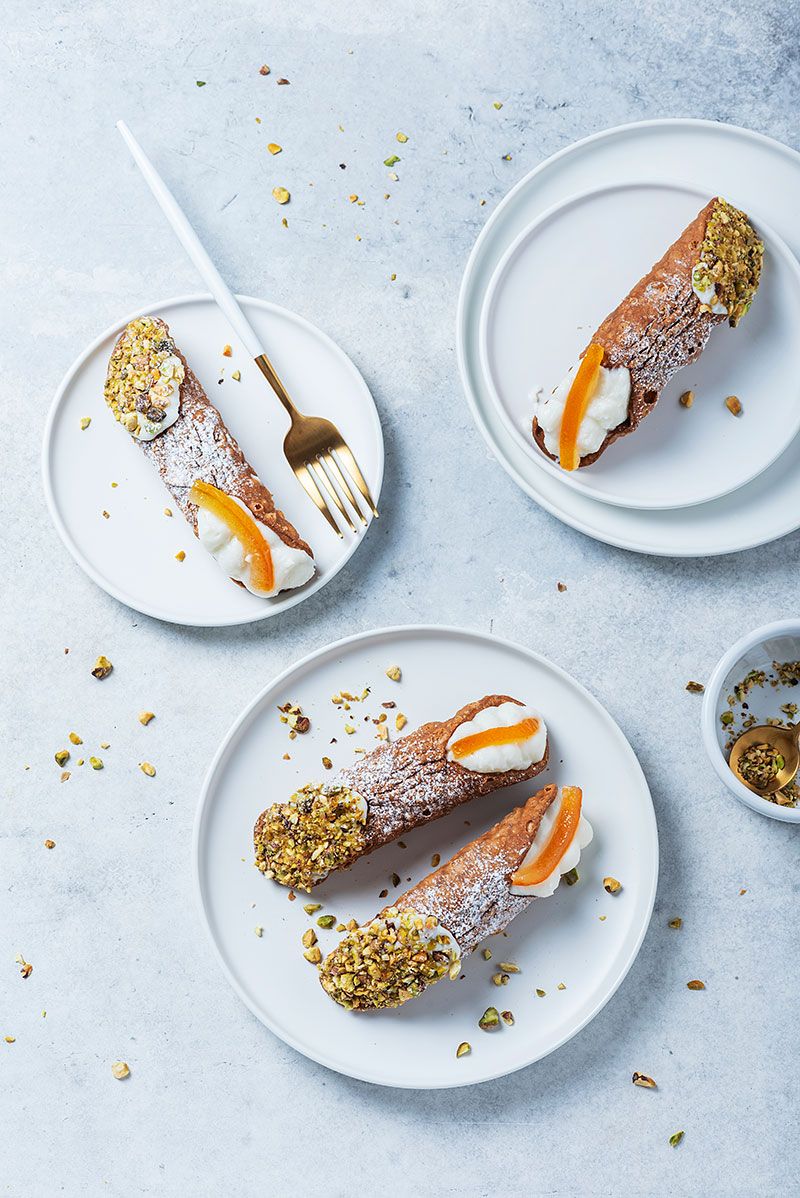
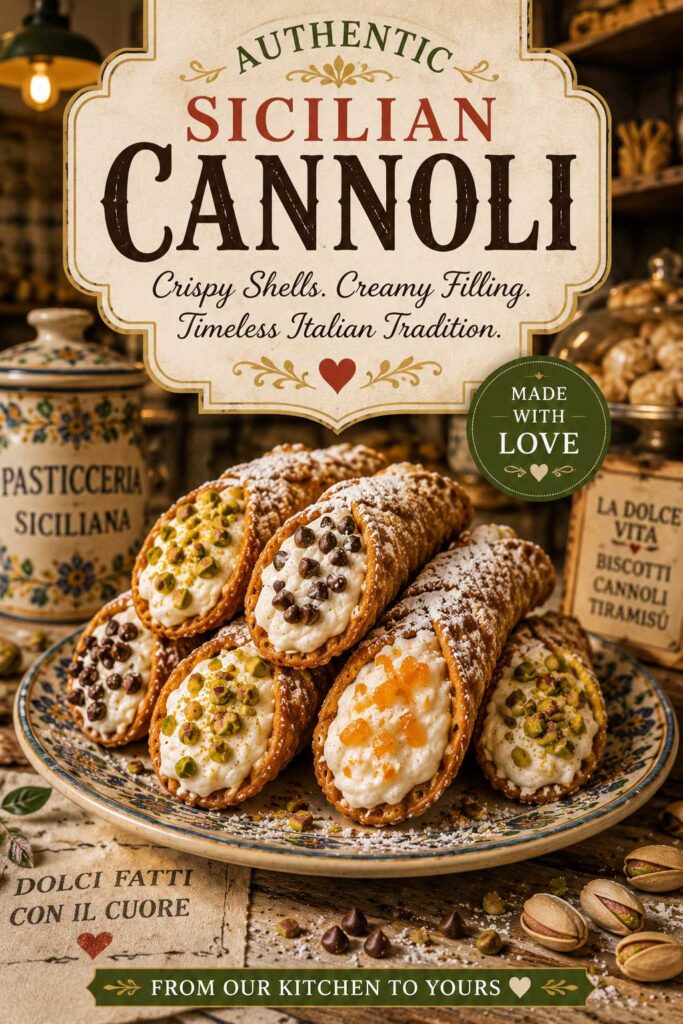
This authentic Sicilian cannoli recipe is one of the most famous Italian desserts ever created. Made with crisp golden pastry shells and filled with creamy ricotta filling, homemade cannoli combine delicate crunch, smooth texture, and classic Mediterranean flavor in every bite.
Traditional Sicilian cannoli originated in Sicily before becoming popular throughout Italy and eventually around the world. Today, they remain one of the most recognizable Italian bakery desserts thanks to their crispy shell, lightly sweet ricotta cream, chocolate chips, pistachios, and elegant presentation.
Cannoli are a traditional part of Mediterranean dessert culture where balance, quality ingredients, and homemade baking still play an important role in family meals and celebrations.
What makes cannoli truly unforgettable is the contrast in texture. The shell should stay light and crunchy while the ricotta filling remains cold, creamy, and smooth without feeling overly heavy or sugary.
Fresh homemade cannoli taste dramatically different from many store-bought versions. When the shells are freshly fried and filled just before serving, the dessert feels lighter, crispier, and far more authentic — exactly the kind of classic Sicilian bakery experience people fall in love with after trying desserts like this homemade chocolate gelato recipe.
Why This Sicilian Cannoli Recipe Feels So Special
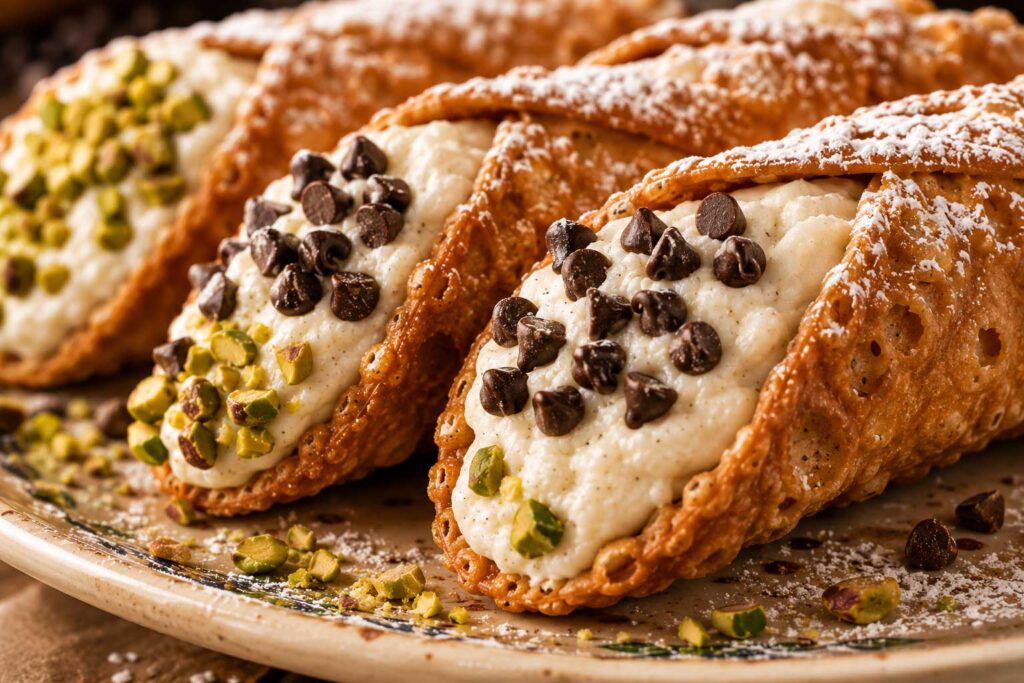
Cannoli are one of those desserts that somehow feel both elegant and comforting at the same time. They instantly stand out on dessert tables during holidays, celebrations, dinner parties, and family gatherings, yet the ingredients themselves remain surprisingly simple and traditional.
The real secret behind a great Sicilian cannoli recipe is balance.
Authentic Sicilian cannoli are never meant to be overwhelmingly sweet. Instead, they focus on creamy ricotta flavor, crisp pastry texture, delicate citrus aroma, and small details like chocolate chips or pistachios that quietly elevate every bite without overpowering the dessert.
Sicilian cannoli remain one of the most recognizable traditional Italian pastries served during holidays and celebrations throughout Italy.
Many Italian families still prepare homemade cannoli for holidays and special occasions because the dessert represents celebration, hospitality, and generations of traditional Sicilian baking.
Unlike many modern desserts overloaded with sugar and heavy fillings, fresh homemade cannoli feel lighter, fresher, more delicate, and far more refined. The contrast between crisp shell and creamy ricotta filling creates the kind of dessert people continue reaching for long after the first bite.
What Are Sicilian Cannoli?
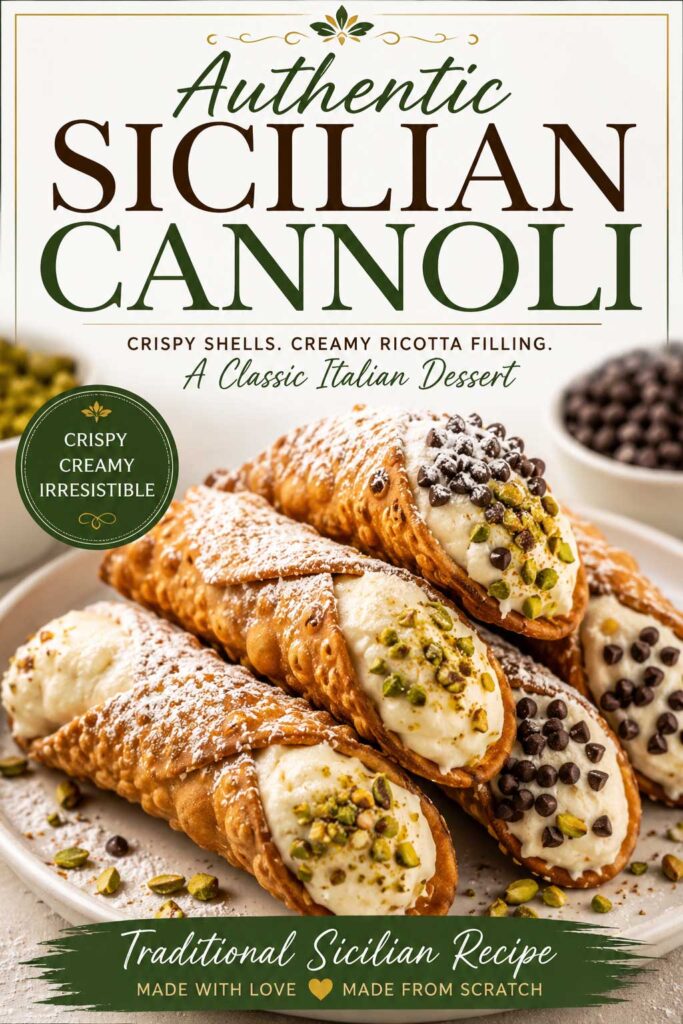
Cannoli originally became famous in Sicily, where pastry traditions heavily influenced local desserts for generations. Many Sicilian bakeries still prepare cannoli using family recipes passed down over decades, often filling the shells fresh throughout the day to preserve their signature crisp texture.
Sicilian cannoli are traditional Italian pastries made from crisp fried dough shells filled with sweet ricotta cream. They are considered one of the most iconic desserts in both Sicilian and Italian cuisine and are now recognized around the world as a classic Italian bakery treat.
In Sicily, cannoli are still commonly displayed in bakery windows filled fresh throughout the day, especially during holidays, festivals, and large family celebrations.
The word “cannoli” translates to “little tubes” in Italian, referring to the pastry’s signature cylindrical shape.
Traditional cannoli shells are known for being thin, crisp, lightly blistered from frying, and delicately sweet with subtle hints of cinnamon, cocoa, or citrus depending on the regional recipe. The filling is typically made with ricotta cheese, powdered sugar, vanilla, chocolate chips, and citrus zest, creating a creamy texture that contrasts beautifully with the crunchy shell.
Some Sicilian bakeries also add ingredients like candied orange peel, crushed pistachios, cinnamon, mascarpone, or even espresso flavors for more modern variations.
One of the most important details in an authentic Sicilian cannoli recipe is timing. Traditional cannoli are usually filled shortly before serving so the shells stay perfectly crisp while the ricotta filling remains cold, smooth, and creamy.
Why You’ll Love This Homemade Cannoli Recipe
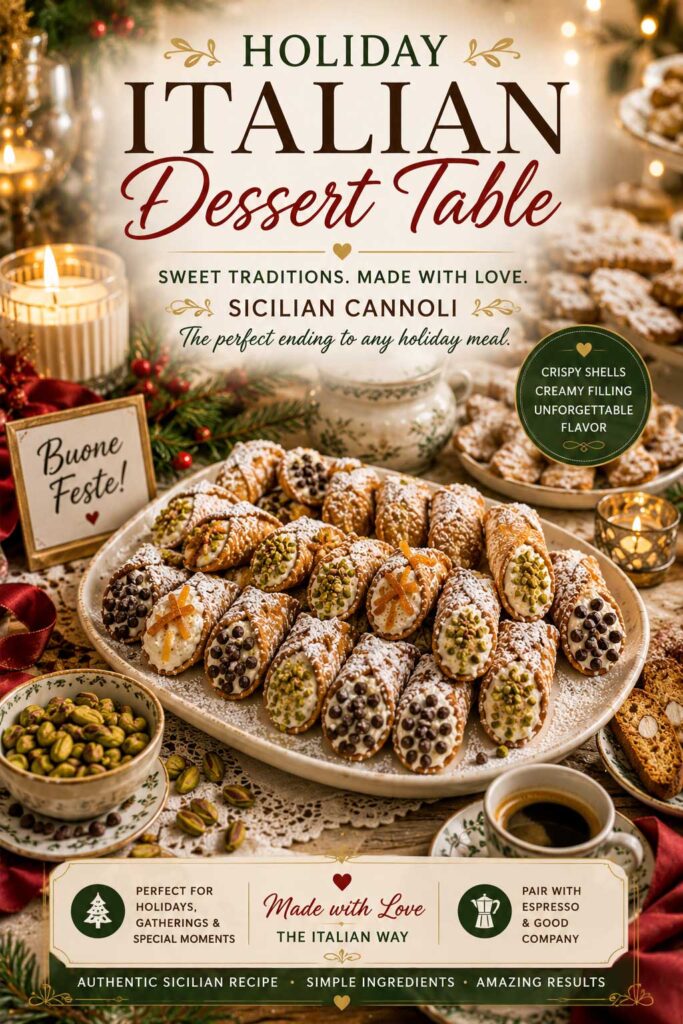
There are many reasons why homemade cannoli taste dramatically better than prefilled bakery versions from grocery stores or commercial bakeries.
Freshly made cannoli have a crispier shell, fresher ricotta flavor, lighter sweetness, and a much better balance between creamy filling and delicate crunch. The aroma alone feels completely different once the shells are freshly fried and filled right before serving.
One of the best parts about this Sicilian cannoli recipe is how customizable it becomes depending on the flavors you enjoy most. Some people prefer traditional ricotta cannoli with chocolate chips, while others love pistachio cannoli, citrus versions with extra orange zest, or espresso-flavored filling for a deeper Italian café-style flavor.
Mini cannoli are also especially popular for holidays, dessert platters, and dinner parties because they feel elegant and easy to serve.
Once you taste freshly filled homemade cannoli with perfectly crisp shells and creamy ricotta filling, it becomes very difficult to go back to soft prefilled versions that have been sitting for hours.
Best Ricotta for Cannoli Fillings
The ricotta is truly the heart of an authentic Sicilian cannoli recipe. A great cannoli filling should taste creamy, fresh, smooth, and light without becoming watery or overly sweet.
Whole milk ricotta creates the richest and most traditional texture. Lower-fat ricotta often lacks the same creamy consistency and can produce thinner filling that does not feel as luxurious.
One of the biggest secrets to bakery-style cannoli filling is removing excess moisture from the ricotta before mixing it with sugar and flavorings. Watery ricotta can quickly ruin the texture of the filling while also softening the shells much faster.
Whole milk ricotta creates the richest and most traditional texture while also providing protein and calcium naturally found in dairy products.
For the best results, many Italian bakers drain ricotta overnight, chill it before using, and avoid low-fat versions entirely. Properly strained ricotta creates thick, silky filling that pipes beautifully into the shells without becoming runny.
This small step makes a huge difference in achieving that smooth classic cannoli texture found in traditional Sicilian bakeries.
Affiliate Disclosure: This article may contain affiliate links. If you purchase through these links, I may earn a small commission at no additional cost to you.
Best Tools for Cannoli Filling
Smooth ricotta filling and clean piping make homemade cannoli look dramatically more professional.
| Product | Why It Works | Check Price |
|---|---|---|
| Reusable Piping Bag Set | Helps fill cannoli neatly and evenly | Check Price on Amazon |
| Fine Mesh Strainer | Essential for draining ricotta properly | Check Price on Amazon |
| Silicone Spatula Set | Helps create smooth filling texture | Check Price on Amazon |
How to Make Cannoli Shells
Making homemade cannoli shells takes a little patience, but the texture and flavor are completely worth the effort. The dough is rolled very thin before being wrapped around cannoli tubes and fried until golden, crisp, and lightly blistered. Traditional Sicilian cannoli shells should feel delicate and crunchy rather than thick or heavy.
One of the biggest secrets is maintaining the correct oil temperature while frying. Properly fried shells develop that signature airy crisp texture that pairs perfectly with creamy ricotta filling. Marsala wine in the dough also helps create a lighter shell while adding authentic Sicilian bakery flavor.
Once cooled, the shells can be stored unfilled until ready to serve. Many Italian bakeries actually prepare shells ahead of time and fill them fresh to order so the cannoli stay perfectly crisp, similar to other traditional Mediterranean pastries where texture matters just as much as flavor.
Cannoli Tubes Set
Perfect homemade cannoli start with properly shaped shells. Reusable stainless steel cannoli tubes help create the classic Sicilian bakery shape and make frying much easier for beginners.
| Product | Why It Works | Check Price |
|---|---|---|
| Stainless Steel Cannoli Tubes Set | Creates authentic crisp cannoli shells | Check Price on Amazon |
| Mini Cannoli Forms | Perfect for party-size cannoli | Check Price on Amazon |
| Heavy Duty Pastry Forms | Durable for frequent baking | Check Price on Amazon |
Sicilian Cannoli Recipe

This authentic Sicilian cannoli recipe features crispy golden pastry shells filled with creamy ricotta filling, chocolate chips, pistachios, and classic Italian flavor. Perfect for holidays, dinner parties, and traditional Mediterranean dessert tables.
- Metal cannoli tubes
- Paper towels
- Spoon
- Sharp knife
- Rolling Pin
- Large bowl
For the Cannoli Shells
- 2 cups all-purpose flour
- 2 tbsp granulated sugar
- 2 tbsp unsalted butter
- 1 egg
- 1/2 tsp ground cinnamon
- 2 tbsp Marsala wine
- 1 tbsp white vinegar
- Pinch of salt
- Neutral oil for frying
For the Ricotta Filling
- 2 cups whole milk ricotta cheese (drained overnight)
- 3/4 cup powdered sugar
- 1 tsp vanilla extract
- 1/2 cup mini chocolate chips
- 1 tsp orange zest
Optional Garnishes
- Crushed pistachios
- Powdered sugar
- Candied orange peel
- Extra chocolate chips
Step 1: Prepare the Dough
In a large bowl combine the flour, butter, sugar, cocoa, egg, and a pinch of salt, and mix with a wooden spoon.
Add the egg, Marsala wine, and vinegar. Mix with your hands until a dough forms, then knead until smooth. Cover and let the dough rest for 1 hour.
Step 2: Roll and Shape
When the dough is homogeneous and smooth let it rest for about 30 minutes.
Roll out the dough with a rolling pin up to a thickness of about 3 mm and cut into circles and wrap around cannoli tubes. Seal the edges lightly with egg wash.
Step 3: Fry the Shells
Heat oil to 350°F (175°C). When is hot, fry 3 or 4 cannoli shells at a time until golden or for about 1-2 minutes. Remove carefully and cool completely before removing the metal tubes.
Use metal cannoli tubes and wrap them around the cannoli shells.
When the cannoli is golden remove from the oil and use a paper towel to drain on and let cool and when are cool enough remove them from the metal tubes.
Step 4: Make the Filling
Till the dough is resting, prepare the filling by stir in a bowl the ricotta through a sieve with the other filling ingredients.
Refrigerate for at least 1 hour before using.
Step 5: Fill the Cannoli
Now take the cannoli filling and fill the cannoli. You can sprinkle some powder or confectioner sugar on top and serve immediately.
Garnish with pistachios, powdered sugar, chocolate chips, or candied orange peel.
To avoid the shells from becoming soggy, prepare the shells ahead of time and fill them just before serving.
When you wrap the cut squares, you can wet the ends of the disk with a little cold water and press well to close it.
- Always drain ricotta well for thick creamy filling.
- Fill cannoli shortly before serving to keep shells crisp.
- Marsala wine helps create authentic Sicilian flavor and texture.
- Cannoli shells can be made 1 day ahead and stored airtight.
If you enjoy rich pastries and traditional Mediterranean desserts, homemade cannoli are among the most rewarding Italian sweets to make at home.
Nutritional information should be considered an estimate only. Please always consult with a nutritionist, registered dietitian, or physician for specific health-related questions or dietary needs.
Nutrition Information (Estimated Per Cannoli)
Nutritional values can vary depending on shell size, frying oil absorption, ricotta brand, and toppings used.
| Nutrient | Approximate Amount |
|---|---|
| Calories | 320–380 kcal |
| Carbohydrates | 28–35g |
| Protein | 7–9g |
| Fat | 18–24g |
| Saturated Fat | 8–11g |
| Sugar | 14–20g |
| Fiber | 1–2g |
| Sodium | 120–180mg |
Traditional Sicilian cannoli are usually richer than many everyday desserts because of the fried pastry shell and creamy ricotta filling, but authentic versions are often less sugary than heavily processed bakery desserts.
Using high-quality ricotta, fresh citrus zest, and balanced sweetness helps homemade cannoli taste more refined and satisfying without becoming overly heavy.
It is always better to use clean, high-quality ingredients whenever possible, including organic products made without unnecessary pesticides, antibiotics, or hormones. Fresh ricotta, real vanilla, quality chocolate, and authentic pistachios can dramatically improve both the flavor and overall quality of homemade cannoli.
Italian Dessert Serving Essentials
Beautiful presentation makes homemade cannoli feel even more special for holidays and dinner parties.
Traditional Italian desserts feel even more special when served alongside strong espresso drinks or cozy homemade cappuccinos after dinner.
| Product | Why It Works | Check Price |
|---|---|---|
| Rustic Italian Dessert Plates | Perfect Mediterranean dessert presentation | Check Price on Amazon |
| Espresso Cup Set | Traditional pairing for cannoli | Check Price on Amazon |
| Wooden Dessert Serving Board | Beautiful for entertaining and photos | Check Price on Amazon |
How to Fill Cannoli the Right Way
One of the biggest secrets to perfect homemade cannoli is timing.
Traditional Sicilian cannoli should never be filled too early because the crisp pastry shells slowly absorb moisture from the ricotta filling over time. When that happens, the shells lose the light crunchy texture that makes authentic cannoli so special.
To keep the shells beautifully crisp, cannoli should be filled shortly before serving rather than prepared too far in advance. Using a piping bag helps distribute the ricotta filling more neatly and evenly, especially when filling from both ends toward the center. A final dusting of powdered sugar right before serving adds the classic Italian bakery finish while keeping the shells light, fresh, and crunchy.
This method helps the shells stay beautifully crisp while keeping the ricotta filling smooth, creamy, and fresh.
Many Italian bakeries fill cannoli to order for this exact reason. The contrast between crunchy shell and cold creamy filling is one of the most important parts of an authentic Sicilian cannoli recipe.
Pro Tips for Crisp Cannoli Shells
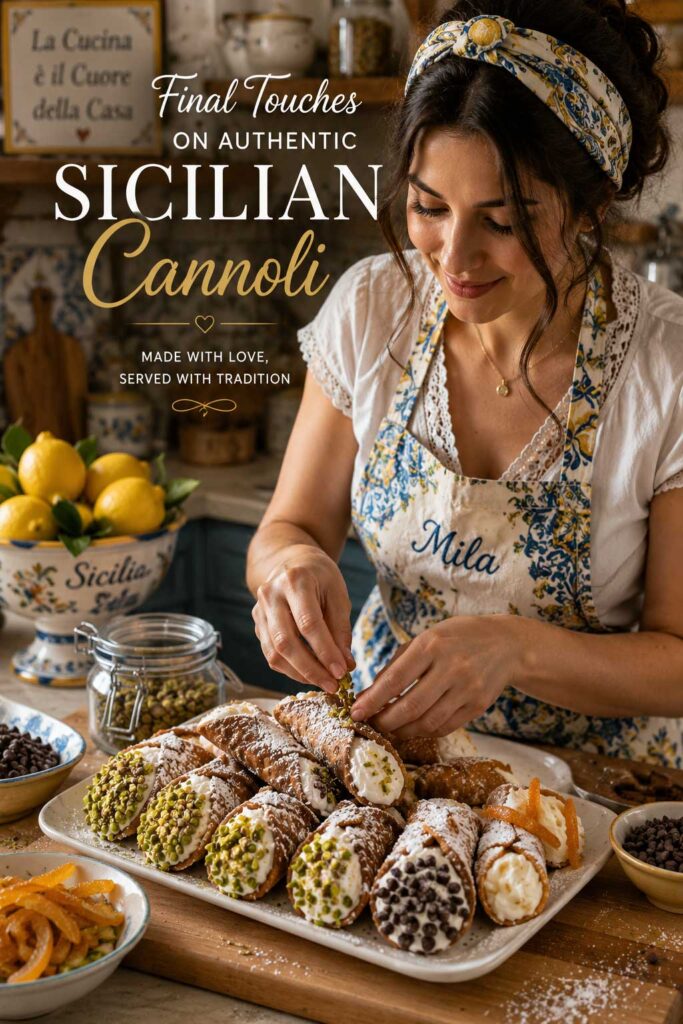
The texture of the shell is what separates truly great homemade cannoli from average versions. Authentic Sicilian cannoli should feel light, crisp, delicate, and slightly blistered rather than thick or greasy.
Roll the Dough Thin
Thin dough creates the signature crisp texture traditional cannoli are known for. Thick dough produces shells that feel heavy and hard instead of light and airy.
Drain Ricotta Properly
Excess moisture is one of the biggest enemies of good cannoli. Properly drained ricotta creates creamy filling while helping the shells stay crisp longer.
Fill Right Before Serving
Freshly filled cannoli always taste best. Waiting until the last moment preserves the contrast between crunchy shell and smooth ricotta filling.
Use Marsala Wine
Marsala wine adds authentic Sicilian bakery flavor while also helping create a lighter, crispier shell texture during frying.
Fry at the Correct Temperature
Maintaining proper oil temperature is extremely important.
Oil that is too cool can create greasy shells, while oil that is too hot may burn the pastry before it fully crisps. Steady frying temperature helps achieve the golden, blistered texture classic Sicilian cannoli are famous for.
Common Cannoli Mistakes to Avoid
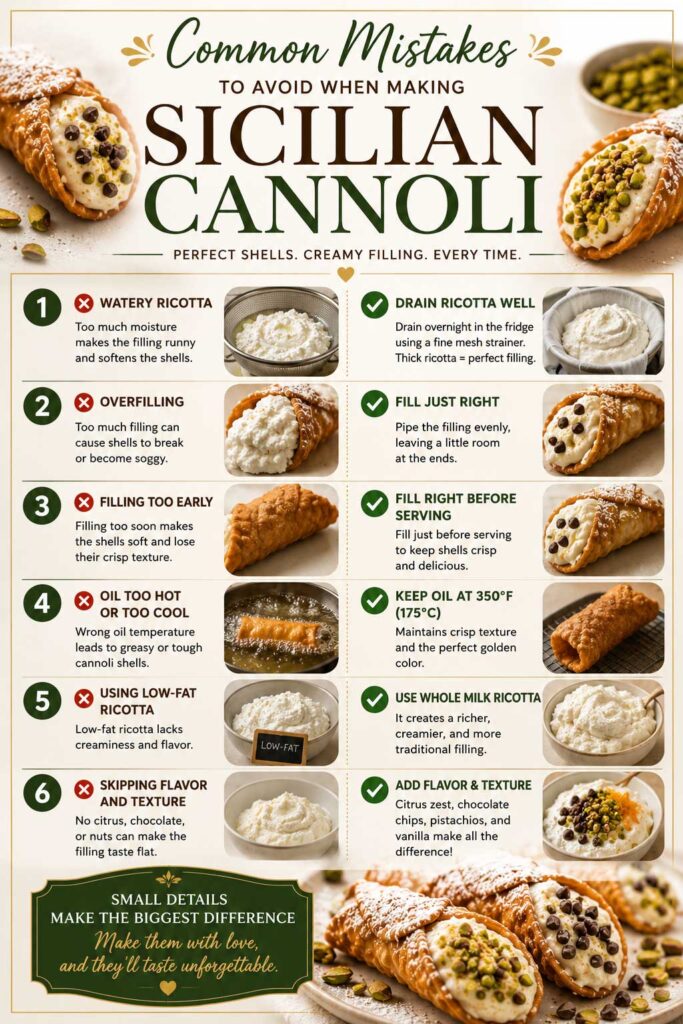
Even simple homemade cannoli can go wrong if a few important details are overlooked. Most cannoli problems come down to moisture, texture, or frying technique.
Using Wet Ricotta
Watery ricotta is one of the biggest mistakes when making cannoli filling. Excess moisture creates thin, runny filling that can quickly soften the pastry shells.
For the best texture, always strain ricotta before mixing the filling. Many Italian bakers drain ricotta overnight for especially creamy results.
Overfilling the Shells
Too much filling may look impressive at first, but it can overpower the delicate crisp shell and make cannoli feel overly heavy.
A balanced amount of filling creates the perfect contrast between crunchy pastry and creamy ricotta.
Filling Too Early
This is probably the most common cannoli mistake.
Once filled, the shells slowly absorb moisture from the ricotta filling and begin losing their crisp texture. For authentic texture, fill cannoli shortly before serving.
Rolling the Dough Too Thick
Authentic cannoli shells should feel light, delicate, and crisp.
If the dough is rolled too thick, the shells become dense, hard, and overly chewy instead of airy and crunchy.
Frying at Incorrect Temperature
Maintaining steady oil temperature is essential for proper cannoli texture.
Oil that is too cool can create greasy shells, while oil that is too hot may burn the outside before the pastry fully crisps. A steady frying temperature helps create that signature golden blistered shell traditional Sicilian cannoli are known for.
Easy Cannoli Variations
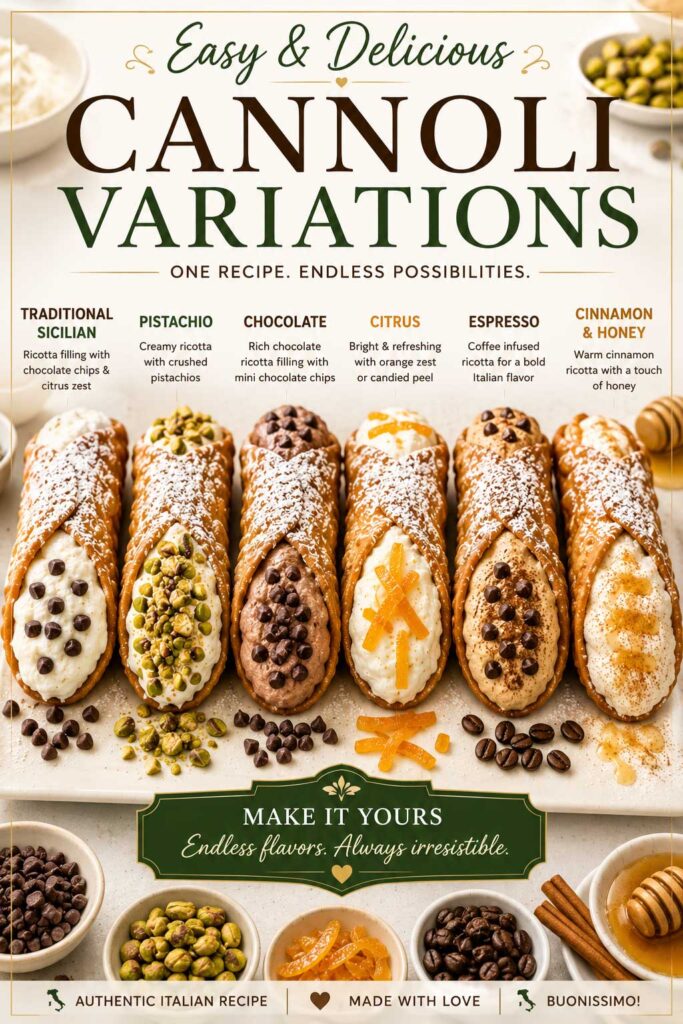
One of the best things about homemade cannoli is how easy they are to customize. While traditional ricotta cannoli remain the classic version, small ingredient changes can create completely different flavor profiles while still keeping the authentic Sicilian feel.
Chocolate Cannoli
Chocolate lovers can add cocoa powder directly into the cannoli shell dough or mix melted chocolate into the ricotta filling for a richer dessert with deeper flavor.
Pistachio Cannoli
Pistachio cannoli have become especially popular in modern Italian bakeries. Adding pistachio cream to the filling, along with crushed pistachios, creates a luxurious Mediterranean-style dessert with a beautiful color and nutty flavor that pairs well with other pistachio desserts.
Pistachios not only add beautiful color and texture, but they also provide healthy fats, antioxidants, and Mediterranean flavor.
Espresso Cannoli
A small amount of espresso powder mixed into the ricotta filling gives cannoli a deeper Italian café-style flavor that pairs perfectly with coffee after dinner or creamy homemade cappuccinos.
Mini Cannoli
Mini cannoli are perfect for holidays, parties, dessert platters, and entertaining because they are easier to serve and look especially elegant on dessert tables.
Citrus Cannoli
Extra orange zest or lemon zest brightens the filling and adds fresh Mediterranean flavor that balances beautifully with the creamy ricotta and crisp pastry shell.
What to Serve With Sicilian Cannoli
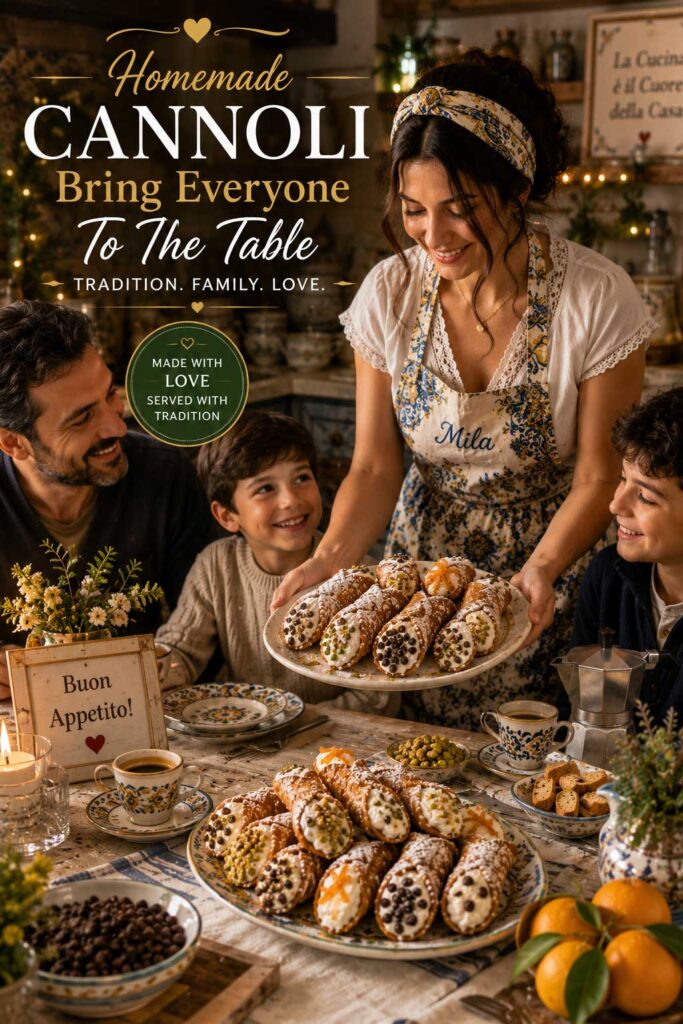
Sicilian cannoli pair beautifully with rich coffee drinks, light Mediterranean desserts, and elegant Italian-style dessert spreads.
Sicilian cannoli pair especially well with espresso, cappuccino, Italian coffee, dessert wine, fresh berries, gelato, and other elegant Mediterranean desserts.
Cannoli are the kind of dessert people often keep reaching for long after dinner is technically over.
The creamy ricotta filling and crisp pastry shells balance especially well with strong espresso and lightly bitter coffee drinks.
Homemade Sicilian cannoli also pair beautifully with espresso after large Italian-style family dinners and holiday meals.
Cannoli also look beautiful served as part of a larger Mediterranean dessert table alongside pastries, fresh fruit, chocolate desserts, pistachio-based sweets, and homemade gelato for holidays, dinner parties, and celebrations.
How to Store Cannoli
Proper storage makes a huge difference when it comes to maintaining the crisp texture authentic cannoli are known for.
To preserve the crisp texture, store the cannoli shells separately at room temperature while refrigerating the ricotta filling until ready to serve. Filling the shells shortly before serving helps prevent them from becoming soft.
Filled cannoli are usually best enjoyed within a few hours because the ricotta filling gradually softens the pastry shells over time.
Unfilled cannoli shells stay crisp much longer when stored in an airtight container at room temperature. The filling should remain refrigerated until ready to use.
Fresh cannoli are one of those desserts where texture changes surprisingly fast, which is why Italian bakeries usually fill them fresh throughout the day.
Because ricotta is a fresh dairy product, proper refrigeration is important for both texture and food safety.
This simple storage method helps homemade cannoli keep that perfect contrast between crunchy shell and creamy filling that makes traditional Sicilian cannoli so special.
Can You Make Cannoli Ahead of Time?
Yes — and this is actually the best way to prepare homemade cannoli without sacrificing texture.
Many people make:
- the cannoli shells one day ahead
- the ricotta filling one day ahead
Then everything gets assembled shortly before serving.
This method helps preserve the signature contrast between the crisp pastry shell and the creamy ricotta filling. If cannoli sit filled for too long, the shells slowly absorb moisture and become soft.
To preserve the crisp bakery-style texture, store the shells at room temperature in an airtight container while keeping the filling refrigerated separately until serving.
Many traditional Italian bakeries use this exact approach because freshly filled cannoli always taste lighter, crispier, and more authentic.
Why Homemade Cannoli Taste Better
There is a huge difference between freshly made homemade cannoli and mass-produced bakery versions that may have been sitting filled for hours.
Fresh homemade cannoli usually have crispier shells, fresher ricotta flavor, lighter sweetness, and a much better balance between creamy filling and delicate crunch compared to mass-produced bakery versions.
One of the biggest differences is the shell texture. Freshly fried cannoli shells stay light, crisp, and delicate with that signature blistered exterior traditional Italian bakeries are known for. Once shells sit too long after being filled, they gradually soften and lose the contrast that makes cannoli so satisfying.
The sound of a freshly crisp cannoli shell breaking on the first bite is part of what makes homemade versions feel so satisfying.
Homemade cannoli filling also tastes noticeably fresher because the ricotta remains creamy, clean, and lightly sweet rather than overly sugary or heavy.
The combination of crisp shell, cold ricotta filling, chocolate chips, citrus zest, and pistachios creates the kind of dessert that feels far more elegant and balanced than most store-bought versions.
Sicilian Cannoli recipe FAQ’s
Can I bake cannoli shells instead of frying?
Yes, you can bake cannoli shells instead of frying them. However, traditional fried shells create the most authentic texture with the crisp, blistered exterior Sicilian cannoli are known for.
Can I use mascarpone instead of ricotta?
Yes. Some modern cannoli recipes combine mascarpone and ricotta for an even richer and creamier filling. Traditional Sicilian cannoli usually rely mostly on ricotta cheese.
Why are my cannoli shells soft?
Soft cannoli shells usually happen because they were filled too early or because the ricotta filling contained too much moisture. Properly drained ricotta and last-minute filling make a huge difference in preserving crisp texture.
For the crispiest results, always drain the ricotta well and fill the shells shortly before serving.
Can cannoli be frozen?
Yes. Cannoli shells freeze surprisingly well when stored in an airtight container. The ricotta filling is usually best made fresh for the smoothest texture.
What oil is best for frying cannoli?
Neutral oils with high smoke points work best, including:
- vegetable oil
- canola oil
- peanut oil
These oils allow the pastry shells to fry evenly without overpowering the flavor.
How long do cannoli stay crispy?
Freshly filled cannoli are usually best within a few hours. Over time, the ricotta filling slowly softens the shells.
Many Italian bakeries fill cannoli to order specifically to preserve the crisp texture.
Are cannoli very sweet?
Traditional Sicilian cannoli are usually less sweet than many American bakery versions. Authentic recipes focus more on creamy ricotta flavor, delicate sweetness, and balanced texture rather than excessive sugar.
A Classic Italian Dessert Worth Making From Scratch
Once you taste freshly made homemade cannoli with crisp golden shells and creamy ricotta filling, it becomes easy to understand why this dessert stayed famous for generations across Sicily and beyond.
A truly great Sicilian cannoli recipe is all about texture and balance. The shell should stay light and crunchy while the filling remains smooth, creamy, and lightly sweet without feeling heavy. Small details like orange zest, chocolate chips, and crushed pistachios help create that authentic Italian bakery flavor people instantly recognize.
These are the kinds of desserts that naturally slow people down at the table. One cannoli usually turns into two while everyone quietly reaches for another with espresso or coffee nearby.
Whether you make them for holidays, family gatherings, dinner parties, or simply for the fun of traditional Italian baking, homemade cannoli always feel elegant, comforting, and unforgettable alongside other Mediterranean and Balkan-inspired desserts.
Did you make this Sicilian cannoli recipe?
If you enjoyed this Sicilian cannoli recipe, explore more Mediterranean desserts and comforting homemade sweets here on TastyBG for even more traditional recipes inspired by Mediterranean and Balkan kitchens.
If you make this recipe, tag @tastybg_ on Instagram and use #tastybg to share your homemade version.