

This Russian potato salad recipe, also known as Olivier salad, is one of the most beloved comfort foods across Eastern Europe and the Balkans. Made with tender potatoes, carrots, peas, eggs, pickles, and creamy mayonnaise, this classic salad is rich, satisfying, and perfect for holidays, celebrations, and family dinners.
At TastyBG, Mila grew up seeing large bowls of Olivier salad on festive tables long before the guests arrived. It was one of those dishes everyone expected to see during New Year celebrations, birthdays, and family gatherings, and somehow there were never any leftovers by the end of the evening.
For many families across Bulgaria, Serbia, North Macedonia, and Russia, no holiday table feels complete without a bowl of Russian potato salad sitting in the center. The creamy texture, colorful vegetables, and familiar flavors make it one of those recipes that instantly brings back memories of childhood celebrations and meals shared with loved ones.
If you enjoy traditional Balkan comfort foods, you’ll also love our Bulgarian Moussaka Recipe, another family favorite often served during gatherings and celebrations.
One of the reasons this Russian potato salad recipe has remained popular for generations is its simplicity. A handful of humble ingredients come together to create a dish that feels both comforting and special. Whether you’re making it for a holiday feast, a summer gathering, or a casual family dinner, Olivier salad is a timeless recipe that always seems to bring people back for another spoonful.
Why This Creamy Potato Salad Has Stayed Popular for Generations
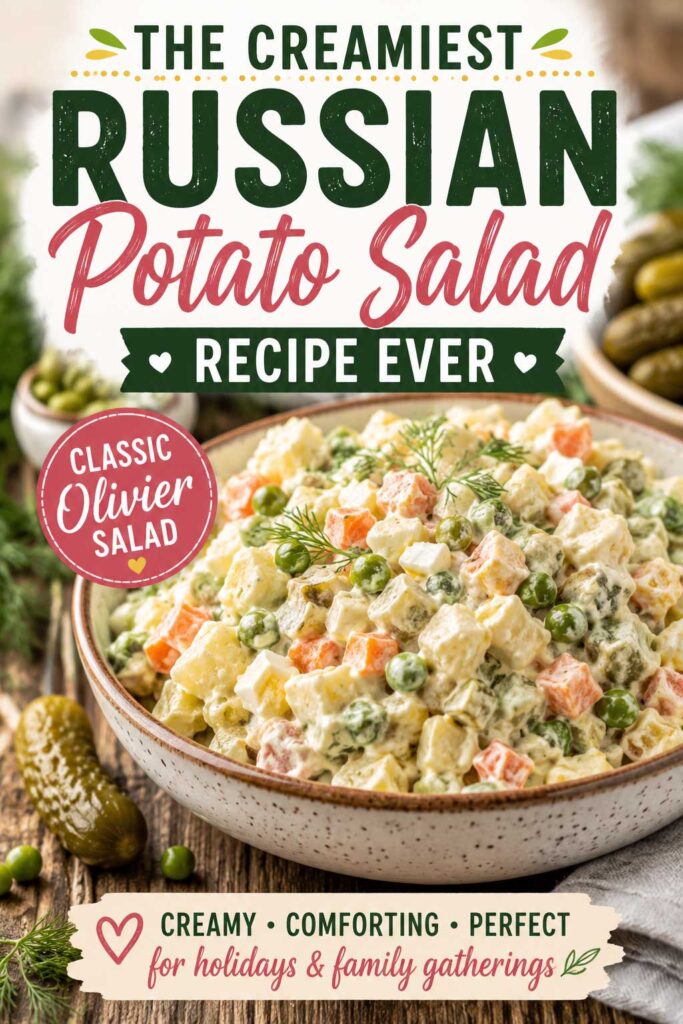
Some recipes come and go, but Olivier salad has remained a favorite for generations. Part of its appeal comes from its simplicity. With just a handful of everyday ingredients, Olivier salad creates something that feels comforting, satisfying, and special enough for any celebration.
A Flavor That Feels Familiar
The combination of tender potatoes, sweet peas, crunchy pickles, eggs, and creamy mayonnaise creates a balance of flavors and textures that people rarely grow tired of. Every bite feels familiar, which is one reason the salad is often associated with family traditions and childhood memories.
A Tradition Passed Down Through Generations
Across Eastern Europe and the Balkans, Olivier salad has become much more than a simple side dish. It is a staple of holiday tables, birthday celebrations, New Year gatherings, and special family meals. In many households, the recipe has been passed down through multiple generations, with each family adding its own small touches along the way.
A Practical Dish for Busy Celebrations
Another reason for its lasting popularity is practicality. The ingredients are affordable, easy to find, and simple to prepare. The salad can also be made ahead of time, which makes it especially useful during busy holidays and celebrations. In fact, many people believe it tastes even better after spending a night in the refrigerator, allowing the flavors to blend together.
Perhaps that’s why Russian potato salad continues to appear on tables year after year. It offers comfort, tradition, and a sense of nostalgia that few dishes can match, making it one of the most beloved salads throughout Eastern Europe and the Balkans.
What Is Russian Potato Salad (Olivier Salad)?
Russian potato salad, commonly known as Olivier salad, is a creamy cold salad made with potatoes, carrots, peas, eggs, pickles, mayonnaise, and sometimes diced meat or ham. It is one of the most recognizable and beloved comfort foods throughout Eastern Europe and the Balkans.
The salad is known for its creamy texture, colorful vegetables, and balanced flavor. Tender potatoes and eggs provide richness, sweet peas add freshness, and tangy pickles bring just enough contrast to keep every bite interesting. While recipes vary slightly from country to country and even from family to family, the core ingredients remain remarkably similar.
More Than Just a Potato Salad
Unlike many traditional potato salads, Olivier salad is typically prepared with finely diced ingredients that create a uniform texture throughout the dish. The result is a salad that feels rich and satisfying while still allowing each ingredient to contribute its own flavor.
Over the years, different regions have adapted the recipe to local tastes. Some families add ham or sausage, while others prefer a completely vegetarian version. Despite these variations, the salad’s role as a celebration food has remained largely unchanged.
A Tradition Found on Holiday Tables
Today, Russian potato salad is closely associated with holidays, family gatherings, and special occasions. It regularly appears on Christmas and New Year tables, at Easter celebrations, birthday parties, and festive family meals across Eastern Europe and the Balkans.
It is also commonly served alongside traditional Bulgarian moussaka during larger family gatherings.
Many families prepare large bowls in advance because the salad stores well and often tastes even better after spending a few hours in the refrigerator. It is also a popular addition to buffet tables and appetizer spreads, where it is served alongside fresh salads, breads, cheeses, and other traditional dishes.
Many families serve it alongside dishes like the Traditional Ajvar Recipe and fresh seasonal salads.
For many people, Olivier salad is more than just a side dish. It is a recipe connected to family traditions, holiday memories, and shared meals around the table. That combination of simplicity, comfort, and nostalgia is exactly why it continues to be enjoyed generation after generation.
The Story Behind Traditional Olivier Salad
Like many beloved traditional dishes, Olivier salad has a fascinating history that stretches back more than a century.
The original recipe was created in Moscow during the 1860s by Lucien Olivier, a Belgian-born chef who owned the famous Hermitage Restaurant. His version was considered a luxury dish and featured expensive ingredients such as game meat, caviar, crayfish, and a special dressing that remained a closely guarded secret.
From Luxury Dish to Family Favorite
As the recipe spread beyond restaurants and into home kitchens, families began adapting it using ingredients that were easier to find and more affordable. Potatoes, carrots, eggs, peas, pickles, and mayonnaise gradually replaced many of the original luxury ingredients.
Over time, these simpler versions became even more popular than the original. What started as an upscale restaurant dish eventually transformed into one of the most recognizable comfort foods throughout Russia, Ukraine, the Balkans, and much of Eastern Europe.
A Recipe That Evolved Across Generations
One of the reasons Olivier salad has survived for so long is its flexibility. Every family seems to have its own way of making it. Some recipes include ham or sausage, while others remain completely vegetarian. Some people prefer extra pickles for a tangier flavor, while others add more mayonnaise for a creamier texture.
Because the recipe is so adaptable, it naturally evolved as it traveled from one country to another and from one generation to the next.
Today, Olivier salad remains a staple of holiday tables and family celebrations across Eastern Europe and the Balkans. Although the ingredients may vary slightly from household to household, the comforting spirit of the dish remains the same—a simple recipe that brings people together and creates lasting memories around the table.
Why Families Across the Balkans Love This Salad So Much

Mila still remembers helping peel potatoes in the kitchen while the entire house smelled like holiday cooking and fresh baked bread. Long before the guests arrived, a large bowl of Russian potato salad was already sitting on the counter, slowly chilling and waiting for the celebration to begin.
For many families across Bulgaria, Serbia, North Macedonia, and other Balkan countries, Olivier salad is more than just a side dish. It is a tradition that brings people together around the table during holidays, birthdays, New Year celebrations, and family gatherings.
The salad became popular throughout the region because it is:
- Affordable to make
- Easy to prepare in large batches
- Filling and satisfying
- Perfect for holidays and special occasions
- Easy to customize with local ingredients
Many families also appreciate that the recipe can be prepared ahead of time, which makes holiday cooking much less stressful. In fact, some people believe Russian potato salad tastes even better the next day after all the flavors have had time to blend together.
That combination of simplicity, comfort, and tradition is exactly why Olivier salad continues to appear on Balkan tables generation after generation. Even today, one bite is often enough to bring back memories of family dinners, holiday celebrations, and recipes passed down from grandparents.
Ingredients You Need for Russian Potato Salad
One of the reasons this Russian potato salad recipe has remained popular for generations is that it relies on simple, everyday ingredients. While every family has its own variation, the classic combination creates the creamy, comforting flavor that makes Olivier salad so memorable.
Main Ingredients
- Potatoes
- Carrots
- Eggs
- Peas
- Dill pickles
- Mayonnaise
- Salt
- Black pepper
- Fresh dill (optional)
The potatoes provide the hearty base, while carrots and peas add color and subtle sweetness. Eggs contribute richness, and dill pickles bring the tangy flavor that helps balance the creamy mayonnaise dressing.
When combined, these humble ingredients create the classic texture and flavor that people throughout Eastern Europe and the Balkans know and love.
Optional Additions
Depending on family traditions and regional preferences, some versions may also include:
- Ham
- Bologna-style sausage
- Cooked chicken
- Diced apples
- Mustard
- Greek yogurt
- Green onions
- Fresh parsley
In Russia and parts of Eastern Europe, diced sausage is often considered traditional. Throughout the Balkans, however, many households prefer vegetarian versions that focus entirely on vegetables, eggs, and mayonnaise.
Some modern recipes replace part of the mayonnaise with Greek yogurt to create a lighter dressing while still maintaining the creamy texture that makes Olivier salad so satisfying.
No matter which variation you choose, the heart of the recipe remains the same: simple ingredients coming together to create one of the most beloved holiday salads in Eastern European and Balkan cuisine.
Choosing the Best Potatoes for Olivier Salad
The type of potato you choose can make a surprisingly big difference in the final texture of Russian potato salad. While the ingredients are simple, getting the potatoes right is one of the keys to making an authentic Olivier salad.
Waxy potatoes are generally the best choice because they hold their shape after cooking and stay firm when mixed with the dressing. This helps create the classic texture where every ingredient remains distinct rather than turning into a mashed mixture. According to the Potatoes USA potato guide, waxy potatoes are often preferred for salads because they maintain their structure after boiling.
Good Potato Choices for Olivier Salad
- Yukon Gold potatoes
- Red potatoes
- Yellow potatoes
- Other waxy potato varieties
These potatoes stay tender while maintaining their structure, making them ideal for salads and cold dishes.
Starchy potatoes can work in a pinch, but they tend to absorb more water and break apart more easily. When mixed with mayonnaise, they can become soft and mushy, which changes the texture of the finished salad.
Tips for Perfect Potatoes
Cook potatoes until just fork-tender. Overcooked potatoes can quickly become mushy once mixed with the dressing.
Allow potatoes to cool completely before dicing. This helps them retain their shape and texture.
Cut ingredients into evenly sized cubes. Uniform pieces create the classic Olivier salad appearance.
Mix gently. Aggressive stirring can break the potatoes and create a heavy texture.
Many experienced home cooks prefer to boil the potatoes with their skins on and peel them after cooling. This helps the potatoes retain their texture and prevents them from becoming waterlogged during cooking.
A little extra attention to the potatoes may seem like a small detail, but it is often the difference between an average potato salad and a truly great Russian potato salad recipe that tastes like it came straight from a family holiday table.
The Secret to Perfect Creamy Texture

What makes a truly great Russian potato salad recipe stand out is its texture. The best Olivier salads are creamy without being heavy, rich without feeling greasy, and packed with perfectly balanced flavors in every bite.
While the ingredients are simple, a few small techniques can make a huge difference in the final result.
Tips for the Perfect Creamy Texture
Dice ingredients evenly. Uniform pieces help create a balanced texture in every bite.
Let vegetables cool completely. Warm vegetables absorb too much dressing.
Use mayonnaise sparingly. The dressing should coat the ingredients, not overpower them.
Chill before serving. This allows the flavors to blend together.
Add plenty of pickles. They provide brightness and contrast to the creamy dressing.
One common mistake is mixing the salad while the potatoes are still warm. Warm vegetables can absorb too much dressing and become soft, creating a heavier texture instead of the light, creamy consistency that Olivier salad is known for.
Another secret many Balkan families use is preparing the salad several hours in advance. Chilling allows the flavors to blend together while helping the dressing thicken slightly, creating a smoother and more balanced texture.
Some home cooks also stir a small splash of pickle juice into the mayonnaise dressing. This simple addition adds a subtle tanginess that cuts through the richness and gives the salad an extra layer of flavor.
When prepared properly, every spoonful should contain creamy potatoes, tender vegetables, crunchy pickles, and just enough dressing to bring everything together without overpowering the ingredients. That’s the texture that keeps people coming back for seconds at family gatherings and holiday celebrations.
Step-by-Step Russian Potato Salad Recipe
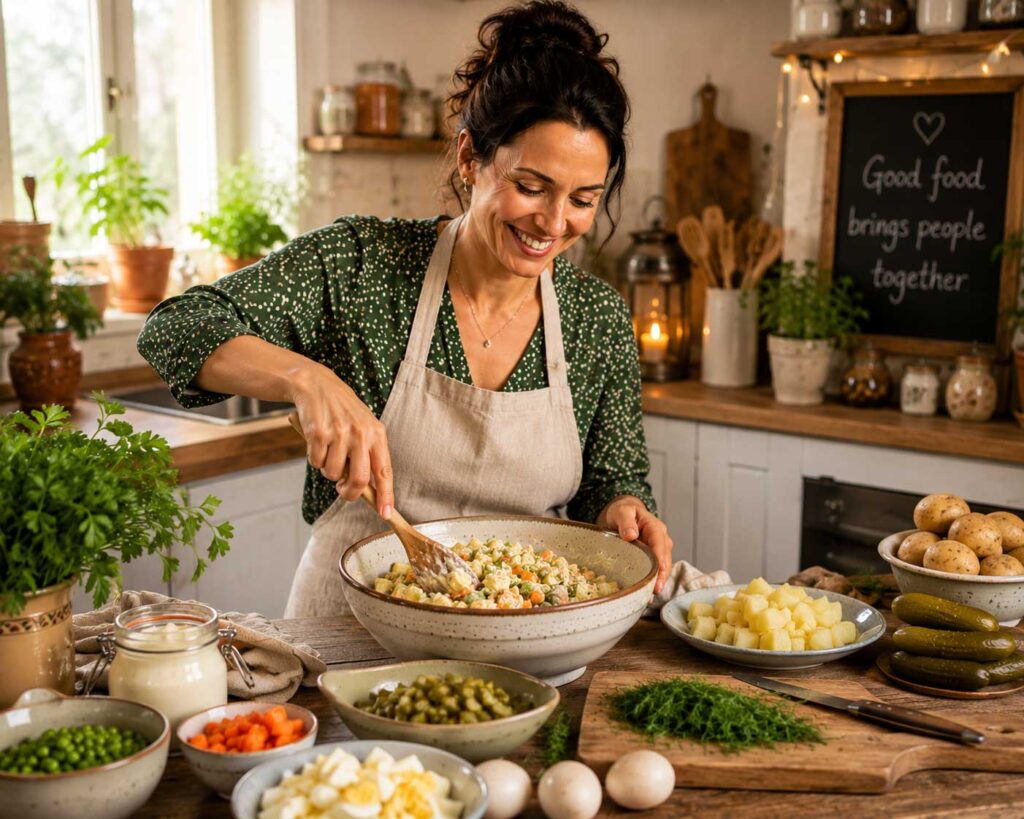
Making Russian potato salad recipe is surprisingly simple, but a few small details can make a big difference in the final texture and flavor. The goal is to create a salad that is creamy and satisfying while still allowing each ingredient to keep its shape.
Step 1: Cook the Potatoes and Carrots
Place the potatoes and carrots in a large pot and cover them with water. Bring to a gentle boil and cook until they are tender but not falling apart. Depending on their size, this usually takes about 20 to 30 minutes.
Be careful not to overcook the vegetables, as overly soft potatoes can turn the salad mushy.
Step 2: Boil the Eggs
While the vegetables are cooking, place the eggs in a separate saucepan and cover them with water. Bring to a boil, then cook for about 10 minutes until hard-boiled.
Transfer the eggs to cold water and allow them to cool completely before peeling.
Step 3: Cool Everything Completely
Once the potatoes, carrots, and eggs are cooked, allow them to cool fully before assembling the salad.
This step is important because warm ingredients can absorb too much dressing and affect the final texture.
Step 4: Dice the Ingredients
Peel the potatoes, carrots, and eggs if needed, then cut them into small, evenly sized cubes.
Dice the pickles into pieces similar in size to the vegetables. Uniform pieces help create the classic appearance and texture that Olivier salad is known for.
Step 5: Combine the Salad Ingredients
Add the diced potatoes, carrots, eggs, pickles, and peas to a large mixing bowl.
Gently toss everything together until evenly distributed.
Step 6: Add the Dressing
Add the mayonnaise and season with salt and black pepper to taste.
Using a large spoon or spatula, carefully fold the dressing into the vegetables until everything is lightly coated.
Step 7: Taste and Adjust
This is the perfect time to adjust the flavor. Some families prefer a little extra pickle for tanginess, while others enjoy a creamier salad with slightly more mayonnaise.
Feel free to customize it to your own taste.
Step 8: Chill Before Serving
Cover the bowl and refrigerate the salad for at least 2 hours before serving.
Many people believe Russian potato salad tastes even better the next day after the flavors have had time to blend together.
Step 9: Garnish and Serve
Just before serving, garnish with fresh dill if desired.
Serve chilled as part of a holiday spread, family dinner, appetizer platter, or alongside your favorite Balkan and Eastern European dishes.
Affiliate Disclosure: This article may contain affiliate links. If you purchase through these links, I may earn a small commission at no additional cost to you.
Essential Tools for Making Russian Potato Salad
Preparing Olivier salad is simple, but a few kitchen tools can make the process much faster and help create the classic texture that makes this dish so popular.
| Product | Why It’s Helpful | Check Price |
|---|---|---|
| Vegetable Chopper | Creates evenly diced potatoes, carrots, eggs, and pickles in seconds | Check Price on Amazon |
| Large Mixing Bowl Set | Perfect for combining large family-sized batches | Check Price on Amazon |
| Chef’s Knife | Makes clean, uniform cuts for better texture | Check Price on Amazon |
| Glass Meal Prep Containers | Keeps leftovers fresh and easy to store | Check Price on Amazon |
| Measuring Cups & Spoons | Helps maintain dressing consistency | Check Price on Amazon |
Russian Potato Salad Olivier

This Russian potato salad recipe, also known as Olivier salad, is a creamy and comforting Eastern European classic made with potatoes, carrots, eggs, peas, pickles, and mayonnaise. Perfect for holidays, family gatherings, and make-ahead meals, it's a timeless dish that has been enjoyed for generations.
- Cutting board
- Sharp knife
- Large mixing bowl
- Saucepan
- Measuring cups and spoons
- Storage container for chilling
- ¾ lbs ham ((cubed))
- 3 potatoes ((cooked and cubed))
- 3 carrots ((cooked and cubed))
- 6 boiled eggs
- 3 dill pickles ((cubed))
- 1 cup frozen fresh peas
- 1 sweet onion ((cubed))
- ½ english cucumber ((cubed))
- 1 cup mayo
- 1 pinch fresh dill (chopped (optional))
- salt and pepper
- 1-2 limes juice
Place the potatoes and carrots in a large pot, cover with water, and boil until fork-tender, about 20 to 30 minutes.
In a separate saucepan, boil the eggs for 10 minutes until hard-boiled.
Then peel the potatoes, remove the sheld from the eggs and let them cool.
Drain the peas and add it to a large bowl.
Cut the potatoes, cucumber, pickles, eggs into small cubes.
Chop the onion and add it to the bowl. You can use green onion instead of sweet onion.
Add the ingredients to the bowl and mix them with the mayonnaise.
Gently fold everything together until evenly coated.
Taste and adjust seasoning if needed.
Cover and refrigerate for at least 2 hours before serving.
Garnish with fresh dill and serve chilled.
For the carrots, you can use a can of cooked carrots if you do not have one you can cook them.
Be careful with salt, since mayonnaise, as well as Dijon mustard, contains a lot of salt.
- Yukon Gold or other waxy potatoes work best because they hold their shape after cooking.
- Allow all ingredients to cool completely before mixing for the best texture.
- Russian potato salad often tastes even better the next day after the flavors have had time to develop.
- For a lighter version, replace part of the mayonnaise with Greek yogurt.
- Some traditional variations include diced ham or bologna-style sausage.
Nutritional information should be considered an estimate only. Please consult with a nutritionist, registered dietitian, or physician for specific dietary or health-related questions.
For the best flavor and quality, we recommend using fresh, high-quality ingredients whenever possible, including organic produce and responsibly sourced foods.
Common Mistakes That Ruin Potato Salad
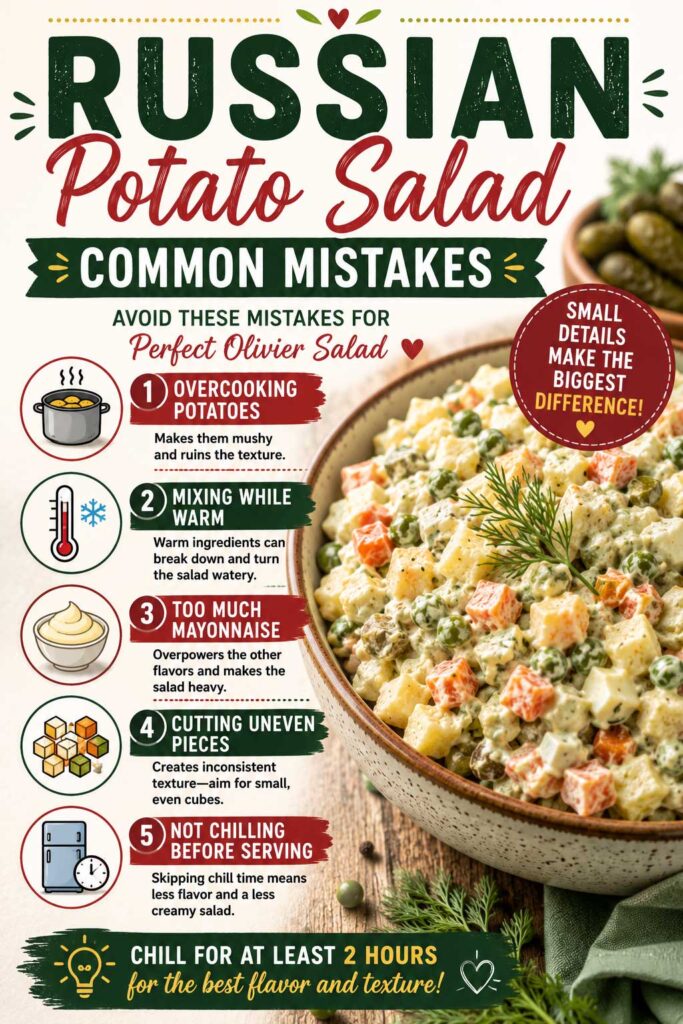
Even though Russian potato salad recipe uses simple ingredients, a few small mistakes can completely change the texture and flavor. Fortunately, most of these problems are easy to avoid once you know what to watch for.
| Mistake | Why It Causes Problems |
|---|---|
| Overcooking potatoes | Creates a mushy texture instead of distinct pieces |
| Mixing while ingredients are warm | Causes potatoes to break apart and absorb too much dressing |
| Using too much mayonnaise | Overpowers the vegetables and makes the salad heavy |
| Cutting uneven pieces | Creates an inconsistent texture in every bite |
| Not chilling before serving | Prevents the flavors from fully developing |
One of the most common mistakes is rushing the process. Many home cooks are tempted to mix the salad while the potatoes are still warm, but allowing everything to cool completely helps maintain the classic texture that makes Olivier salad so enjoyable.
Another mistake is adding excessive mayonnaise. The dressing should gently coat the ingredients rather than dominate them. A good Russian potato salad should still highlight the flavor of the vegetables, eggs, and pickles.
Taking a little extra time during preparation can make the difference between an average potato salad and one that guests remember long after the meal is over.
Traditional Variations of Olivier Salad Around Europe
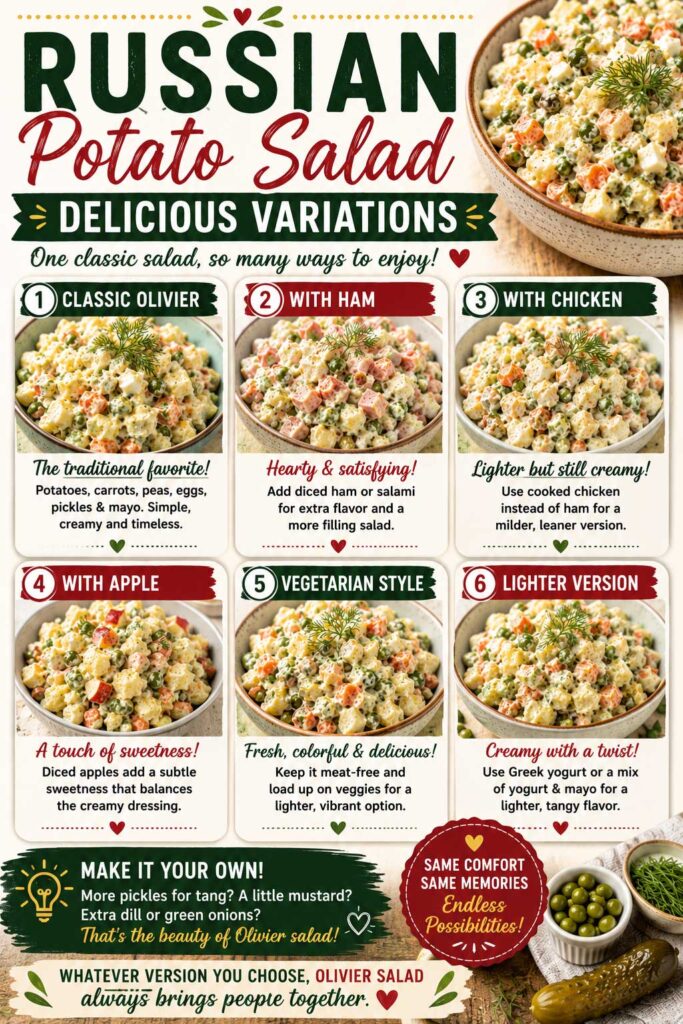
One of the reasons Olivier salad has remained popular for more than a century is its incredible versatility. While the basic ingredients stay largely the same, every country—and often every family—has its own unique version.
Across the Balkans, Russia, Ukraine, and other parts of Eastern Europe, the recipe is often adapted based on local traditions, available ingredients, and personal preferences. This means no two bowls of Russian potato salad are ever exactly alike.
Balkan-Style Olivier Salad
Some Balkan families add diced ham or salami for a richer version. In countries such as Bulgaria, Serbia, and North Macedonia, family recipes often vary from household to household, with each generation adding its own personal touch.
For another traditional salad commonly found on Balkan tables, try our Bulgarian Shopska Salad Recipe.
Russian and Ukrainian Versions
In Russia and Ukraine, Olivier salad frequently includes bologna-style sausage, which has become one of the most recognizable modern variations. These versions are especially common during New Year celebrations and holiday gatherings.
Vegetarian Olivier Salad
Many families prefer a meat-free version that focuses entirely on potatoes, carrots, peas, eggs, pickles, and mayonnaise. Vegetarian variations remain popular throughout the Balkans and Mediterranean regions.
Olivier Salad With Apples
Some households add diced apples to introduce a subtle sweetness and a bit of extra crunch. The apples create an interesting contrast with the tangy pickles and creamy dressing.
Lighter Mediterranean Variations
In Mediterranean regions, lighter versions using Greek yogurt, sour cream, or reduced-fat mayonnaise have become increasingly popular. These alternatives maintain the creamy texture while reducing overall richness.
Why So Many Variations Exist
The beauty of Olivier salad is its flexibility. Every family can adapt the recipe to local ingredients and personal preferences without losing the comforting flavor that makes this dish so beloved.
That adaptability is one reason the Russian potato salad recipe continues to survive across generations, cultures, and countries throughout Europe.
What to Serve With Russian Potato Salad
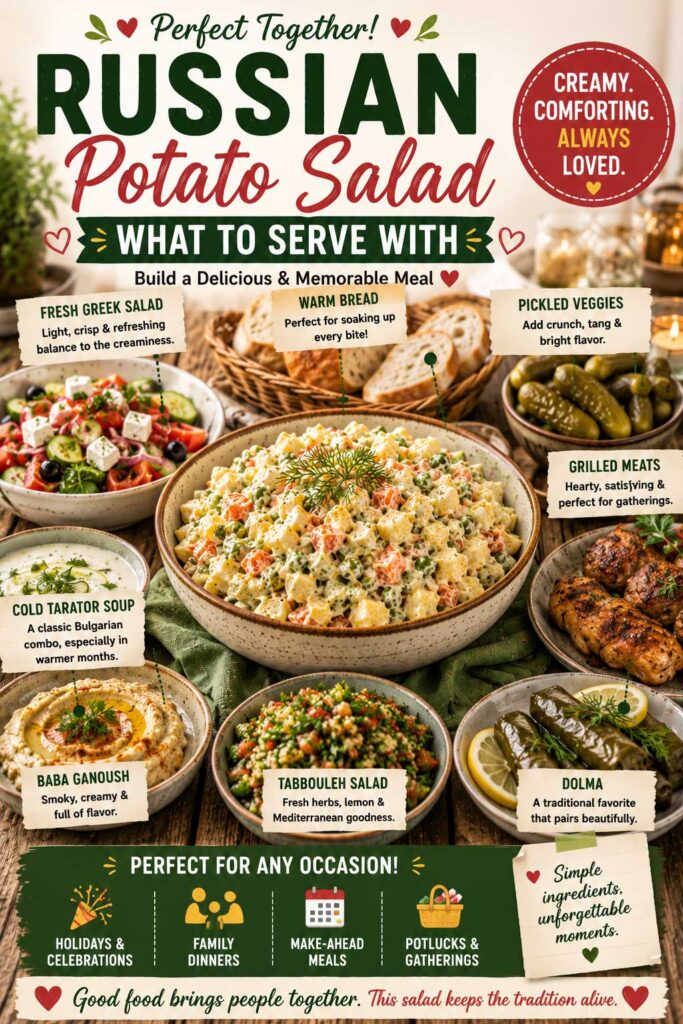
Russian potato salad is rich, creamy, and satisfying, which makes it a natural companion for many traditional Balkan and Eastern European dishes. Whether you’re preparing a holiday feast, a family dinner, or a casual summer gathering, Olivier salad fits comfortably alongside a variety of meals.
A Classic Addition to Holiday Tables
For many families, Russian potato salad is rarely served on its own. It usually appears as part of a larger holiday spread filled with roasted meats, fresh bread, pickled vegetables, and homemade appetizers. During Christmas, New Year celebrations, and family gatherings, it often shares the table with dishes that have been passed down through generations.
Perfect Alongside Grilled and Roasted Meats
The creamy texture of Olivier salad pairs beautifully with grilled meats and roasted poultry. The cool, tangy salad helps balance richer dishes and adds a refreshing contrast to smoky flavors. This combination is especially popular during summer barbecues and outdoor family gatherings throughout the Balkans.
Pairing Olivier Salad With Fresh Mediterranean Favorites
If you prefer a lighter meal, Russian potato salad also works wonderfully with fresh vegetable dishes. Serve it alongside this fresh Mediterranean Greek salad for a bright contrast, or add fresh tabbouleh salad to bring extra herbs and freshness to the table.
Many people also enjoy pairing it with cold Bulgarian tarator soup during the warmer months or serving it as part of a larger spread that includes smoky homemade baba ganoush and other traditional appetizers.
A Dish Made for Sharing
One reason Russian potato salad has remained so popular is its ability to bring people together. A large bowl placed in the center of the table naturally invites sharing, conversation, and second helpings. Whether served at a holiday celebration or a simple Sunday family meal, Olivier salad has a way of making the entire meal feel a little more special.
Traditional Serving Essentials for Holiday Gatherings
Russian potato salad is often prepared for holidays, celebrations, and large family meals. These serving essentials help present Olivier salad beautifully and make entertaining easier.
| Product | Why It’s Helpful | Check Price |
|---|---|---|
| Decorative Serving Bowl | Ideal for presenting Olivier salad at gatherings | Check Price on Amazon |
| Serving Spoon Set | Perfect for buffets and holiday tables | Check Price on Amazon |
| Glass Salad Bowls | Great for larger appetizer spreads | Check Price on Amazon |
| Wooden Serving Board | Beautiful presentation for breads and side dishes | Check Price on Amazon |
| Airtight Glass Containers | Convenient for preparing salad ahead of time | Check Price on Amazon |
How to Store Russian Potato Salad Properly
One of the great things about Russian potato salad is that it stores exceptionally well, which is one reason it has become a favorite for holidays and family gatherings. In fact, many people believe Olivier salad tastes even better the next day after the flavors have had time to blend together.
Store the salad in an airtight container in the refrigerator for up to 3 days. Because it contains mayonnaise and eggs, it should not be left at room temperature for extended periods, especially during warm weather or outdoor gatherings.
For the best flavor and texture, keep the salad chilled until serving and stir it gently before bringing it to the table. This helps redistribute the dressing and maintain the creamy consistency.
Freezing is generally not recommended, as mayonnaise tends to separate after thawing, which can significantly affect both the texture and appearance of the salad.
Many families prefer storing Olivier salad in glass containers because they help preserve freshness and prevent the salad from absorbing odors from other foods in the refrigerator.
With proper storage, this Russian potato salad recipe remains delicious for several days, making it a convenient make-ahead dish for busy holidays, celebrations, and meal prep.
Can You Make Olivier Salad Ahead of Time?
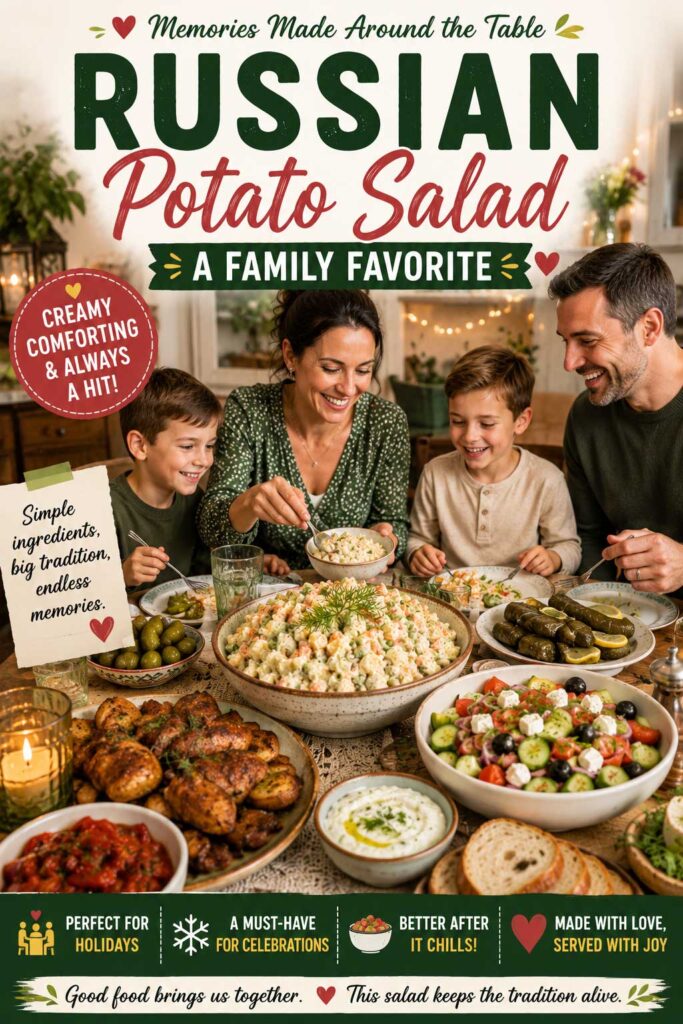
Absolutely, and many people would argue that Russian potato salad is actually better when made ahead of time.
One of the reasons Olivier salad became such a staple of holiday cooking across Eastern Europe and the Balkans is that it can be prepared well before guests arrive. In many households, the salad is made the evening before a celebration and left to chill overnight in the refrigerator.
As the salad rests, the flavors have time to blend together, creating a richer and more balanced taste. The potatoes absorb some of the dressing, the pickles add more flavor throughout the salad, and the overall texture becomes creamier and more cohesive.
This make-ahead convenience is especially helpful during busy holidays when families are preparing multiple dishes at once. Having a large bowl of Russian potato salad already prepared means one less thing to worry about on the day of the celebration.
For the best results, prepare the salad up to one day in advance, store it in an airtight container, and keep it refrigerated until serving. Before bringing it to the table, give it a gentle stir and, if needed, add a small spoonful of mayonnaise to refresh the texture.
It’s one of those rare dishes that not only holds up well overnight—it often tastes even better the next day.
Is Russian Potato Salad Healthy?
Russian potato salad can absolutely be part of a balanced diet when enjoyed in moderation. While it is often considered a comfort food, it also contains several nutritious ingredients that provide protein, fiber, vitamins, and minerals.
The concept of balanced eating is supported by recommendations from the USDA MyPlate guidelines, which encourage a variety of vegetables, proteins, and healthy carbohydrates.
The exact nutritional profile depends on the recipe, but traditional Olivier salad typically includes wholesome ingredients like potatoes, carrots, peas, eggs, and pickles, all of which contribute valuable nutrients.
| Nutrient | Main Source |
|---|---|
| Carbohydrates | Potatoes |
| Protein | Eggs |
| Fiber | Peas and carrots |
| Fats | Mayonnaise |
| Vitamins and minerals | Vegetables and eggs |
One of the benefits of Russian potato salad is that it combines vegetables, protein, and healthy carbohydrates in a single dish. The potatoes provide lasting energy, while eggs contribute protein and important nutrients. Peas and carrots add fiber, vitamins, and natural sweetness.
If you’re looking for a lighter version, many modern recipes replace part of the mayonnaise with Greek yogurt or use a lighter dressing. Some families also increase the amount of vegetables while reducing the dressing slightly to create a fresher and lower-calorie variation.
As with most traditional comfort foods, balance is key. When served alongside fresh salads, lean proteins, and other wholesome dishes, Russian potato salad can easily fit into a healthy and enjoyable eating pattern.
One reason this Russian potato salad recipe has remained popular for generations is that it offers both comfort and nourishment while using simple, everyday ingredients that most families already have on hand.
Frequently Asked Questions About Russian Potato Salad
Why is it called Olivier salad?
Olivier salad gets its name from Lucien Olivier, a Belgian-born chef who created the original version of the dish in Moscow during the 1860s. While the recipe has evolved significantly over the years, his name remains closely associated with this famous salad.
Can you make Russian potato salad ahead of time?
Yes, and many people actually prefer it that way. Allowing the salad to chill for several hours or overnight helps the flavors blend together and often improves the overall taste and texture.
What potatoes work best for Olivier salad?
Waxy potatoes such as Yukon Gold, red potatoes, or yellow potatoes are usually the best choice. They hold their shape well after cooking and help maintain the classic texture of Russian potato salad.
Can you freeze Russian potato salad?
Freezing is generally not recommended. The mayonnaise can separate after thawing, which affects both the texture and appearance of the salad. For best results, enjoy it fresh within a few days of preparation.
Food safety experts generally recommend avoiding freezing mayonnaise-based salads because the texture changes significantly after thawing. Learn more from the USDA Food Safety and Inspection Service.
Is Olivier salad served cold?
Yes. Traditional Russian potato salad is always served chilled. Refrigerating the salad before serving also helps the flavors develop and creates the creamy texture that Olivier salad is known for.
Can you make it without meat?
Absolutely. Many Balkan and Mediterranean versions are completely vegetarian and rely on potatoes, carrots, peas, eggs, pickles, and mayonnaise for flavor and texture.
How long does Russian potato salad last in the refrigerator?
When stored in an airtight container, Russian potato salad typically stays fresh for up to 3 days in the refrigerator. Always keep it chilled and avoid leaving it at room temperature for extended periods.
What makes Olivier salad different from regular potato salad?
Unlike many traditional potato salads, Olivier salad includes a combination of potatoes, carrots, peas, eggs, and pickles cut into small uniform pieces and mixed with a creamy dressing. The result is a richer and more substantial salad that is especially popular during holidays and celebrations.
Can I use Greek yogurt instead of mayonnaise?
Yes. Many modern recipes replace some or all of the mayonnaise with Greek yogurt for a lighter version. This creates a slightly tangier flavor while reducing the overall richness of the dish.
Why This Russian Potato Salad Recipe Never Goes Out of Style
Whether served during New Year celebrations, summer gatherings, or family dinners, this classic Olivier salad recipe continues bringing generations together around the table.
Its simple ingredients, creamy texture, and nostalgic flavor are exactly why Olivier salad remains one of the most beloved traditional dishes across Eastern Europe and the Balkans.
At TastyBG, recipes like this are about more than food. They represent family traditions, holiday memories, and the simple joy of sharing a meal with the people you love. From crowded celebration tables to quiet Sunday dinners, Olivier salad continues to connect generations through flavors that never go out of style.
Did You Make This Russian Potato Salad Recipe?
If you enjoyed this Russian potato salad recipe, be sure to explore more Mediterranean and Balkan-inspired recipes here on TastyBG. From fresh salads and traditional side dishes to comforting family meals and holiday favorites, you’ll find plenty of easy recipes made with simple ingredients and authentic flavors.
For a complete meal, try serving Olivier salad alongside a fresh Greek Salad, a refreshing Authentic Tarator Recipe, a flavorful Traditional Baba Ganoush Recipe, or a vibrant Tabbouleh Salad. The combination of creamy potato salad, fresh vegetables, and Mediterranean-inspired dishes creates a satisfying spread that’s perfect for family dinners, holidays, and special gatherings.
If you enjoy traditional recipes passed down through generations, don’t miss our Bulgarian Shopska Salad Recipe, Traditional Ajvar Recipe, and other classic Balkan dishes featured throughout TastyBG.
If you make this recipe, tag @tastybg_ on Instagram and use #tastybg to share your homemade Russian potato salad with us. We’d love to see your version of this classic Olivier salad recipe!