
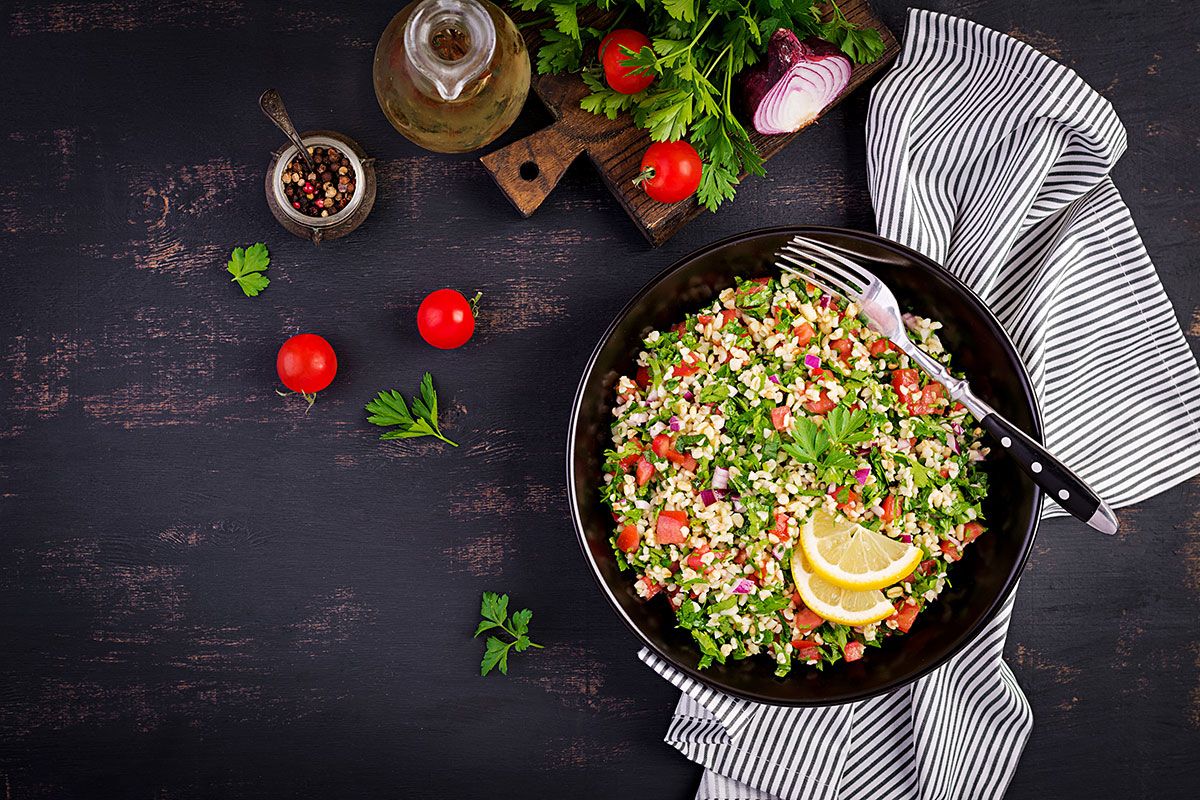
Fresh tabbouleh salad recipe is one of the brightest and most refreshing dishes in Mediterranean cuisine. Made with fresh parsley, mint, tomatoes, bulgur wheat, lemon juice, and olive oil, this authentic tabbouleh recipe is light, healthy, and packed with vibrant flavor.
Unlike many modern versions that rely heavily on grains, traditional tabbouleh is actually a parsley-forward salad where fresh herbs take center stage. The bulgur adds texture, while the parsley, mint, and lemon provide the fresh, vibrant flavor that makes this Mediterranean classic so special.
Whether you’re looking for a healthy side dish, a light lunch, or a colorful addition to a mezze platter, tabbouleh is always a wonderful choice. It pairs beautifully with grilled meats, warm pita bread, hummus, baba ganoush, and other Mediterranean favorites.
The best part is that tabbouleh salad recipe is surprisingly easy to make at home using simple, everyday ingredients.
For many families across the Mediterranean and the Middle East, tabbouleh is more than just a salad. It is a celebration of fresh seasonal ingredients, shared meals, and simple cooking that brings people together around the table. One bite delivers the bright, refreshing flavors that have made this beloved dish a favorite for generations.
If you enjoy fresh Mediterranean salads made with simple ingredients and vibrant flavors, this tabbouleh salad recipe deserves a place on your table.
Why This Tabbouleh Salad Recipe Is So Popular Every Summer
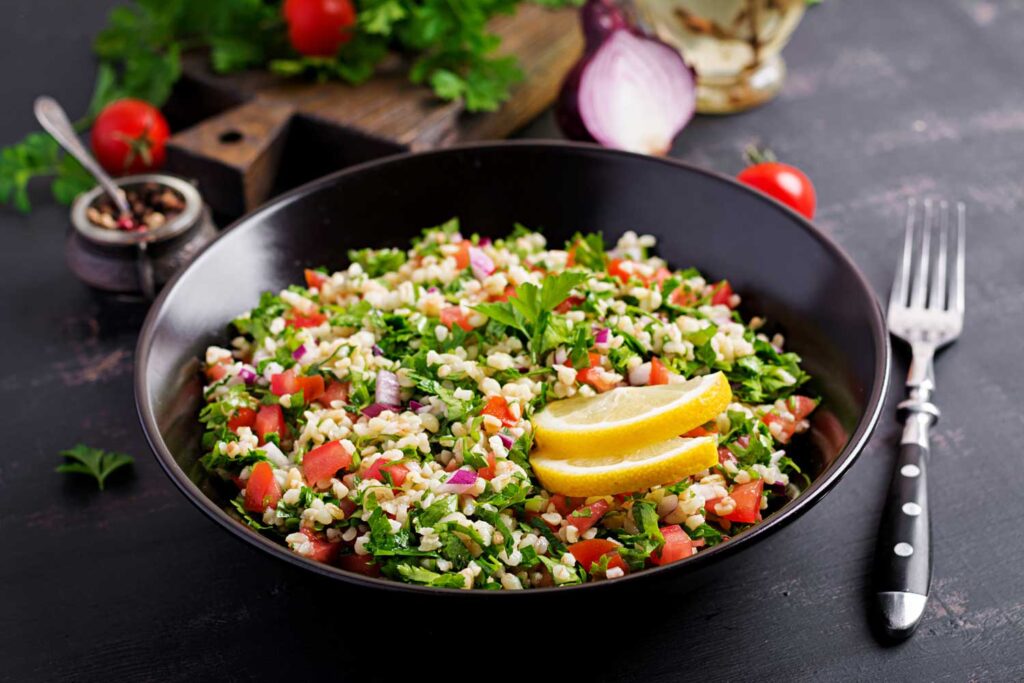
There is a reason tabbouleh appears on so many Mediterranean tables once the weather becomes warm. With its abundance of fresh herbs, juicy vegetables, and bright citrus flavor, it is the perfect salad for hot days when lighter meals are most appealing.
The combination of cooling parsley, ripe tomatoes, fresh mint, lemon juice, and olive oil creates a dish that feels incredibly refreshing. Unlike heavy pasta salads or mayonnaise-based side dishes, tabbouleh tastes clean, vibrant, and full of fresh seasonal flavor.
Perfect for Warm Weather
Tabbouleh is especially popular during the summer because it is served chilled or slightly cool. The fresh herbs and citrus dressing provide a refreshing contrast to grilled foods and outdoor meals.
A Natural Fit for Mediterranean Meals
Throughout the Mediterranean, tabbouleh is often served alongside grilled meats, warm pita bread, hummus, baba ganoush, falafel, and yogurt-based dishes. Its bright flavor helps balance richer foods while adding freshness to the table.
Great for Many Occasions
Its versatility makes tabbouleh a favorite for:
- Summer dinners
- Mediterranean mezze platters
- Healthy lunches
- BBQ gatherings
- Meal prep
- Vegetarian meals
- Picnics and outdoor events
Fresh, Colorful, and Inviting
Beyond its flavor, tabbouleh is also visually appealing. The vibrant green parsley, red tomatoes, and fresh herbs create a colorful salad that instantly brightens any meal.
Whether served as a side dish, part of a mezze spread, or a light lunch on its own, tabbouleh captures everything people love about Mediterranean summer cooking—fresh ingredients, simple preparation, and bright, refreshing flavors.
During hot summer afternoons, tabbouleh is often served alongside grilled meats, warm pita bread, hummus, baba ganoush, and cooling yogurt-based dishes.
What Makes This Traditional Tabbouleh Salad Recipe Different From Other Salads
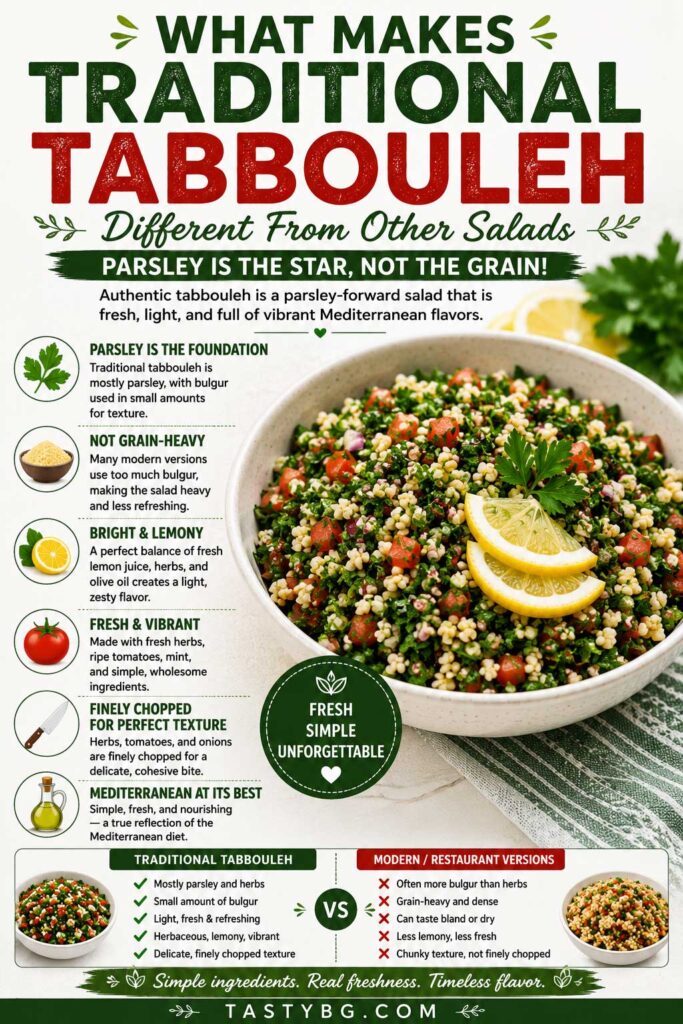
One of the biggest misconceptions about tabbouleh is that it is primarily a grain salad. While bulgur wheat is an important ingredient, authentic tabbouleh is actually a parsley salad at its core.
In traditional recipes, fresh parsley makes up the majority of the dish, while bulgur is used in smaller amounts to provide texture. This creates a salad that feels light, fresh, and herb-forward rather than heavy or grain-dominated.
Parsley Comes Before Bulgur
Many restaurant versions outside the Mediterranean contain far more bulgur than traditional recipes. While these versions can still be delicious, they often lose the fresh, vibrant character that makes authentic tabbouleh so special.
Traditional tabbouleh focuses on:
- Fresh parsley
- Fresh mint
- Ripe tomatoes
- Lemon juice
- Olive oil
- A small amount of fine bulgur
A Bright and Refreshing Flavor
A true traditional tabbouleh should taste:
- Herbaceous
- Lemony
- Fresh
- Light
- Slightly tangy
- Vibrant
No single ingredient should overpower the others. Instead, the flavors should blend together into a refreshing and balanced salad.
Delicate Texture Matters
Authentic tabbouleh is also known for its finely chopped texture. The herbs, tomatoes, and onions are cut into small pieces so every bite contains a little of everything. The result is a salad that feels delicate and cohesive rather than chunky.
Fresh Herbs Make the Difference
In many Mediterranean homes, the quality of the herbs matters more than anything else in the recipe. Fresh parsley and mint provide the flavor, color, and aroma that define traditional tabbouleh.
This emphasis on fresh herbs, vegetables, olive oil, and whole foods is what separates tabbouleh from many other grain-based salads and fits naturally into a Mediterranean diet. One bite should taste bright, fresh, and full of garden flavors rather than simply tasting like wheat or grains.
The Secret to Authentic Tabbouleh Salad Recipe Flavor
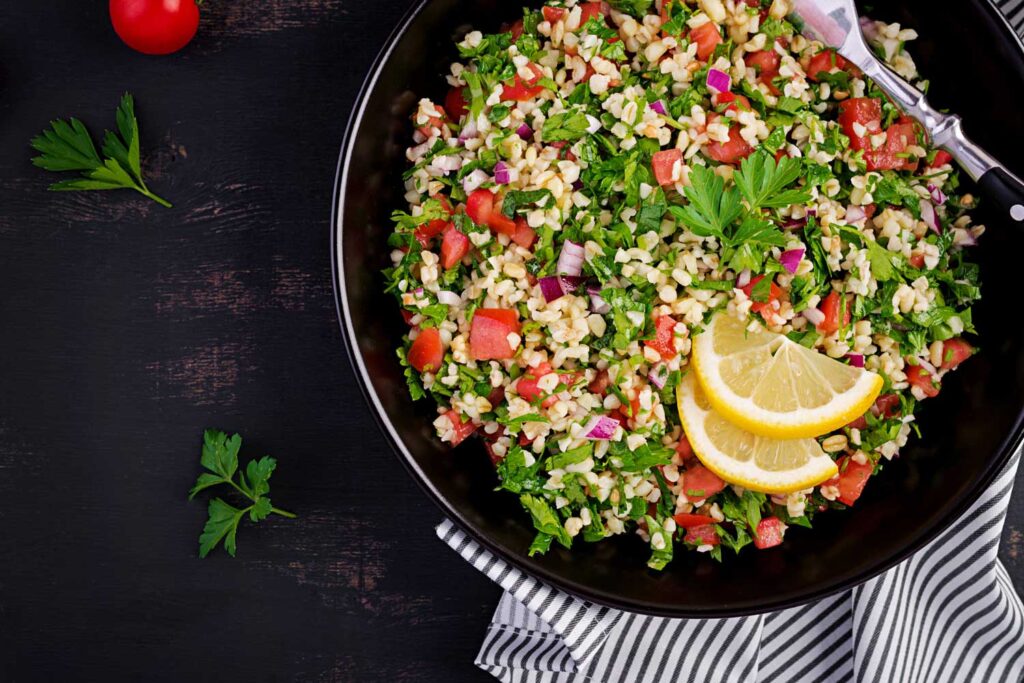
The secret to authentic tabbouleh is freshness.
Because the recipe contains only a handful of ingredients, the quality of each one matters. Fresh parsley, mint, lemon juice, ripe tomatoes, and good olive oil work together to create the bright, refreshing flavor that makes tabbouleh so beloved throughout the Mediterranean.
A good tabbouleh should never taste dry, bland, or overly grain-heavy. Instead, every bite should feel light, juicy, lemony, and full of fresh herb flavor.
Focus on Fresh Ingredients
Traditional tabbouleh relies on simple ingredients, so freshness is essential. Fresh herbs should be vibrant and fragrant, tomatoes should be ripe and flavorful, and lemon juice should always be freshly squeezed whenever possible.
Finely Chop the Herbs
Authentic tabbouleh is known for its delicate texture. Finely chopping the parsley, mint, tomatoes, and onions helps create a balanced bite where all the flavors blend together naturally.
Use Fresh Lemon Juice
Fresh lemon juice provides the bright acidity that gives tabbouleh its signature flavor. It adds freshness and helps highlight the herbs without overpowering them.
Dry the Parsley Thoroughly
After washing the herbs, make sure they are completely dry before chopping. Excess moisture can dilute the dressing and leave the salad watery instead of crisp and refreshing.
Let the Salad Rest Before Serving
Allowing the salad to rest for 15 to 20 minutes before serving gives the bulgur and herbs time to absorb the dressing. This simple step helps the flavors come together beautifully.
Balance the Lemon and Olive Oil
The dressing should be bright and refreshing without being overly acidic. A proper balance of lemon juice and extra virgin olive oil creates the smooth, vibrant flavor that authentic tabbouleh is known for.
Use Ripe Tomatoes
Even the tomatoes matter. Ripe, flavorful tomatoes add natural sweetness and moisture that balance the acidity of the lemon juice and complement the fresh herbs perfectly.
When these small details come together, the result is a tabbouleh that tastes fresh, vibrant, and wonderfully authentic—exactly as it has been enjoyed around Mediterranean tables for generations.
Choosing the Freshest Herbs for This Tabbouleh Salad Recipe
Fresh herbs are the heart of traditional tabbouleh, so choosing the best ones can make a noticeable difference in both flavor and texture.
Choose Flat-Leaf Parsley
Flat-leaf parsley is traditionally preferred because it has a stronger flavor and a softer texture than curly parsley. It is easier to chop finely and blends more naturally into the salad.
Don’t Forget the Fresh Mint
Fresh mint adds a cooling flavor that beautifully balances the lemon juice and gives tabbouleh its signature refreshing taste. Even a small amount can brighten the entire dish.
What to Look for When Buying Parsley
For the best results, choose parsley that is:
- Bright green in color
- Fresh and fragrant
- Crisp and upright
- Free from yellowing leaves
- Free from wilted stems
Fresh, vibrant herbs will provide the clean flavor and beautiful appearance that authentic tabbouleh is known for.
Properly Wash and Dry the Herbs
Before chopping, wash the parsley and mint thoroughly to remove any dirt or debris. Just as important, make sure the herbs are completely dry before using them.
Excess moisture can water down the lemon dressing and leave the salad soggy instead of light and refreshing. A salad spinner or clean kitchen towel works well for drying herbs quickly and effectively.
The fresher the herbs, the brighter and more authentic your tabbouleh will taste. In a recipe this simple, ingredient quality truly makes all the difference.
Why Parsley Is the True Star of Tabbouleh
Many people are surprised to learn that authentic tabbouleh is not primarily a grain salad—it’s actually a parsley salad.
In traditional recipes, parsley isn’t used as a garnish or finishing touch. It is the foundation of the entire dish and the ingredient that gives tabbouleh its distinctive color, texture, and fresh flavor.
More Than Just a Garnish
Unlike many salads where herbs play a supporting role, parsley takes center stage in tabbouleh. Large amounts of finely chopped parsley create the vibrant green appearance and refreshing taste that make this Mediterranean classic so recognizable.
Fresh Flavor in Every Bite
Parsley brings a bright, clean flavor that pairs beautifully with fresh mint, tomatoes, lemon juice, and olive oil. Together, these simple ingredients create a salad that feels light, refreshing, and full of life.
Naturally Rich in Nutrients
Parsley is also one of the reasons tabbouleh is often considered one of the healthiest Mediterranean salads. It naturally contains:
- Vitamin C
- Vitamin K
- Antioxidants
- Fiber
- Essential minerals
The Heart of Authentic Tabbouleh
Combined with olive oil, fresh vegetables, and lemon juice, parsley transforms a handful of simple ingredients into a nutritious and flavorful dish. In fact, one of the easiest ways to recognize authentic tabbouleh is by looking at the ratio of herbs to grains—the parsley should always be the star of the bowl.
That’s what gives traditional tabbouleh its fresh, vibrant character and timeless Mediterranean appeal.
Ingredients You Need for Traditional Tabbouleh Salad
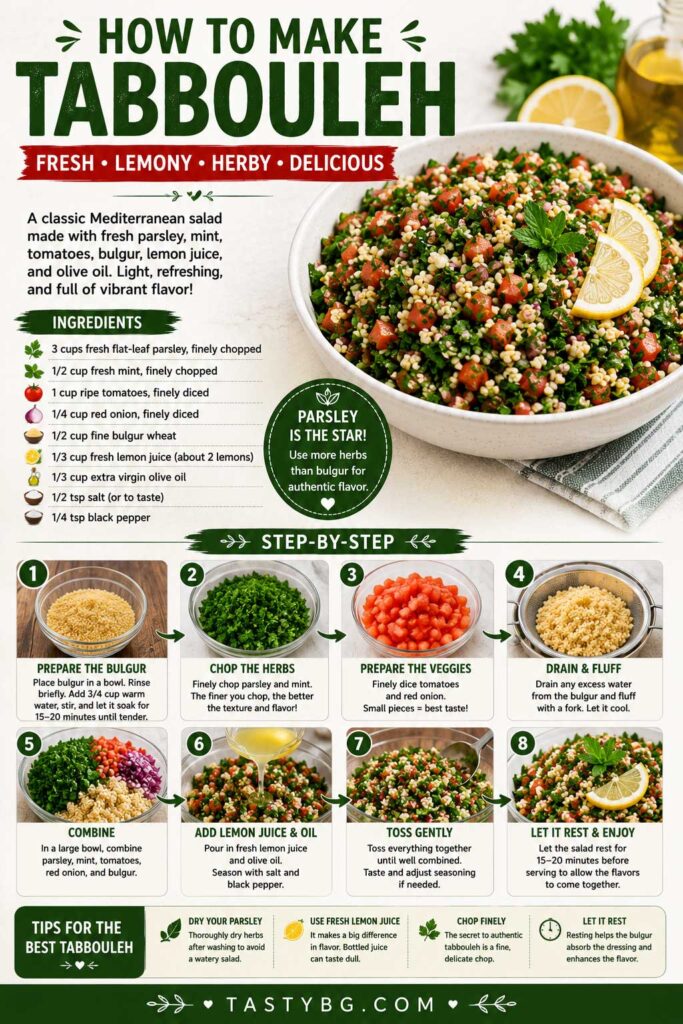
One of the reasons tabbouleh has remained a Mediterranean favorite for generations is its simplicity. With just a handful of fresh ingredients, you can create a salad that is bright, refreshing, and full of flavor.
Fresh Parsley
Parsley is the most important ingredient in authentic tabbouleh. Traditional recipes use generous amounts of finely chopped flat-leaf parsley, giving the salad its signature color, texture, and fresh herbal flavor.
Fresh Mint
Fresh mint adds a cooling Mediterranean flavor that perfectly complements the parsley and lemon juice. Even a small amount can make a noticeable difference.
Fine Bulgur Wheat
Fine bulgur provides texture without overpowering the herbs. It absorbs the dressing well and helps create the delicate balance that traditional tabbouleh is known for.
Traditional tabbouleh is made with fine bulgur wheat, which adds texture while allowing the fresh herbs to remain the star of the dish.
Tomatoes
Ripe tomatoes add natural sweetness, color, and moisture to the salad. For the best flavor, choose fresh, juicy tomatoes that are in season whenever possible.
Green Onion
Green onions bring mild sharpness and depth without overwhelming the fresh herbs. They add just enough savory flavor to balance the bright ingredients.
Fresh Lemon Juice
Freshly squeezed lemon juice gives tabbouleh its signature brightness and refreshing taste. It helps tie all of the ingredients together while enhancing the flavors of the herbs and vegetables.
Extra Virgin Olive Oil
A good-quality extra virgin olive oil adds richness and authentic Mediterranean flavor. Since the dressing is simple, using quality olive oil makes a noticeable difference.
Salt and Black Pepper
Simple seasoning helps highlight the freshness of the ingredients without masking their natural flavors. A small amount is all you need to bring everything together.
The beauty of traditional tabbouleh lies in its simplicity. When you start with fresh, high-quality ingredients, every bite tastes bright, vibrant, and incredibly refreshing.
Best Bulgur Wheat for Tabbouleh Salad Recipe Success
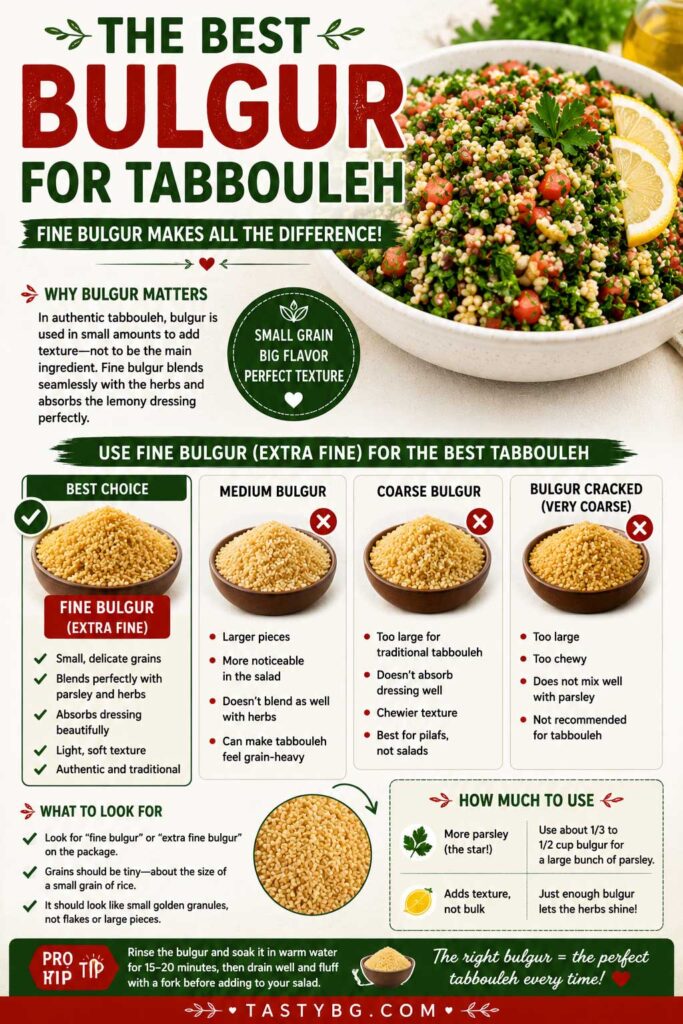
Choosing the right bulgur can make a noticeable difference in the texture of your tabbouleh.
Why Fine Bulgur Works Best
Traditional tabbouleh is made with fine bulgur wheat because it softens quickly and blends naturally into the salad without overpowering the fresh herbs. Its delicate texture allows the parsley, mint, tomatoes, and lemon dressing to remain the stars of the dish.
Avoid Coarse Bulgur
Coarse bulgur creates a heavier, grain-forward salad that feels less authentic. Because the grains are larger, they can dominate the texture and distract from the bright, herbaceous character that makes tabbouleh so refreshing.
Remember: Herbs Come First
One of the hallmarks of authentic tabbouleh is that it is primarily a parsley salad rather than a grain salad. Many traditional recipes use only a small amount of bulgur, allowing the fresh parsley and mint to take center stage.
Gluten-Free Alternative
If you need a gluten-free option, quinoa makes an excellent substitute for bulgur wheat. While the flavor and texture are slightly different, quinoa still creates a light, fresh salad that pairs beautifully with the classic lemon and herb dressing.
A good rule of thumb is simple: the finer the bulgur, the closer your tabbouleh will be to the traditional Mediterranean version enjoyed for generations.
Affiliate Disclosure: This article may contain affiliate links. If you purchase through these links, I may earn a small commission at no additional cost to you.
Kitchen Tools That Make Tabbouleh Easier
Making authentic tabbouleh is simple, but a few helpful kitchen tools can save time and make preparation much easier. These favorites help with chopping herbs, squeezing fresh lemon juice, and serving the salad beautifully.
| Product | Why It Works | Best For | Check Price |
|---|---|---|---|
| Herb Chopper Knife | Speeds up parsley preparation | Large batches | Check Price on Amazon |
| Glass Salad Bowl Set | Beautiful Mediterranean presentation | Serving guests | Check Price on Amazon |
| Citrus Juicer | Makes fresh lemon juice quickly | Authentic flavor | Check Price on Amazon |
Fresh Tabbouleh Salad Recipe
Now that you know what makes authentic tabbouleh so special, let’s make this fresh and flavorful Mediterranean classic step by step.
Tabbouleh Salad
This Middle Eastern Tabbouleh salad is so quick and easy to prepare!
- Large bowl
- Cutting board
- Sharp knife
- 1 cup fine bulgur wheat
- 4 cups fresh flat-leaf parsley (finely chopped (minimum))
- ½ cup fresh mint (finely chopped)
- 3 medium ripe tomatoes (finely diced)
- 1 small red onion (finely diced)
- Juice of 2 large lemons
- ½ cup extra virgin olive oil
- ¼ tsp sea salt (or to taste)
- Freshly ground black pepper (to taste)
Place the bulgur wheat in a bowl and rinse briefly under cold water. Drain well.
- Cover the bulgur with hot water and let it soak for 15–20 minutes, or until tender. Drain any excess liquid and fluff with a fork.
- Finely chop the parsley, mint, tomatoes, and red onion.
- Add the prepared vegetables and herbs to a large mixing bowl.
- Add the soaked bulgur, lemon juice, olive oil, salt, and black pepper.
- Toss everything together until well combined.
- Taste and adjust the seasoning, lemon juice, or olive oil as needed.
- Cover and refrigerate for at least 30 minutes before serving to allow the flavors to blend.
Serve chilled or slightly cool.
If you do not have bulgur wheat you can use quinoa or couscous.
- Traditional tabbouleh is primarily a parsley salad, not a grain salad.
- Fine bulgur wheat works best for authentic texture.
- For the freshest flavor, use freshly squeezed lemon juice.
- Tabbouleh can be made several hours ahead and often tastes even better after chilling.
- For a gluten-free version, substitute the bulgur wheat with cooked and cooled quinoa.
Once you try this tabbouleh salad recipe, you’ll understand why it remains one of the most beloved Mediterranean salads.
Nutritional information should be considered an estimate only and may vary based on ingredient brands, preparation methods, and portion sizes. Always consult a nutritionist, registered dietitian, or healthcare professional for specific dietary or health-related advice.
Whenever possible, use fresh, high-quality ingredients, including organic produce and minimally processed foods, for the best flavor and overall quality.
Common Mistakes That Ruin a Tabbouleh Salad Recipe
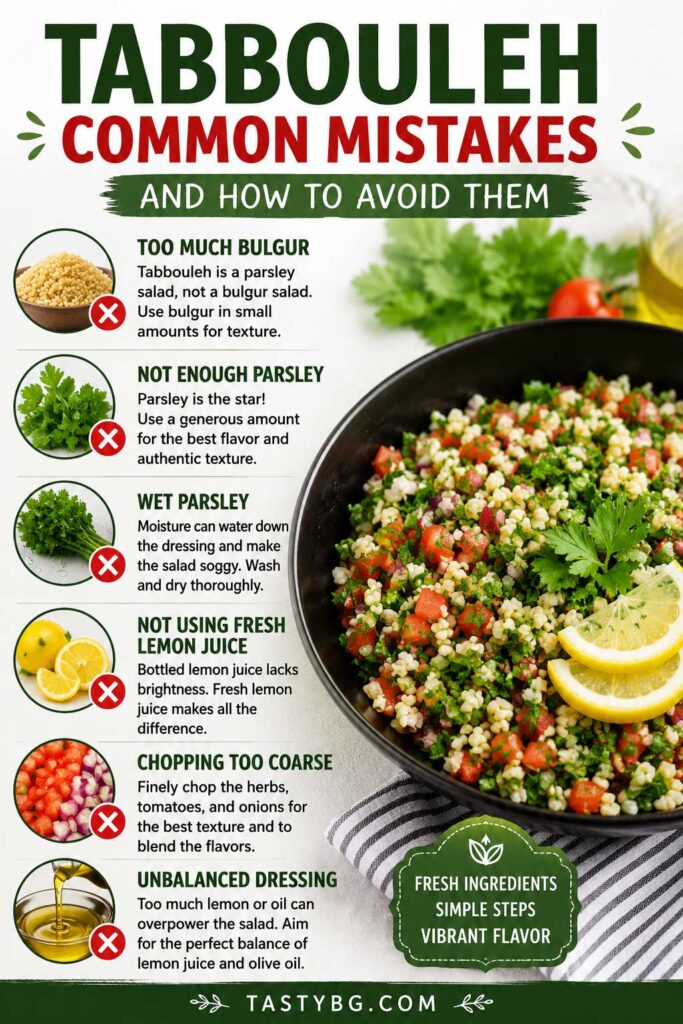
Even though tabbouleh is a simple salad, a few common mistakes can affect its flavor and texture. Avoiding these issues will help you create a fresher, more authentic Mediterranean salad every time.
Using Too Much Bulgur
One of the most common mistakes is treating tabbouleh like a grain salad. Traditional tabbouleh is herb-forward, with parsley as the star ingredient and bulgur used mainly for texture.
Not Drying the Herbs Properly
Fresh parsley should always be washed and dried thoroughly before chopping. Excess moisture can dilute the dressing and leave the salad watery or soggy.
Chopping the Ingredients Too Large
Authentic tabbouleh is known for its delicate texture. Finely chopping the parsley, mint, tomatoes, and onions helps ensure every bite contains a balanced mix of flavors.
Using Bottled Lemon Juice
Fresh lemon juice provides the bright, vibrant flavor that makes tabbouleh so refreshing. Bottled lemon juice often lacks the same freshness and can make the salad taste flat.
Skipping the Resting Time
Allowing the salad to rest for 15 to 20 minutes before serving gives the herbs and bulgur time to absorb the dressing. This simple step helps the flavors blend together beautifully.
Using Low-Quality Olive Oil
Because tabbouleh contains only a handful of ingredients, the quality of the olive oil matters. A good extra virgin olive oil adds richness and enhances the fresh Mediterranean flavor of the salad.
Overloading the Salad With Extras
While variations can be delicious, adding too many ingredients can overwhelm the traditional balance of parsley, mint, tomatoes, lemon juice, and bulgur. Sometimes the simplest version is the most flavorful.
By avoiding these common mistakes, you’ll create a tabbouleh salad that is light, fresh, vibrant, and much closer to the traditional Mediterranean version enjoyed for generations.
How to Keep Your Tabbouleh Salad Recipe Fresh and Crisp
One of the best things about tabbouleh is that it can be prepared ahead of time while still tasting fresh and vibrant. In fact, many people believe the flavor improves after chilling because the herbs have more time to absorb the lemon juice and olive oil.
Store It Properly
Store leftover tabbouleh in an airtight container in the refrigerator for up to 2 to 3 days. Keeping the salad well sealed helps preserve its freshness and prevents the herbs from drying out.
Prevent Excess Moisture
Because parsley and tomatoes naturally release moisture over time, tabbouleh may become softer as it sits. If you are preparing the salad in advance, consider keeping the tomatoes separate and mixing them in just before serving.
Refresh Leftovers Before Serving
If your tabbouleh has been refrigerated overnight, give it a quick stir before serving. Adding a small handful of freshly chopped parsley or an extra squeeze of lemon juice can help restore its bright flavor and texture.
Serve Chilled for the Best Flavor
Tabbouleh is best served chilled or slightly cool. The refreshing herbs, citrus, and vegetables taste especially vibrant when the salad has had time to rest in the refrigerator for a few hours.
Many people actually enjoy tabbouleh even more the next day because the flavors blend together beautifully while remaining light and refreshing.
One of the advantages of tabbouleh is that it can be made ahead of time and enjoyed over several days.
What to Serve With Tabbouleh Salad
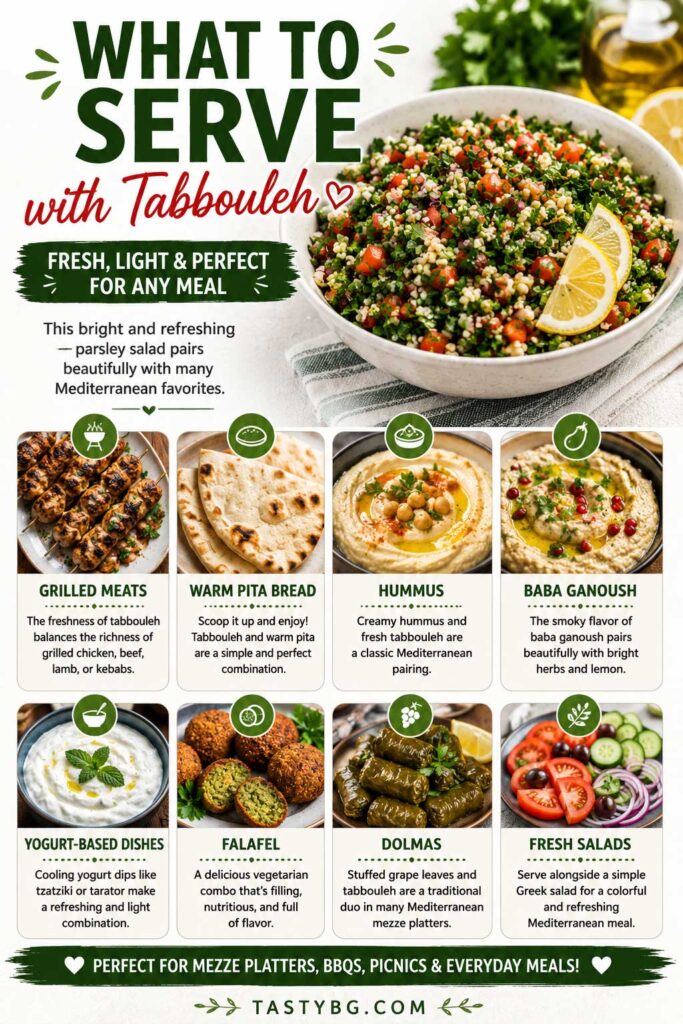
Tabbouleh pairs beautifully with many Mediterranean and Balkan dishes. Its fresh herbs, bright lemon flavor, and light texture make it a versatile side dish that complements everything from grilled meats to vegetarian mezze platters.
Grilled Chicken
Simple grilled chicken pairs perfectly with tabbouleh because the fresh herbs and citrus dressing add brightness to every bite.
Lamb Kebabs
Juicy lamb kebabs are a classic pairing. The richness of the meat balances the light and refreshing flavors of the salad.
Grilled Vegetables
Zucchini, eggplant, peppers, and onions bring smoky Mediterranean flavor that works beautifully alongside fresh tabbouleh.
Warm Pita Bread
Soft, warm pita bread is perfect for scooping up tabbouleh and creating a simple Mediterranean-style meal.
Hummus
Creamy hummus and fresh tabbouleh are a timeless combination often found on mezze platters throughout the Mediterranean and Middle East.
Baba Ganoush
The smoky flavor of roasted eggplant complements the bright herbs and lemon in tabbouleh. This pairing is especially popular as part of a mezze spread.
Falafel
Crispy falafel and fresh tabbouleh create a satisfying vegetarian meal packed with flavor, texture, and protein.
Yogurt Dips
Cooling yogurt-based dips provide a refreshing contrast to the citrusy herbs and vegetables in the salad.
Mediterranean Rice Dishes
Tabbouleh can also be served alongside rice-based dishes for a larger Mediterranean-inspired feast.
Build a Mediterranean Mezze Platter
Tabbouleh works wonderfully as part of a mezze platter with olives, cheeses, roasted peppers, fresh vegetables, hummus, and warm bread. The combination creates a colorful spread that is perfect for sharing.
If you enjoy fresh Mediterranean vegetable salads, you may also love Greek Salad. For cooling summer dishes, try a refreshing yogurt soup like Tarator. Tabbouleh also pairs beautifully with Traditional Baba Ganoush Recipe, while Bulgarian Kufteta makes an excellent choice for a heartier Mediterranean-inspired dinner.
Easy Variations of Tabbouleh Salad Recipe Around the Mediterranean
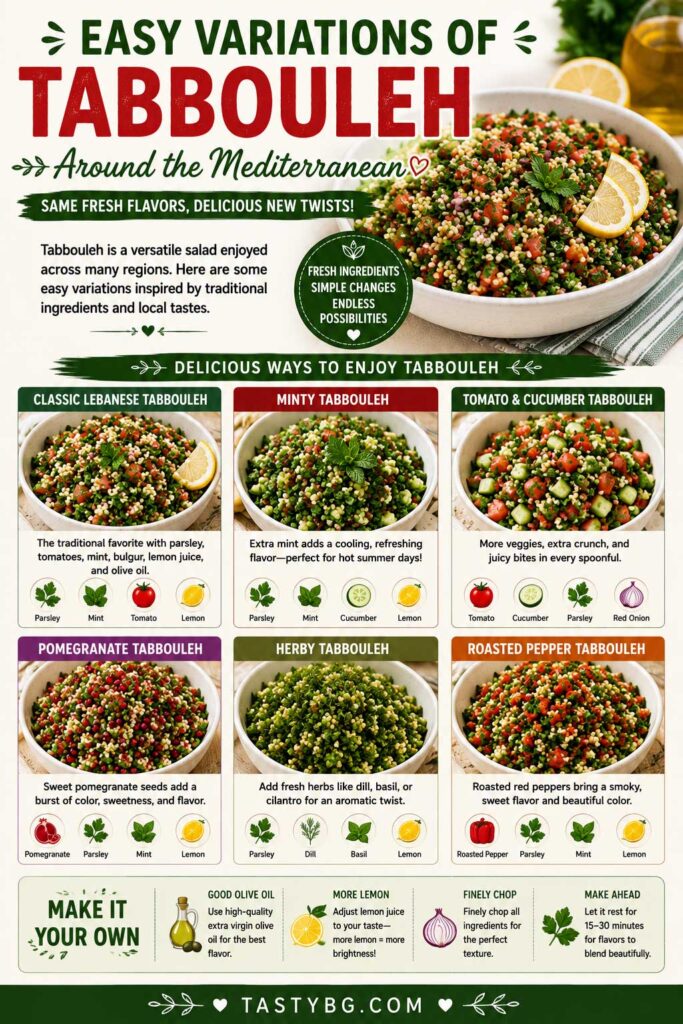
Different regions prepare tabbouleh slightly differently, often adjusting the balance of herbs, grains, and vegetables based on local traditions and personal preference.
Cucumber Tabbouleh
Adding finely diced cucumber creates an even more refreshing salad with extra crunch and moisture, making it especially popular during hot summer months.
Extra Mint Tabbouleh
Some families increase the amount of fresh mint for a cooler, more aromatic flavor that pairs beautifully with grilled meats and Mediterranean mezze.
Pomegranate Tabbouleh
Pomegranate seeds add bursts of sweetness and color while providing a delicious contrast to the lemony herbs.
Quinoa Tabbouleh
Quinoa is a popular gluten-free alternative to bulgur wheat and offers additional protein while maintaining a similar texture.
Couscous Tabbouleh
Some modern versions replace bulgur with couscous for a slightly softer texture and milder flavor.
Lemon Lover’s Tabbouleh
For those who enjoy bright citrus flavors, extra lemon juice creates a tangier and more refreshing salad.
Spicy Tabbouleh
Finely chopped chili peppers or red pepper flakes can add a gentle kick that complements the fresh herbs beautifully.
Chickpea Tabbouleh
Adding chickpeas increases the protein content and transforms tabbouleh into a more filling lunch or light dinner.
No matter the variation, the heart of a great tabbouleh remains the same: plenty of fresh parsley, vibrant herbs, quality olive oil, and bright lemon flavor. Every family eventually develops its own preferred balance of herbs, citrus, and grains, making each version unique.
Some Mediterranean-inspired versions are even served alongside Mediterranean roasted pepper spreads for additional smoky flavor.
Is Tabbouleh Healthy?
Tabbouleh is widely considered one of the healthiest Mediterranean salads. Made primarily with fresh parsley, tomatoes, mint, lemon juice, and olive oil, it delivers plenty of flavor while remaining light and refreshing.
| Nutrient | Main Source |
|---|---|
| Fiber | Parsley and bulgur |
| Healthy Fats | Olive oil |
| Vitamin C | Parsley and lemon juice |
| Antioxidants | Fresh herbs and tomatoes |
| Minerals | Parsley and vegetables |
Because the salad relies heavily on fresh ingredients rather than processed foods, it fits naturally into a healthy Mediterranean-style eating pattern. The combination of herbs, vegetables, healthy fats, and whole grains makes tabbouleh both nutritious and satisfying.
If you enjoy healthy Mediterranean meal prep recipes, tabbouleh is another excellent option that can be prepared in advance and enjoyed throughout the week.
One of the biggest benefits of traditional tabbouleh is that it is naturally packed with fresh parsley, which provides vitamins, antioxidants, and vibrant flavor in every bite. When prepared with quality ingredients and enjoyed as part of a balanced meal, tabbouleh can be a delicious way to add more vegetables and fresh herbs to your diet.
Another reason this tabbouleh salad recipe is so popular is its combination of fresh herbs, vegetables, and healthy fats.
Much of tabbouleh’s nutritional value comes from parsley, which is rich in vitamins, antioxidants, and other beneficial plant compounds.
Best Ingredients for Authentic Mediterranean Flavor
The secret to exceptional tabbouleh is using a few simple ingredients of the highest quality. Fresh herbs, good olive oil, and authentic bulgur can make the difference between an ordinary salad and one that tastes truly Mediterranean.
| Product | Why It Works | Best For | Check Price |
|---|---|---|---|
| Extra Virgin Olive Oil | Rich Mediterranean flavor | Dressing | Check Price on Amazon |
| Organic Fine Bulgur Wheat | Traditional texture | Authentic preparation | Check Price on Amazon |
| Sea Salt Grinder | Cleaner finishing flavor | Seasoning | Check Price on Amazon |
Frequently Asked Questions About Tabbouleh
Is Tabbouleh Healthy?
Yes. Traditional tabbouleh is packed with fresh herbs, vegetables, olive oil, and fiber. Because it relies on minimally processed ingredients, it is often considered one of the healthiest Mediterranean salads.
Is Tabbouleh Gluten Free?
Traditional tabbouleh contains bulgur wheat, which is made from wheat and is not gluten free. If you need a gluten-free alternative, quinoa is a popular substitute that provides a similar texture.
Can You Make Tabbouleh Ahead of Time?
Yes. Tabbouleh can be prepared several hours in advance and stored in the refrigerator. Many people find that the flavor improves after chilling because the herbs have time to absorb the lemon and olive oil dressing.
What Is the Difference Between Tabbouleh and Couscous Salad?
Tabbouleh is primarily a herb-based salad made with large amounts of parsley, fresh vegetables, and a small amount of bulgur. Couscous salads are usually grain-focused and contain a much higher proportion of couscous than herbs.
How Long Does Tabbouleh Last in the Fridge?
Fresh tabbouleh will typically stay fresh for 2 to 3 days when stored in an airtight container in the refrigerator. Stir the salad before serving, as some natural moisture may collect at the bottom.
Can You Freeze Tabbouleh?
Freezing is not recommended. Fresh parsley, tomatoes, and other vegetables lose their texture after thawing, resulting in a watery and less flavorful salad.
What Do You Eat With Tabbouleh?
Tabbouleh pairs well with grilled chicken, falafel, hummus, baba ganoush, warm pita bread, grilled vegetables, and Mediterranean-style mezze platters. It can also be enjoyed as a light lunch on its own.
Why Is My Tabbouleh Watery?
Watery tabbouleh is usually caused by not drying the parsley thoroughly after washing or by using overly juicy tomatoes. Properly drying the herbs and draining excess tomato liquid helps keep the salad fresh and crisp.
Can Tabbouleh Be Served as a Main Dish?
Yes. While tabbouleh is traditionally served as a side dish, many people enjoy it as a light lunch or main meal. Adding chickpeas, grilled chicken, or falafel can make it even more filling.
Bring Fresh Mediterranean Flavor to Your Table
Fresh tabbouleh salad recipe is one of the simplest yet most refreshing Mediterranean dishes you can make at home.
With fresh parsley, mint, lemon juice, olive oil, and ripe tomatoes, this authentic Mediterranean parsley salad delivers incredible brightness and flavor while staying healthy and light.
Whether served as part of a mezze platter, summer dinner, healthy lunch, or Mediterranean gathering, this tabbouleh salad brings freshness, vibrant color, and bright Mediterranean flavor to any table.
Its simplicity is exactly what makes it timeless. One bowl is often all it takes to understand why this beloved Mediterranean classic has remained a favorite for generations.
Did You Make This Tabbouleh Salad Recipe?
If you enjoyed this Tabbouleh Salad Recipe, be sure to explore more Mediterranean and Balkan-inspired recipes here on TastyBG. From refreshing salads and healthy meal prep ideas to traditional dips, grilled favorites, and wholesome vegetable dishes, you’ll find plenty of easy recipes made with fresh ingredients and authentic flavors.
For a complete Mediterranean-style meal, try serving tabbouleh alongside our Greek Salad, Traditional Baba Ganoush Recipe, Authentic Falafel Recipe, or Mediterranean Ajvar Chicken Bowl. These recipes pair beautifully with tabbouleh and create a colorful table full of fresh herbs, vegetables, and bold flavors.
For more healthy Mediterranean recipes, be sure to explore our Healthy Shopska Salad Meal Prep, Bulgarian Kyopolou Recipe, Traditional Tarator Recipe, and Crispy Halloumi Lutenitsa Sandwich.
If you make this Tabbouleh Salad Recipe, tag @tastybg_ on Instagram and use #tastybg to share your homemade version with us. We’d love to see how you bring this fresh, lemony Mediterranean classic to your table!