
Bulgarian Kyopolou Recipe is one of those traditional Balkan recipes that proves roasted vegetables do not need complicated ingredients to become incredibly flavorful. Made with roasted eggplant, sweet peppers, tomato, garlic, olive oil, vinegar, and fresh herbs, this classic Bulgarian spread delivers smoky richness, fresh brightness, and deep homemade flavor in every bite.
Kyopolou is usually served cold or at room temperature as a spread, dip, salad, or side dish. Traditional versions are built around roasted eggplant and garlic, often combined with roasted peppers, tomatoes, parsley, and just enough vinegar or lemon juice to balance the smoky vegetables.
Eggplant is the star ingredient in this recipe, and the National Eggplant Council eggplant guide offers additional information about selecting, storing, and cooking eggplants at home.
Across Bulgaria and other parts of the Balkans, Kyopolou is especially popular during late summer and early autumn when peppers and eggplants are at their peak. Many families roast huge batches of vegetables outdoors, filling kitchens and gardens with the unmistakable smoky aroma that makes homemade Balkan spreads feel so nostalgic and comforting.
The texture is softer and more eggplant-forward than many other Balkan pepper spreads, which makes Kyopolou feel especially rich and satisfying while still staying fresh and light enough for everyday meals.
Why This Bulgarian Eggplant Spread Belongs on Every Balkan Table

Bulgarian Kyopolou may look simple, but it delivers the kind of deep homemade flavor that many people across the Balkans instantly recognize. The smell of roasted eggplant and peppers mixed with fresh garlic and parsley feels connected to summer kitchens, backyard grills, garden harvests, and jars carefully prepared for winter.
Many of these seasonal food traditions remain an important part of Bulgarian culinary culture. Readers interested in the history behind these recipes can learn more about traditional Bulgarian food customs on Bulgaropedia.
If you enjoy smoky roasted vegetable spreads, you’ll also love this Traditional Baba Ganoush Recipe, another Mediterranean favorite built around roasted eggplant.
The eggplant gives the spread its soft creamy body, while the roasted peppers add natural sweetness and smoky depth. Garlic brings sharp savory flavor, and a small amount of vinegar or lemon juice helps brighten everything without overpowering the vegetables.
Roasted vegetable dishes like Kyopolou fit naturally into the eating patterns highlighted in this Mediterranean Diet Overview, which emphasizes vegetables, herbs, olive oil, and simple whole foods.
One of the reasons Kyopolou remains so popular is because it feels rich and satisfying while still staying relatively light and fresh. Compared to other Balkan vegetable spreads, it is usually lighter than lutenitsa, softer than ajvar, and more eggplant-forward than many pepper-based recipes. The result is something smoky, savory, slightly tangy, and incredibly easy to pair with countless meals.
Whether served with warm bread, grilled meats, sirene cheese, or fresh summer salads, Bulgarian Kyopolou has a comforting homemade quality that makes it feel welcome on almost any Balkan table.
Ingredients For Bulgarian Kyopolou
This Bulgarian Kyopolou recipe uses simple roasted vegetables and fresh herbs to create one of Bulgaria’s most beloved traditional spreads.
One of the reasons Bulgarian Kyopolou has remained popular for generations is its simplicity. The recipe relies on a handful of fresh ingredients that work together beautifully after roasting. Eggplant provides a creamy base, peppers add natural sweetness, garlic brings bold flavor, and a touch of vinegar helps balance the vegetables’ richness.
For the best traditional flavor, many Bulgarian cooks prefer using kapia peppers when they are available, although regular red bell peppers also work very well.
You Will Need
- 2 large eggplants
- 3 large red peppers (preferably kapia peppers)
- 1 medium tomato, finely chopped
- 3–4 garlic cloves, minced
- 3 tablespoons olive oil
- 1–2 tablespoons red wine vinegar or lemon juice
- 2 tablespoons fresh parsley, finely chopped
- 1 teaspoon salt, or to taste
- ½ teaspoon black pepper
- 1 small chili pepper, finely chopped (optional)
How To Make Bulgarian Kyopolou
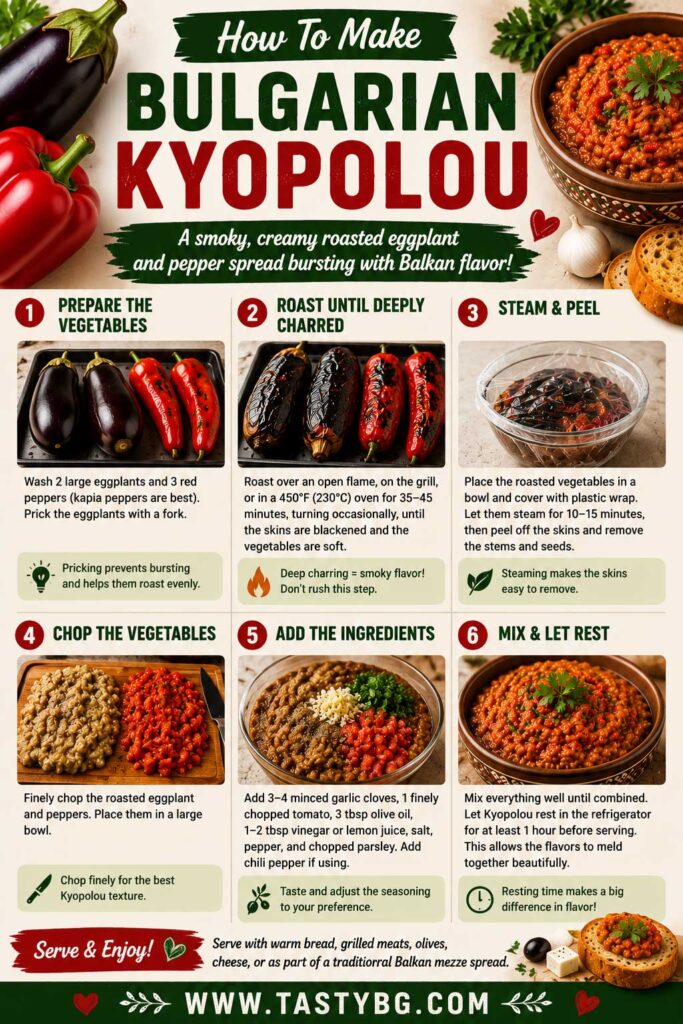
Learning how to make an authentic Bulgarian Kyopolou recipe is easier than many people expect.
Making Bulgarian Kyopolou is surprisingly simple, but the secret lies in properly roasting the vegetables. Taking the time to deeply char the eggplant and peppers creates the smoky flavor that makes this traditional Bulgarian spread so memorable.
After roasting, the vegetables are peeled, chopped, and combined with garlic, tomato, olive oil, vinegar, and fresh parsley. The mixture is then allowed to rest so the flavors can fully develop before serving.
Whether you roast the vegetables over charcoal, an open flame, or in the oven, the result is a rich and flavorful spread that pairs beautifully with bread, grilled meats, cheeses, and fresh salads.
Many Bulgarian families traditionally roast peppers and eggplants over charcoal or open flame. If you enjoy making Kyopolou, ajvar, lutenitsa, and other Balkan roasted vegetable recipes, investing in a quality grill basket can make preparation significantly easier.
Follow the recipe instructions below for the complete step-by-step instructions and measurements.
Bulgarian Kyopolou Recipe

A traditional Bulgarian roasted eggplant and pepper spread made with garlic, tomatoes, olive oil, vinegar, and fresh parsley. Smoky, flavorful, and perfect served with bread, grilled meats, or fresh vegetables.
- Baking sheet or grill
- Large mixing bowl
- Sharp knife
- Cutting board
- Food processor (optional)
- 2 large eggplants
- 3 large red peppers (preferably kapia peppers)
- 1 medium tomato (finely chopped)
- 3 –4 garlic cloves (minced)
- 3 tbsp olive oil
- 1 –2 tablespoons red wine vinegar or lemon juice
- 2 tbsp fresh parsley (finely chopped)
- 1 tsp salt (or to taste)
- ½ tsp black pepper
- 1 small chili pepper (finely chopped (optional))
Roast the eggplants and peppers until the skins are charred and blistered and the vegetables are completely softened.
- Place the roasted peppers in a covered bowl for 15–20 minutes to steam.
- Peel the peppers and remove the seeds.
- Peel the eggplants and allow them to drain for several minutes to remove excess moisture.
- Finely chop the roasted vegetables by hand or pulse briefly in a food processor.
- Transfer to a large bowl.
- Add the chopped tomato, garlic, olive oil, vinegar, parsley, salt, and black pepper.
- Mix thoroughly until combined.
- Taste and adjust seasoning as needed.
- Cover and refrigerate for at least 1 hour before serving.
- Serve chilled or at room temperature with warm bread, pita, crackers, grilled meats, or Bulgarian sirene cheese.
- Kapia peppers provide the most authentic Balkan flavor.
- For extra smokiness, roast the vegetables over charcoal or an open flame.
- Do not overblend; traditional Kyopolou should have a rustic texture.
- The flavor often improves after resting overnight in the refrigerator.
Pro Tips for Better Bulgarian Kyopolou
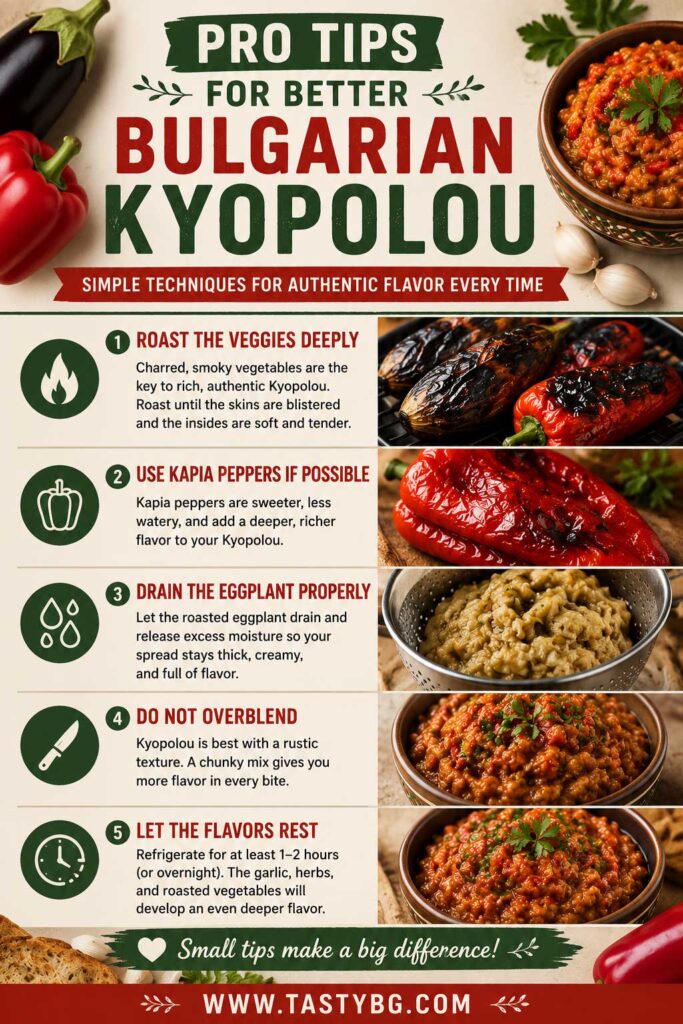
One of the best things about Kyopolou is that it transforms a few humble vegetables into something that tastes far more special than the ingredient list suggests. The combination of smoky eggplant, sweet peppers, garlic, and fresh herbs creates a flavor that feels unmistakably Balkan.
Making truly delicious Bulgarian Kyopolou is not complicated, but a few small techniques can dramatically improve the flavor, texture, and overall authenticity of the final spread.
Roast the Vegetables Deeply
The biggest secret to flavorful Kyopolou is roasting the vegetables deeply enough. Pale, lightly baked eggplant and peppers will never develop the same smoky richness that traditional Balkan versions are known for. The skins should become blistered and charred while the inside turns completely soft and tender.
Many Bulgarian home cooks prefer roasting directly over open flame or on outdoor grills because the smoke adds even more depth to the finished spread.
If you’re new to roasting vegetables, this Roasting Vegetables Guide provides useful techniques for achieving deeper caramelization and richer flavor.
Use Kapia Peppers If Possible
If you can find red kapia peppers, they are one of the best choices for authentic Balkan roasted pepper recipes. Kapia peppers are naturally sweeter, less watery, and slightly smokier than regular bell peppers, which gives the Kyopolou a richer flavor.
If you are unfamiliar with kapia peppers, our detailed Bulgarian pepper varieties guide explains why they are widely used throughout Balkan cooking traditions.
During late summer across the Balkans, roasted kapia peppers are often prepared in huge batches specifically for homemade spreads like Kyopolou, lutenitsa, and ajvar.
Drain the Eggplant Properly
After roasting and peeling the eggplant, allow it to drain for several minutes before mixing everything together. Eggplant naturally holds a lot of moisture, and excess liquid can make the spread watery instead of creamy and rich.
Some cooks even lightly press the eggplant to remove additional liquid while still keeping the texture soft.
Do Not Overblend
Kyopolou tastes best when it still has some texture. Avoid turning it into a perfectly smooth puree. A rustic mixture with small pieces of roasted eggplant and peppers feels far more homemade and traditional.
Many classic Bulgarian versions are chopped entirely by hand rather than blended.
Let the Flavors Rest Before Serving
One of the easiest ways to improve Kyopolou is simply allowing it to rest before serving. Even 1–2 hours in the refrigerator helps the garlic, roasted vegetables, vinegar, parsley, and oil settle together into a deeper and more balanced flavor.
Many people actually prefer Kyopolou the next day because the smoky roasted flavors become even more developed overnight. In many Bulgarian homes, the bowl sitting in the refrigerator for the next day often disappears faster than the one served fresh.
Affiliate Disclosure: This article may contain affiliate links. If you purchase through these links, I may earn a small commission at no additional cost to you.
Best Tools For Making Bulgarian Kyopolou
If you make roasted vegetable spreads regularly, a few simple kitchen tools can make preparing Kyopolou much easier while improving texture and flavor.
| Product | Why It’s Helpful | Check Price |
|---|---|---|
| Charcoal Grill | Adds authentic smoky flavor | Check Price on Amazon |
| Gas Grill Basket | Easy vegetable roasting | Check Price on Amazon |
| Food Processor | Quick chopping and mixing | Check Price on Amazon |
| Chef’s Knife | Traditional hand-chopped texture | Check Price on Amazon |
| Glass Mixing Bowls | Ideal for combining ingredients | Check Price on Amazon |
Common Mistakes to Avoid When Making Bulgarian Kyopolou
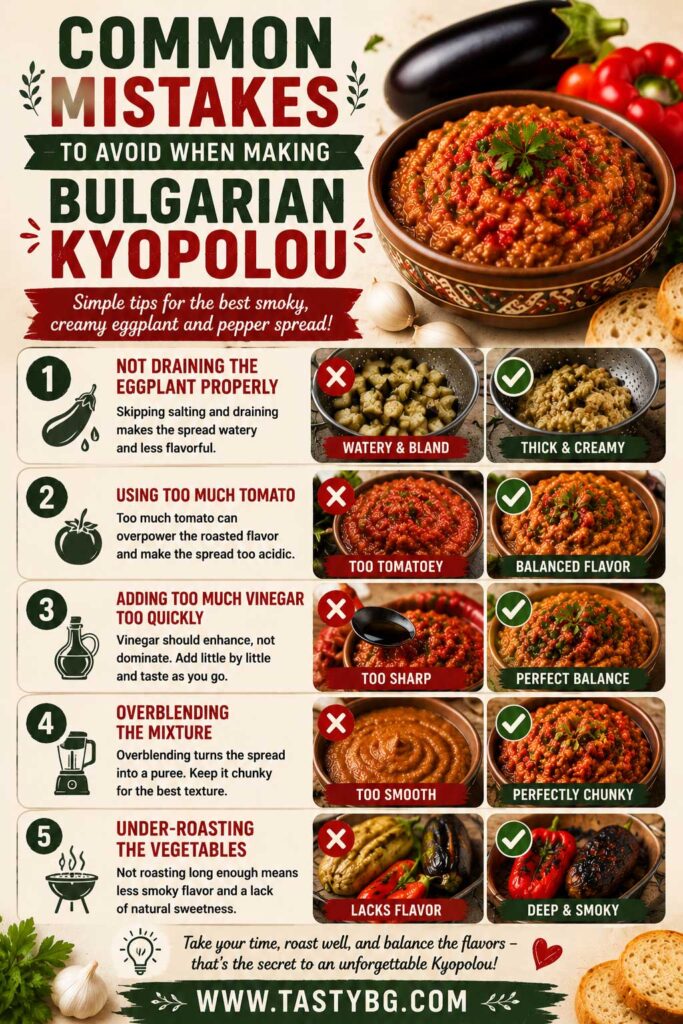
Even though Bulgarian Kyopolou is made with simple ingredients, a few small mistakes can dramatically affect the texture and flavor of the final spread.
Not Draining the Eggplant Properly
One of the most common mistakes is leaving too much moisture in the roasted eggplant. After peeling, allow the eggplant to drain for several minutes so the spread stays creamy and rich instead of watery.
Some cooks even gently press the eggplant to remove excess liquid while keeping the texture soft.
Using Too Much Tomato
Tomatoes should brighten the spread and add freshness without overpowering the smoky roasted vegetables. Adding too much tomato can quickly turn Kyopolou into something closer to tomato sauce rather than a balanced roasted eggplant spread.
The roasted eggplant and peppers should always remain the dominant flavor.
Adding Too Much Vinegar Too Quickly
Traditional Kyopolou should have gentle acidity, not aggressive sharpness. Pouring in too much vinegar immediately can overpower the roasted flavor of the vegetables.
Start with a small amount, mix well, taste carefully, and adjust gradually until the balance feels right.
Overblending the Mixture
Kyopolou tastes best when it remains slightly rustic with visible pieces of roasted eggplant and peppers. Blending everything into a perfectly smooth puree removes much of the homemade character and traditional texture.
Hand chopping often creates the best consistency.
Under-Roasting the Vegetables
Proper roasting is what gives Bulgarian Kyopolou its signature smoky flavor. If the eggplant and peppers are only lightly baked, the spread can taste flat and bland.
The vegetables should be deeply softened with charred, blistered skins so the smoky flavor fully develops before mixing everything together.
What to Serve With Bulgarian Kyopolou
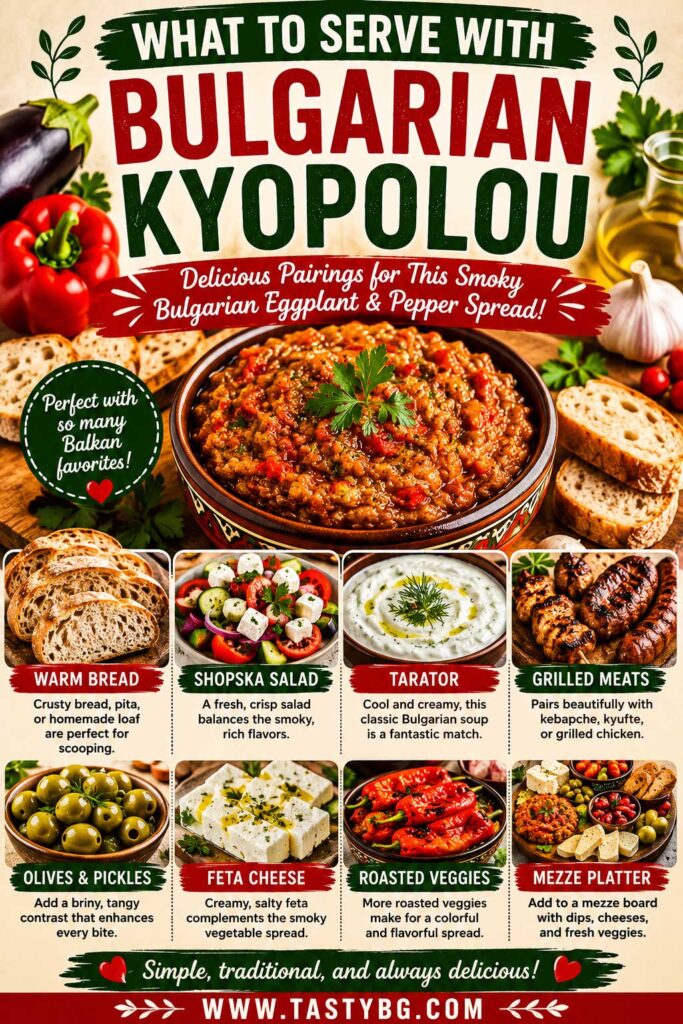
Bulgarian Kyopolou works beautifully as part of a larger Balkan-style table because the smoky roasted vegetables pair naturally with fresh cheeses, grilled meats, breads, and summer salads.
| Serve With | Why It Works |
|---|---|
| Warm bread | Classic and simple |
| Bulgarian sirene cheese | Salty creamy contrast |
| Grilled meats | Fresh smoky side dish |
| Roasted potatoes | Comforting Balkan-style meal |
| Shopska salad | Bright fresh summer pairing |
| Pita or crackers | Easy appetizer option |
For a classic Bulgarian summer meal, serve Kyopolou alongside a Bulgarian Shopska Salad Recipe and warm crusty bread.
Kyopolou is especially popular during summer gatherings when grilled foods, roasted peppers, tomatoes, and fresh herbs are everywhere. Many families serve it as part of a mezze-style spread alongside ajvar, lutenitsa, olives, cucumbers, and chilled rakia.
It also works surprisingly well inside sandwiches, wraps, or grain bowls because the roasted eggplant creates a rich, creamy texture without needing dairy or mayonnaise.
Recommended Serving Essentials
Serving Kyopolou on a beautiful mezze-style table can make even a simple appetizer feel like a traditional Balkan gathering.
| Product | Why It’s Useful | Check Price |
|---|---|---|
| Wooden Mezze Board | Beautiful presentation | Check Price on Amazon |
| Ceramic Dip Bowls | Perfect for spreads | Check Price on Amazon |
| Olive Oil Dispenser | Elegant serving option | Check Price on Amazon |
| Bread Basket | Great for warm bread | Check Price on Amazon |
| Appetizer Plate Set | Traditional-style serving | Check Price on Amazon |
How to Store Bulgarian Kyopolou

Bulgarian Kyopolou stores very well, which is one reason it has remained popular in Balkan kitchens for generations. After the flavors rest together overnight, many people actually think it tastes even better the next day.
Like many traditional spreads, this Bulgarian Kyopolou recipe often tastes even better after the flavors have had time to develop overnight.
Store the Kyopolou in an airtight container in the refrigerator for up to 5–7 days. Always use a clean spoon when serving to help preserve freshness and prevent excess moisture from entering the container.
One reason this Bulgarian Kyopolou recipe remains popular is that the flavors continue developing after a few hours in the refrigerator.
For additional food safety recommendations, the USDA Food Storage Guidelines provide detailed information about storing homemade vegetable-based dishes safely.
Some traditional homemade versions are also preserved in jars for winter, especially during late summer pepper and eggplant season. However, proper canning requires safe sterilization and sealing methods to ensure long-term storage safety.
If the spread becomes slightly watery after sitting, simply stir it before serving. A drizzle of olive oil on top can also help refresh the texture and flavor.
Bulgarian Kyopolou vs Lutenitsa vs Ajvar
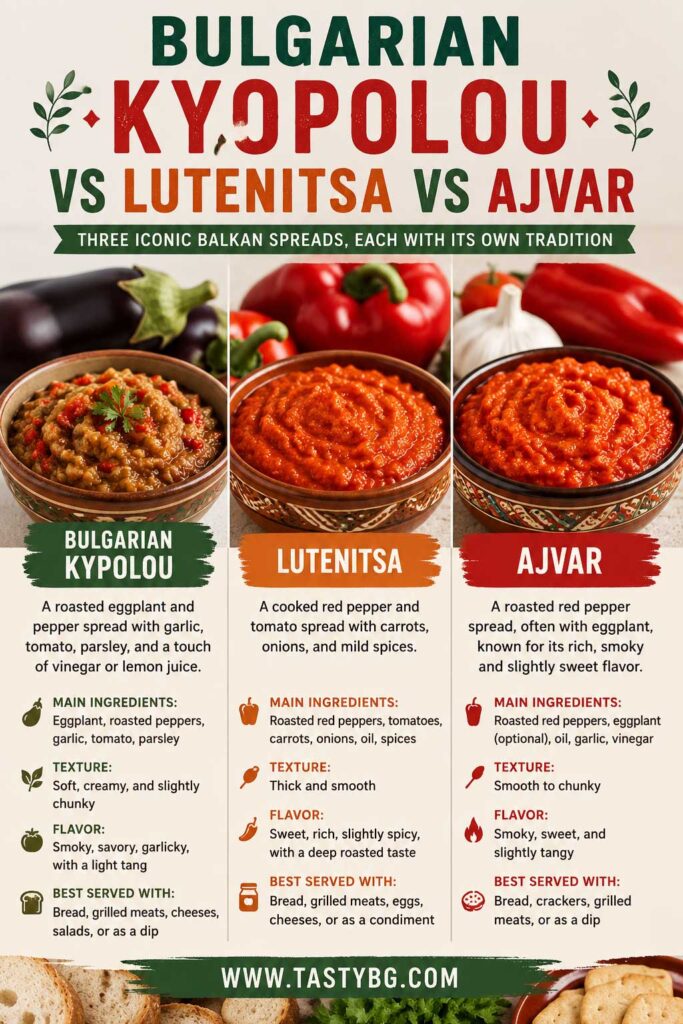
Many people across the Balkans grow up eating several roasted vegetable spreads, but each one has its own personality, texture, and regional identity.
Understanding how this Bulgarian Kyopolou recipe differs from lutenitsa and ajvar can help you appreciate the unique role each spread plays in Balkan cuisine.
| Spread | Main Flavor |
|---|---|
| Kyopolou | Roasted eggplant, peppers, garlic |
| Lutenitsa | Tomato and pepper spread, often smoother and slightly sweeter |
| Ajvar | Roasted red pepper spread, sometimes with eggplant |
| Pindjur | Chunkier tomato and pepper spread with rustic texture |
While these spreads share many ingredients, each has its own regional identity. You can explore the differences between ajvar, lutenitsa, and other traditional Balkan spreads in greater detail on BalkanRecipes.com.
Bulgarian Kyopolou is usually the most eggplant-forward of the group, giving it a softer, smokier, and more spreadable texture. Lutenitsa tends to lean sweeter and more tomato-heavy, while ajvar focuses more strongly on roasted peppers. Pindjur often feels chunkier and fresher, almost like a rustic roasted vegetable relish.
In many Balkan homes, families prepare several of these spreads at the end of summer using large batches of roasted peppers and eggplant. Some households even argue over which one deserves a permanent place on the table during winter.
If you would like to explore a slightly different variation, take a look at this Balkan Kyopolou version that highlights regional preparation styles found throughout Southeastern Europe.
Frequently Asked Questions About Bulgarian Kyopolou Recipe
Below are answers to some of the most common questions readers ask about making an authentic Bulgarian Kyopolou recipe at home.
What is Kyopolou?
Kyopolou is a traditional Bulgarian roasted eggplant and pepper spread made with garlic, tomato, oil, vinegar, and fresh herbs. It is popular throughout the Balkans as a cold appetizer, dip, or side dish.
Is Kyopolou served hot or cold?
Kyopolou is usually served cold or at room temperature. Many people actually prefer it after chilling because the smoky roasted flavors become deeper and more balanced.
Can I make Kyopolou without peppers?
Yes. Some versions use mostly roasted eggplant with garlic and tomato, although peppers add natural sweetness and balance. Without peppers, the flavor becomes more similar to a smoky roasted eggplant dip.
Is Bulgarian Kyopolou vegan?
Yes, traditional Bulgarian Kyopolou is naturally vegan because it uses roasted vegetables, garlic, oil, herbs, and vinegar without dairy or meat ingredients.
Can I freeze Kyopolou?
Yes, Kyopolou can be frozen in airtight containers for later use. The texture may soften slightly after thawing, but the flavor usually remains very good. Freezing smaller portions works best for easier serving.
A Taste of Traditional Bulgarian Summer Cooking
If you are looking for an easy Bulgarian Kyopolou recipe that captures traditional Balkan flavors, this version delivers the smoky roasted vegetable taste that has made the dish a favorite for generations.
Bulgarian Kyopolou is the kind of recipe that captures the feeling of late summer kitchens across the Balkans, when roasted peppers, smoky eggplant, garlic, and fresh parsley fill the air with incredible aroma. Simple ingredients transform into something deeply flavorful, comforting, and surprisingly versatile.
Once you try this Bulgarian Kyopolou recipe, you’ll understand why roasted eggplant spreads remain a staple of Bulgarian home cooking.
For an authentic Bulgarian appetizer spread, many families serve Kyopolou together with Traditional Tarator Recipe, fresh vegetables, sirene cheese, and homemade bread.
There is something incredibly satisfying about a simple slice of bread topped with homemade Kyopolou. The smoky vegetables, fresh herbs, and garlic come together in a way that feels both rustic and comforting. It is the kind of recipe that reminds you why traditional Balkan cooking continues to be loved generation after generation.
If you enjoy traditional Bulgarian recipes like Kyopolou, you may also enjoy exploring additional Balkan dishes on BalkanRecipes.com or learning more about Bulgaria’s food heritage on Bulgaropedia.org.
Did You Make This Bulgarian Kyopolou Recipe?
If you enjoyed this Bulgarian Kyopolou recipe, be sure to explore more traditional Balkan and Mediterranean recipes here on TastyBG. From fresh salads and roasted vegetable dishes to comforting family meals and authentic Bulgarian favorites, you’ll find plenty of recipes inspired by the flavors of Southeastern Europe.
For a complete Bulgarian-inspired appetizer spread, try serving your Kyopolou alongside a fresh Shopska Salad, creamy Snezhanka Salad, traditional Tarator, warm homemade bread, or other classic Balkan dishes featured throughout the site.
If you enjoy traditional roasted vegetable recipes, be sure to explore more Balkan favorites such as ajvar, lutenitsa, and other authentic regional specialties that celebrate the simple ingredients and bold flavors of Balkan cooking.
If you make this recipe, tag @tastybg_ on Instagram and use #tastybg to share your homemade Bulgarian Kyopolou with us. We’d love to see your version of this smoky Bulgarian roasted eggplant and pepper spread!