
This traditional Bulgarian kebapche recipe is one of the most recognizable grilled foods in Bulgaria. Few foods instantly remind Bulgarians of summer, charcoal grills, and family gatherings more than kebapche. These juicy grilled meat sausages are one of the most iconic foods in Bulgaria and can be found everywhere from traditional restaurants to roadside grills, beach stands, backyard BBQs, and football stadiums.
Unlike classic sausages, authentic Bulgarian kebapche contains no casing. The meat mixture is shaped by hand into long cylinders, seasoned heavily with cumin and black pepper, then grilled until smoky, juicy, and lightly charred outside.
The aroma alone immediately feels like a Balkan summer evening. In many Bulgarian homes, someone usually steals the first kebapche straight from the grill before dinner officially starts.
Traditional kebapche is usually served with fries, grated sirene cheese, lyutenitsa, chopped onions, and a cold drink on the side. In Bulgaria, ordering “kebapche i kartofki” is almost a national comfort food experience.
Many Bulgarian families also serve kebapche with homemade lyutenitsa for extra smoky pepper flavor.
This authentic Bulgarian kebapche recipe follows the classic Balkan method while also including important tips that help achieve juicy texture and restaurant-style flavor at home.
Why Bulgarian Kebapche Has Such a Distinct Balkan Grill Flavor
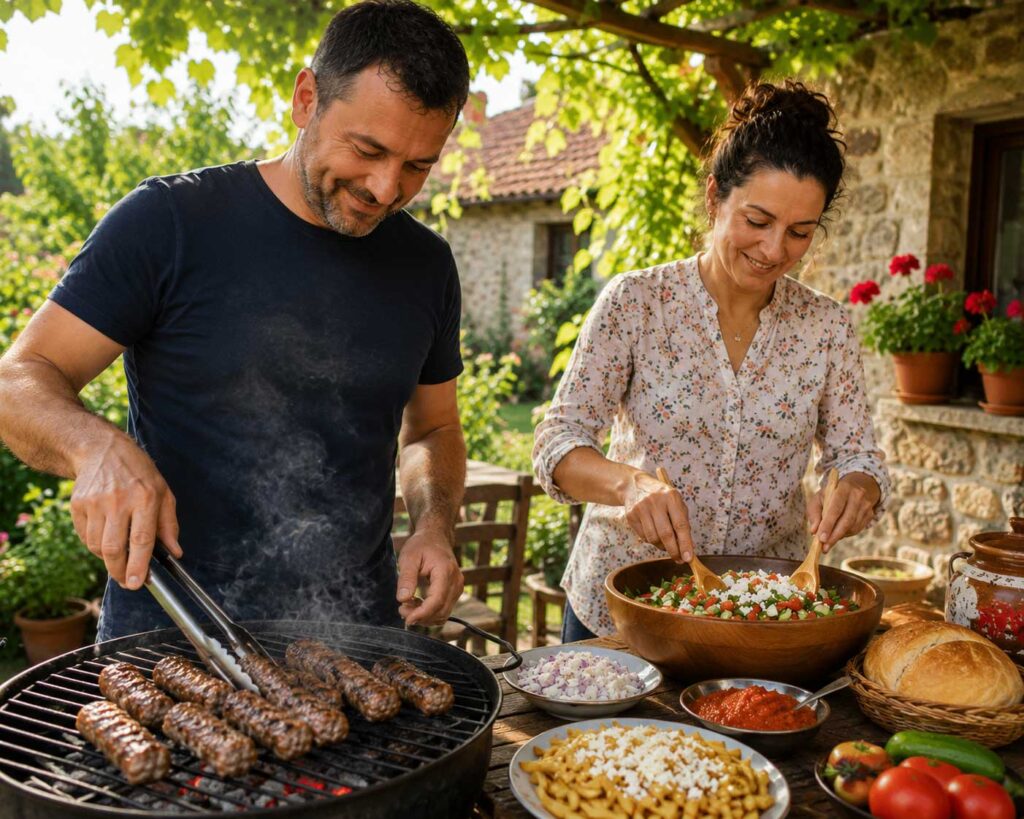
What makes Bulgarian kebapche so memorable is how much flavor comes from such a simple ingredient list. Unlike many sausages that rely on heavy spice blends, garlic, herbs, or fillers, traditional kebapche keeps things surprisingly minimal. The flavor mainly comes from the quality of the meat, the smoky grilling process, and the unmistakable aroma of cumin.
Traditional kebapche usually contains only minced pork and beef, cumin, black pepper, salt, and a little cold water. That combination may sound simple, but once grilled over charcoal, it creates the classic Balkan flavor that many Bulgarians instantly recognize from childhood summers, roadside grills, and family gatherings.
Meals like this remain some of the most recognizable traditional Bulgarian comfort foods across the Balkans.
Another important difference is the texture. The meat mixture is kneaded thoroughly until it becomes sticky and elastic. This traditional technique helps kebapche stay juicy without needing sausage casings or breadcrumbs. When prepared correctly, the inside remains tender and moist while the outside develops light char and crispy edges from the grill.
Traditional kebapche is almost always cooked over charcoal, which gives it the smoky flavor that is difficult to fully recreate indoors. The smell of cumin mixing with charcoal smoke is one of the signature aromas of Bulgarian summer cooking.
A properly made Bulgarian kebapche should feel juicy inside with lightly crispy edges, smoky aroma, tender texture, and the slightly springy bite that traditional Balkan grill cooks aim for.
Good kebapche should never feel dry, dense, or crumbly.
The History Behind Bulgarian Kebapche
Kebapche has deep roots in Balkan food culture and shares historical influences with other grilled minced meat dishes found throughout Southeastern Europe and former Ottoman regions. While similar recipes exist across the Balkans, Bulgarian kebapche gradually developed its own recognizable identity through its seasoning, shape, and grilling traditions.
In Bulgaria, kebapche became especially popular during the 20th century as restaurants, beer gardens, and seaside resorts expanded across the country. It quickly earned a reputation as one of the most beloved grilled foods alongside kyufte, especially during summer gatherings and outdoor celebrations.
It is the kind of food many people associate with smoky summer BBQs, beachside grills on the Black Sea, mountain taverns after long drives, football nights with friends, roadside restaurants, and large family celebrations.
Many Bulgarians still remember ordering “kebapche i kartofki” at local restaurants or sharing large platters during family cookouts. The smell alone usually tells people exactly what is cooking before they even see the grill. Even today, the smell of cumin and charcoal smoke instantly feels nostalgic to many people who grew up in Bulgaria.
For Bulgarians living abroad, homemade kebapche often becomes more than just food. It is a way to reconnect with familiar flavors, family traditions, and memories of home.
Simple Ingredients With Classic Balkan Grill Flavor
A classic Bulgarian kebapche recipe relies on simple ingredients and proper grilling technique rather than heavy seasoning.
One of the reasons Bulgarian kebapche is so loved is because the ingredient list stays simple while still creating incredibly bold flavor. Traditional recipes rely more on proper technique and grilling than on complicated seasoning blends.
Choosing the Right Meat
Most homemade kebapche is usually made with a combination of pork and beef.
Pork provides the rich, juicy texture that keeps kebapche tender during grilling, while beef adds deeper savory flavor and firmer structure. The balance between the two creates the classic restaurant-style texture many Bulgarians expect.
A very common ratio is:
- 70% pork
- 30% beef
Some families prefer slightly more pork for extra softness and juiciness, especially when cooking over very hot charcoal grills. All-pork versions are also popular in some regions and tend to produce a softer, more tender kebapche.
The meat should not be too lean. A little fat is important for authentic flavor and texture.
Traditional Bulgarian Spices
Classic Bulgarian kebapche recipe keeps the seasoning surprisingly minimal. Classic Bulgarian kebapche relies mostly on cumin, black pepper, and salt for its signature flavor.
Cumin is the defining flavor of authentic kebapche. The aroma becomes especially noticeable once the meat hits a hot charcoal grill. Even small changes in cumin quantity can dramatically affect the final taste, which is why many Bulgarian cooks are very particular about seasoning balance.
Unlike some Balkan grilled meat recipes, kebapche usually does not contain garlic, paprika, or fresh herbs.
Why Cold Water Matters
Cold water plays an important role in traditional kebapche preparation. Cold water helps distribute the spices evenly, soften the meat mixture, improve texture, and keep the kebapche juicy during grilling.
As the meat is kneaded, the cold water helps create the sticky, elastic consistency that gives kebapche its signature bite.
Some Bulgarian grill masters also add sparkling water instead of regular water because they believe it creates a lighter and softer texture after grilling.
Why This Bulgarian Kebapche Recipe Always Feels Juicier
The biggest secret behind authentic restaurant-style kebapche is not a special spice blend or hidden ingredient. It is the way the meat is prepared before grilling.
Many beginners simply combine the ingredients quickly and move straight to shaping the kebapche, but traditional Bulgarian preparation requires much more mixing. The meat should be kneaded thoroughly until it becomes sticky, smooth, and almost paste-like in texture.
Many restaurant cooks believe the secret to a juicy Bulgarian kebapche recipe is proper kneading and enough fat in the meat mixture.
This step helps retain moisture, create the signature springy texture, prevent crumbling, and improve overall juiciness.
As the proteins develop during mixing, the meat binds together naturally without needing breadcrumbs or fillers. This is one of the defining characteristics of authentic Bulgarian kebapche.
Another major factor is fat content. Very lean meat almost always produces dry and dense kebapche. Traditional recipes typically use slightly fatty pork because the fat melts during grilling and keeps the inside tender and juicy.
Many Bulgarian grill cooks would rather use meat with a little extra fat than risk dry kebapche. The final result should feel moist, flavorful, and lightly springy rather than compact or crumbly.
The Meat Balance Most Bulgarian Grill Cooks Prefer
Different Bulgarian families and restaurants often have their own preferred meat ratios for kebapche. Some versions focus on extra juiciness while others aim for firmer texture and stronger beef flavor.
The most traditional restaurant-style combination is:
- 70% pork
- 30% beef
This balance creates the classic kebapche texture that is juicy, tender, and slightly springy after grilling. Many Bulgarian restaurants still use a variation of this ratio because it delivers reliable flavor and moisture.
Some homemade recipes use:
- 80% pork
- 20% beef
This richer version produces softer and juicier kebapche with a more delicate texture. Families cooking over very hot charcoal grills sometimes prefer slightly more pork because the added fat helps prevent dryness.
For a firmer and meatier texture, some cooks choose:
- 50% pork
- 50% beef
This creates a denser kebapche with deeper beef flavor and slightly less richness.
No matter which ratio you use, most Bulgarians avoid extremely lean meat. A little fat is essential for authentic flavor and texture. Proper kebapche should stay juicy and tender after grilling rather than dry or compact.
This traditional Bulgarian kebapche recipe combines smoky charcoal flavor, juicy meat texture, and classic Balkan grilling techniques.
Bulgarian Kebapche Recipe
Authentic Bulgarian kebapche made with pork, beef, cumin, and smoky Balkan grill flavor. Juicy inside with lightly crispy edges, this traditional Bulgarian comfort food is perfect for summer BBQs, family gatherings, and homemade Balkan dinners.
- Grill pan
- Mixing bowl
- Tongs
- Tray or baking sheet
- 1 ½ pounds ground pork
- ¾ pound ground beef
- 2 tsp cumin
- 1 tsp black pepper
- 1 ½ tsp salt
- ¼ cup cold water
- 2 tbsp sparkling water (optional)
- Oil for lightly greasing grill grates
In a large mixing bowl, combine the ground pork, ground beef, cumin, black pepper, and salt.
- Add the cold water and optional sparkling water.
- Knead the meat mixture thoroughly for several minutes until it becomes sticky, smooth, and elastic. Proper kneading is essential for authentic kebapche texture.
- Cover the bowl and refrigerate for at least 2 hours, preferably overnight, to deepen the flavor and improve texture.
- Wet your hands lightly with water and shape the meat into long sausage-like cylinders about 5–6 inches long.
- Place the shaped kebapche on a tray and refrigerate another 20–30 minutes before grilling.
- Preheat a charcoal grill, gas grill, grill pan, or cast iron skillet over medium-high heat.
- Lightly oil the grill grates and cook the kebapche for about 4–5 minutes per side until browned, lightly charred, and fully cooked inside.
- Serve hot with fries, grated sirene cheese, chopped onions, Shopska salad, lyutenitsa, mustard, or grilled vegetables.
- Slightly fatty pork creates the juiciest authentic texture.
- Charcoal grilling gives the most traditional Balkan flavor.
- Do not overcook or the kebapche may become dry.
- Resting the meat overnight improves both flavor and texture significantly.
Small Mistakes That Can Ruin Homemade Kebapche
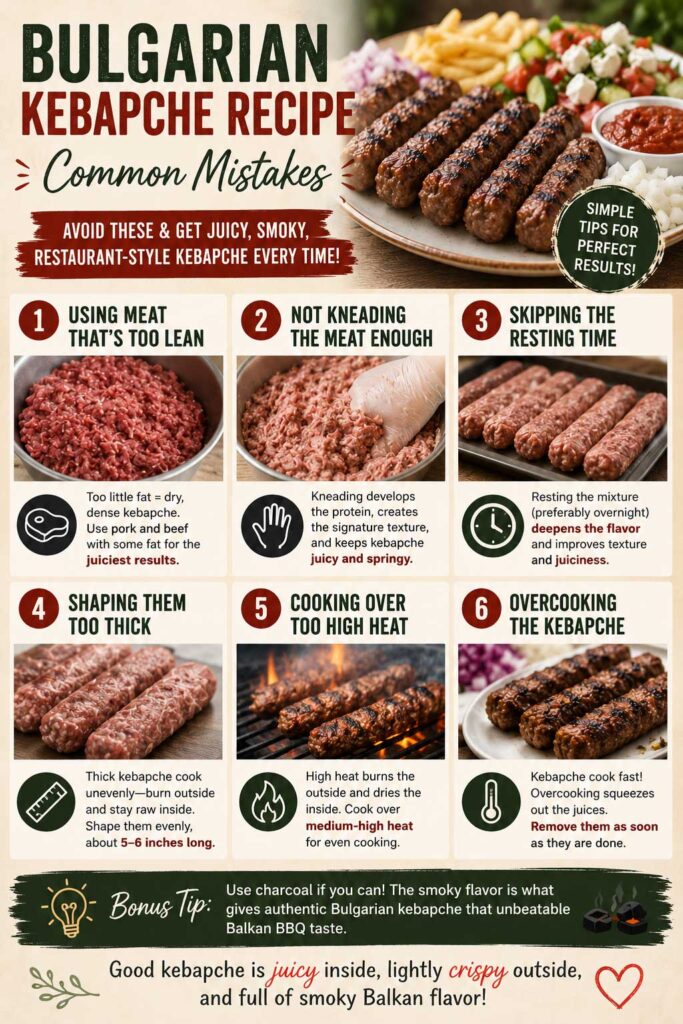
Even though Bulgarian kebapche uses simple ingredients, small mistakes can dramatically affect the final texture. Proper kebapche should be juicy, tender, and lightly springy — never dry or crumbly.
Using Meat That Is Too Lean
One of the most common mistakes is choosing very lean meat. While it may seem healthier, low-fat meat often produces kebapche that feels dry, dense, and tough after grilling.
Traditional Bulgarian kebapche usually includes slightly fatty pork because the fat melts during cooking and helps keep the inside moist and flavorful.
Skipping the Resting Time
Freshly mixed meat rarely develops the same depth of flavor as properly rested kebapche mixture.
Allowing the meat to rest overnight helps deepen the cumin flavor, improve texture, bind the mixture more effectively, and create juicier results after grilling.
Many traditional Bulgarian restaurants prepare the meat a full day ahead before grilling.
Not Kneading the Meat Enough
This is one of the biggest differences between average homemade kebapche and authentic restaurant-style kebapche.
Without enough kneading, the texture becomes crumbly, juices escape during grilling, and the kebapche can fall apart more easily instead of staying juicy and springy.
The mixture should become sticky and elastic before shaping. Proper kneading helps the proteins bind naturally and creates the signature kebapche texture.
Overcooking the Kebapche
Kebapche cooks surprisingly fast, especially over charcoal.
Leaving it on the grill too long quickly dries the interior and removes the juicy Balkan-style texture that makes kebapche so satisfying. The outside should have light char and crispy edges while the inside stays moist and tender.
Many Bulgarians believe slightly juicy kebapche is always better than overcooked kebapche.
Small Tricks That Make Homemade Kebapche Taste More Authentic
A few small techniques can make homemade kebapche taste much closer to the kind served in traditional Bulgarian restaurants and roadside grills. Even simple adjustments in preparation can noticeably improve texture, juiciness, and flavor.
Use Charcoal If Possible
Authentic Bulgarian kebapche is traditionally cooked over charcoal, and the smoky flavor makes a massive difference. The combination of cumin, grilled meat, and charcoal smoke creates the unmistakable aroma many Bulgarians associate with summer BBQs and seaside restaurants.
Gas grills and stovetop grill pans can still produce delicious results, but charcoal delivers the closest traditional Balkan flavor.
Wet Your Hands Before Shaping
The meat mixture can become quite sticky after proper kneading. Lightly wetting your hands before shaping helps:
- prevent sticking
- create smoother kebapche
- make shaping easier
- improve overall appearance
This simple trick also helps keep the kebapche evenly sized for more consistent cooking.
Chill the Kebapche Before Grilling
Cold kebapche holds its shape much better once it hits the hot grill.
Refrigerating the kebapche before grilling helps firm the texture, reduce breaking, improve juiciness, and make turning easier on the grill.
This step becomes especially helpful when grilling outdoors over very high heat.
Add Sparkling Water for Softer Texture
Some Balkan grill masters use sparkling water instead of regular cold water in the meat mixture. The carbonation is believed to help create slightly lighter and softer kebapche after grilling.
Not every family uses this technique, but it remains a popular traditional trick in many Bulgarian homes and restaurants.
Affiliate Disclosure: This article may contain affiliate links. If you purchase through these links, I may earn a small commission at no additional cost to you.
The right grill tools make Bulgarian kebapche easier to shape, cook, and serve with that smoky restaurant-style texture.
Helpful Tools for Making Bulgarian Kebapche Recipe
| Product | Why It Helps | Check Price on Amazon |
|---|---|---|
| Charcoal Grill | Gives kebapche the most authentic smoky Balkan flavor | Check Price on Amazon |
| Grill Pan | Best indoor option when you do not have an outdoor grill | Check Price on Amazon |
| Cast Iron Skillet | Creates strong browning and crispy edges indoors | Check Price on Amazon |
| Mixing Bowls | Helps knead the meat mixture properly before shaping | Check Price on Amazon |
| Meat Thermometer | Helps avoid overcooking and drying out the kebapche | Check Price on Amazon |
| Grill Tongs | Makes turning kebapche easier without breaking them | Check Price on Amazon |
| Airtight Meal Prep Containers | Good for storing leftover kebapche in the fridge or freezer | Check Price on Amazon |
What To Serve With Bulgarian Kebapche Recipe
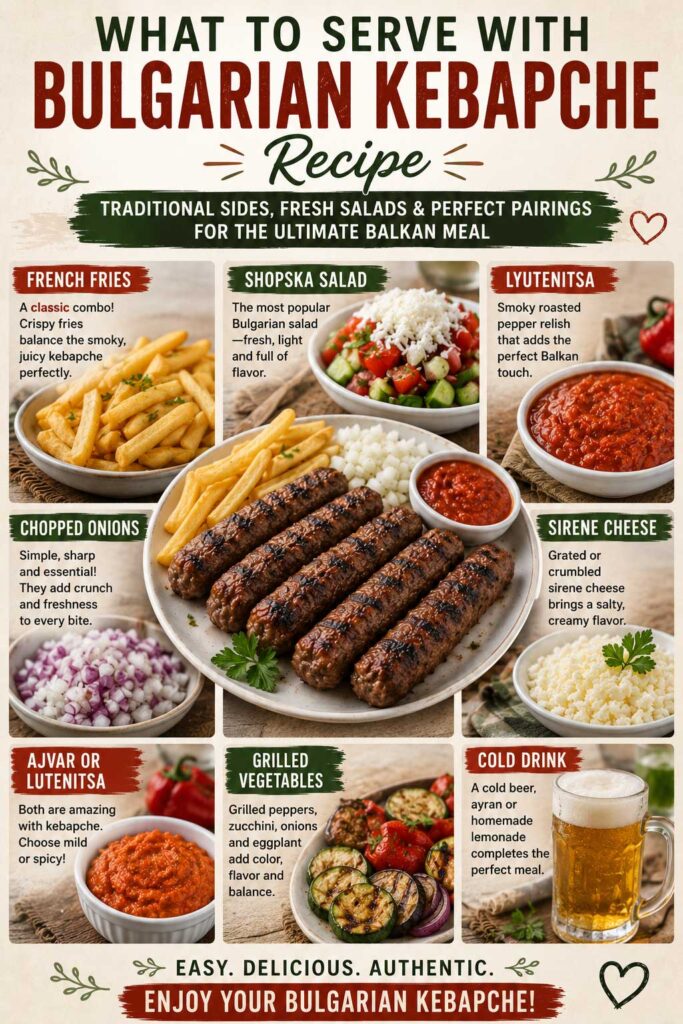
Traditional Bulgarian kebapche is almost never served by itself. In Bulgaria, it is usually part of a larger grilled meal filled with fresh salads, roasted vegetables, sauces, and simple side dishes that balance the smoky meat flavor.
One of the most classic combinations is kebapche with crispy French fries topped with grated sirene cheese. This restaurant-style pairing is especially popular at traditional taverns, beach restaurants, and roadside grills across Bulgaria.
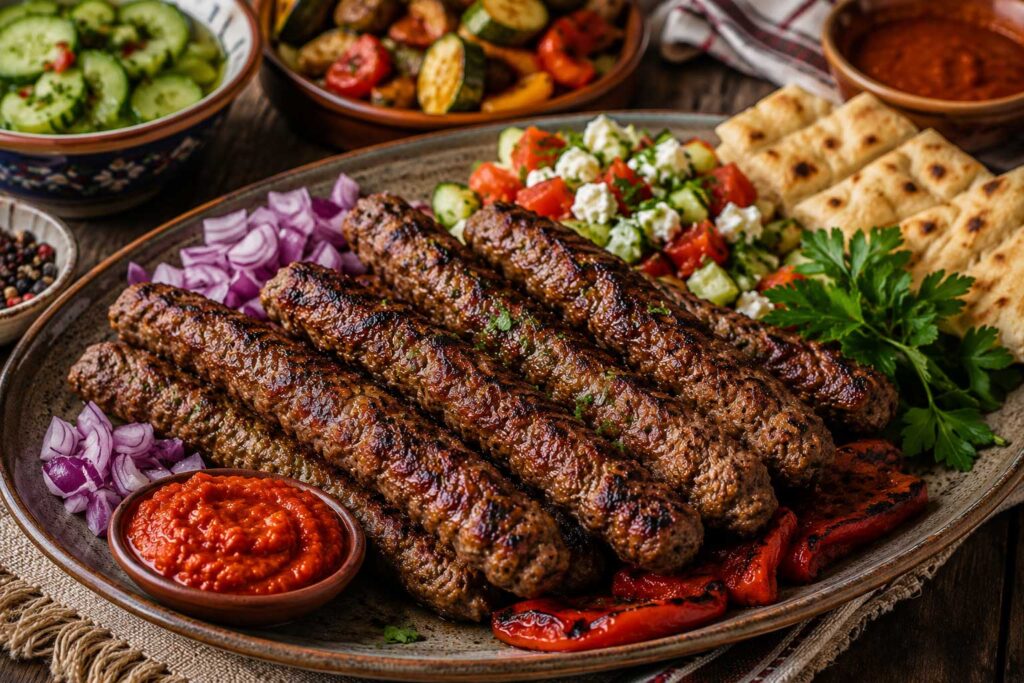
Other popular side dishes include chopped onions, fresh Shopska salad, homemade lyutenitsa, roasted peppers, warm bread, mustard, grilled vegetables, and fresh cucumbers and tomatoes. Many Bulgarian families set out large summer-style tables laden with grilled meats like kebapche, combining smoky flavors with fresh vegetables, cold salads, and simple homemade spreads.
Smoky Balkan grilled vegetables are another classic addition to outdoor BBQ spreads.
A side of authentic Shopska salad beautifully balances the richness of the grilled meat.
During summer, many Bulgarian families also prepare large salad spreads alongside grilled meat dishes. The freshness of tomatoes, cucumbers, roasted peppers, and yogurt-based sides helps balance the richness of the kebapche.
During hot summer months, many Bulgarians also pair kebapche with cold tarator soup.
Cold beer is another traditional pairing, especially during outdoor BBQ gatherings and football nights with friends and family. Some families argue whether kebapche tastes better at the beach, in the mountains, or during backyard summer cookouts.
Regional Variations Across the Balkans
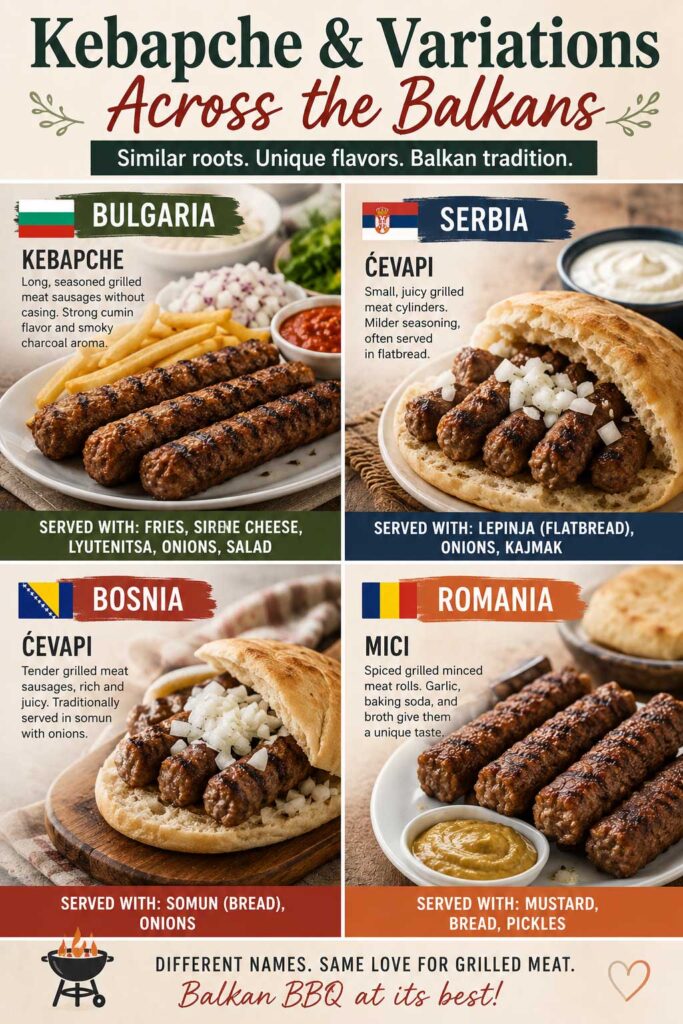
Grilled minced meat dishes are popular throughout the Balkans, and nearly every country has its own traditional version. While the recipes may look similar at first glance, each variation has distinct seasoning, texture, and serving traditions that reflect local food culture.
Bulgarian Kebapche
Bulgarian kebapche is usually longer and thinner than many neighboring versions. It is especially known for its strong cumin flavor, smoky grilled aroma, and slightly springy texture. Traditional Bulgarian kebapche is often served with fries, sirene cheese, mustard, and fresh salads.
Serbian Ćevapi
Serbian ćevapi are typically smaller and softer in texture. They are commonly served inside flatbread with chopped onions and creamy kajmak. Some regional Serbian recipes use different meat combinations and milder seasoning than Bulgarian kebapche.
Romanian Mici
Romanian mici are heavily associated with outdoor grilling and summer gatherings. They often include garlic, broth, and additional spices, creating a more intensely seasoned flavor profile compared to Bulgarian kebapche.
Bosnian Ćevapi
Bosnian ćevapi are traditionally served inside soft flatbread with raw onions on top. The texture is usually tender and juicy, with seasoning that tends to be less cumin-forward than Bulgarian versions.
Despite these similarities across the Balkans, Bulgarian kebapche still stands out for its distinctive cumin-heavy flavor and its close connection to Bulgarian BBQ culture and summer grilling traditions.
These kinds of Balkan grilled meat dishes remain popular throughout Southeastern Europe.
What Is the Difference Between Kebapche and Ćevapi?
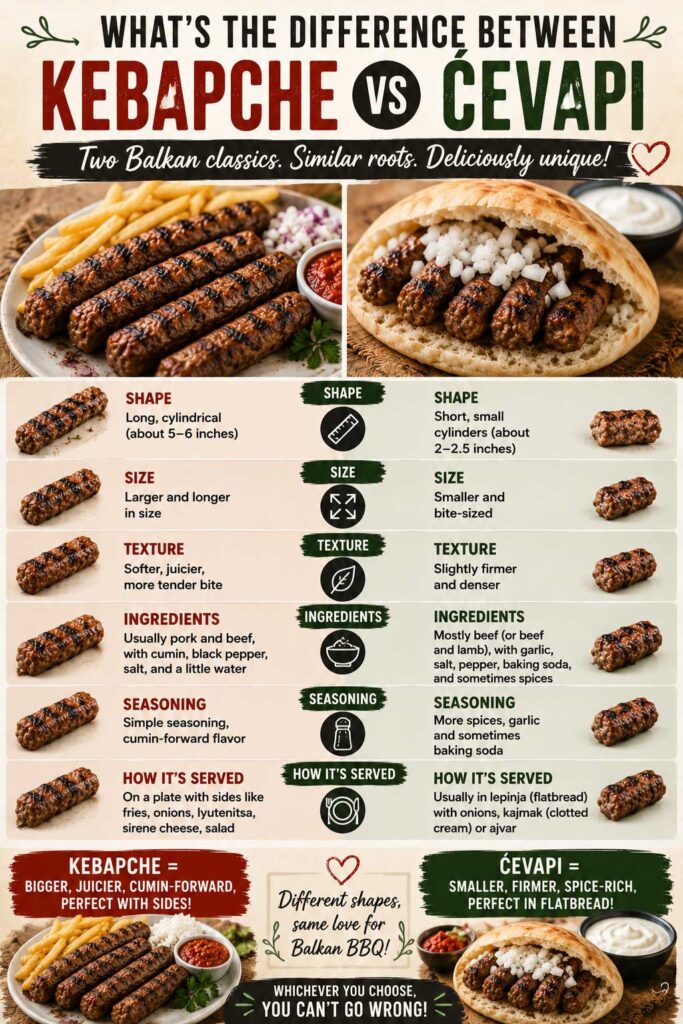
Although Bulgarian kebapche and Balkan ćevapi may look similar at first glance, they have several important differences in flavor, texture, and serving style.
Bulgarian kebapche is usually longer and thinner with a stronger cumin flavor and slightly firmer texture. It is traditionally served with fries, grated sirene cheese, mustard, fresh salads, and sometimes lyutenitsa.
Ćevapi, which are especially popular in Serbia and Bosnia, are often smaller, softer, and less cumin-forward. They are commonly served inside flatbread with chopped onions and creamy kajmak.
Another major difference is the seasoning. Bulgarian kebapche keeps the spice mixture very simple, relying heavily on cumin, black pepper, salt, and smoky grilling for its signature flavor. Many ćevapi recipes use different spice balances and meat combinations depending on the region.
Both dishes remain deeply connected to Balkan BBQ culture and outdoor summer grilling traditions, but Bulgarian kebapche has a flavor profile that many Bulgarians instantly recognize from the aroma of cumin and charcoal alone.
Many travelers searching for a traditional Bulgarian kebapche recipe are surprised by how different the flavor is compared to Serbian or Bosnian ćevapi.
Can You Cook Kebapche Without a Grill?
Yes. Although traditional Bulgarian kebapche is best cooked over charcoal, you can still make delicious homemade kebapche indoors using several alternative cooking methods.
Charcoal grilling creates the most authentic Balkan flavor because the smoke adds depth and gives the meat its classic slightly charred exterior. However, many people successfully prepare kebapche year-round without an outdoor grill.
Popular indoor cooking methods include grill pans, cast iron skillets, oven broilers, and air fryers.
A cast iron skillet or grill pan can create a nicely browned exterior while helping the inside stay juicy. The oven broiler works especially well for cooking larger batches quickly and can produce light charring similar to grilling.
Air fryers have also become increasingly popular for homemade kebapche because they cook the meat evenly while still creating crispy edges.
No matter which method you choose, avoid overcrowding the cooking surface and try not to overcook the kebapche. The inside should remain moist and tender while the outside develops light browning and slight crispiness.
Kebapche also pairs well with Mediterranean-style grilled meals and fresh vegetable sides.
Even though indoor methods work very well, outdoor charcoal grilling still produces the closest flavor to authentic Bulgarian restaurant-style kebapche.
Keeping Leftover Kebapche Juicy the Next Day
Bulgarian kebapche stores surprisingly well, which makes it great for meal prep, summer leftovers, or preparing ahead for gatherings and BBQs.
Refrigerating Kebapche
Allow the kebapche to cool completely before storing.
Place cooked kebapche in an airtight container and refrigerate for up to:
- 4 days
Many people actually enjoy leftover kebapche the next day because the cumin flavor becomes even deeper after resting overnight.
Freezing Kebapche
Kebapche freezes very well both before and after cooking.
You can freeze both raw shaped kebapche and fully cooked kebapche successfully.
For best results, place parchment paper between pieces before freezing so they do not stick together.
Frozen kebapche can typically be stored for up to:
- 3 months
Best Ways To Reheat Kebapche
The best reheating methods help restore the slightly crispy exterior while keeping the inside juicy.
Recommended reheating methods include:
- grill
- skillet
- air fryer
A hot skillet or air fryer usually works best for bringing back the fresh grilled texture.
Microwaving is possible, but it tends to soften the exterior and can make the kebapche slightly rubbery if overheated.
Why Kebapche Is One of Bulgaria’s Most Loved Foods
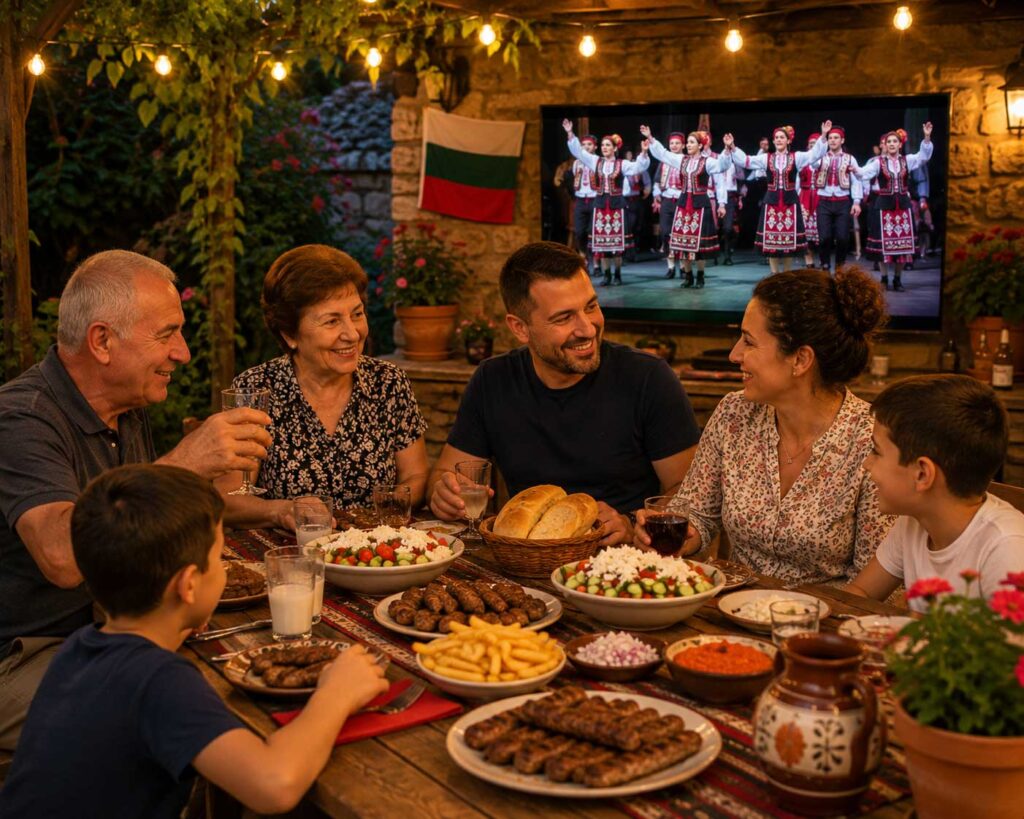
Kebapche is much more than simply grilled meat in Bulgaria. For many people, it represents comfort, tradition, and some of the most familiar moments of everyday Balkan life.
The smell of cumin hitting a hot charcoal grill instantly reminds many Bulgarians of summer vacations by the sea, mountain restaurants after long drives, football nights with friends, roadside grills, and family BBQ gatherings.
Few foods feel as nostalgic and recognizable across Bulgaria as freshly grilled kebapche served with fries, sirene cheese, salad, and cold drinks on a warm evening.
Part of its popularity comes from its simplicity. Kebapche is affordable, filling, easy to share, and deeply connected to outdoor cooking culture throughout the Balkans. It appears everywhere from casual taverns to backyard cookouts and busy seaside restaurants during summer.
For many people, meals like this represent classic Bulgarian summer comfort foods shared outdoors with family.
For Bulgarians living abroad, homemade kebapche often becomes emotionally tied to memories of home, family gatherings, and traditional Bulgarian flavors that are difficult to fully recreate outside the Balkans.
Even today, the combination of smoky charcoal and cumin remains one of the most instantly recognizable aromas in Bulgarian cuisine.
Frequently Asked Questions About Bulgarian Kebapche Recipe
What is Bulgarian kebapche made of?
Traditional Bulgarian kebapche is usually made from minced pork and beef mixed with cumin, black pepper, salt, and cold water. The meat is kneaded thoroughly before being shaped and grilled over charcoal.
Is kebapche spicy?
No. Authentic Bulgarian kebapche is flavorful but not spicy. The main flavor comes from cumin, black pepper, and smoky grilling rather than hot spices.
What is the difference between kebapche and kyufte?
Kebapche is shaped into long sausage-like cylinders without casing, while kyufte is usually formed into round patties or meatballs. Kyufte recipes may also include onions, parsley, or additional spices depending on the region.
If you enjoy this recipe, you may also like our traditional Bulgarian kyufte recipe.
Can I make kebapche ahead of time?
Yes. In fact, many Bulgarian cooks prefer preparing the meat mixture a day ahead. Resting the meat overnight helps deepen the flavor and improves texture after grilling.
What gives kebapche its authentic flavor?
Cumin is the signature spice that gives Bulgarian kebapche its unmistakable traditional flavor. When combined with charcoal grilling, it creates the classic Balkan BBQ aroma many Bulgarians instantly recognize. The cumin-heavy seasoning is one of the defining characteristics of a traditional Bulgarian kebapche recipe.
Can I freeze kebapche?
Yes. Both raw and cooked kebapche freeze very well. Properly stored kebapche can usually be frozen for up to three months without major loss of flavor or texture.
Smoky, Juicy, and Comforting Every Time
This authentic Bulgarian kebapche recipe brings together smoky grill flavor, juicy texture, and the comforting Balkan aromas many people instantly associate with Bulgarian summer cooking.
The combination of juicy meat, smoky grill marks, and cumin is what makes this Bulgarian kebapche recipe so memorable across generations. It is the kind of food that instantly reminds many people of summer evenings, family BBQs, mountain restaurants, and beachside grills throughout Bulgaria.
Whether you prepare it over charcoal outdoors or using a grill pan indoors, homemade kebapche delivers rich traditional flavor with surprisingly little effort. Served with fries, fresh salad, lyutenitsa, or cold beer, this classic Balkan comfort food always feels satisfying, simple, and deeply nostalgic.
Fresh Balkan salads and roasted vegetables help complete the traditional serving experience.
More Balkan Recipes You May Enjoy
If you enjoy smoky Balkan grilled foods and traditional Bulgarian comfort meals, you may also enjoy:
- Traditional Bulgarian Kyufte Recipe
- Authentic Shopska Salad
- Traditional Bulgarian Lutenitsa Recipe
- Balkan Grilled Vegetables
- Mediterranean Ajvar Chicken Bowl
Did You Make This Bulgarian Kebapche Recipe?
If you enjoyed this Bulgarian kebapche recipe, explore more Balkan-inspired recipes here on TastyBG for even more traditional comfort foods, smoky grilled dishes, and Mediterranean-style meals inspired by authentic Bulgarian cooking traditions. If you make this recipe, tag @tastybg_ on Instagram and use #tastybg to share your homemade version.