
This easy shakshuka recipe is one of those meals that feels both comforting and impressive while using incredibly simple ingredients. Eggs are gently poached in a rich tomato and pepper sauce filled with garlic, onions, olive oil, and warm Mediterranean spices until everything becomes thick, cozy, and deeply flavorful.
Shakshuka is the kind of dish that works almost any time of day. It can be served as a hearty breakfast, a relaxed weekend brunch, a quick lunch, or even a light dinner with warm bread and fresh salad on the side. The entire recipe comes together in one pan, making it ideal for busy weeknights while still feeling special enough for guests.
If you enjoy simple one-pan meals like this, you’ll also love exploring more Mediterranean breakfast recipes that focus on fresh ingredients and balanced flavors.
What makes shakshuka truly unforgettable is the sauce. Sweet peppers, tomatoes, cumin, paprika, and garlic slowly simmer together until the flavors deepen and the kitchen smells incredible. Once the eggs are added directly into the sauce, they gently cook until the whites are set and the yolks stay soft and creamy.
What Is Shakshuka?
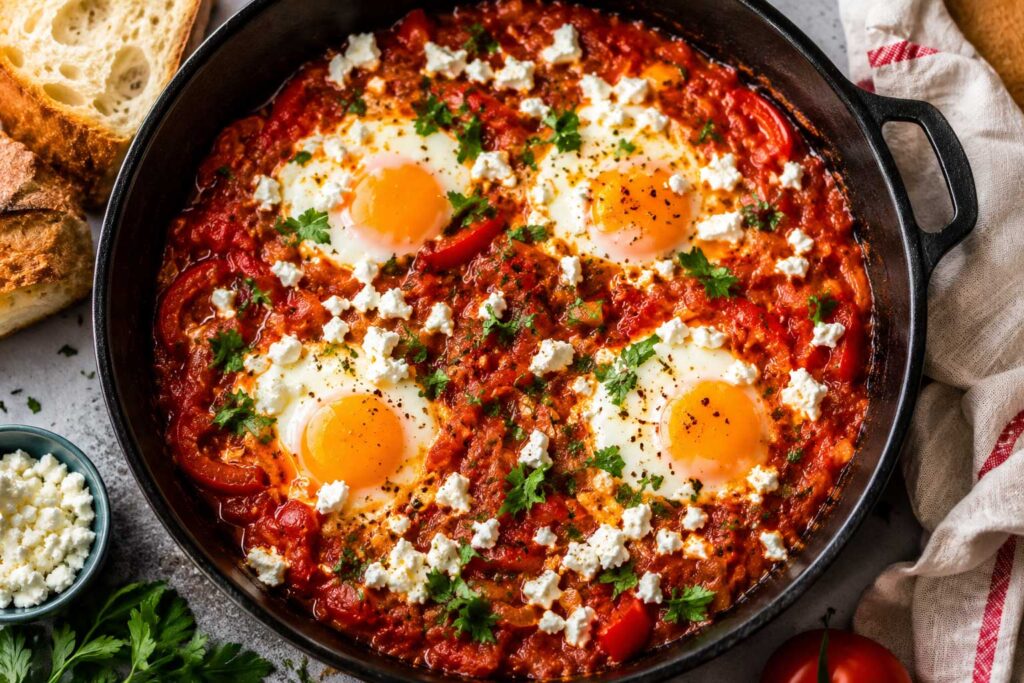
Shakshuka is a traditional dish made with eggs gently poached in a rich tomato and pepper sauce filled with garlic, olive oil, onions, and warm spices. Although the dish is especially popular across North Africa and the Middle East, it has also become one of the most beloved Mediterranean-style breakfasts around the world because it is simple, comforting, affordable, and deeply flavorful.
The name itself roughly translates to “mixture,” which perfectly fits the way everything cooks together slowly in one skillet. Tomatoes simmer with sweet peppers, onions soften into the sauce, garlic adds depth, and spices like cumin and paprika create the warm aroma that makes shakshuka instantly recognizable.
Many of the ingredients used in shakshuka reflect broader Mediterranean and Middle Eastern breakfast traditions that have influenced regional cooking for generations.
While every family and region has its own variation, most traditional shakshuka recipes stay centered around a tomato base with eggs cooked directly in the sauce until the whites are set and the yolks remain soft. Some versions stay simple and rustic, while others include additions like salty feta cheese, spicy peppers, fresh herbs, spinach, olives, or chickpeas for extra texture and flavor.
Part of the reason shakshuka became so popular internationally is because it works for almost everyone. It is naturally vegetarian, high in protein, easy to customize, and made using inexpensive pantry ingredients that still feel incredibly satisfying. It is also one of those dishes that looks especially beautiful served directly from the skillet with warm crusty bread on the side for scooping up the rich sauce and runny egg yolks.
If you enjoy Mediterranean-style egg dishes, you may also enjoy this Bulgarian Mish Mash Recipe, another vegetable-rich breakfast that combines eggs with peppers and tomatoes.
Why You’ll Love This One-Pan Mediterranean Breakfast

There is a reason shakshuka has become such a beloved dish in kitchens around the world. Despite using simple everyday ingredients, it delivers the kind of rich, comforting flavor that feels far more special than the effort required to make it.
At its heart, shakshuka transforms pantry staples like tomatoes, eggs, onions, garlic, and peppers into a meal that tastes vibrant, satisfying, and deeply flavorful. Everything cooks together in a single skillet, making cleanup easy and allowing the ingredients to build layers of flavor as they simmer.
Another reason people return to shakshuka again and again is its flexibility. Some versions are spicy and bold, while others are loaded with fresh herbs, vegetables, or creamy feta cheese. The recipe adapts easily to different tastes, seasons, and ingredients you may already have on hand.
Even better, shakshuka feels comforting without becoming overly heavy. The rich tomato sauce stays bright and fresh, while the eggs add enough protein to make the meal satisfying for breakfast, brunch, lunch, or even dinner.
Perhaps the best part is the way shakshuka brings people together. It is the kind of dish that arrives at the table still bubbling in the skillet, surrounded by warm bread and eager hands ready to scoop up every last bite. Those shared moments are part of what has made shakshuka a favorite across generations and cultures.
If you enjoy protein-rich Mediterranean breakfasts, this Bulgarian Yogurt Breakfast Bowl Recipe is another easy option that comes together in minutes.
Ingredients You Need for Shakshuka
One of the reasons shakshuka has remained so popular for generations is because it relies on simple, affordable ingredients that come together beautifully in one skillet. Most of the ingredients are pantry staples, yet they create a dish that feels rich, colorful, and full of Mediterranean flavor.
For this shakshuka recipe, you will need olive oil, onion, bell pepper, garlic, tomatoes, eggs, and a handful of warm spices. Feta cheese and fresh herbs are optional but highly recommended because they add extra freshness and contrast to the rich tomato sauce.
Eggs are one of the key ingredients that make shakshuka so satisfying, providing both protein and richness. If you’re interested in learning more about their nutritional value, this Harvard Nutrition Source guide to eggs offers a detailed overview.
Main Ingredients
- 2 tablespoons olive oil
- 1 medium yellow onion, diced
- 1 red bell pepper, diced
- 3 garlic cloves, minced
- 1 teaspoon ground cumin
- 1 teaspoon paprika
- ½ teaspoon red pepper flakes (optional)
- 1 can (28 ounces) crushed tomatoes
- Salt and black pepper, to taste
- 4 to 6 large eggs
- ½ cup crumbled feta cheese
- Fresh parsley or cilantro for serving
Optional Additions
If you want to customize your shakshuka, consider adding:
- Roasted red peppers
- Fresh chili peppers
- Spinach
- Chickpeas
- Kalamata olives
- Harissa paste
- Green onions
- Avocado slices
These additions can add extra texture, spice, or Mediterranean flavor while still keeping the dish true to its roots. The beauty of shakshuka is that it can easily be adapted to suit your taste while remaining simple, comforting, and satisfying.
Why These Ingredients Work So Well
One of the reasons shakshuka tastes so comforting is because every ingredient plays an important role in building the sauce slowly. The onions and peppers add natural sweetness as they soften in olive oil, while the garlic brings a deeper savory flavor that makes the entire skillet smell incredible while cooking.
The spices are what truly give shakshuka its signature Mediterranean warmth. Paprika adds subtle smokiness and richness, while cumin brings an earthy depth that balances the brightness and acidity of the tomatoes beautifully. As the sauce simmers, all of those flavors blend together into something that tastes far more complex than the ingredient list suggests.
The eggs gently poach directly in the sauce, creating soft whites and creamy yolks that naturally mix into the tomatoes when served. Feta cheese adds a salty, tangy contrast that works especially well against the rich tomato base, while fresh herbs added at the very end bring freshness and brightness that keep the dish from feeling too heavy.
This is also why shakshuka feels so satisfying despite using very simple ingredients. The balance of sweetness, acidity, spice, creaminess, and fresh herbs creates layers of flavor that make the dish feel warm, rustic, and deeply comforting.
How to Make Shakshuka Step by Step

Making shakshuka recipe is mostly about building flavor slowly in one skillet before gently poaching the eggs in the sauce. Once the tomato and pepper base is rich and slightly thickened, the rest of the recipe comes together quickly.
Cook the Onions and Peppers
Start by heating olive oil in a large skillet over medium heat. Add the diced onion and bell pepper, then cook until they soften and become slightly sweet. This usually takes about 8 to 10 minutes and creates the flavor base for the entire dish.
Add the Garlic and Spices
Stir in the minced garlic, cumin, paprika, and optional red pepper flakes. Let everything cook for about 30 seconds to 1 minute, just until fragrant. This short step helps the spices bloom in the oil and gives the shakshuka a warmer, deeper flavor.
Simmer the Tomato Sauce
Pour in the crushed tomatoes and season with salt and black pepper. Let the sauce simmer gently until it thickens slightly and the flavors come together. This usually takes about 10 to 15 minutes. The sauce should look rich, not watery, before you add the eggs.
Add the Eggs
Use a spoon to make small wells in the tomato sauce, then carefully crack one egg into each well. Try to space the eggs evenly so they cook at the same rate.
Cover and Cook
Cover the skillet and let the eggs cook gently until the whites are set and the yolks are still soft. This usually takes about 5 to 8 minutes, depending on how runny you like your eggs.
Finish and Serve
Remove the skillet from the heat, then sprinkle feta cheese and fresh parsley or cilantro over the top. Serve the shakshuka immediately with warm pita, crusty bread, or flatbread for scooping up the sauce.
Affiliate Disclosure: This article may contain affiliate links. If you purchase through these links, I may earn a small commission at no additional cost to you.
Kitchen Favorites for Better Shakshuka
Small kitchen tools can make shakshuka easier to cook and serve because this dish depends heavily on even heat and proper simmering.
| Product | Why It Works | Best For | Check Price |
|---|---|---|---|
| Cast Iron Skillet | Retains heat beautifully for even cooking | Authentic shakshuka | Check Price on Amazon |
| Nonstick Deep Skillet With Lid | Helps eggs cook gently | Beginner-friendly cooking | Check Price on Amazon |
| Olive Wood Spoon Set | Perfect for simmering tomato sauces | Mediterranean recipes | Check Price on Amazon |
| Mediterranean Spice Set | Adds deeper flavor to shakshuka | Better seasoning | Check Price on Amazon |
The Secret to a Rich Tomato and Pepper Sauce
The biggest difference between average shakshuka and truly incredible shakshuka usually comes down to the sauce. While the ingredients themselves are simple, taking enough time to properly cook the onions, peppers, tomatoes, and spices creates much deeper flavor and better texture.
Many people rush this step, but slow cooking allows the vegetables to develop natural sweetness while helping the tomatoes reduce into a richer, thicker sauce. This also helps the eggs poach more evenly once added to the skillet.
The smell that fills the kitchen during this stage is often the first sign that a truly great shakshuka is on the way. As the onions, peppers, garlic, and spices slowly cook together, the sauce develops the deep flavor that makes the finished dish so memorable.
Using good olive oil also makes a noticeable difference because its flavor stays present throughout the dish and helps carry the spices beautifully.
Some cooks like adding extra ingredients to deepen the flavor even further:
| Ingredient | What It Adds |
|---|---|
| Roasted red peppers | Sweeter, smoky flavor |
| Smoked paprika | Deeper warmth and smokiness |
| Fresh chili peppers | Brighter natural heat |
| Tomato paste | Richer concentrated tomato flavor |
| Harissa | Spicy North African depth |
These small additions can completely change the personality of the sauce while still keeping the cozy Mediterranean character that makes shakshuka so comforting.
Shakshuka

Shakshuka is a Tunisian dish featuring eggs poached in a pepper sauce, onion, and spiced tomato.
- 12-inch nonstick skillet with lid
- Blender
- Cutting board
- Sharp knife
- Can opener
- 3 tbsp extra-virgin olive oil
- 2 onions ((chopped fine))
- 4 garlic cloves ((minced))
- 2 yellow bell peppers ((stemmed, seeded, and cut))
- 2 tsp tomato paste
- 1 tsp ground cumin ((small, Cara Cara, or Valencia))
- salt and pepper
- 1 tsp ground turmeric
- ⅛ tsp cayenne pepper
- 1½ cup jarred piquillo peppers ((chopped))
- 1 can diced tomatoes
- ¼ cup water
- 2 bay leaves
- ⅓ cup fresh cilantro ((chopped))
- 4 large eggs
- ½ cup feta cheese ((crumbled))
Put oil in 12-inch nonstick skillet and bring it over medium-high heat.
Add the bell peppers and chopped onions and cook for about 8 minutes or until lightly browned.
Add tomato paste, salt, cumin, garlic, turmeric, cayenne, pepper.
Cook it about 3 minutes and frequently stirring until you see the tomato paste gets darker.
Add the tomatoes, bay leaves and cook, stirring occasionally for about 10 to 15 minutes.
Remove it from the heat and stir in ¼ cup cilantro. In a blender add 2 cups sauce
and process until it became pure mixture. Put skillet and add the pure to simmer over medium-low heat.
Using a wooden spoon, make 6 indentations, (about 2 inches wide) in the surface of sauce using the back of the spoon. Crack 1 egg into each indentation and season eggs with salt and pepper.
Reduce the heat, cover the skillet, and cook on low until the egg whites are set, 4 to 6 minutes..
Use the remaining cilantro and feta to sprinkle and serve immediately. Serve with pitas or crusty bread.
For feta cheese, you can use Greek cow feta or goat cheese but my favorite one is Bulgarian feta cheese.
Nutritional information should be considered an estimate only and may vary depending on the specific ingredients, brands, and portion sizes used. Always consult a nutritionist, registered dietitian, or your physician for specific dietary, nutritional, or health-related advice.
It is always better for your health to use clean ingredients whenever possible, preferably organic and free from unnecessary pesticides, antibiotics, and hormones.
How to Cook the Eggs Perfectly
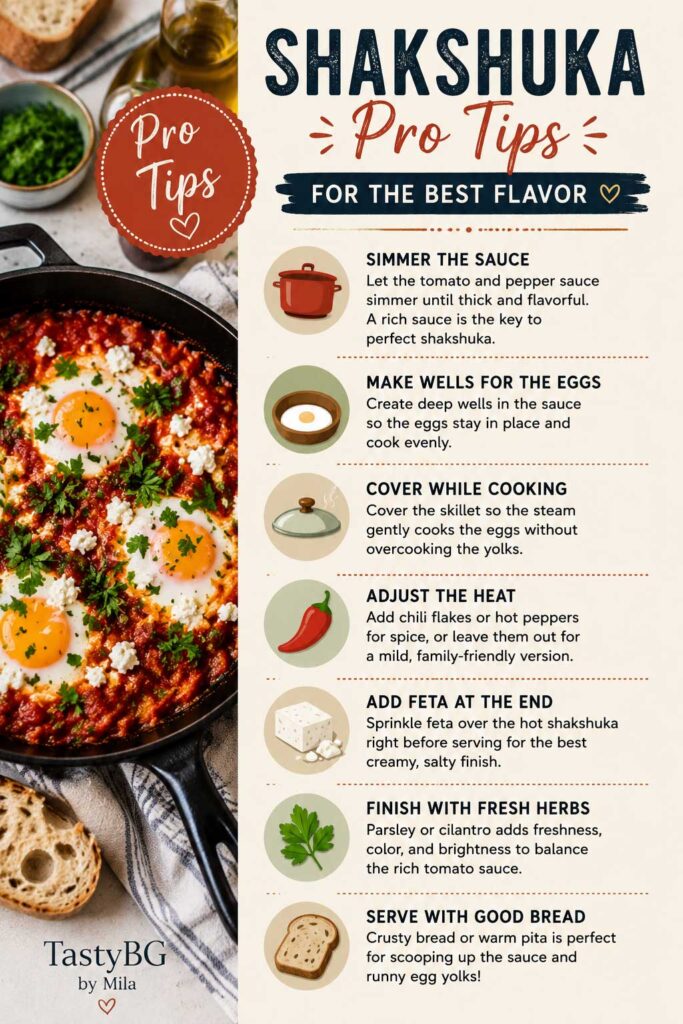
The eggs are one of the most important parts of shakshuka, and getting the texture right can completely change the final dish. Perfect shakshuka eggs should have fully set whites with soft, creamy yolks that gently blend into the tomato sauce when broken open. The texture should feel delicate and silky rather than dry or rubbery.
One of the easiest ways to achieve this is by covering the skillet with a lid while the eggs cook. The trapped steam helps cook the tops gently and evenly without overcooking the bottoms or drying out the sauce.
Cooking time usually depends on how soft you prefer the yolks. Around 5 minutes typically creates very runny yolks, while 7 minutes gives a slightly creamier medium texture. Closer to 9 minutes produces firmer yolks that are still tender but less runny.
Watching the eggs closely is important because they continue cooking slightly even after removing the skillet from heat. Taking the pan off the stove just before the eggs look fully done often gives the best final texture once served.
Another helpful trick is creating small wells in the sauce before cracking in the eggs. This helps keep them evenly spaced and allows the whites to cook more consistently throughout the skillet.
Best Cheese and Toppings for Shakshuka
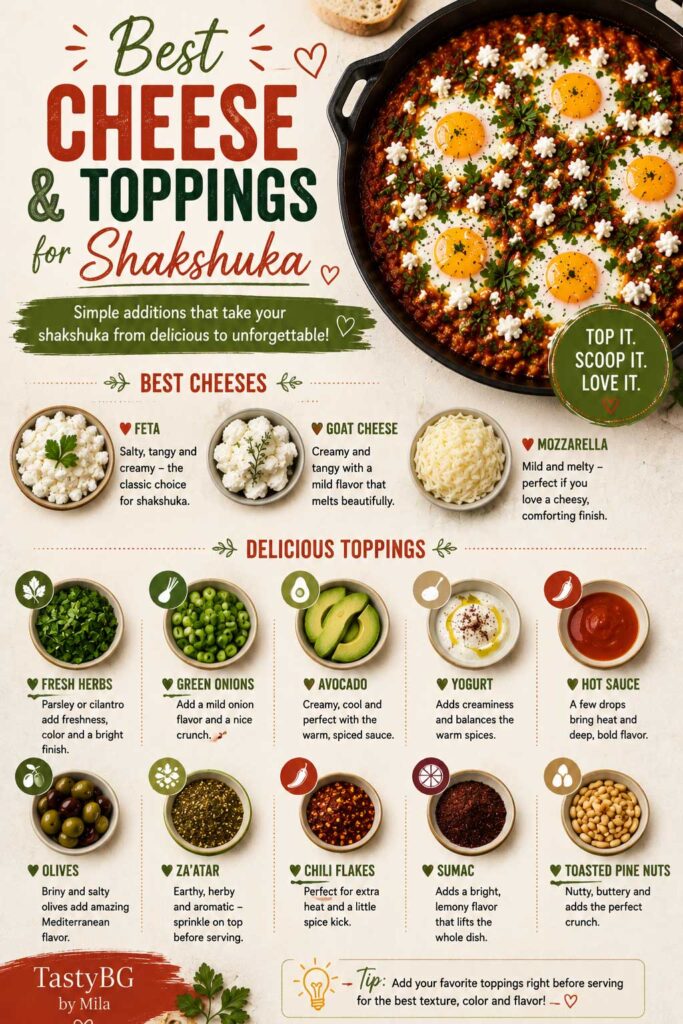
Feta is one of the most popular toppings for shakshuka because its salty, creamy texture balances the rich tomato sauce and warm spices beautifully. As the feta softens slightly over the hot skillet, it adds little pockets of creaminess that work perfectly with the eggs and peppers.
Fans of feta may also enjoy learning about traditional Bulgarian feta-style cheeses and their role in Balkan cooking.
Fresh herbs are also an important finishing touch. Parsley and cilantro both bring brightness and freshness that help lighten the deeper flavors of the tomatoes, olive oil, and spices. Green onions add a milder sharpness and a bit of crunch that gives the dish extra texture.
For people who enjoy richer toppings, sliced avocado or a spoonful of yogurt can add cooling creaminess that contrasts especially well with spicy shakshuka versions. Hot sauce, chili oil, or harissa are popular additions for extra heat, while olives and za’atar create an even stronger Mediterranean flavor profile.
Some cooks also finish shakshuka with extra smoked paprika or chili flakes right before serving to enhance the aroma and deepen the color of the skillet.
One of the best things about shakshuka toppings is that they are easy to customize depending on the mood, the season, or what you already have in your kitchen.
If you enjoy rich tomato-based Mediterranean dishes, you’ll also love this Matbucha Recipe, a slow-cooked tomato and pepper spread that shares many of the same flavors found in shakshuka.
Mediterranean Pantry Essentials
The quality of your Mediterranean ingredients can have a huge impact on the final flavor of shakshuka.
| Product | Why It Helps | Best For | Check Price |
|---|---|---|---|
| Extra Virgin Olive Oil | Rich Mediterranean flavor | Cooking and finishing | Check Price on Amazon |
| Smoked Paprika | Adds depth and smokiness | Richer tomato sauce | Check Price on Amazon |
| Ground Cumin | Essential shakshuka spice | Authentic flavor | Check Price on Amazon |
| Harissa Paste | Adds spicy North African flavor | Spicy shakshuka variations | Check Price on Amazon |
| Mediterranean Spice Set | Multiple seasonings in one package | Home cooks | Check Price on Amazon |
What to Serve With Shakshuka
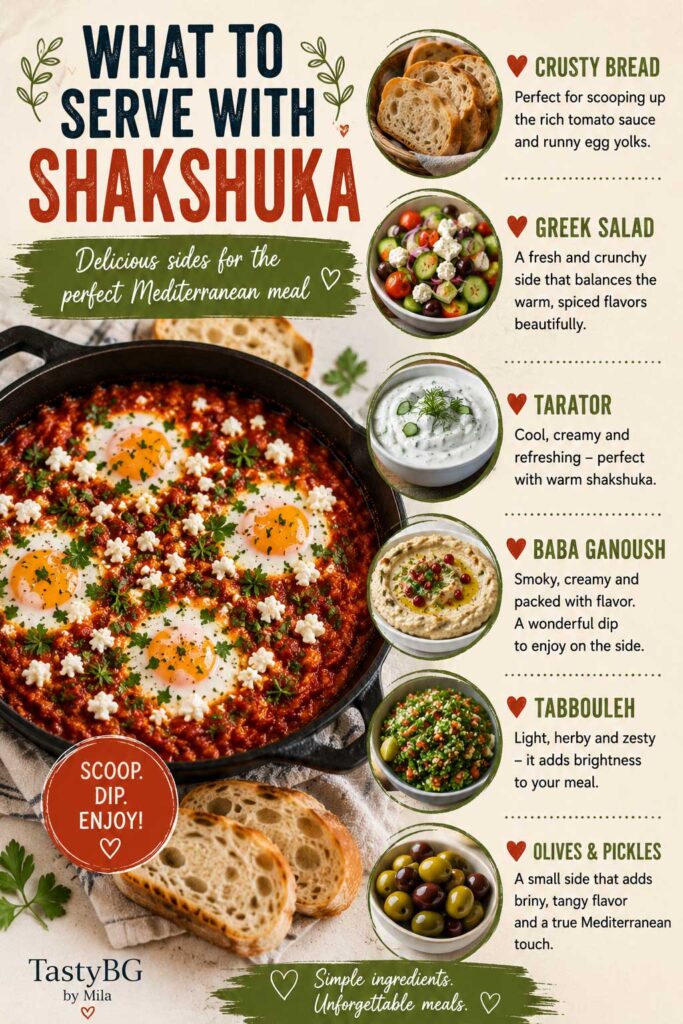
Shakshuka is one of those meals that practically demands good bread on the side because the rich tomato sauce and soft egg yolks are too flavorful to leave behind. Warm pita, crusty sourdough, toasted baguette slices, or soft flatbread all work beautifully for scooping directly from the skillet.
Warm bread is an important part of the experience, and many traditional Balkan breads are perfect for scooping up the rich tomato sauce.
For a more complete Mediterranean-style meal, fresh salads pair especially well with the warm spices and rich tomato base. A crisp Greek Salad Recipe adds brightness, freshness, and crunch that balances the creamy eggs perfectly.
Creamy Mediterranean dips also make excellent additions to the table. This Traditional Baba Ganoush Recipe pairs beautifully with shakshuka thanks to its smoky eggplant flavor and smooth texture.
During warmer months, something cool and refreshing can make the meal feel even lighter. This Authentic Tarator Recipe works especially well alongside shakshuka because the chilled yogurt and cucumber contrast the warm tomato sauce beautifully.
Another fresh side that complements shakshuka naturally is this Tabbouleh Salad Recipe, which adds herbs, lemon, and freshness that brighten the entire meal.
Together, these sides help transform shakshuka from a simple skillet breakfast into a full Mediterranean-style spread that feels colorful, comforting, and perfect for sharing.
Common Shakshuka Mistakes to Avoid
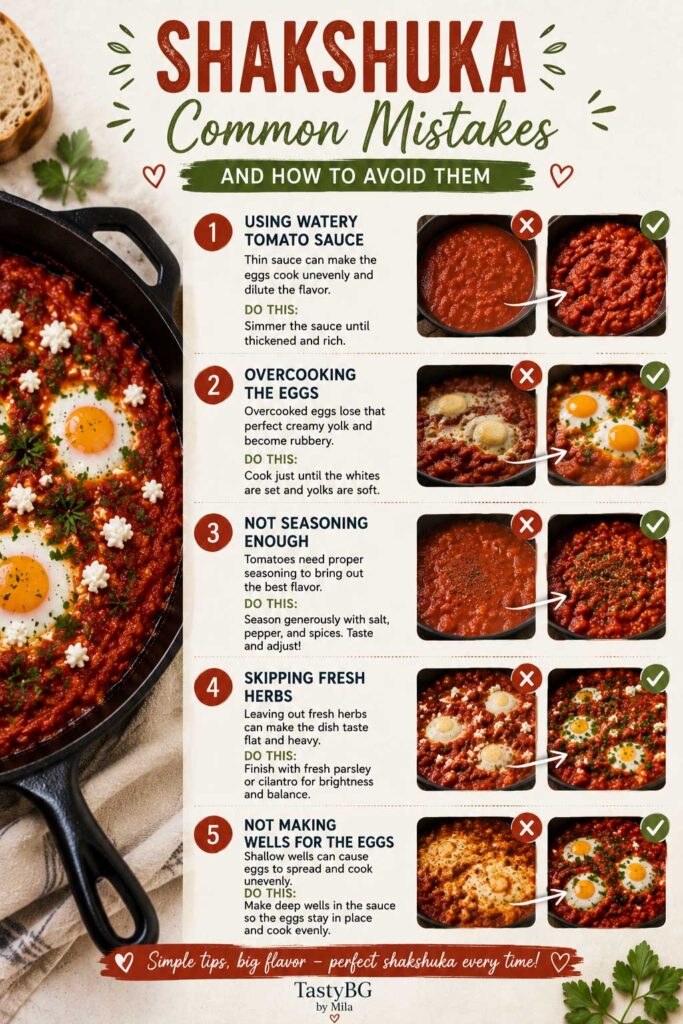
Even though shakshuka is considered a simple one-pan meal, a few small mistakes can dramatically affect the final texture and flavor. The good news is that most problems are easy to avoid once you understand how the dish works.
Using Watery Tomato Sauce
One of the most common mistakes is rushing the sauce. If the tomatoes and peppers do not simmer long enough, the mixture can stay watery and prevent the eggs from cooking evenly. A thinner sauce also weakens the overall flavor of the dish.
Allow the sauce enough time to slowly reduce until it becomes slightly thicker and richer before adding the eggs.
Overcooking the Eggs
The eggs should stay soft and creamy rather than dry or rubbery. Overcooked eggs lose the texture that makes shakshuka feel comforting and satisfying.
For the best results, remove the skillet from heat as soon as the egg whites are set while the yolks still look slightly soft. The residual heat will continue cooking them gently for another minute or two.
Not Seasoning the Sauce Properly
Tomatoes naturally need enough salt and seasoning to taste balanced and flavorful. Under-seasoned shakshuka can taste flat even when using good ingredients.
Taste the sauce before adding the eggs and adjust the salt, pepper, cumin, paprika, or chili as needed.
Skipping Fresh Herbs
Fresh parsley or cilantro added at the end may seem like a small detail, but they make a surprisingly big difference. The herbs brighten the rich tomato sauce and help balance the warm spices and creamy eggs.
Without fresh herbs, shakshuka can sometimes feel heavier and less vibrant.
Easy Shakshuka Variations
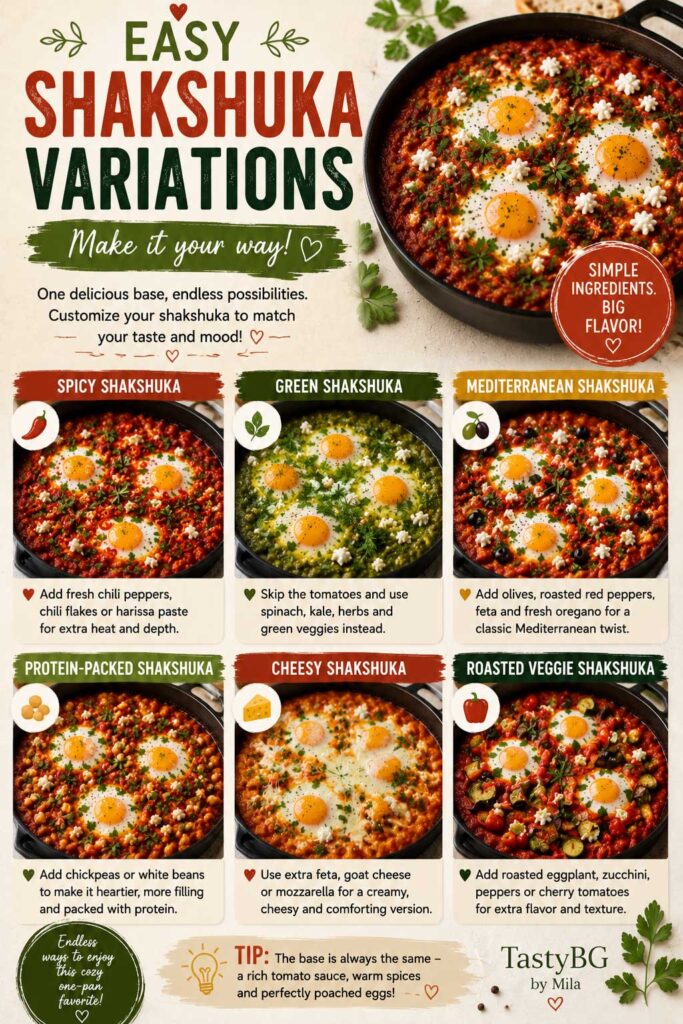
One of the reasons shakshuka became so popular around the world is because it is incredibly flexible. Once you learn the basic tomato-and-egg technique, the recipe becomes easy to customize depending on the season, the ingredients you have available, or the type of meal you want to create.
Spicy Shakshuka
For people who enjoy bold heat, spicy shakshuka is especially popular. Adding fresh chili peppers, chili oil, or harissa paste creates a deeper smoky spice that works beautifully with the tomatoes and eggs. Some versions become intensely fiery, while others stay balanced and warm.
Green Shakshuka
Green shakshuka offers a completely different flavor profile by replacing the tomato base with spinach, kale, herbs, green onions, zucchini, or other green vegetables. The result feels lighter, fresher, and especially good during spring and summer.
Mediterranean Shakshuka
Mediterranean-inspired shakshuka often includes ingredients like olives, roasted peppers, feta cheese, oregano, and fresh herbs. These additions create a saltier, brighter flavor that pairs beautifully with warm pita and fresh salads.
Protein-Packed Shakshuka
For a heartier meal, many people add chickpeas or white beans directly into the sauce for extra protein and texture. This version feels especially satisfying for lunch or dinner while still staying vegetarian.
If you enjoy bold pepper flavors, you may also like this Mediterranean Ajvar Chicken Bowl Recipe, which highlights another popular Mediterranean pepper-based ingredient.
Cheese Lover’s Shakshuka
Cheese lovers also create richer variations using feta, goat cheese, mozzarella, or even creamy yogurt swirled into the sauce. The creaminess balances the acidity of the tomatoes and gives the skillet an even more comforting texture.
Once you start experimenting with shakshuka variations, it quickly becomes one of those recipes you can make differently every single time while still keeping the cozy Mediterranean character that makes the dish so popular.
Shakshuka vs Menemen: What’s the Difference?
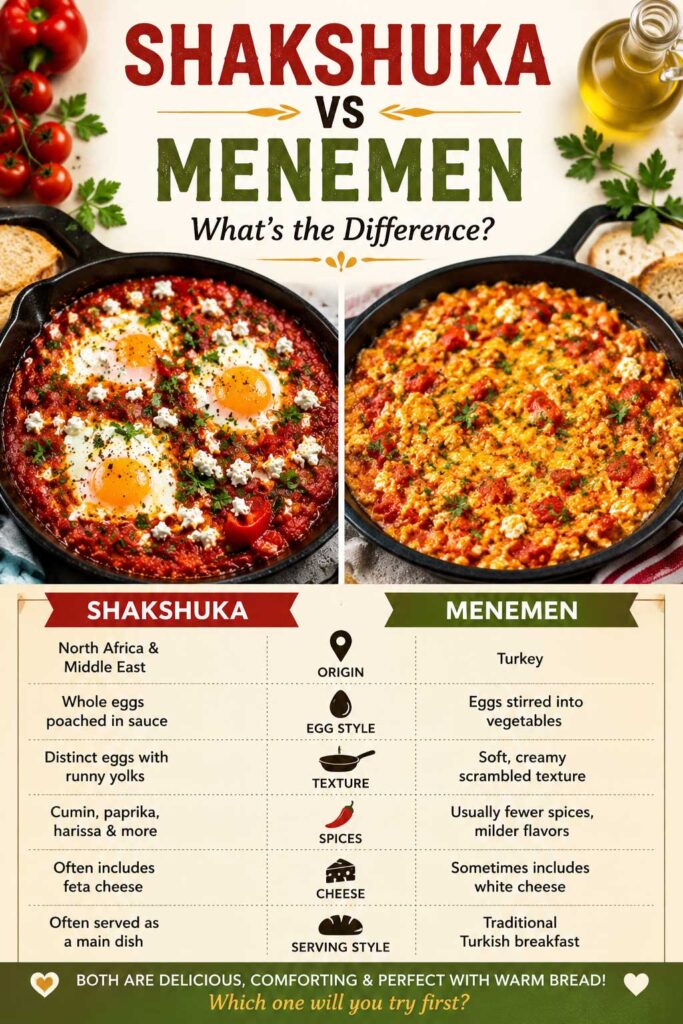
Shakshuka and Menemen are often compared because both dishes combine eggs with tomatoes and peppers in a single skillet. While they may look similar at first glance, the two recipes come from different culinary traditions and have distinct flavors, textures, and cooking methods.
Shakshuka is most commonly associated with North African and Middle Eastern cuisine. The eggs are typically cracked directly into a rich tomato and pepper sauce and left whole while they gently poach. Warm spices such as cumin, paprika, and sometimes harissa play an important role in creating its signature flavor. Many versions are finished with feta cheese, fresh herbs, or other Mediterranean toppings.
Menemen, on the other hand, is a beloved Turkish breakfast dish. Instead of poaching the eggs whole, the eggs are usually stirred directly into the tomatoes and peppers, creating a softer, creamier texture that resembles loose scrambled eggs. Menemen generally relies less on bold spices and focuses more on the natural flavors of tomatoes, peppers, butter, and eggs.
Quick Comparison
| Feature | Shakshuka | Menemen |
|---|---|---|
| Origin | North Africa & Middle East | Turkey |
| Egg Style | Whole eggs poached in sauce | Eggs stirred into vegetables |
| Texture | Distinct eggs with runny yolks | Soft scrambled texture |
| Spices | Cumin, paprika, harissa | Usually fewer spices |
| Cheese | Often includes feta | Sometimes includes white cheese |
| Serving Style | Often served as a main dish | Traditional Turkish breakfast |
Both dishes are delicious, comforting, and perfect for sharing with warm bread. If you enjoy bold Mediterranean flavors and runny egg yolks, you will probably prefer shakshuka. If you enjoy creamy eggs and a milder tomato flavor, Menemen may become your favorite.
The good news is that there is no wrong choice. Both recipes celebrate the simple combination of eggs, tomatoes, peppers, and fresh ingredients that have been enjoyed throughout Mediterranean and neighboring cuisines for generations.
Can You Make Shakshuka Ahead of Time?
Yes, and many people actually think shakshuka tastes even better the next day after the flavors have more time to develop. The tomato, pepper, garlic, and spice mixture becomes deeper and richer as it rests, which makes this dish especially convenient for meal prep or relaxed brunch gatherings.
One of the easiest approaches is to prepare the sauce ahead of time and store it in the refrigerator until you are ready to serve. When reheating, simply warm the sauce gently in a skillet, create small wells, and add fresh eggs directly into the simmering mixture. This helps keep the eggs soft and perfectly cooked rather than overcooked from reheating leftovers.
Because the sauce can be made in advance, shakshuka is also great for entertaining. You can prepare most of the work earlier in the day and finish the eggs just before serving, making the meal feel fresh, warm, and effortless when guests arrive.
How to Store and Reheat Shakshuka
Leftover shakshuka stores surprisingly well, especially if you keep the tomato and pepper sauce separate from freshly cooked eggs. Allow the dish to cool completely before transferring it into an airtight container and storing it in the refrigerator for up to 3 days.
For the best texture, many people prefer reheating only the sauce and then adding fresh eggs directly into the skillet before serving again. This helps preserve the soft, creamy texture that makes shakshuka so satisfying.
If you are reheating fully cooked leftovers, warm the shakshuka gently on the stovetop over low heat or microwave it in short intervals until heated through. Keep in mind that the eggs may become firmer during reheating, especially if microwaved too long.
The sauce itself often tastes even richer the next day because the garlic, tomatoes, peppers, and spices continue developing flavor as they rest.
For additional food storage recommendations and leftover safety guidelines, review the USDA Food Safety leftovers guide. Following proper storage practices helps maintain both quality and food safety.
Is Shakshuka Healthy?
Shakshuka is often considered a healthy Mediterranean-style meal because it combines simple whole ingredients that feel both nourishing and satisfying. Eggs provide protein that helps make the dish filling, while olive oil adds healthy fats commonly associated with Mediterranean cooking.
The tomato and pepper base also adds vegetables, fiber, and important nutrients like vitamin C, potassium, and antioxidants. Garlic, onions, herbs, and spices contribute additional flavor without relying on heavy processed ingredients.
Because shakshuka is built around vegetables, olive oil, herbs, and eggs, it fits naturally within many Mediterranean-style eating patterns. The Oldways Mediterranean Diet overview explains many of the principles that have made this style of eating popular around the world.
Another reason many people enjoy shakshuka as part of balanced eating is because it feels comforting without becoming overly heavy. The combination of vegetables, eggs, olive oil, and herbs creates a meal that is naturally vegetarian, protein-rich, and easy to customize depending on your preferences.
For another protein-focused breakfast idea, take a look at this High Protein Balkan Breakfast Bowl Recipe.
You can also adjust shakshuka to fit different eating styles. Some people serve it with crusty bread for a more traditional Mediterranean-style meal, while others keep it lower in carbohydrates by enjoying it on its own or alongside fresh salads and vegetables.
Frequently Asked Questions About Easy Shakshuka Recipe
Is shakshuka spicy?
Traditional shakshuka is usually warmly spiced rather than extremely hot. Most versions rely more on flavors like paprika, cumin, garlic, and tomatoes than heavy heat. However, you can easily make it spicier by adding chili flakes, harissa, fresh hot peppers, or your favorite hot sauce.
Can I use fresh tomatoes instead of canned?
Yes, especially during summer when tomatoes are naturally sweeter and more flavorful. Fresh ripe tomatoes create a lighter, fresher sauce, although canned tomatoes often provide deeper flavor and consistency during colder months.
What bread goes best with shakshuka?
Warm crusty bread is one of the best parts of serving shakshuka because it helps scoop up the rich tomato sauce and soft egg yolks. Pita, sourdough, rustic country bread, toasted baguette, or flatbread all work beautifully.
Can shakshuka be frozen?
The tomato and pepper sauce freezes very well for future meals. However, the eggs are best cooked fresh when serving because frozen eggs can become rubbery after reheating. Many people freeze only the sauce, then reheat it later and add fresh eggs directly into the skillet.
Is shakshuka served for breakfast or dinner?
Both. Shakshuka is popular for breakfast and brunch, but many people also serve it as a quick lunch or cozy vegetarian dinner. Since it is filling, protein-rich, and made in one pan, it works well almost any time of day.
Do I need feta cheese?
No. Feta is optional, but it adds a creamy, salty contrast that pairs beautifully with the rich tomato sauce and warm spices. If you prefer, you can also use goat cheese, mozzarella, yogurt, or simply enjoy shakshuka without cheese at all.
A Mediterranean Breakfast You Will Want To Make Again
This easy shakshuka recipe proves that some of the most comforting meals come from the simplest ingredients. Slowly simmered tomatoes, sweet peppers, garlic, olive oil, warm spices, creamy eggs, and salty feta all come together in one skillet to create something that feels rustic, cozy, and deeply satisfying.
One of the best things about shakshuka is how flexible it becomes once you make it a few times. It works beautifully for slow weekend breakfasts, casual brunch gatherings, quick weeknight dinners, or even healthy meal-prep lunches with fresh bread and salad on the side. The flavors feel rich and comforting without becoming overly heavy, which is one reason this dish has remained so loved across Mediterranean and Middle Eastern kitchens for generations.
Once you break into the soft egg yolks and scoop up the rich tomato sauce with warm crusty bread, it becomes easy to understand why shakshuka has become such a beloved classic around the world. It is simple food at its best — warm, flavorful, colorful, and meant to be shared around the table.
If you enjoy fresh Mediterranean flavors, this Healthy Shopska Salad Meal Prep Recipe makes another easy and satisfying meal to add to your weekly rotation.
Did You Make This Shakshuka Recipe?
If you enjoyed this Shakshuka recipe, be sure to explore more Mediterranean and Balkan-inspired recipes here on TastyBG. From fresh salads and flavorful vegetable dishes to protein-packed breakfasts and comforting family meals, you’ll find plenty of recipes that celebrate simple ingredients and bold Mediterranean flavors.
For a complete Mediterranean-style meal, try serving your shakshuka alongside a fresh Greek Salad, creamy Baba Ganoush, refreshing Tarator, warm pita bread, or a bright Tabbouleh Salad. These dishes pair beautifully with the rich tomato sauce and warm spices that make shakshuka so satisfying.
If you enjoy easy one-pan meals and Mediterranean breakfast recipes, be sure to explore more favorites throughout the site, including healthy breakfast bowls, vegetable-forward dishes, and traditional recipes inspired by the cuisines of the Mediterranean and Balkans.
If you make this recipe, tag @tastybg_ on Instagram and use #tastybg to share your homemade shakshuka with us. We’d love to see your version of this cozy skillet of eggs, tomatoes, peppers, and Mediterranean spices!