
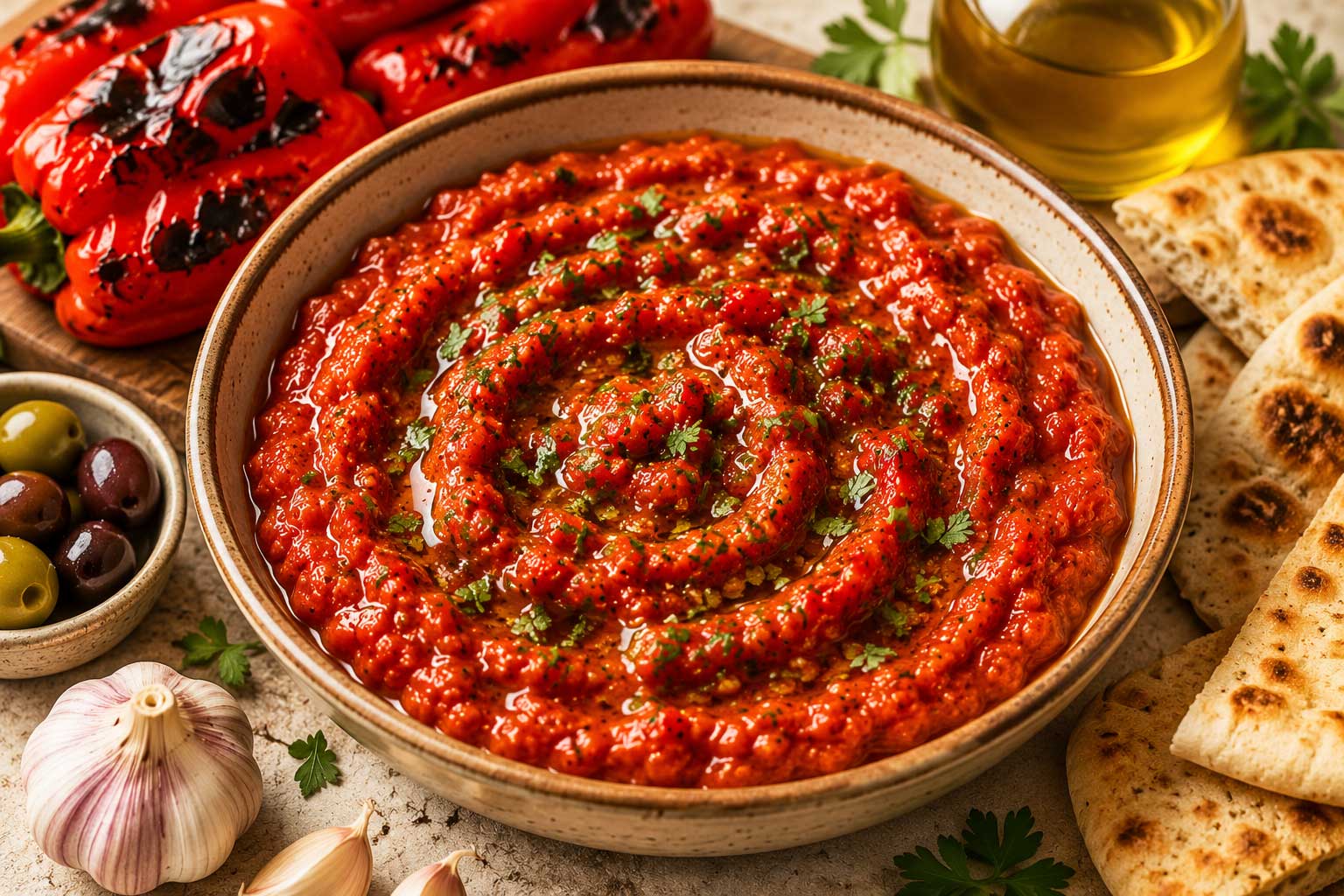
If you love rich Mediterranean flavors, this traditional Matbucha recipe is one of those dishes that can transform a simple meal into something truly memorable. Made with slow-cooked tomatoes, roasted peppers, garlic, olive oil, and warm spices, matbucha is a classic Moroccan tomato and pepper dip known for its deep flavor and silky texture.
Across Morocco and throughout the Mediterranean, matbucha is often served as part of mezze spreads, family breakfasts, grilled meat platters, alongside dishes like a traditional Baba Ganoush recipe, where fresh bread is never far away. While the ingredients are simple, the slow cooking process creates a remarkable depth of flavor that is savory, slightly sweet, gently smoky, and incredibly comforting.
One of the reasons matbucha has remained popular for generations is its versatility. You can serve it warm, chilled, or at room temperature. It works beautifully as a dip for pita bread, a topping for eggs, a side dish for grilled meats, or even a flavorful spread for sandwiches and wraps.
Unlike fresh tomato salsas or uncooked vegetable dips, authentic matbucha is intentionally simmered for a long time. As the tomatoes slowly reduce, they become rich and jammy, the peppers soften completely, and the garlic infuses the olive oil with flavor. The result is a thick, silky spread that tastes far more complex than its humble ingredient list would suggest.
Many people discover that matbucha tastes even better the next day, which is one reason it remains a favorite for meal prep and family gatherings. Once you make this homemade Matbucha recipe, it quickly becomes one of those Mediterranean recipes you find yourself returning to again and again.
What Makes This Matbucha Recipe So Rich and Flavorful
The secret behind a truly great matbucha recipe is patience. Unlike quick tomato sauces or fresh vegetable dips, authentic matbucha develops its signature flavor slowly as the ingredients gently simmer together over time.
As the tomatoes cook down, they release their moisture and become naturally sweeter and more concentrated. The peppers soften completely, the garlic mellows, and the olive oil absorbs the flavors of the vegetables and spices. Nothing is rushed, which is exactly what gives matbucha its remarkable depth.
When cooked properly, the final texture should be thick, silky, and spreadable rather than watery or chunky. Every spoonful delivers a balance of flavors that feels far more complex than the simple ingredient list might suggest.
Sweetness From Slow-Cooked Tomatoes and Peppers
As the vegetables slowly reduce, their natural sugars become more concentrated. This creates a subtle sweetness that balances the acidity of the tomatoes and gives matbucha its comforting, mellow character.
Gentle Heat From Paprika and Chili Peppers
Traditional matbucha often includes paprika, chili peppers, or both. Rather than creating aggressive heat, the slow cooking process softens the spice and allows it to blend naturally into the dish.
Richness From Olive Oil
Good olive oil plays a major role in authentic matbucha. It creates the silky texture the dish is known for while helping carry the flavors of the garlic, peppers, and spices throughout the mixture.
Olive oil has long been one of the foundations of Mediterranean cooking and contributes both flavor and texture to traditional matbucha.
Earthiness From Garlic and Spices
Garlic, paprika, cumin, and other warm seasonings add depth and complexity without overwhelming the vegetables. Together, they create the savory Mediterranean flavor that makes matbucha so satisfying.
Bright Tomato Acidity
Even after a long simmer, the tomatoes retain enough brightness to keep the dish balanced. This gentle acidity prevents matbucha from feeling too heavy while enhancing the sweetness of the peppers and richness of the olive oil.
When all of these elements come together, the result is a rich, silky spread that feels both comforting and deeply flavorful. It is one of the reasons matbucha has remained a beloved staple across Mediterranean and North African kitchens for generations.
What Is a Traditional Matbucha Recipe?
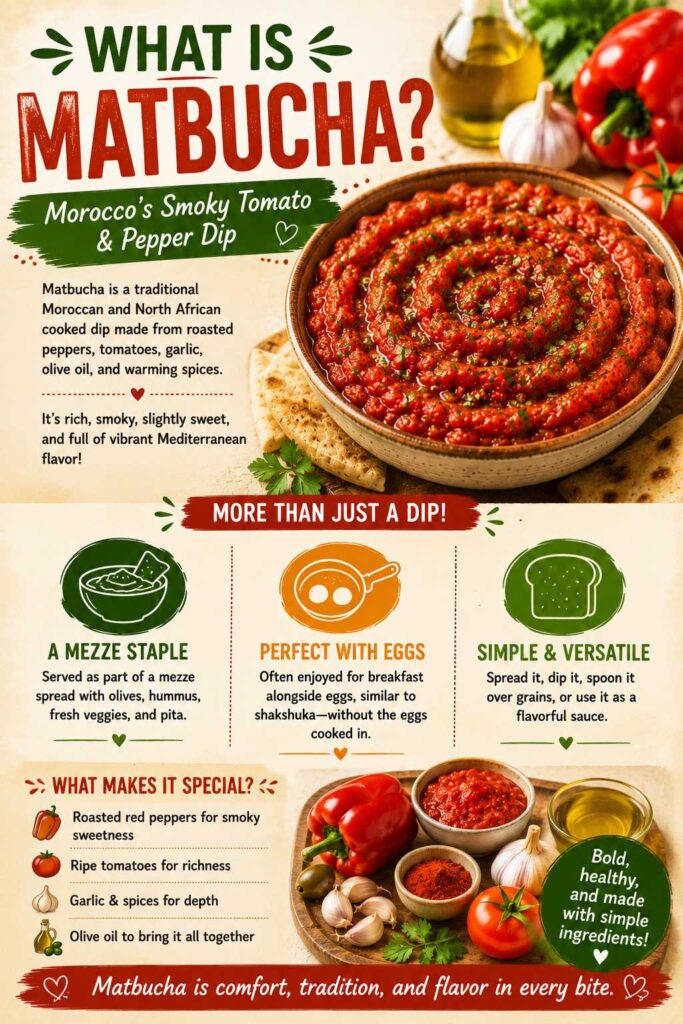
Matbucha is a traditional Moroccan cooked tomato and pepper salad or dip that is enjoyed throughout North Africa and across many Mediterranean and Middle Eastern tables. Rich, slow-cooked, and deeply flavorful, it transforms simple ingredients like tomatoes, peppers, garlic, olive oil, and spices into a dish that feels both comforting and remarkably complex.
The dish became especially popular in Moroccan Jewish cuisine before later gaining widespread popularity in Israeli cuisine as well. The word matbucha roughly translates to “cooked salad,” which perfectly describes its soft, simmered texture compared to fresh vegetable salads.
Unlike chunky fresh tomato dips, authentic matbucha is intentionally cooked low and slow until the vegetables completely soften and the flavors become rich and concentrated. The tomatoes break down into a silky base, the peppers add sweetness and depth, and the olive oil helps create the luxurious texture that makes the dish so distinctive.
Like many traditional recipes, matbucha varies slightly from family to family. Some versions are mild and sweet, while others include extra chili peppers for additional heat. Certain regional variations may also include cumin, preserved lemon, cayenne, or other spices.
Today, matbucha is served in many different ways depending on the meal and occasion.
Many of matbucha’s culinary roots can be traced to North African food traditions discussed in this Moroccan cuisine overview.
As Part of a Mezze Spread
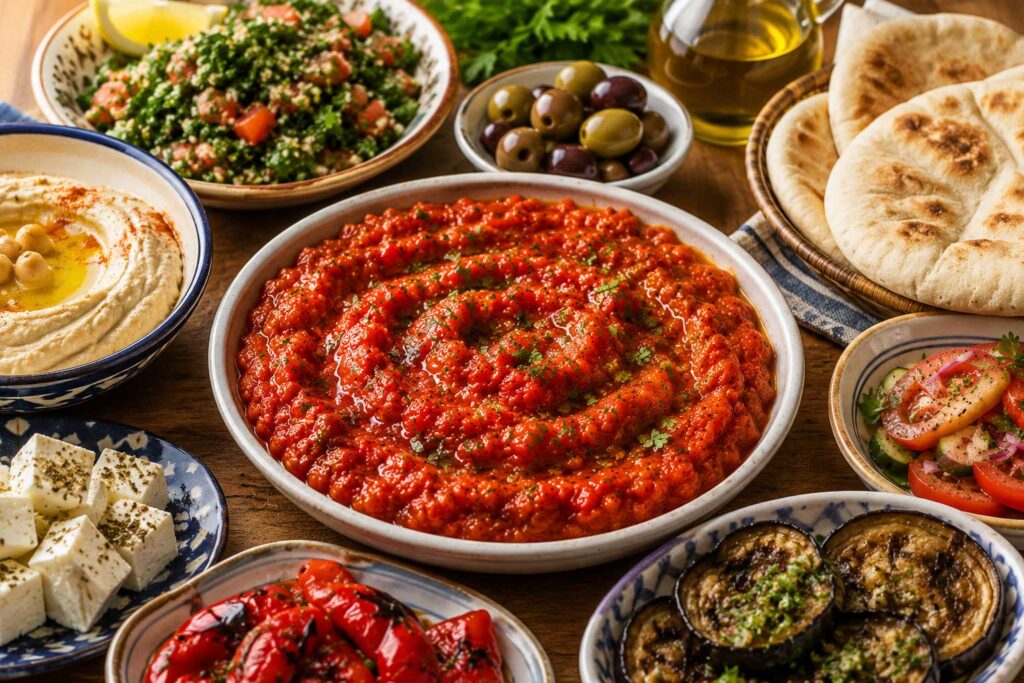
Matbucha is often served alongside hummus, baba ganoush, olives, fresh vegetables, warm bread, and fresh Tabbouleh Salad as part of a Mediterranean appetizer platter.
With Grilled Meats
The sweet, savory flavor of matbucha pairs beautifully with grilled chicken, lamb kebabs, beef, and fish. It works almost like a condiment while adding far more depth than a simple sauce.
With Bread and Sandwiches
Many people enjoy matbucha with warm pita bread, crusty sourdough, or spread inside sandwiches and wraps. The thick texture makes it perfect for scooping and spreading.
Alongside Eggs
Matbucha is especially delicious with fried eggs, scrambled eggs, and shakshuka-style breakfasts. The slow-cooked tomatoes and peppers naturally complement eggs and create a hearty Mediterranean meal.
The rich tomato and pepper base is one reason matbucha is often compared to a traditional Shakshuka recipe, although matbucha is typically served without eggs.
As Part of Breakfast
In many Mediterranean and Middle Eastern households, matbucha regularly appears as part of breakfast spreads that include cheeses, olives, eggs, vegetables, and fresh bread. Its bold flavor and versatility make it a natural addition to the table.
Its deep flavor, versatility, and comforting texture are exactly why matbucha remains one of the most beloved tomato-based dishes throughout the Mediterranean and North Africa.
Matbucha vs Shakshuka: What’s the Difference?
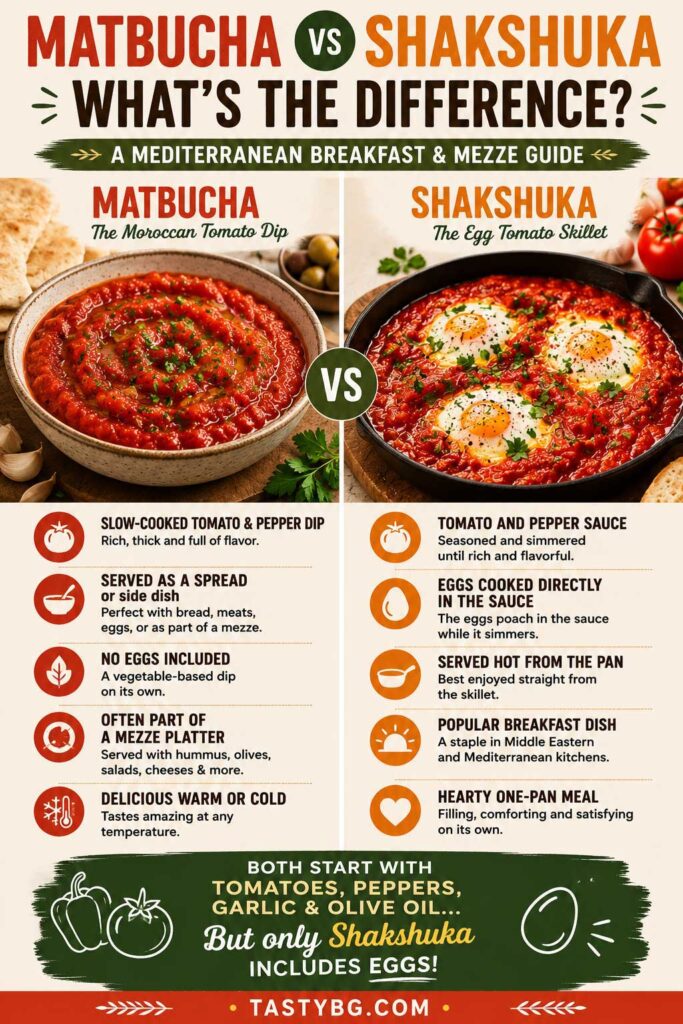
Although matbucha and shakshuka share many of the same ingredients, they serve different purposes on the table. Matbucha is primarily a dip or side dish, while shakshuka is a complete meal built around eggs cooked directly in the tomato sauce.
Because both dishes are built around tomatoes, peppers, garlic, olive oil, and Mediterranean spices, many people assume matbucha and shakshuka are the same thing. While they share similar ingredients, they are actually served very differently.
What Is Matbucha?
Matbucha is a slow-cooked Moroccan tomato and pepper salad or dip. The vegetables are simmered until thick, silky, and spreadable. It is commonly served as part of a mezze platter, alongside bread, grilled meats, salads, and other appetizers.
What Is Shakshuka?
Shakshuka begins with a similar tomato and pepper base, but eggs are cooked directly in the sauce. The dish is usually served hot and enjoyed as a breakfast, brunch, or light dinner throughout North Africa and the Mediterranean.
Key Differences
| Matbucha | Shakshuka |
|---|---|
| Served as a dip, spread, or side dish | Served as a complete meal |
| No eggs included | Eggs cooked directly in the sauce |
| Often served cold, room temperature, or warm | Usually served hot |
| Part of mezze platters and appetizers | Popular breakfast and brunch dish |
| Thick, spreadable texture | More sauce-like consistency |
Which One Should You Make?
If you’re looking for a versatile dip that can be served with bread, vegetables, grilled meats, and Mediterranean appetizers, matbucha is the better choice. If you want a hearty breakfast or brunch dish built around eggs and tomato sauce, shakshuka is the way to go.
Many Mediterranean cooks actually prepare matbucha first and then use leftovers as the base for a delicious Shakshuka recipe, making the two dishes closely related despite their differences.
Why You’ll Love This Moroccan Tomato and Pepper Dip
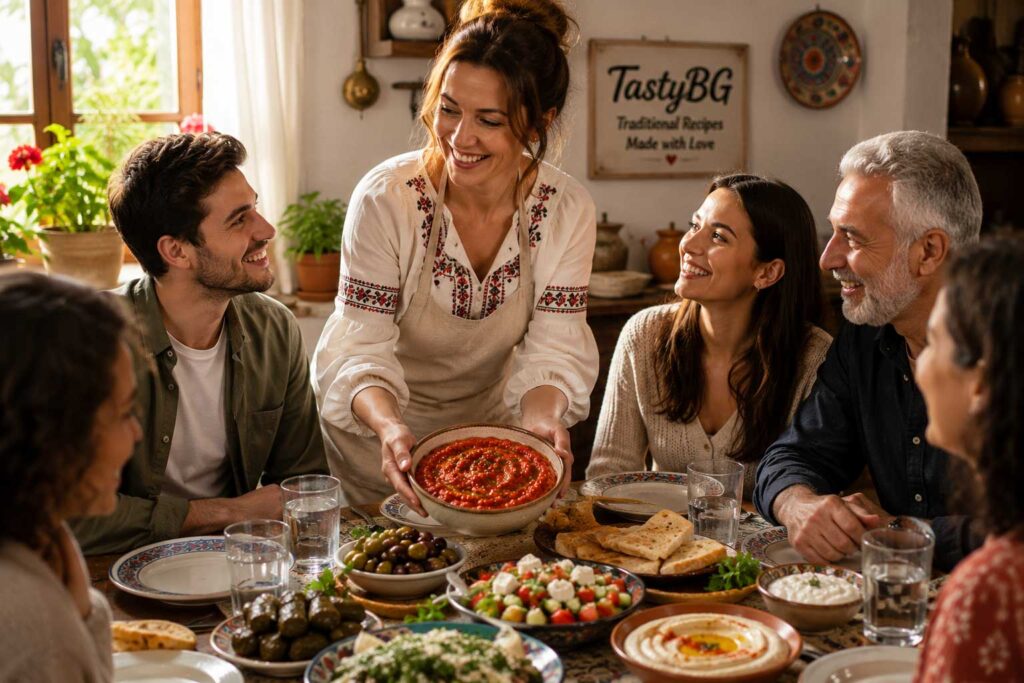
One of the reasons matbucha has remained popular for generations is that it fits naturally into almost any Mediterranean-inspired meals, whether served as a dip, side dish, breakfast addition, or part of a mezze spread.
This matbucha recipe is simple to make but incredibly rewarding. Even though the ingredient list is humble, the slow cooking process transforms tomatoes, peppers, garlic, olive oil, and spices into something deeply rich and flavorful.
One reason this Matbucha recipe has remained popular for generations is its incredible versatility.
One of the best things about homemade matbucha is that you do not need advanced cooking skills or complicated ingredients to create authentic Mediterranean flavor. Most of the magic happens naturally while the vegetables slowly simmer and concentrate over time.
Matbucha also fits naturally into the eating patterns highlighted in the Mediterranean Diet Overview.
Rich Restaurant-Quality Flavor
Slow cooking creates a deep, savory flavor that tastes surprisingly luxurious despite relying on simple pantry ingredients. As the tomatoes and peppers slowly reduce, they develop the rich taste and silky texture that make traditional matbucha so memorable.
Naturally Vegan and Vegetarian
Traditional matbucha is naturally plant-based, making it an excellent addition to vegan, vegetarian, and Mediterranean-style meals. It delivers bold flavor without requiring any animal products or specialty ingredients.
Budget-Friendly Ingredients
Tomatoes, peppers, garlic, olive oil, and spices are affordable ingredients that create impressive homemade flavor. This is proof that simple ingredients can often produce the most satisfying dishes.
Excellent for Meal Prep
Matbucha stores beautifully in the refrigerator and often tastes even better the next day. As it rests, the flavors continue to blend together, creating even more depth and complexity.
Extremely Versatile
One of the reasons matbucha has remained popular for generations is its incredible versatility. It can be served as a dip with warm pita bread, spread onto sandwiches and wraps, enjoyed as a side dish alongside grilled meats, or used as a flavorful sauce for vegetables and grain bowls. Many people also include matbucha as part of a traditional mezze platter or spoon it over eggs, chicken, lamb, and fish for an easy boost of Mediterranean flavor.
Pairs Beautifully With Mediterranean Meals
Matbucha fits naturally into mezze platters alongside baba ganoush, hummus, falafel, olives, fresh salads, grilled vegetables, and warm pita bread. Its balance of richness, brightness, sweetness, and gentle spice makes it one of the most versatile Mediterranean tomato dishes you can keep in your kitchen.
The Best Tomatoes and Peppers to Use
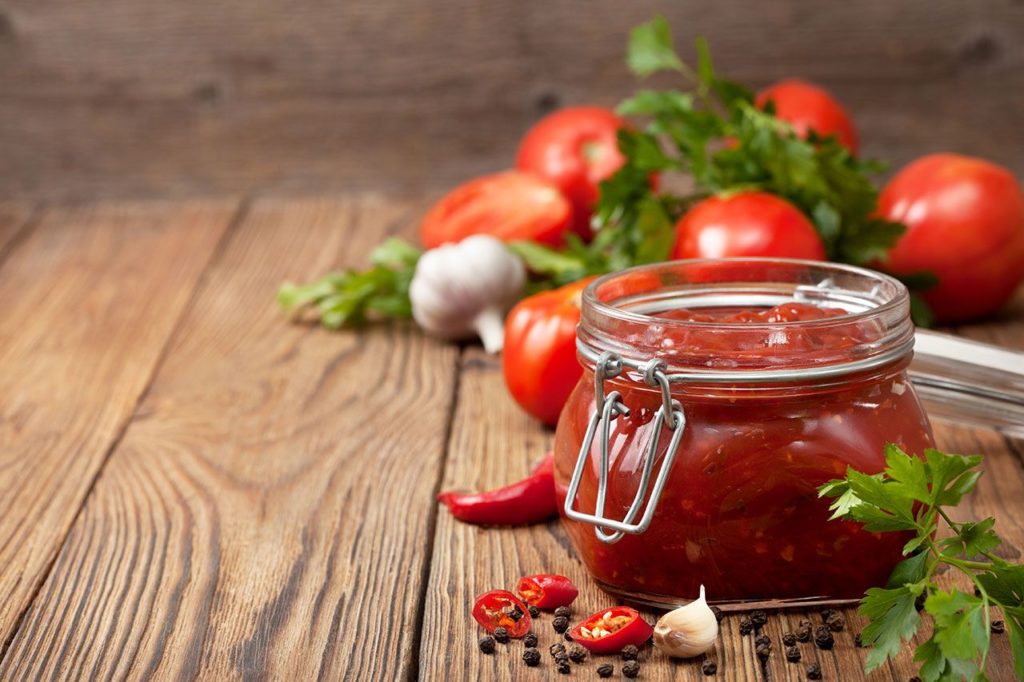
Because tomatoes and peppers are the foundation of a traditional matbucha recipe, choosing the right varieties can dramatically improve the final flavor and texture.
The goal is to create a rich, concentrated tomato base with naturally sweet roasted pepper flavor rather than a thin or watery sauce. Since matbucha relies on only a handful of ingredients, the quality of those ingredients makes a noticeable difference.
Since tomatoes make up most of the recipe, their quality has a huge impact on the final flavor. Choosing ripe, flavorful tomatoes is one of the easiest ways to make homemade matbucha taste exceptional.
Best Tomatoes for Matbucha
Roma tomatoes are one of the best choices for homemade matbucha because they contain less water and more concentrated tomato flavor. Their firmer texture also helps the mixture reduce into the thick, silky consistency that authentic matbucha is known for.
Vine-ripened tomatoes are another excellent option when they are fully in season. Their natural sweetness and rich flavor create a particularly delicious batch of matbucha during the summer months.
Using quality tomatoes is one of the easiest ways to improve any Matbucha recipe.
If fresh tomatoes are bland or out of season, high-quality canned whole tomatoes can actually produce better results than underripe supermarket tomatoes. Many experienced cooks prefer San Marzano-style tomatoes during colder months because they provide consistent sweetness and depth of flavor.
When summer tomatoes are at their peak, however, many home cooks prefer fresh tomatoes for their brighter flavor and natural sweetness.
Best Peppers for Matbucha
Roasted red bell peppers are the traditional choice for matbucha because they become naturally sweet and silky after roasting. Their sweetness balances the acidity of the tomatoes while adding rich roasted flavor to the finished dish.
For those who enjoy more heat, some cooks also include Fresno peppers, serrano peppers, or fresh chili peppers. The amount can easily be adjusted depending on how mild or spicy you prefer your matbucha.
Why Roasting the Peppers Matters
Roasting the peppers before simmering is one of the most important steps for creating authentic matbucha flavor. As the skins blister and char, the peppers develop a subtle smokiness that adds another layer of complexity to the dish.
Once peeled, the roasted peppers become soft and silky, allowing them to blend beautifully into the slow-cooked tomato mixture. This extra step requires a little more time, but it gives homemade matbucha the rich depth and distinctive flavor that makes it so memorable.
Affiliate Disclosure: This article may contain affiliate links. If you purchase through these links, I may earn a small commission at no additional cost to you.
Best Ingredients for Authentic Matbucha
Choosing quality ingredients is one of the easiest ways to improve homemade matbucha. A good olive oil and flavorful tomatoes can make a noticeable difference in the final dish.
| Product | Why We Like It | Check Price |
|---|---|---|
| Extra Virgin Olive Oil | Rich Mediterranean flavor | Check Price on Amazon |
| Smoked Paprika | Adds depth and warmth | Check Price on Amazon |
| San Marzano Tomatoes | Excellent when fresh tomatoes aren’t available | Check Price on Amazon |
| Mediterranean Sea Salt | Clean, balanced seasoning | Check Price on Amazon |
| Preserved Lemons | Great for Moroccan variations | Check Price on Amazon |
The Secret to Deep Flavor: Slow Cooking
Authentic matbucha is never rushed. One of the biggest differences between average matbucha and truly exceptional homemade matbucha comes down to how slowly the tomatoes and peppers are allowed to cook.
Quick cooking often leaves the tomatoes tasting watery and overly acidic, while the flavors remain separate rather than fully blending together. Slow simmering transforms both the texture and flavor, turning a handful of simple ingredients into something remarkably rich and satisfying.
Natural Sweetness Develops Over Time
As the tomatoes and peppers slowly cook down, their natural sugars become more concentrated. This gentle sweetness balances the garlic, olive oil, and spices while reducing the sharp acidity often found in freshly cooked tomatoes.
Slow cooking is what separates an average dish from an exceptional Matbucha recipe.
The Flavor Becomes Richer and More Complex
Long simmering creates a deeper, more developed flavor that simply cannot be achieved with quick cooking. The vegetables gradually soften, caramelize slightly, and blend together into a rich Mediterranean-style spread.
The Texture Turns Silky and Jammy
One of the signature characteristics of a great matbucha recipe is its thick, silky consistency. Slow cooking allows excess moisture to evaporate naturally while the vegetables soften into a rich, spreadable texture that is perfect for bread, sandwiches, and mezze platters.
The Color Deepens Dramatically
As the mixture reduces, the tomatoes darken into a richer red color that reflects the concentration of flavor happening in the pan. The finished dish looks far more vibrant and appetizing than a quickly cooked tomato mixture.
Olive Oil Carries the Flavor Throughout the Dish
During the long simmer, the olive oil gradually absorbs the flavors of the garlic, peppers, paprika, and chili. This creates the luxurious mouthfeel and silky finish that traditional matbucha is known for.
Many Moroccan cooks intentionally simmer matbucha for an hour or longer because the transformation becomes dramatic over time. The longer the ingredients cook gently together, the deeper, smoother, and more comforting the final flavor becomes.
Essential Cookware for Making Matbucha
Matbucha rewards patience, and the right cookware helps create the rich, silky texture that makes this traditional Moroccan dish so memorable.
| Product | Why We Like It | Check Price |
|---|---|---|
| Enameled Dutch Oven | Ideal for long simmering | Check Price on Amazon |
| Deep Sauté Pan | Excellent for reducing tomatoes | Check Price on Amazon |
| Silicone Spatula | Perfect for stirring thick sauces | Check Price on Amazon |
| Chef’s Knife | Makes vegetable prep easier | Check Price on Amazon |
| Wooden Spoon Set | Traditional and durable | Check Price on Amazon |
How Spicy Should Matbucha Be?
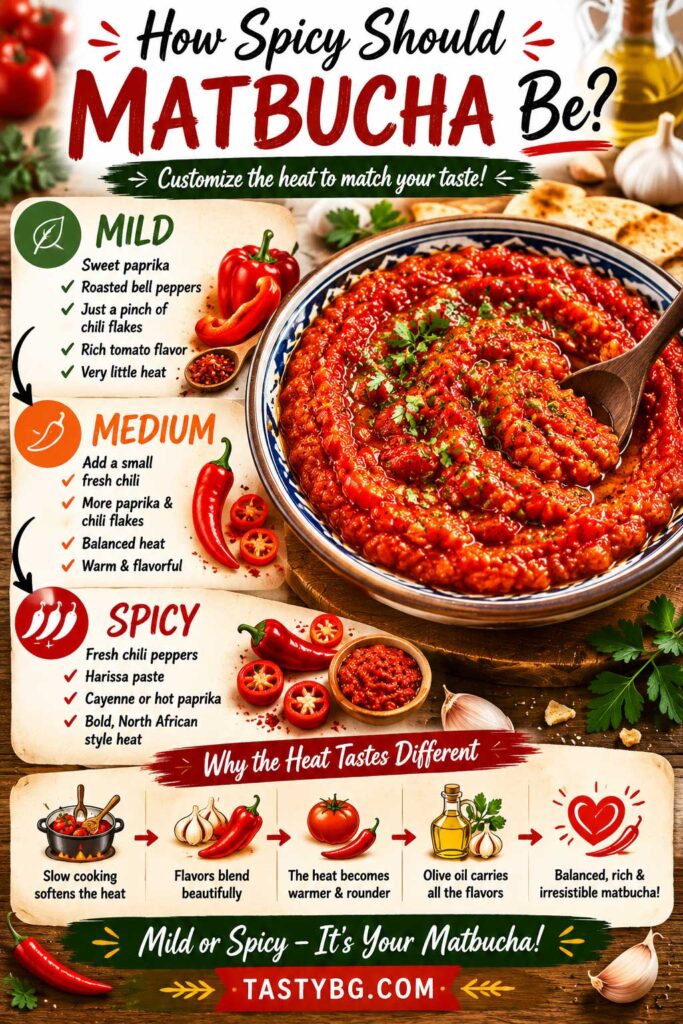
Traditional matbucha can range from very mild to surprisingly spicy depending on the region, family recipe, and personal preference. Some versions highlight the natural sweetness of slow-cooked tomatoes and roasted peppers, while others incorporate enough chili to create a noticeable warmth that lingers pleasantly after each bite.
One of the advantages of making matbucha at home is that the spice level can be adjusted easily to suit your taste.
For Mild Matbucha
If you prefer a gentler flavor, stick with sweet paprika, roasted red bell peppers, and just a small pinch of chili flakes. This creates a rich tomato-forward matbucha with subtle warmth but very little actual heat.
For Medium Heat
For a balanced level of spice, add a small fresh chili pepper or slightly increase the amount of paprika and chili flakes. This allows the peppers and tomatoes to remain the dominant flavors while adding a pleasant kick in the background.
For Spicy Matbucha
If you enjoy bolder flavors, traditional additions may include fresh chili peppers, cayenne pepper, harissa paste, or hot paprika. These ingredients create the deeper North African-style heat often found in spicier regional versions of matbucha.
Why the Heat Feels Different
One reason matbucha tastes different from many spicy sauces is the slow cooking process itself. As the tomatoes, peppers, garlic, and spices simmer together, the heat becomes softer, warmer, and more rounded. Instead of feeling sharp or aggressive, the spice blends into the dish and becomes part of its overall depth and richness.
Matbucha Recipe
Matbucha (Mott-Boo-Chah) means ‘cooked salad’ in Arabic. It is served as an appetizer, often as part of a meze table. It has many variations of the recipe and it is one of the most popular salad in Israel.
- Small pot
- Large bowl
- Frying pan pan
- Slotted spoon
- Cutting board
- Sharp knife
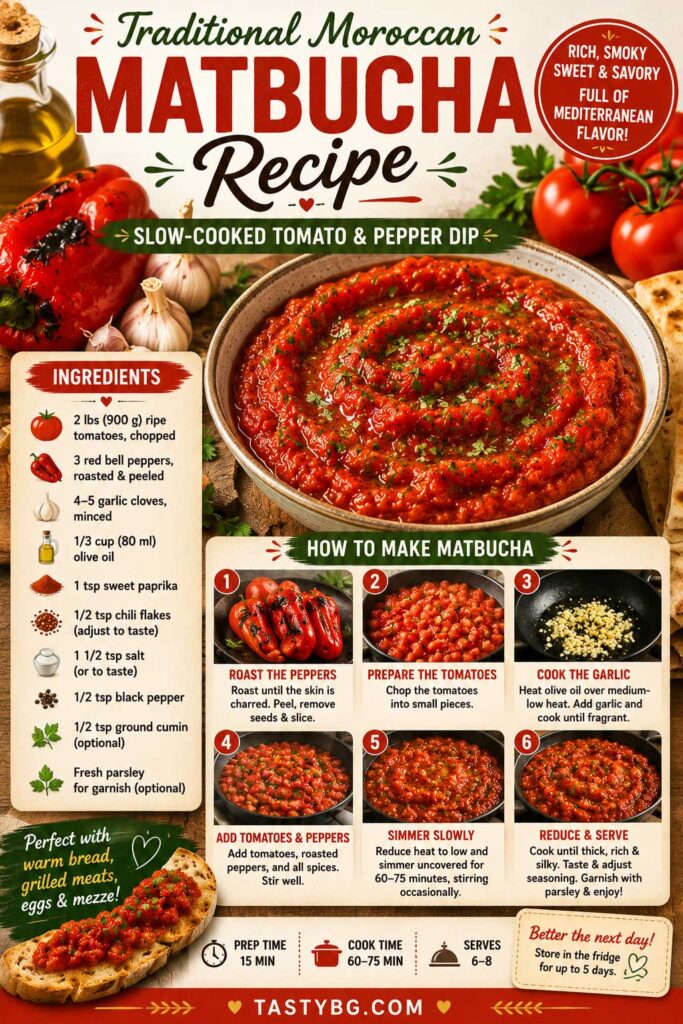
- 2 pounds ripe Roma tomatoes (chopped)
- 3 large red bell peppers
- 6 garlic cloves (minced)
- ¼ cup extra virgin olive oil
- 1 tablespoon sweet paprika
- ½ teaspoon smoked paprika (optional)
- ¼ teaspoon cayenne pepper or chili flakes (adjust to taste)
- 1 teaspoon salt
- ½ teaspoon black pepper
- ¼ teaspoon ground cumin (optional)
Roast the bell peppers over an open flame, under a broiler, or in a 425°F oven until the skins are charred and blistered.
- Transfer the peppers to a bowl and cover for 10 minutes. Peel away the skins, remove the seeds, and slice the peppers into thin strips.
- Heat the olive oil in a large skillet or wide saucepan over medium-low heat.
- Add the garlic and cook for about 1 minute until fragrant, being careful not to brown it.
- Stir in the chopped tomatoes, roasted peppers, paprika, cayenne, salt, black pepper, and cumin if using.
- Bring the mixture to a gentle simmer.
- Reduce the heat to low and cook uncovered for 60–75 minutes, stirring occasionally.
- Continue simmering until most of the liquid has evaporated and the mixture becomes thick, rich, and spreadable.
- Taste and adjust seasoning if needed.
- Allow the matbucha to cool slightly before serving warm, at room temperature, or chilled.
- For extra smoky flavor, roast the tomatoes along with the peppers.
- Matbucha often tastes even better after resting overnight in the refrigerator.
- Add harissa paste for a spicier North African version.
- Serve with pita bread, grilled meats, eggs, falafel, or as part of a mezze platter.
Nutritional information is estimated and may vary based on ingredients and serving sizes. Please consult a qualified healthcare professional or registered dietitian for specific dietary advice.
For the best flavor and quality, use fresh, high-quality ingredients whenever possible, including organic produce and responsibly sourced foods free from unnecessary pesticides, antibiotics, and added hormones.
What to Serve With Matbucha
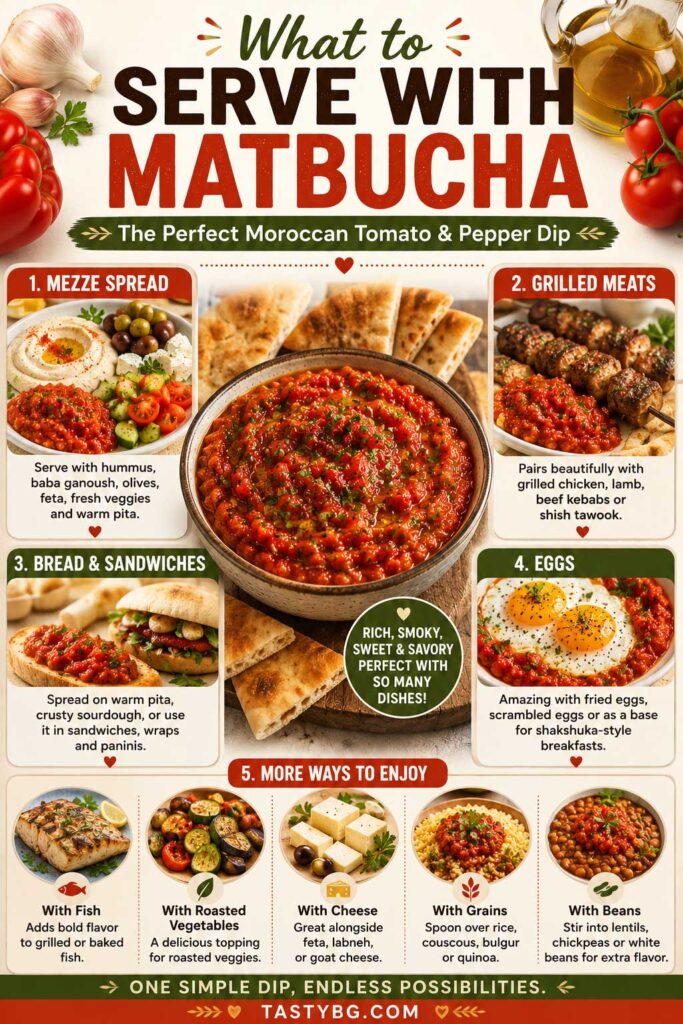
Warm Pita Bread and Crusty Bread
One of the most traditional ways to enjoy this matbucha recipe is with warm pita bread or slices of crusty sourdough. The bread soaks up the rich tomato and pepper mixture beautifully while balancing the olive oil and spices.
Few things are more satisfying than tearing off a piece of warm bread and scooping up freshly made matbucha while it’s still slightly warm.
This Matbucha recipe pairs beautifully with everything from warm bread to grilled meats.
For a complete mezze spread, serve matbucha with homemade Baba Ganoush, warm pita bread, olives, and fresh vegetables.
Grilled Chicken and Lamb Kebabs
Matbucha pairs especially well with grilled meats like Mediterranean chicken skewers, lamb kebabs, or beef kofta. The slow-cooked tomatoes and roasted peppers add brightness and richness alongside smoky grilled flavors.
Falafel and Mezze Platters
This Moroccan tomato and pepper dip fits perfectly into mezze spreads with falafel, hummus, baba ganoush, olives, cucumbers, and fresh salads. The bold tomato flavor helps balance creamy dips and crispy fried dishes.
Fried Eggs and Shakshuka
Many people enjoy matbucha for breakfast or brunch alongside fried eggs or spooned underneath poached eggs. It also works beautifully as a flavorful base for shakshuka.
Rice Bowls and Grain Bowls
A spoonful of matbucha can instantly transform rice bowls, quinoa bowls, or Mediterranean grain bowls by adding deep slow-cooked tomato flavor without needing extra sauces.
It also pairs wonderfully with Tabbouleh Salad for a refreshing contrast to the rich tomato flavor.
Roasted Vegetables and Potatoes
For a lighter Mediterranean-style meal, serve matbucha alongside grilled vegetables, roasted potatoes, cauliflower, or eggplant. The rich tomato mixture complements roasted vegetables especially well.
A simple Greek Salad makes another excellent side dish thanks to its fresh vegetables and tangy feta cheese.
Many foods traditionally served with matbucha are staples of the Mediterranean Diet food list.
Mediterranean Serving Essentials
Matbucha is often served as part of a Mediterranean mezze spread. A few serving pieces can instantly make homemade appetizers look more inviting for family dinners and gatherings.
| Product | Why We Like It | Check Price |
|---|---|---|
| Olive Wood Serving Board | Beautiful mezze presentation | Check Price on Amazon |
| Ceramic Dip Bowls | Perfect for matbucha and hummus | Check Price on Amazon |
| Mezze Serving Tray | Great for entertaining | Check Price on Amazon |
| Cast Iron Pita Warmer | Keeps bread warm longer | Check Price on Amazon |
| Mediterranean Appetizer Plates | Perfect for small dishes | Check Price on Amazon |
Delicious Ways to Use Leftover Matbucha
Leftovers from this Matbucha recipe often taste even better the following day.
One of the best things about homemade matbucha is how versatile the leftovers become. In fact, many people feel the flavor actually improves after resting overnight because the tomatoes, peppers, garlic, and olive oil continue blending together more deeply in the refrigerator.
Leftover matbucha works beautifully as a flavorful spread for sandwiches and toast, especially paired with eggs, grilled vegetables, or Mediterranean cheeses. It is also excellent spooned over scrambled eggs or folded into omelets for a rich breakfast packed with slow-cooked tomato flavor.
Many people enjoy leftover matbucha spooned over eggs for an easy Mediterranean-style breakfast.
Many people use matbucha inside wraps, grain bowls, or rice dishes because it instantly adds bold Mediterranean character without needing extra sauces or seasoning. It also pairs beautifully with grilled fish, roasted chicken, or lamb.
It also works beautifully in grain bowls with roasted vegetables and grilled proteins.
Some cooks even use leftover matbucha as a quick pizza sauce or pasta sauce base because the tomato flavor becomes so concentrated and savory after slow cooking. A spoonful can completely transform simple meals into something far more comforting and flavorful.
Try using it alongside roasted eggplant dishes for an extra layer of authentic Moroccan flavor.
Common Matbucha Mistakes to Avoid
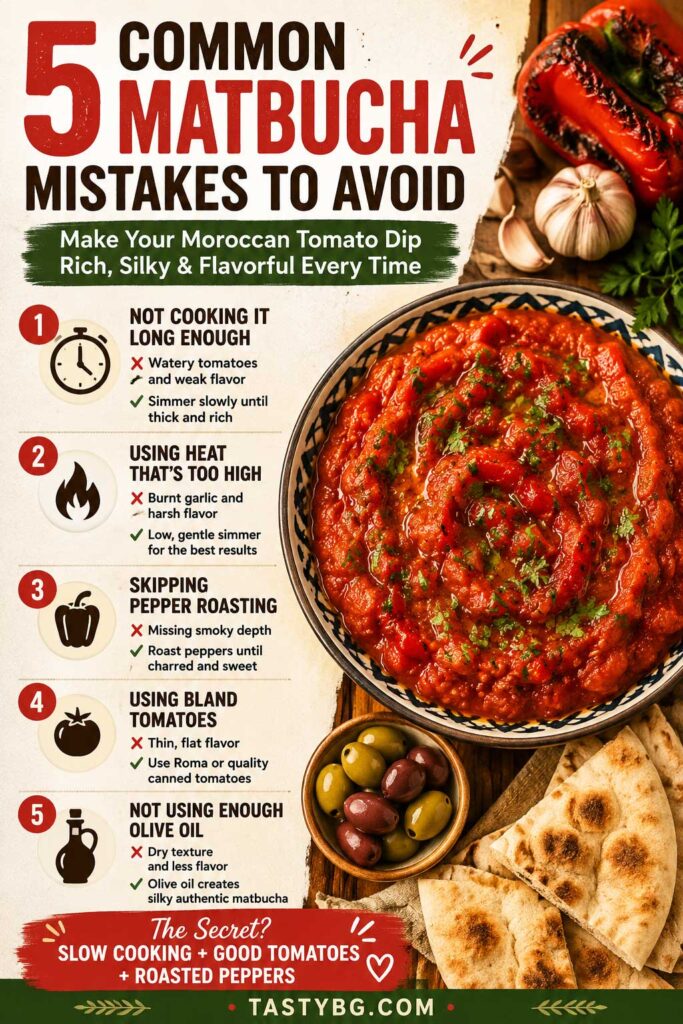
Not Cooking the Mixture Long Enough
One of the biggest mistakes people make with a matbucha recipe is rushing the cooking process. Authentic matbucha should never taste like fresh chopped tomatoes. The tomatoes and peppers need enough time to slowly break down, reduce, and concentrate into a rich, silky mixture with deep flavor.
Using Heat That Is Too High
Cooking matbucha over high heat can scorch the garlic and tomatoes before the mixture properly reduces. Slow simmering creates smoother flavor, better texture, and the signature jammy consistency that makes homemade matbucha so satisfying.
Using Overly Watery Tomatoes
Watery tomatoes can leave the final dish thin and bland instead of thick and rich. Roma tomatoes or high-quality canned whole tomatoes usually work best because they contain less moisture and more concentrated tomato flavor.
Overpowering the Dish With Too Many Spices
Traditional matbucha keeps the seasoning relatively simple. Adding too many spices can overwhelm the natural sweetness of the tomatoes and roasted peppers. The vegetables themselves should remain the star of the dish.
Not Using Enough Olive Oil
Good olive oil is essential for authentic Moroccan flavor and silky texture. Too little oil can make the matbucha feel dry or overly acidic instead of smooth and rich.
Avoiding these mistakes will help your Matbucha recipe develop its signature rich texture and flavor.
Pro Tips for the Best Texture and Flavor
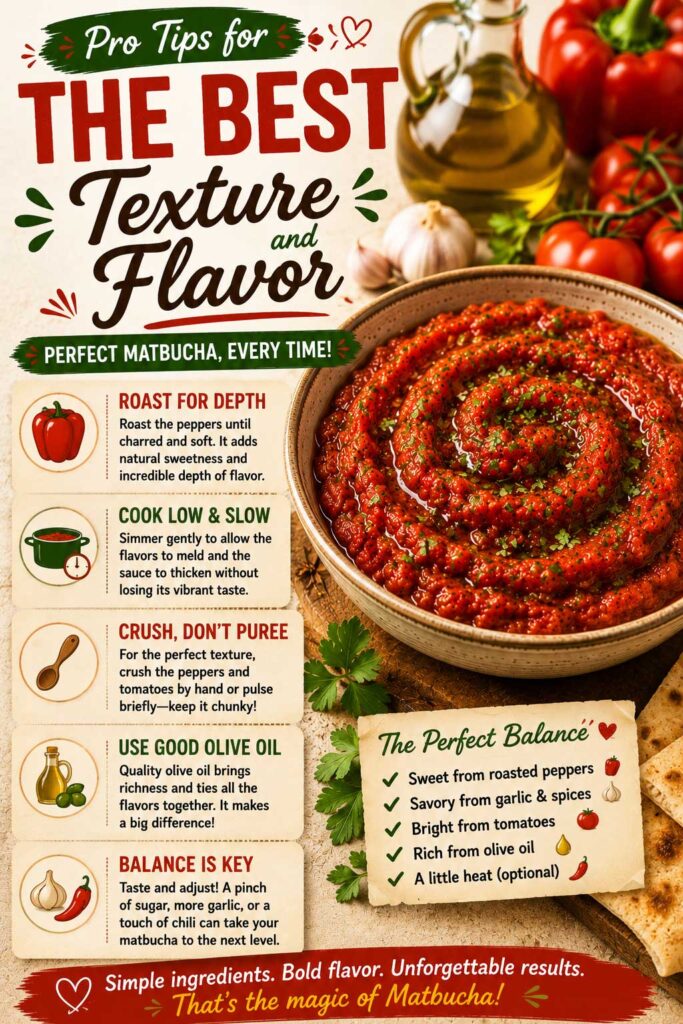
Roast the Peppers Until Deeply Charred
One of the easiest ways to create richer homemade matbucha is roasting the peppers until the skins become deeply blistered and charred. This adds smoky depth that makes the final dish taste far more authentic and complex.
Cook the Mixture Uncovered
Keeping the pan uncovered while simmering allows excess moisture to evaporate naturally. This helps the tomatoes slowly reduce into the thick, silky consistency that traditional matbucha is known for.
Adjust the Texture to Your Preference
If you enjoy smoother matbucha, lightly mash the tomatoes and peppers while cooking. Some people also blend a small portion near the end to create a creamier restaurant-style texture while still keeping some rustic character.
Let the Flavors Rest Overnight
Many Mediterranean cooks intentionally prepare matbucha a day ahead because the flavor becomes noticeably deeper after resting in the refrigerator overnight. The garlic, peppers, olive oil, and spices continue blending together beautifully.
Many people are surprised to discover that matbucha often tastes even better on the second day than it does fresh from the stove.
Finish With Good Olive Oil
A drizzle of high-quality olive oil added near the end of cooking creates richer texture, smoother mouthfeel, and more authentic Mediterranean flavor.
Add Small Amounts of Warm Spices
For extra depth, some traditional matbucha recipes include a small pinch of cumin or smoked paprika during the final stages of cooking. These subtle additions can create even more warmth and complexity without overpowering the tomatoes and peppers.
Easy Matbucha Variations
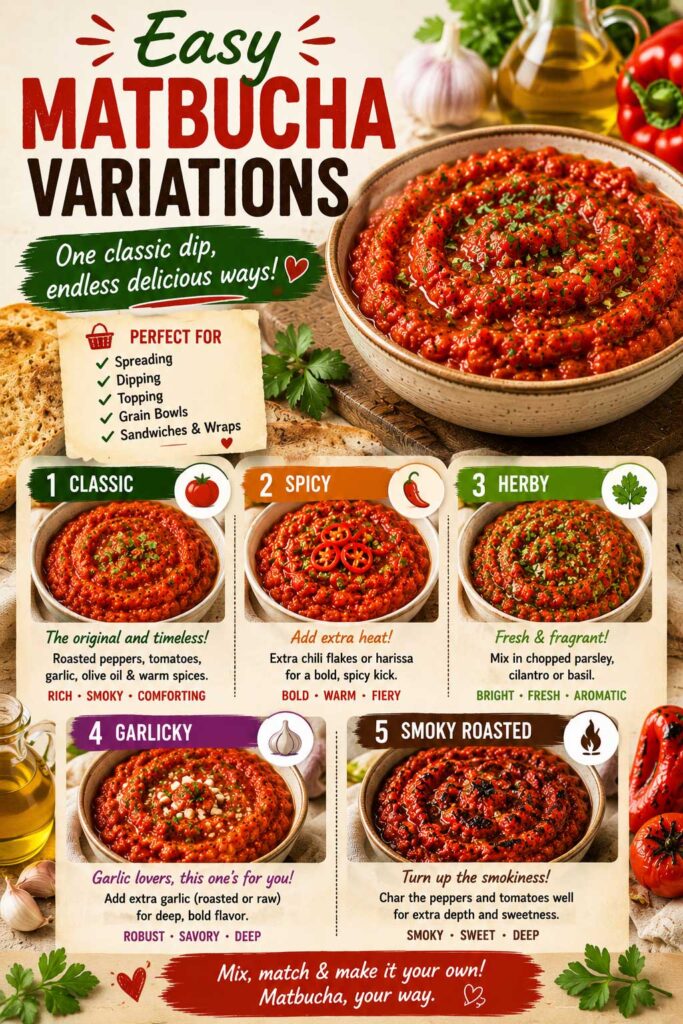
One of the reasons this matbucha recipe has remained popular across generations is because every family tends to make it a little differently. Some versions are smoother and silkier, while others stay chunky and rustic with bold pepper texture. Spice levels also vary heavily depending on the region and personal preference.
Spicy Harissa Matbucha
For a deeper North African flavor, stir in a spoonful of harissa paste while the tomatoes simmer. Harissa adds smoky chili heat along with extra richness that pairs beautifully with roasted peppers and garlic.
Chunky Rustic Matbucha
Some traditional homemade versions keep the vegetables larger instead of cooking everything down completely smooth. This creates more texture and gives the dish a heartier, rustic Mediterranean feel.
Smooth Restaurant-Style Matbucha
Many restaurant-style matbucha recipes cook the vegetables much longer until they almost melt together. Lightly mashing the tomatoes and peppers while simmering creates a smoother, silkier consistency that spreads beautifully onto bread.
Preserved Lemon Matbucha
Adding finely chopped preserved lemon introduces brightness and slight citrus complexity that balances the rich tomato base especially well. This variation feels particularly vibrant alongside grilled fish or chicken.
Smoky Fire-Roasted Matbucha
For the deepest flavor, roast both the peppers and tomatoes directly over an open flame before simmering. The charred skins create a smoky richness that gives the finished matbucha an even deeper and more authentic flavor.
If you enjoy smoky flavors, you may also love other Mediterranean roasted pepper recipes inspired by North African and Balkan cooking.
How to Store and Freeze Matbucha
One of the best things about this matbucha recipe is how well it stores. In fact, many people feel the flavor becomes even richer after resting overnight because the tomatoes, peppers, garlic, and spices continue blending together.
Refrigerator
Allow the matbucha to cool completely before transferring it to an airtight container. Stored properly in the refrigerator, it usually stays fresh for up to 5 days.
The olive oil may naturally firm slightly when chilled, but the texture softens again quickly at room temperature.
Freezer
Matbucha also freezes surprisingly well. Place the cooled mixture into freezer-safe containers or freezer bags and freeze for up to 3 months.
For easier portioning, many people freeze smaller amounts separately so they can thaw only what they need.
Reheating
You can enjoy matbucha cold, room temperature, or warm depending on personal preference.
If reheating, warm it gently on the stove over low heat while stirring occasionally. Avoid high heat because it can cause the tomatoes to reduce too much or the garlic flavor to become harsh.
A small drizzle of fresh olive oil before serving helps refresh the texture and brings back some of the silky richness that makes homemade matbucha so satisfying.
For additional food safety recommendations, review the USDA food storage guidelines.
Matbucha Recipe FAQs
Is matbucha served hot or cold?
Both. Some people enjoy matbucha warm straight from the pan, while others prefer it chilled or served at room temperature as part of a Mediterranean mezze spread.
Is matbucha spicy?
It can be either mild or spicy depending on the peppers and seasonings used. Traditional matbucha recipes often include chili peppers or paprika, but the heat level is easy to adjust.
Can I make this Matbucha recipe ahead of time?
Yes. In fact, many people believe this matbucha recipe tastes even better the next day after the flavors have had more time to develop.
What does matbucha taste like?
Matbucha tastes rich, savory, slightly smoky, and deeply tomato-forward with soft roasted peppers, garlic, olive oil, and warm Mediterranean spices.
Can I freeze matbucha?
Yes. Homemade matbucha freezes very well for up to several months when stored in an airtight container.
Is matbucha healthy?
Yes. This Moroccan tomato and pepper dip is naturally rich in vegetables, olive oil, and Mediterranean ingredients while remaining relatively light and wholesome.
What is the difference between matbucha and shakshuka?
Matbucha is usually served as a cooked salad, dip, or spread, while shakshuka uses a similar tomato and pepper base but includes eggs cooked directly inside the sauce.
Can I use canned tomatoes?
Absolutely. High-quality canned whole tomatoes often work beautifully in a matbucha recipe, especially when fresh tomatoes are out of season or lack sweetness.
Why Homemade Matbucha Deserves a Spot in Your Kitchen
There is something incredibly satisfying about watching a pot of tomatoes, peppers, garlic, and olive oil slowly transform into a rich homemade matbucha recipe filled with deep traditional North African flavor. The longer it cooks, the better it becomes, developing the kind of comforting richness that makes simple food feel truly special.
One of the reasons matbucha has remained popular for generations is because it works for almost every occasion. It can be part of a relaxed breakfast with eggs and warm bread, served on a mezze platter for guests, spooned over grilled meats, or enjoyed straight from the fridge the next day when the flavors become even deeper.
Unlike many modern dips or sauces that rely on heavy ingredients, matbucha stays simple while still tasting incredibly bold and satisfying. Slow-cooked tomatoes, roasted peppers, garlic, olive oil, and warm spices create a silky texture and naturally rich flavor that feels both rustic and comforting.
The smell of tomatoes, peppers, garlic, and olive oil slowly simmering together is enough to make the kitchen feel warm and inviting long before the dish ever reaches the table.
After making this traditional Matbucha recipe at home, many people discover it becomes one of those staple Mediterranean dishes they return to constantly because it pairs beautifully with so many meals while still feeling wholesome, affordable, and deeply homemade.
Did You Make This Matbucha Recipe?
If you enjoyed this Matbucha recipe, be sure to explore more Mediterranean and Balkan-inspired recipes here on TastyBG. From fresh salads and flavorful dips to traditional family dishes and healthy Mediterranean favorites, you’ll find plenty of recipes built around simple ingredients and bold homemade flavor.
For a complete Mediterranean-style spread, try serving this matbucha alongside homemade Baba Ganoush, creamy Hummus, fresh Tabbouleh Salad, warm pita bread, grilled meats, or other mezze favorites featured throughout the site. The rich tomato and pepper flavor pairs beautifully with a wide variety of Mediterranean dishes.
If you enjoy traditional recipes from across the Mediterranean and North Africa, be sure to explore more authentic appetizers, salads, spreads, and comfort foods that celebrate the region’s vibrant culinary traditions.
If you make this recipe, tag @tastybg_ on Instagram and use #tastybg to share your homemade matbucha with us. We’d love to see your version of this rich and flavorful Moroccan tomato and pepper dip!