

There is something incredibly satisfying about opening a jar of homemade kimchi after a few days of fermentation and tasting that perfect balance of spicy, tangy, salty, and deeply savory flavor. A well-made traditional kimchi recipe transforms simple napa cabbage into one of the boldest and most flavorful fermented foods in the world.
Kimchi has been part of Korean cuisine for centuries, and today it has become popular worldwide because of its vibrant flavor, versatility, satisfying crunch, and probiotic-rich fermentation. While store-bought kimchi can be convenient, homemade kimchi usually tastes fresher, brighter, crunchier, and far more alive in flavor.
This traditional kimchi recipe uses napa cabbage, Korean gochugaru pepper flakes, garlic, ginger, green onions, and a simple fermentation process that creates authentic Korean-inspired flavor right in your own kitchen.
If you enjoy making flavorful dishes from scratch, you’ll also love our Traditional Baba Ganoush Recipe, another classic recipe that transforms simple ingredients into something truly special.
Whether you are making a traditional kimchi recipe for the very first time or trying to improve your homemade batches, this guide will help you create rich, flavorful traditional kimchi recipe with excellent texture, balanced fermentation, and deep savory flavor that becomes even better over time.
Why Homemade Kimchi Is Worth Making
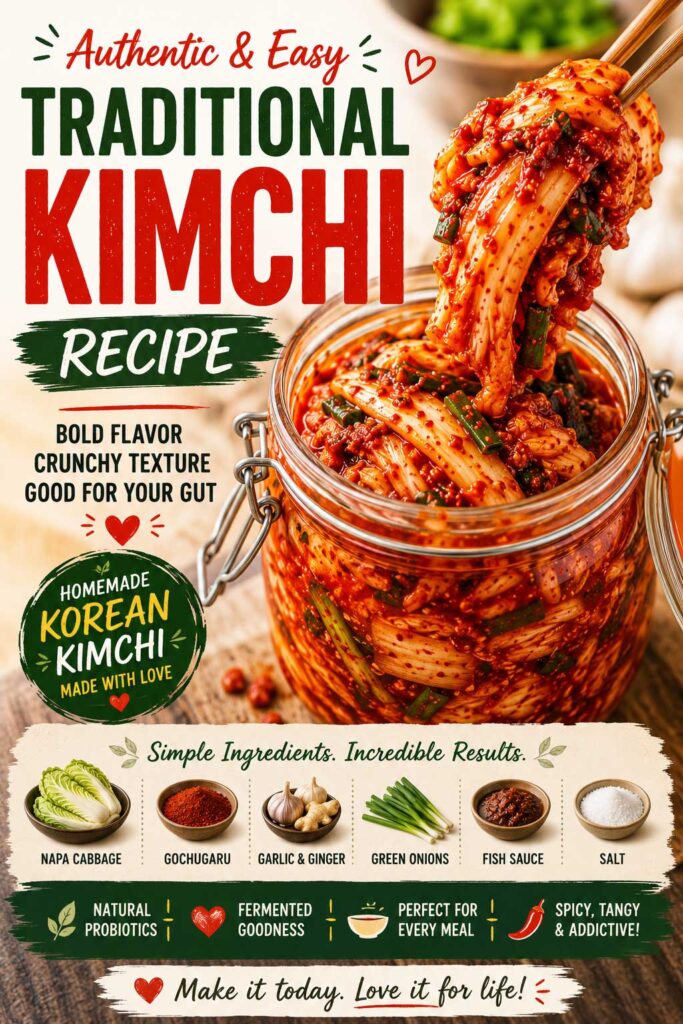
Many people are genuinely surprised by how much better homemade kimchi tastes compared to many store-bought versions. Freshly made kimchi often has brighter flavor, better crunch, fresher aromatics, and a more balanced fermentation profile that feels richer and more authentic.
Homemade kimchi usually delivers:
- Better crunch
- Fresher garlic flavor
- More balanced spice
- Cleaner fermentation flavor
- Better texture
- Customizable heat levels
One of the biggest advantages of making kimchi at home is controlling the fermentation process yourself. Some people prefer fresh lightly fermented kimchi with crisp texture and mild tanginess, while others love deeply sour aged kimchi with stronger fermented flavor. Homemade batches allow you to decide exactly when the flavor reaches your perfect balance.
There is something surprisingly rewarding about watching a simple jar of cabbage slowly transform into a deeply flavorful fermented food over the course of just a few days. Preparing the vegetables, mixing the seasoning paste, and watching the fermentation slowly develop creates a rewarding kitchen ritual that many home cooks quickly become passionate about.
One reason this traditional kimchi recipe remains so popular is that it allows you to customize the fermentation exactly to your taste.
Much like our Balkan Cabbage Salad, homemade kimchi proves that simple vegetables can deliver incredible flavor when prepared properly.
What Is Kimchi?
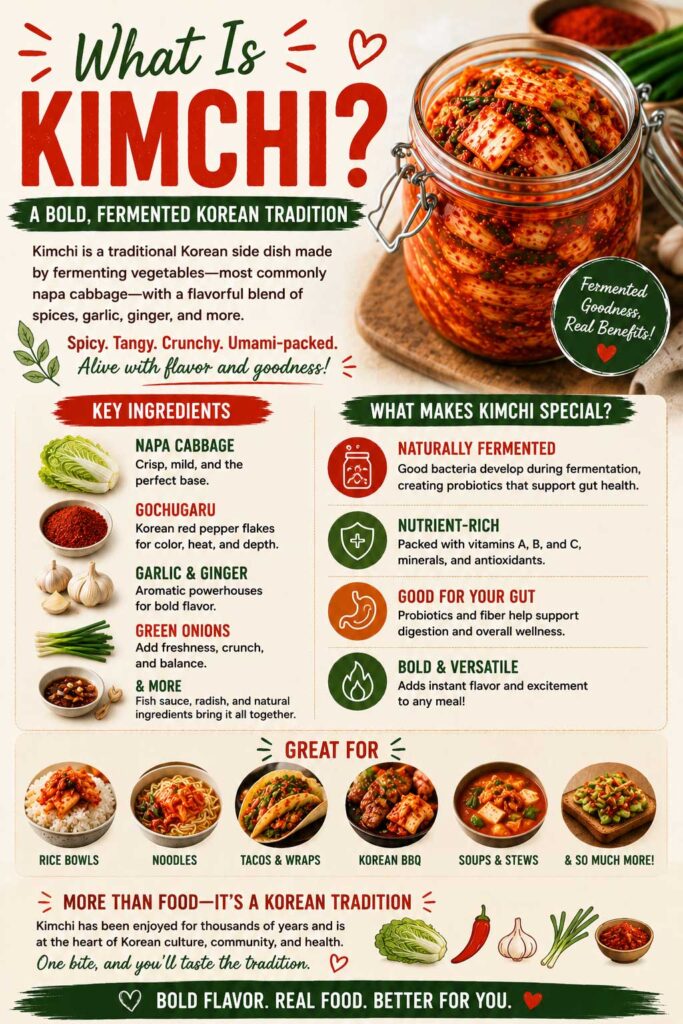
Kimchi is a traditional Korean fermented vegetable dish most commonly made with napa cabbage and Korean chili flakes known as gochugaru. It is one of the most iconic foods in Korean cuisine and has been enjoyed for generations because of its bold flavor, versatility, and unique fermentation process. A well-made traditional kimchi recipe delivers multiple layers of flavor at once.
To make kimchi, the vegetables are first salted to remove excess moisture and create the ideal crunchy texture. After draining, the cabbage is coated in a flavorful seasoning paste typically made with garlic, ginger, gochugaru, green onions, and other savory ingredients before fermenting for several days.
Many traditional fermented foods evolved from centuries-old preservation techniques, similar to other traditional food preservation methods found throughout the world.
One bite of well-made kimchi can be surprisingly complex. You taste heat, tanginess, savory depth, garlic, and a subtle sweetness all at the same time.
One of the reasons kimchi is so fascinating is the incredible variety found throughout Korea. There are hundreds of regional and seasonal variations including radish kimchi, cucumber kimchi, green onion kimchi, white kimchi, and refreshing water kimchi.
However, napa cabbage kimchi remains the most famous and widely recognized version around the world because of its perfect balance of crunch, spice, and fermented depth.
Kimchi is one of the most recognizable foods in Korean cuisine and is discussed in greater detail in the Encyclopedia Britannica overview of Korean cuisine.
Why Kimchi Has Such Deep Cultural Meaning
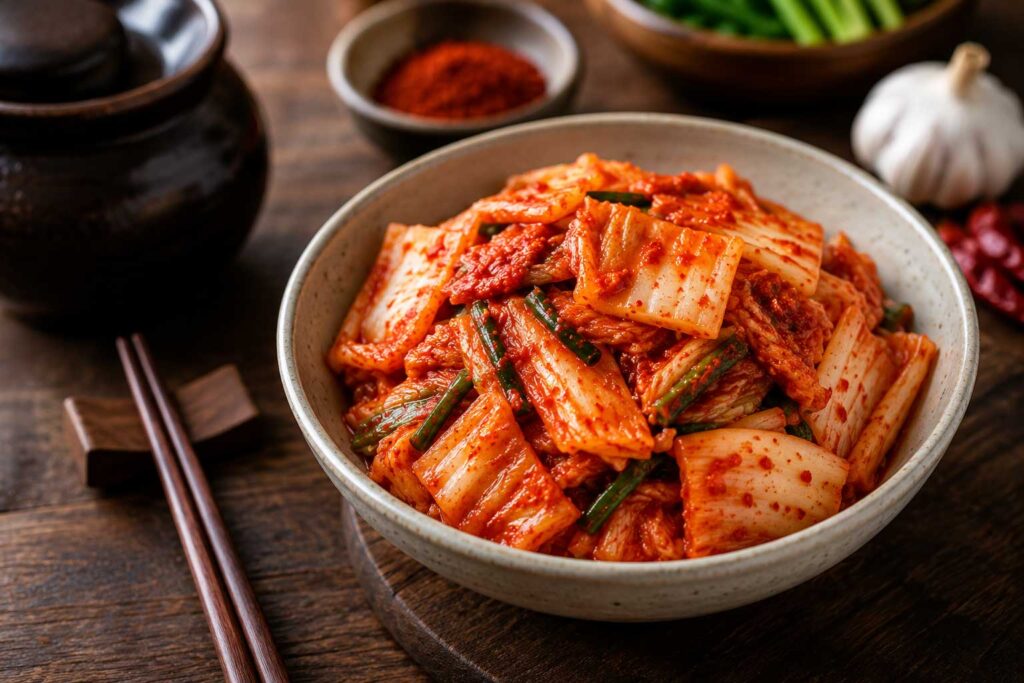
Kimchi is far more than simply a side dish in Korean cuisine. For many families, it represents tradition, heritage, seasonal cooking, and generations of shared food culture passed down over time.
The tradition of Kimjang, the communal preparation and sharing of kimchi, has even been recognized through the UNESCO recognition of Kimjang as an important element of cultural heritage.
Historically, families gathered during kimjang season to prepare large batches of kimchi before winter arrived. This important tradition involved salting cabbage, preparing seasoning pastes, and fermenting enough kimchi to last through colder months when fresh vegetables were less available.
Over time, kimjang became much more than a method of preserving vegetables. It evolved into a tradition centered around family, community cooperation, seasonal preparation, and the sharing of food with others.
Even today, kimchi remains one of Korea’s most important and recognizable foods. It is served daily with countless meals and continues to play a major role in both traditional and modern Korean cooking.
Like many beloved regional foods, kimchi reflects the importance of family, community, and seasonal cooking traditions that can be seen in food traditions around the world.
Making a homemade traditional kimchi recipe today connects modern kitchens to one of the world’s oldest and most respected fermentation traditions while preserving the spirit of communal cooking and food sharing that has existed for generations.
Ingredients You Need For Traditional Kimchi
One of the reasons this traditional kimchi recipe is so beloved is that a relatively small number of ingredients create incredible complexity. The combination of cabbage, garlic, ginger, chili peppers, and fermentation produces the spicy, tangy, savory taste that makes kimchi unique.
While recipes vary slightly from region to region and family to family, these ingredients form the foundation of classic napa cabbage kimchi.
Napa Cabbage
Napa cabbage is the heart of traditional kimchi. Its tender leaves and thick crunchy stems create the perfect texture for fermentation while absorbing the seasoning paste beautifully.
Korean Coarse Salt
Salt plays a critical role in the kimchi-making process. It helps draw moisture from the cabbage, improves texture, and creates the environment needed for proper fermentation.
Gochugaru (Korean Red Pepper Flakes)
Gochugaru provides kimchi’s signature color, balanced heat, and distinctive pepper flavor. Authentic Korean gochugaru creates a much smoother and more complex flavor than standard chili flakes.
Garlic
Fresh garlic adds depth, pungency, and one of the most recognizable flavor notes found in traditional kimchi.
Fresh Ginger
Ginger contributes warmth, brightness, and subtle spice that complements both the garlic and the fermentation process.
Green Onions
Green onions add freshness, mild onion flavor, and extra texture throughout the kimchi.
Fish Sauce
Fish sauce provides savory umami richness that helps create the deep flavor profile associated with authentic kimchi.
Daikon Radish
Daikon radish adds crunch, mild sweetness, and refreshing texture that balances the cabbage beautifully.
Carrots
Carrots contribute color, subtle sweetness, and additional texture to the finished kimchi.
Sugar
A small amount of sugar helps balance the saltiness and spice while supporting the fermentation process.
Optional Ingredients
Many traditional recipes also include optional ingredients such as:
- Asian pear
- Korean salted shrimp
- Chives
- Onion
- Rice flour paste
These ingredients can add additional sweetness, complexity, texture, and regional character depending on the style of kimchi being made.
If you enjoy vegetable-based recipes packed with bold flavor, be sure to try our Bulgarian Kyopolou Recipe, another dish that highlights the magic of simple ingredients.
Individually, these ingredients may seem simple. Together, they create the bold, spicy, tangy flavor that has made kimchi famous around the world.
Ingredient Note: Whenever possible, choose high-quality ingredients, preferably organic and free from unnecessary pesticides, antibiotics, and hormones.
Affiliate Disclosure: This article may contain affiliate links. If you purchase through these links, I may earn a small commission at no additional cost to you.
Essential Tools For Making Homemade Kimchi
After making kimchi multiple times, I’ve found that a few simple kitchen tools can make the entire process faster, cleaner, and much more enjoyable.
| Product | Why It Helps | Check Price |
|---|---|---|
| Glass Fermentation Jars | Safe fermentation and storage | Check Price on Amazon |
| Large Mixing Bowl | Mixing cabbage and seasoning paste | Check Price on Amazon |
| Nitrile Kitchen Gloves | Protects hands from chili peppers | Check Price on Amazon |
| Vegetable Mandoline Slicer | Uniform vegetable cuts | Check Price on Amazon |
| Kitchen Scale | Accurate ingredient measurements | Check Price on Amazon |
Choosing The Best Cabbage For Kimchi
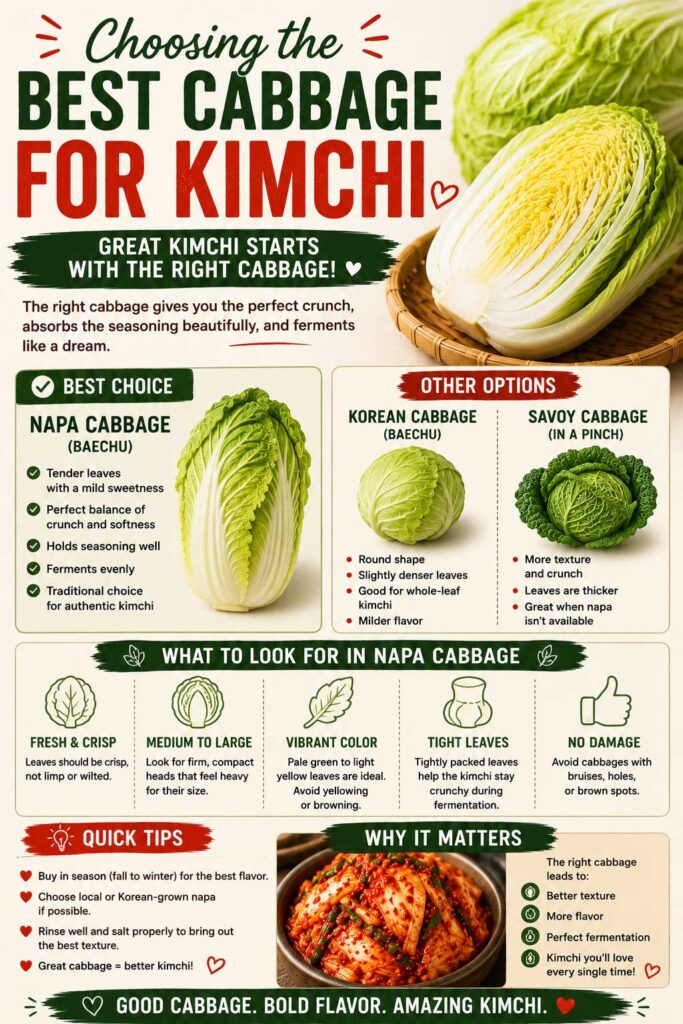
Choosing quality cabbage is one of the easiest ways to improve any traditional kimchi recipe. The quality of your cabbage plays a major role in the final texture and flavor of homemade kimchi. Since napa cabbage is the foundation of traditional kimchi, choosing a fresh, high-quality head can make a noticeable difference throughout the fermentation process.
What To Look For
When shopping for napa cabbage, look for heads that are:
- Heavy for their size
- Crisp and fresh
- Firm and tightly packed
- Bright green and white
- Free from major blemishes
Fresh cabbage retains its crunch better during fermentation and absorbs the seasoning paste more evenly.
What To Avoid
Try to avoid cabbage with:
- Wilted leaves
- Yellowing sections
- Brown spots
- Soft or mushy areas
- Signs of drying around the edges
Fermentation tends to amplify texture issues rather than hide them, so starting with the freshest cabbage possible is always worthwhile.
Proper produce selection and storage can make a noticeable difference in quality, and the USDA vegetable storage guide offers additional recommendations for keeping vegetables fresh.
Smaller vs Larger Napa Cabbage
Smaller napa cabbages are often slightly sweeter and more tender, making them a popular choice for fresh and lightly fermented kimchi.
Larger heads tend to have firmer leaves and can provide a heartier crunch that holds up especially well during longer fermentation periods.
Freshness Makes A Difference
Fresh, high-quality napa cabbage helps create kimchi with better crunch, cleaner flavor, improved fermentation, and a more satisfying texture from the first bite to the last. Since the cabbage is the star ingredient, taking a few extra minutes to choose the best head is one of the easiest ways to improve your homemade kimchi.
Fresh cabbage also plays an important role in recipes like our Balkan Cabbage Salad, where crisp texture makes all the difference.
How To Make Traditional Kimchi Step By Step
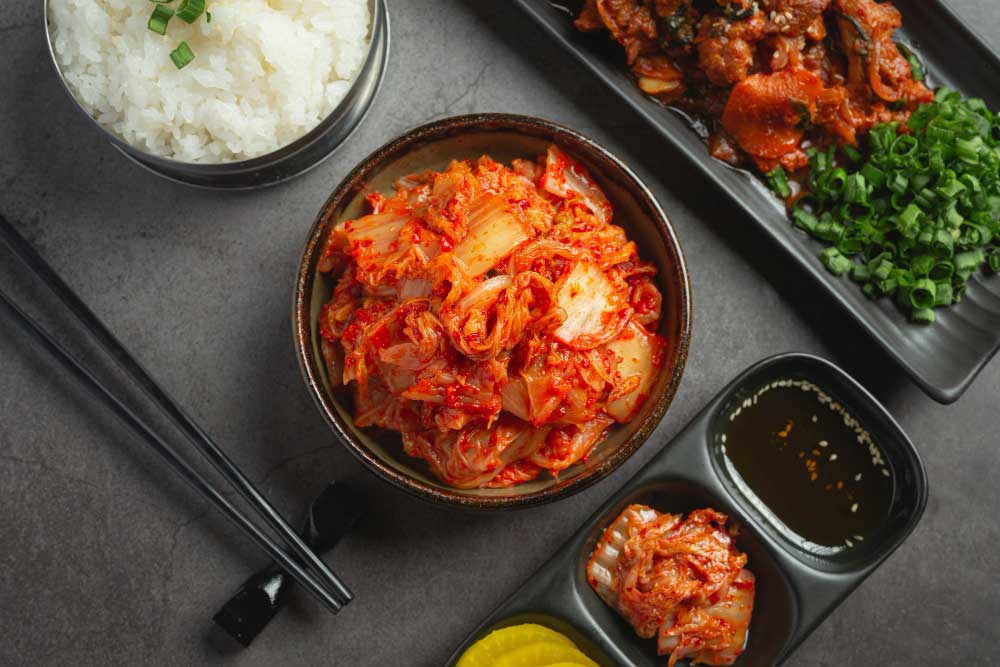
Making traditional kimchi at home is easier than it may seem once the process is broken into simple stages. The key is to properly salt the cabbage, coat it evenly with seasoning paste, and give it enough time to ferment. Following a proven traditional kimchi recipe helps ensure proper fermentation and balanced flavor.
If this is your first time making kimchi, don’t worry. The process is much easier than it looks once you break it into a few simple stages.
Step 1: Prepare The Cabbage
Cut the napa cabbage lengthwise into quarters and remove the core. Then chop the cabbage into large bite-sized pieces. Place the cabbage in a large bowl so it has enough room to be salted evenly.
Step 2: Salt The Cabbage
Sprinkle Korean coarse salt between the cabbage leaves and toss gently to distribute it. Add enough water to lightly cover the cabbage, then let it sit for about 1½ to 2 hours. Turn the cabbage occasionally so all pieces soften evenly.
Step 3: Rinse And Drain
Rinse the salted cabbage thoroughly several times to remove excess salt. Drain very well for 20–30 minutes. This step is important because too much water can dilute the kimchi paste and weaken the final flavor.
Step 4: Make The Kimchi Paste
In a large bowl, combine gochugaru, garlic, ginger, fish sauce, sugar, daikon radish, carrot, and green onions. Mix until everything is coated in a thick, vibrant red seasoning paste.
Step 5: Coat The Cabbage
Wear kitchen gloves and massage the kimchi paste into the cabbage until every piece is evenly coated. Take your time here because good coverage creates better flavor and more even fermentation.
Step 6: Pack Into Jars
Transfer the coated cabbage into clean glass jars or fermentation containers. Press the kimchi down firmly to remove air pockets, but leave about 1 inch of space at the top because fermentation can create pressure and expansion.
Step 7: Ferment At Room Temperature
Leave the jars at room temperature for 1–3 days, depending on your kitchen temperature and preferred sourness. Warmer kitchens ferment faster, while cooler rooms may need more time.
Step 8: Refrigerate And Enjoy
Once the kimchi reaches your preferred tanginess, move it to the refrigerator. The flavor will continue developing slowly as it chills, becoming deeper and more complex over time.
Best Fermentation Supplies For Beginners
If you plan to make kimchi regularly, investing in a few fermentation-specific tools can help produce more consistent results while reducing common fermentation problems.
| Product | Best For | Check Price |
|---|---|---|
| Fermentation Jar Set | Beginners | Check Price on Amazon |
| Glass Weights | Keeping vegetables submerged | Check Price on Amazon |
| Fermentation Lids | Releasing gas automatically | Check Price on Amazon |
| Wide Mouth Mason Jars | Small batches | Check Price on Amazon |
| Pickle Packer Tool | Removing air pockets | Check Price on Amazon |
Why Gochugaru Matters
Gochugaru is one of the most important ingredients in any authentic traditional kimchi recipe because it provides the signature color, flavor, and balanced heat that define classic kimchi. While it may look similar to other chili flakes, its flavor profile is uniquely suited for fermentation and traditional Korean cooking.
If you’re curious about the origins and characteristics of Korean chili flakes, this Korean chili pepper overview provides additional background information.
What Makes Gochugaru Different?
Unlike standard crushed red pepper flakes, Korean gochugaru offers a much more balanced and complex flavor profile, including:
- Mild to medium heat
- Slight smokiness
- Fruity pepper flavor
- Vibrant deep red color
This combination gives kimchi its rich spicy flavor without becoming overly harsh, bitter, or overwhelmingly hot.
Why Regular Chili Flakes Are Not The Same
Using standard crushed red pepper flakes instead of gochugaru can dramatically change the final result. The flavor often becomes sharper, more aggressive, and less balanced, while the color may not develop into the vibrant red shade that traditional kimchi is known for.
The texture of gochugaru is also important. Its coarser grind helps create the thick seasoning paste that coats the cabbage evenly during fermentation.
Bold pepper flavors are also essential in dishes like our Matbucha Recipe, where peppers create deep flavor and vibrant color.
Choosing The Best Gochugaru
For the best homemade kimchi, look for Korean gochugaru specifically labeled for kimchi making. These varieties are typically processed and ground to provide the ideal texture, color, and flavor for fermentation.
While substitutions can work in a pinch, authentic gochugaru remains one of the biggest factors in achieving the classic taste, appearance, and aroma that make traditional kimchi so distinctive.
Korean Pantry Staples For Authentic Kimchi
Authentic ingredients are one of the biggest secrets to exceptional homemade kimchi. Using traditional Korean pantry staples helps create the flavor, color, and aroma that make kimchi so distinctive.
| Ingredient | Why It Matters | Check Price |
|---|---|---|
| Korean Gochugaru | Traditional flavor and color | Check Price on Amazon |
| Korean Coarse Sea Salt | Proper cabbage salting | Check Price on Amazon |
| Premium Fish Sauce | Rich umami flavor | Check Price on Amazon |
| Korean Fermented Shrimp | Traditional ingredient | Check Price on Amazon |
| Korean Rice Flour | Kimchi paste thickener | Check Price on Amazon |
Traditional Kimchi Recipe
This traditional kimchi recipe combines napa cabbage, Korean gochugaru, garlic, ginger, and green onions to create a bold, spicy, tangy fermented side dish packed with authentic Korean flavor. Perfect for serving with rice bowls, grilled meats, noodles, soups, and countless everyday meals.
- Large mixing bowl
- Colander
- Kitchen gloves
- Sharp knife
- Cutting board
- Glass jars or fermentation containers
For The Cabbage
- 1 large napa cabbage (about 2½–3 pounds)
- ½ cup Korean coarse salt
- Water as needed
For The Kimchi Paste
- 1 cup daikon radish (julienned)
- 1 medium carrot (julienned)
- 4 green onions (sliced)
- 6 garlic cloves (minced)
- 1 tbsp fresh ginger (grated)
- 1 tbsp sugar
- 3 tbsp fish sauce
- 1 cup Korean gochugaru (Korean red pepper flakes)
Cut the cabbage, through the stem, lengthwise right into quarters. Cut the cores from each of the pieces. Make sure you cut each quarter crosswise to strips and are about 2-inch in width.
In a large bowl add the cabbage and sprinkle salt all over it. You can use your hands to mix the salt properly with the cabbage until it starts to soften.
Add water just enough to cover the cabbage. You have to weigh down the cabbage with something heavy like a plate on top of the cabbage. Leave for 1-2 hours.
First rinse the cabbage and then drain it, at least three times, thoroughly in cold water. While you prepare the spice paste, leave it aside to drain in a colander for about 15-20 minutes.
You can use the same bowl you used for salting, but make sure you rinse and dry the bowl first. Now add water, fish sauce (or shrimp paste), the sugar, garlic, ginger, and stir until you have a smooth paste. When the paste is ready add the red pepper/chili flakes and stir.
Now grab the cabbage and gently squeeze out any water. You can now add the cabbage to the spice paste and then put to the mixture the other vegetables (scallions, radish, onion, etc.) and stir well the mixture.
With your hands, gently coat the paste over the vegetables. It is a good idea to use gloves, in order to protect your hands from smells and stings.
Pack the kimchi in a 1-quart jar. Press the cabbage with your hands down until the liquid that comes out of the kimchi rises to cover the vegetables. An inch at least leave space on top and then seal the jar.
Leave the jar for 1-5 days at cool room temperature, protected from direct sunlight. Leave a plate under to catch the overflow. It is normal during fermentation to see out of the lid bubbles inside the jar and brine.
At least once per day, check the kimchi opening by the jar and pressing down on the vegetables with a spoon so that the vegetables remain submerged under the brine and check the taste from time to time. Transfer the jar to the refrigerator, when the kimchi tastes ripe enough to your liking. It is best in a week or two.
If you use salt that is free of anti-caking agents and iodine the fermentation will not be disrupted.
- Use authentic Korean gochugaru for the best flavor and color.
- Taste daily during fermentation.
- Glass jars work especially well for fermentation.
- Kimchi becomes more sour as it ages.
- Always use clean utensils when serving.
Nutritional Disclaimer: Nutritional information is provided as an estimate only. Please consult a nutritionist, registered dietitian, or physician for specific dietary or health-related advice.
How Long To Ferment Kimchi
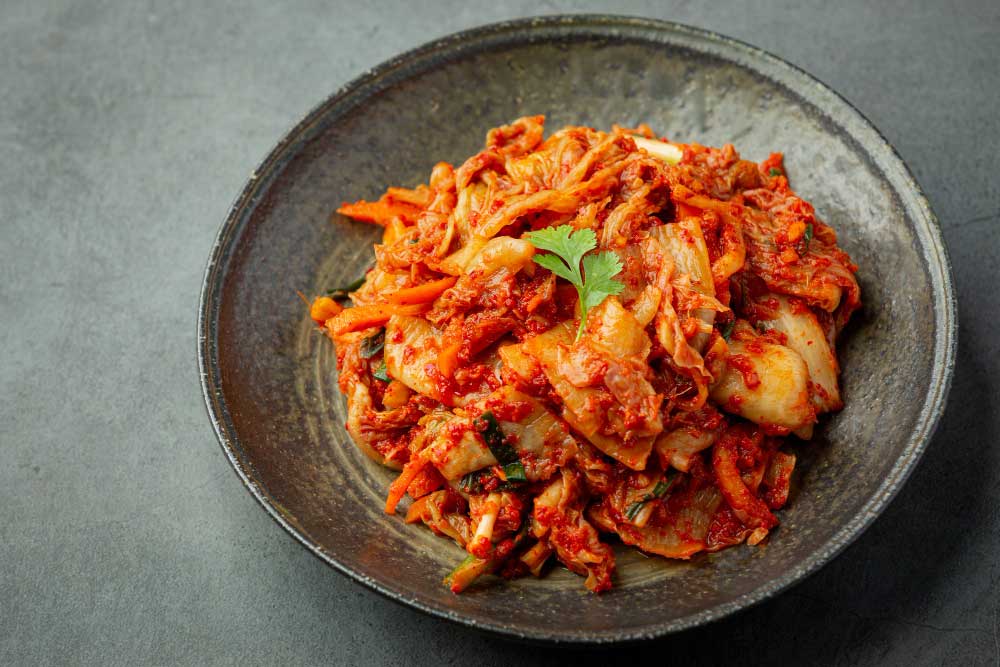
Fermentation time depends heavily on room temperature, the size of the batch, and your personal flavor preference. Warmer kitchens encourage faster fermentation, while cooler environments slow the process significantly.
Fermentation time is one of the most important factors in a successful traditional kimchi recipe.
General Fermentation Guide
| Temperature | Approximate Time |
|---|---|
| Warm kitchen | 1–2 days |
| Moderate room temperature | 2–3 days |
| Cooler room | 3–5 days |
Fresh Kimchi vs Longer Fermentation
Fresh lightly fermented kimchi usually tastes crisp, bright, mildly tangy, and refreshing. The cabbage retains more crunch and the flavors feel lighter and cleaner.
As fermentation continues, the flavor becomes deeper, more sour, and increasingly complex. The texture softens slightly while the savory fermented notes become more pronounced.
Best Uses For Aged Kimchi
Many people actually prefer longer-fermented kimchi for cooking because the stronger flavor works especially well in:
- Kimchi fried rice
- Soups
- Stews
- Noodle dishes
- Kimchi pancakes
- Stir-fries
The added sourness brings incredible depth to cooked dishes.
Finding Your Perfect Fermentation Time
One of the best ways to learn your preferred fermentation level is by tasting the kimchi daily during the room-temperature fermentation stage. Every batch develops differently depending on temperature and ingredients.
Once the flavor reaches the balance of spice, tanginess, and crunch that you enjoy most, transfer the kimchi to the refrigerator. Chilling slows the fermentation process and helps preserve the flavor at its ideal stage.
How To Know When Kimchi Is Ready
One of the most enjoyable parts of making homemade kimchi is tasting how the flavor slowly changes throughout the fermentation process. Every day brings slightly deeper flavor, more complexity, and a different balance of tanginess and crunch.
Signs Your Kimchi Is Fermenting Properly
Good kimchi usually develops:
- Tangy fermented aroma
- Slight bubbling activity
- Balanced sourness
- Deepened savory flavor
- Softer texture while staying slightly crunchy
These are all signs that the beneficial fermentation process is progressing as expected.
Fresh Kimchi vs Aged Kimchi
Fresh kimchi tends to taste brighter, crisper, and less sour. As fermentation continues, the flavor becomes deeper, tangier, and more complex. Neither version is better—it simply depends on personal preference.
Many people enjoy fresher kimchi as a side dish, while older, more sour kimchi is often preferred for soups, stews, and fried rice.
When Kimchi Needs More Time
If your kimchi tastes flat, overly salty, or lacks the characteristic tangy flavor, it usually needs more time at room temperature before refrigeration. Fermentation speed varies depending on temperature, ingredients, and batch size.
Trust Your Taste Buds
The simplest way to know when kimchi is ready is to taste it daily once fermentation begins. When the balance of spice, tanginess, savory flavor, and crunch feels just right to you, transfer the kimchi to the refrigerator to slow the fermentation process and preserve that flavor.
Common Kimchi Mistakes That Can Ruin The Batch
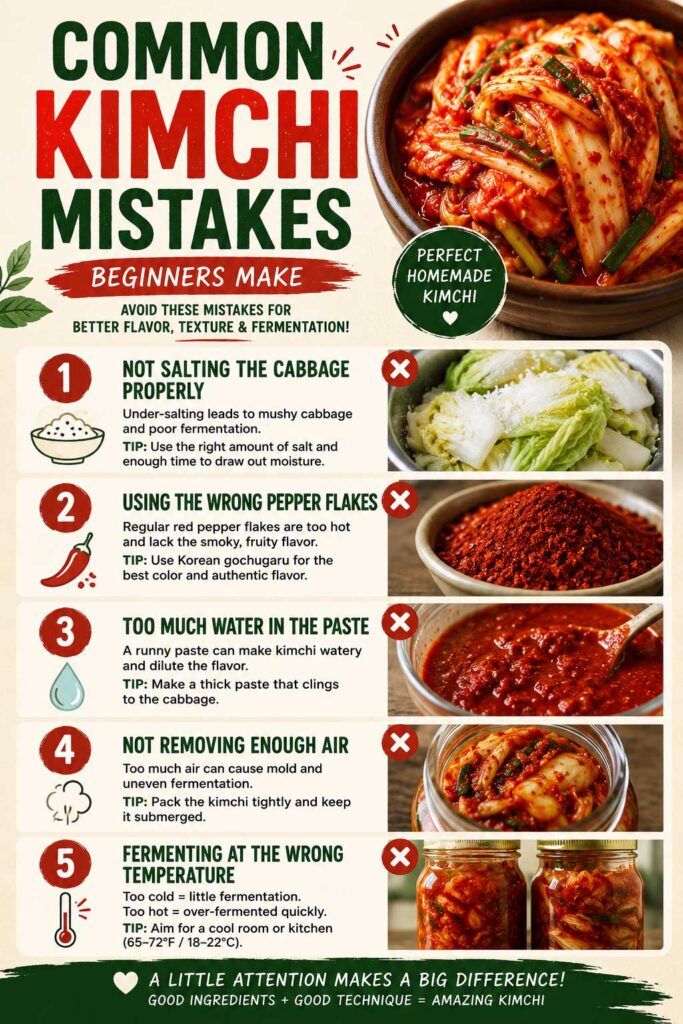
Even though homemade kimchi is surprisingly simple once you understand the process, a few common mistakes can dramatically affect the final flavor, texture, and fermentation quality. Fortunately, most kimchi problems are easy to avoid once you know what to watch for during preparation and storage.
Under-Salting The Cabbage
One of the most common mistakes beginners make when following a traditional kimchi recipe is under-salting the cabbage. Proper salting is essential because it removes excess moisture, helps preserve crunch, and creates the ideal environment for fermentation. Without enough salt, the cabbage can become soft and mushy instead of crisp and flavorful.
Leaving Too Much Water After Rinsing
Another major issue is leaving too much water on the cabbage after rinsing. Excess moisture weakens the seasoning paste, dilutes flavor, and can negatively affect fermentation balance. Allowing the cabbage to drain thoroughly before mixing makes a huge difference in texture and overall flavor.
Not Using Enough Gochugaru
Many first-time kimchi makers become nervous about the amount of gochugaru used in authentic recipes. The quantity may initially seem excessive, but traditional kimchi depends on a generous amount of Korean chili flakes for proper color, depth, and signature flavor.
Poor Packing And Air Pockets
Improper container packing is another mistake that can affect fermentation. Air pockets trapped inside jars may interfere with even fermentation, so pressing the kimchi down firmly helps create better results.
Fermenting In Direct Sunlight Or Excess Heat
Temperature control matters as well. Leaving kimchi in direct sunlight or overly warm rooms can cause fermentation to happen too aggressively, leading to unpleasant texture and overpowering sourness.
Refrigerating Too Early
Some people move kimchi into the refrigerator before fermentation fully begins. This slows the process too soon and can prevent the kimchi from developing its proper tangy fermented flavor.
Using The Wrong Type Of Salt
Traditional kimchi recipes usually use coarse Korean salt because it dissolves more slowly and salts the cabbage evenly. Fine table salt can sometimes create inconsistent texture and overly salty flavor.
Over-Fermenting The Kimchi
While many people enjoy sour aged kimchi, leaving it too long at room temperature can create overpowering acidity and overly soft cabbage. Monitoring the flavor daily helps prevent over-fermentation.
Even a great traditional kimchi recipe can produce disappointing results if these common mistakes are overlooked.
Pro Tips For Better Flavor And Crunch

Small details can make a huge difference when making homemade kimchi. While the basic process is straightforward, a few simple techniques can help improve flavor, texture, and fermentation quality.
Drain The Cabbage Thoroughly
One of the biggest secrets to great homemade kimchi is properly draining the salted cabbage before adding the seasoning paste. Slightly drier cabbage absorbs the spicy mixture more evenly and helps maintain that signature crunchy texture during fermentation.
Wear Gloves While Mixing
Using kitchen gloves is highly recommended when coating the cabbage. Korean gochugaru pepper flakes can irritate sensitive skin after prolonged contact, especially when massaging the seasoning paste into every leaf.
Add Asian Pear For Better Balance
Many Korean home cooks add a small amount of grated Asian pear to the kimchi paste. The natural sweetness helps balance the spice and saltiness while contributing to a smoother, more rounded flavor.
Stop Fermentation Slightly Early
A useful trick is fermenting kimchi slightly less than you think necessary. Fermentation continues slowly in the refrigerator, meaning the flavor will continue developing even after chilling.
Use Glass Jars When Possible
Glass jars are often preferred because they produce a cleaner fermentation environment and absorb fewer odors than some plastic containers. They also make it easier to monitor the fermentation process.
Press Out Air Pockets
When packing kimchi into containers, press it down firmly to reduce trapped air pockets. This helps encourage more even fermentation and better long-term storage.
Keep The Vegetables Submerged
Whenever possible, keep the cabbage pressed beneath the liquid level. This helps maintain freshness and supports consistent fermentation.
Taste As The Flavor Develops
One of the best parts of making kimchi at home is watching the flavor evolve. Taste the kimchi daily once fermentation begins so you can refrigerate it at the exact point that matches your preferred level of tanginess.
Small adjustments in fermentation time, spice levels, ingredient quality, and storage methods can dramatically affect the final result, which is part of what makes homemade kimchi such a rewarding recipe to master.
These small adjustments can elevate a good traditional kimchi recipe into an exceptional one.
Easy Kimchi Variations You Can Try

Traditional napa cabbage kimchi is the most famous version, but it is only one of many kimchi varieties enjoyed throughout Korea. Different vegetables, seasonings, and fermentation times create unique flavors and textures while preserving the core traditions that make kimchi so beloved.
Whether you prefer something spicy, mild, crunchy, or refreshing, there is a kimchi variation for almost every taste.
Radish Kimchi
Radish kimchi is made with crunchy cubes of Korean radish that absorb spicy seasoning beautifully during fermentation. It stays especially crisp and develops a refreshing balance of heat, tanginess, and crunch.
Cucumber Kimchi
Cucumber kimchi is lighter and fresher than traditional cabbage kimchi. Because it is often fermented for a shorter period, it maintains a crisp texture and bright flavor that is especially popular during warmer months.
White Kimchi
White kimchi is a non-spicy version made without gochugaru pepper flakes. The result is a cleaner, milder flavor with subtle sweetness and refreshing fermented notes. It is a great option for those who enjoy fermentation but prefer less heat.
Green Onion Kimchi
Green onion kimchi delivers a bold savory flavor with a slightly sharper bite. The onions absorb the seasoning quickly and pair exceptionally well with grilled meats, rice dishes, and Korean barbecue.
Vegan Kimchi
Vegan kimchi removes fish sauce, salted shrimp, and other seafood ingredients while still providing plenty of umami flavor. Garlic, ginger, vegetables, soy-based ingredients, and fermentation create a rich and satisfying alternative.
If you enjoy experimenting with vegetables and bold flavors, you may also enjoy our Bulgarian Kyopolou Recipe, which transforms roasted vegetables into a flavorful spread.
Experiment With Your Own Variations
One of the most enjoyable parts of making homemade kimchi is experimenting with different vegetables, spice levels, and fermentation times. Small adjustments can create dramatically different flavor profiles, allowing you to develop a kimchi recipe that perfectly matches your personal taste.
Traditional Kimchi vs Sauerkraut: What’s The Difference?
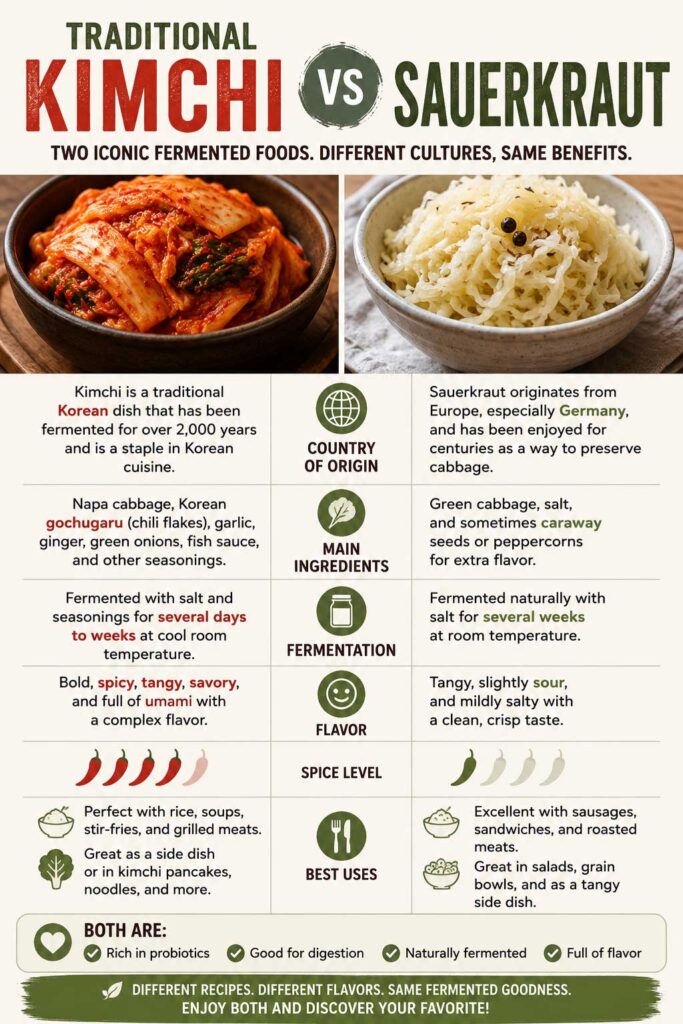
Kimchi and sauerkraut are often compared because both are fermented cabbage dishes, but they come from very different culinary traditions and offer surprisingly different flavors. While both rely on natural fermentation, kimchi is known for its bold seasoning and spicy complexity, whereas sauerkraut focuses on the clean, tangy flavor of fermented cabbage.
Quick Comparison
| Feature | Kimchi | Sauerkraut |
|---|---|---|
| Origin | Korea | Central & Eastern Europe |
| Main Cabbage | Napa Cabbage | Green Cabbage |
| Flavor | Spicy, tangy, savory | Tangy, mild, salty |
| Heat Level | Usually spicy | Not spicy |
| Common Uses | Rice bowls, noodles, BBQ | Sausages, sandwiches, pork |
Ingredients And Flavor
One of the biggest differences between kimchi and sauerkraut is the ingredient list. Traditional kimchi includes napa cabbage along with garlic, ginger, Korean chili flakes, green onions, and often fish sauce. These ingredients create the spicy, savory, and deeply layered flavor that kimchi is famous for.
Sauerkraut is much simpler. Most traditional recipes contain only cabbage and salt, allowing the natural flavor of fermented cabbage to remain the star of the dish.
Fermentation And Texture
Both foods rely on lactic acid fermentation, but kimchi typically ferments with a variety of seasonings and vegetables that create additional complexity. Kimchi often retains more crunch, while sauerkraut usually develops a softer and more uniform texture over time.
Which One Is Better?
Which one you prefer often comes down to personal taste. Some people love kimchi’s spicy complexity, while others prefer the cleaner and milder flavor of sauerkraut. Kimchi is ideal for people who enjoy bold flavors, spice, garlic, and umami-rich foods. Sauerkraut appeals to those who prefer a milder, cleaner fermented flavor.
Many fermented food lovers keep both in their refrigerator because each works well with different meals and brings unique character to the table.
What To Serve With Kimchi

Most people think of kimchi as something served alongside Korean food, but its bold flavor makes it surprisingly versatile in all kinds of meals. Its bold fermented flavor adds brightness, spice, acidity, and deep savory richness that pairs beautifully with everything from simple rice bowls to grilled meats and comfort foods.
Traditional kimchi is especially popular alongside Korean barbecue because the tangy crunch balances rich grilled flavors perfectly. It also works wonderfully with warm rice bowls, fried rice, noodles, dumplings, soups, tofu dishes, and egg-based breakfasts.
Traditional Korean Pairings
Some of the most classic ways to enjoy kimchi include serving it with steamed rice, grilled meats, Korean barbecue, noodle dishes, and comforting soups. The acidity and spice help balance richer foods while adding complexity to every bite.
Kimchi With Rice And Noodles
Kimchi pairs naturally with:
- Rice bowls
- Fried rice
- Ramen
- Udon noodles
- Stir-fried noodles
- Asian-inspired grain bowls
The fermented flavor adds depth and brightness that transforms simple rice and noodle dishes.
Kimchi With Eggs And Breakfast Dishes
Many people enjoy kimchi with breakfast because its savory tanginess pairs beautifully with eggs. Try serving kimchi alongside scrambled eggs, omelets, breakfast rice bowls, or avocado toast for an extra layer of flavor.
Fusion Recipes Using Kimchi
Kimchi has become extremely popular in modern fusion cooking. Creative dishes like kimchi grilled cheese, kimchi tacos, kimchi burgers, spicy kimchi noodles, and kimchi fried rice combine traditional fermentation flavor with familiar comfort foods.
Light Meals And Side Dishes
For lighter meals, kimchi pairs surprisingly well with fresh vegetable spreads and salads. The bold fermented flavor contrasts beautifully with creamy and refreshing dishes.
Try serving kimchi alongside:
- Baba Ganoush
- Greek Salad
- Tabbouleh
- Roasted vegetables
- Grain bowls
- Fresh cucumber salads
For a lighter meal, combine kimchi with our Healthy Shopska Salad Meal Prep for a colorful bowl packed with vegetables and flavor.
Kimchi pairs beautifully with Mediterranean-inspired dishes like our Traditional Baba Ganoush Recipe, which offers a creamy contrast to kimchi’s bold fermented flavor.
The combination of fermented foods, fresh vegetables, and vibrant Mediterranean flavors creates balanced meals filled with texture, color, and bold flavor.
A fresh Greek Salad is another excellent choice thanks to its crisp vegetables and bright flavors. For an herb-forward side dish, try serving kimchi alongside our Tabbouleh Salad.
How To Store Homemade Kimchi
Homemade kimchi should always be refrigerated after the initial room-temperature fermentation period. Once the kimchi reaches your preferred level of tanginess, transferring it to the refrigerator slows fermentation and helps preserve both flavor and texture.
One of the reasons kimchi has remained popular for centuries is that fermentation naturally helps preserve the vegetables, allowing the flavor to continue developing over time.
General Storage Guide
| Kimchi Stage | Approximate Storage Time |
|---|---|
| Fresh lightly fermented kimchi | Several weeks |
| More sour aged kimchi | Several months |
Over time, the flavor becomes deeper, tangier, and more intense. Many people actually prefer older kimchi for cooking because the stronger fermented flavor works beautifully in fried rice, soups, stews, noodle dishes, and stir-fries.
Following basic food storage guidelines can help maintain quality and reduce the risk of contamination during long-term refrigeration. The USDA food storage and leftovers guide provides additional recommendations.
My Favorite Containers For Storing Kimchi
Proper storage plays a major role in preserving flavor, texture, and fermentation quality. These containers help keep homemade kimchi fresh while minimizing odors in the refrigerator.
| Container | Best For | Check Price |
|---|---|---|
| Glass Kimchi Container | Long-term storage | Check Price on Amazon |
| Locking Glass Containers | Refrigerator storage | Check Price on Amazon |
| Mason Jars | Budget-friendly option | Check Price on Amazon |
| Fermentation Crock | Large batches | Check Price on Amazon |
Store In Airtight Containers
Glass jars and fermentation containers are usually the best options because they help maintain freshness and prevent odors from spreading throughout the refrigerator.
Keep The Cabbage Submerged
Whenever possible, keep the kimchi pressed below the liquid level. This helps maintain quality and supports proper long-term storage.
Always Use Clean Utensils
Using clean utensils every time you remove kimchi helps prevent contamination and keeps the batch fresher for longer.
Refrigerate After Fermentation
Once the kimchi reaches your preferred flavor, refrigeration slows the fermentation process and helps maintain the ideal balance of tanginess and texture.
Open Containers Carefully
Fermentation can continue slowly even in the refrigerator, which means pressure may build inside jars. Open containers carefully, especially if the kimchi has been stored for an extended period.
As kimchi ages, the cabbage gradually softens while the savory fermented flavor becomes richer, deeper, and more complex. Many kimchi lovers consider aged kimchi one of the best ingredients for creating flavorful soups, stews, and rice dishes.
Is Kimchi Healthy?
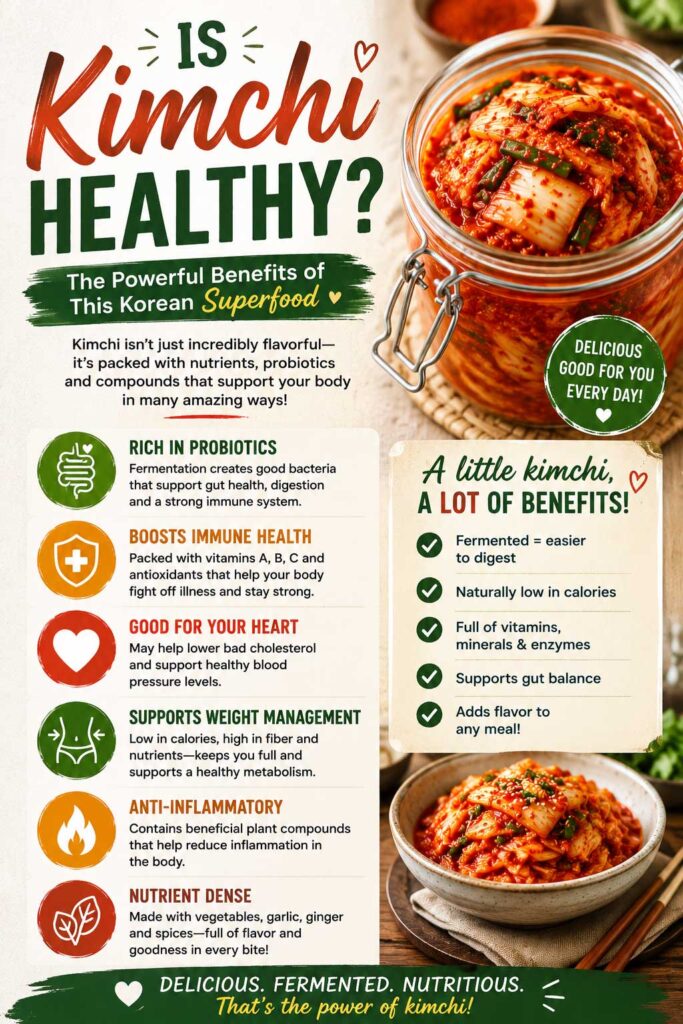
A traditional kimchi recipe combines fermented vegetables with flavorful ingredients that many people enjoy as part of a balanced diet.
Kimchi is often praised for its probiotic content, fermented vegetables, and nutrient-rich ingredients. Because it is made with napa cabbage, garlic, ginger, and traditional fermentation methods, kimchi is commonly included in balanced diets focused on whole foods and gut-friendly fermented ingredients.
Many fermented foods contain beneficial bacteria, which is one reason probiotics continue to receive significant attention from nutrition researchers and healthcare professionals. You can learn more from the Harvard Nutrition Source on fermented foods.
Traditional kimchi contains several nutrients that contribute to its popularity as a flavorful fermented food.
| Nutrient | Potential Benefit |
|---|---|
| Fiber | Supports digestion and fullness |
| Probiotics | Helps support beneficial gut bacteria |
| Vitamins A & C | Supports immune function |
| Garlic & ginger | Provide flavor and natural antioxidant compounds |
| Fermented vegetables | Add beneficial fermentation cultures |
For additional information about probiotic foods and digestive health, the Cleveland Clinic guide to probiotics offers a helpful overview.
Many people enjoy kimchi regularly alongside rice dishes, grilled proteins, soups, noodles, and vegetable-based meals because it adds both bold flavor and fermented food variety to everyday eating.
Kimchi fits naturally into balanced meals alongside recipes like our Mediterranean Ajvar Chicken Bowl, which combines protein, vegetables, and Mediterranean-inspired ingredients.
If you enjoy learning about fermented foods, you may also be interested in exploring fermented herbal drinks and traditional remedies from other culinary traditions.
Frequently Asked Questions About Traditional Kimchi Recipe
These are some of the most common questions people have when making a traditional kimchi recipe at home.
Is kimchi very spicy?
Traditional kimchi recipe usually has moderate heat, but the spice level can vary quite a bit depending on how much Korean gochugaru pepper flakes are used. Some homemade versions are mild and balanced while others develop a much hotter flavor.
Can I make kimchi without fish sauce?
Yes. Vegan kimchi versions are very popular and can still taste incredibly flavorful. Many people replace fish sauce with soy sauce, tamari, miso, or additional fermented ingredients for deep umami flavor.
Why is my kimchi too salty?
This usually happens when the cabbage is not rinsed thoroughly enough after the salting process. Proper rinsing removes excess salt while still keeping the cabbage crisp for fermentation.
Can kimchi go bad?
Properly fermented and refrigerated kimchi stays safe for a long time because fermentation naturally preserves the vegetables. Over time the flavor simply becomes more sour and intense.
Why is my kimchi not fermenting?
Cool room temperatures slow fermentation significantly. If your kitchen is colder, the kimchi may simply need more time before developing tangy flavor and bubbling activity.
Can I freeze kimchi?
Yes, although freezing changes the texture slightly and makes the cabbage softer after thawing. Frozen kimchi works best for soups, fried rice, and cooked dishes.
What jars work best for kimchi?
Glass jars or fermentation containers with tight-fitting lids work best because they help control odors and maintain proper fermentation conditions while keeping the kimchi fresh longer.
If you’re interested in other probiotic-rich foods, take a look at our Bulgarian Yogurt Breakfast Bowl Recipe.
Homemade Kimchi Is One Of The Most Rewarding Fermented Foods To Make
This traditional kimchi recipe delivers bold Korean-inspired flavor with crunchy napa cabbage, deep savory richness, vibrant spice, and that signature tangy fermented taste that makes homemade kimchi so unforgettable.
While the process may seem slightly intimidating the first time, making this traditional kimchi recipe quickly becomes one of those kitchen traditions people genuinely look forward to repeating. Watching simple vegetables slowly transform through fermentation feels both satisfying and surprisingly rewarding.
One of the best parts about the homemade easy kimchi recipe is that every batch develops its own personality. Small differences in fermentation time, room temperature, spice levels, and ingredients create slightly different flavor profiles each time, which makes the entire process feel more personal and authentic.
Whether you prefer fresh or aged kimchi, this traditional kimchi recipe provides a reliable foundation for years of homemade fermentation.
If you enjoy learning about traditional foods and culinary heritage, you may also enjoy exploring more global food culture articles and discovering traditional foods from Southeastern Europe.
The first time you open a jar and taste homemade kimchi that you fermented yourself, you’ll understand why so many people become obsessed with making it. The flavor is brighter, fresher, and more alive than most store-bought versions, and every batch feels a little different. That’s part of what makes homemade kimchi such a rewarding tradition to keep coming back to.
Did You Make This Traditional Kimchi Recipe?
If you enjoyed this Traditional Kimchi Recipe, be sure to explore more Mediterranean and global-inspired recipes here on TastyBG. From fresh salads and wholesome breakfast bowls to roasted vegetable dishes and flavorful homemade spreads, you’ll find plenty of easy recipes made with simple ingredients and bold flavors from around the world.
For a complete meal, try serving kimchi alongside our Greek Salad, Traditional Baba Ganoush, Tabbouleh Salad, or Healthy Shopska Salad Meal Prep. The combination of fresh vegetables, fermented foods, and vibrant Mediterranean ingredients creates satisfying meals packed with texture and flavor.
For more healthy recipes, be sure to explore our Mediterranean Ajvar Chicken Bowl, Healthy Shopska Salad Meal Prep, Traditional Baba Ganoush Recipe, and Bulgarian Kyopolou Recipe.
If you make this Traditional Kimchi Recipe, tag @tastybg_ on Instagram and use #tastybg to share your homemade kimchi with us. We’d love to see your version of this bold, flavorful fermented classic!