
The Bulgarian Moussaka recipe is one of the most comforting meals found across Bulgarian homes. Unlike the Greek version, which uses eggplant and béchamel sauce, Bulgarian musaka is built around soft potatoes, flavorful ground meat, onions, and a creamy yogurt-and-egg topping that turns golden in the oven.
This hearty Balkan casserole is simple, affordable, and deeply satisfying. It’s the kind of meal that fills the kitchen with comforting aromas and brings everyone to the table before it’s even finished baking.
For another cozy Mediterranean-style dish, try this Greek Lemon Chicken Soup.
What makes Bulgarian musaka special is its balance of humble ingredients and deep homemade flavor. Potatoes absorb the juices from the seasoned meat while the yogurt topping creates the signature creamy finish that makes this dish unmistakably Bulgarian.
If you enjoy hearty Balkan comfort foods, you may also love:
What Is Bulgarian Moussaka?
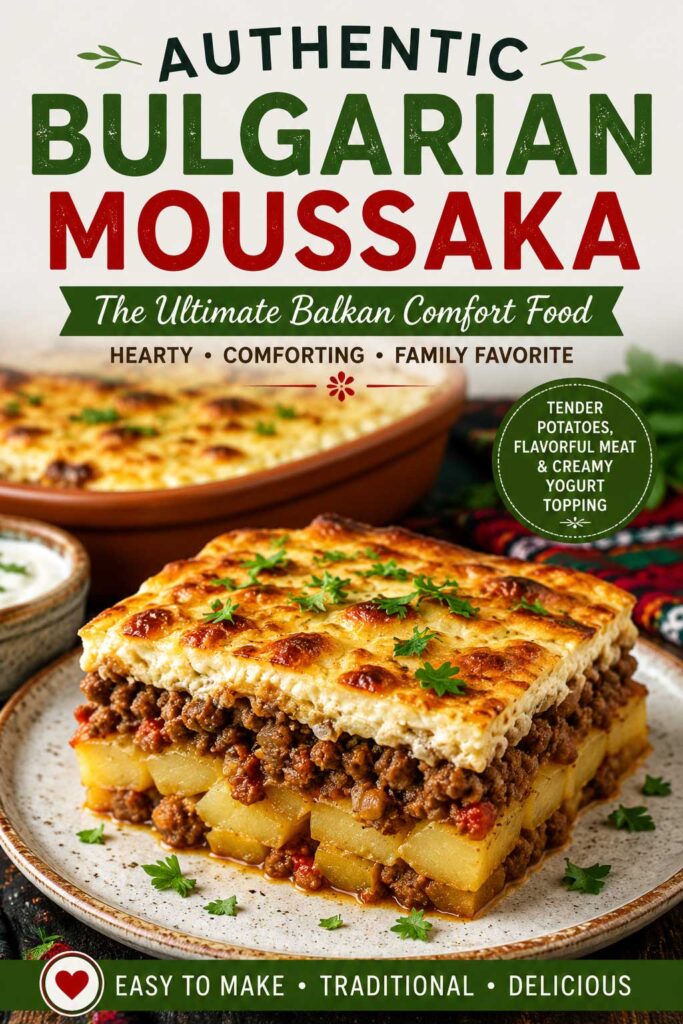
Bulgarian musaka is one of the most beloved comfort foods in Bulgaria. This hearty baked casserole combines diced potatoes, seasoned ground meat, onions, and simple spices, all baked together until tender and flavorful. The dish is then finished with a traditional topping made from yogurt, eggs, and a little flour, which creates the signature golden crust found on authentic Bulgarian musaka.
Typical ingredients include:
- Diced potatoes
- Ground pork, beef, or a mixture of both
- Onion
- Tomatoes or tomato paste
- Paprika
- Savory herbs
- Yogurt, eggs, and flour for the topping
As the casserole bakes, the potatoes absorb the savory juices from the meat and seasonings, creating a rich, comforting meal that has been a staple of Bulgarian home cooking for generations.
Although it shares a name with Greek moussaka, the two dishes are quite different. Greek moussaka is typically layered with eggplant and topped with a rich béchamel sauce, while Bulgarian musaka relies on potatoes and a lighter yogurt-based topping. The result is a dish that feels hearty and satisfying without being overly heavy. Many Bulgarians consider musaka the ultimate family meal—simple ingredients transformed into something warm, filling, and deeply comforting.
If you enjoy traditional Balkan comfort foods, you may also love this Russian Potato Salad Olivier.
Why This Bulgarian Moussaka Recipe Works So Well
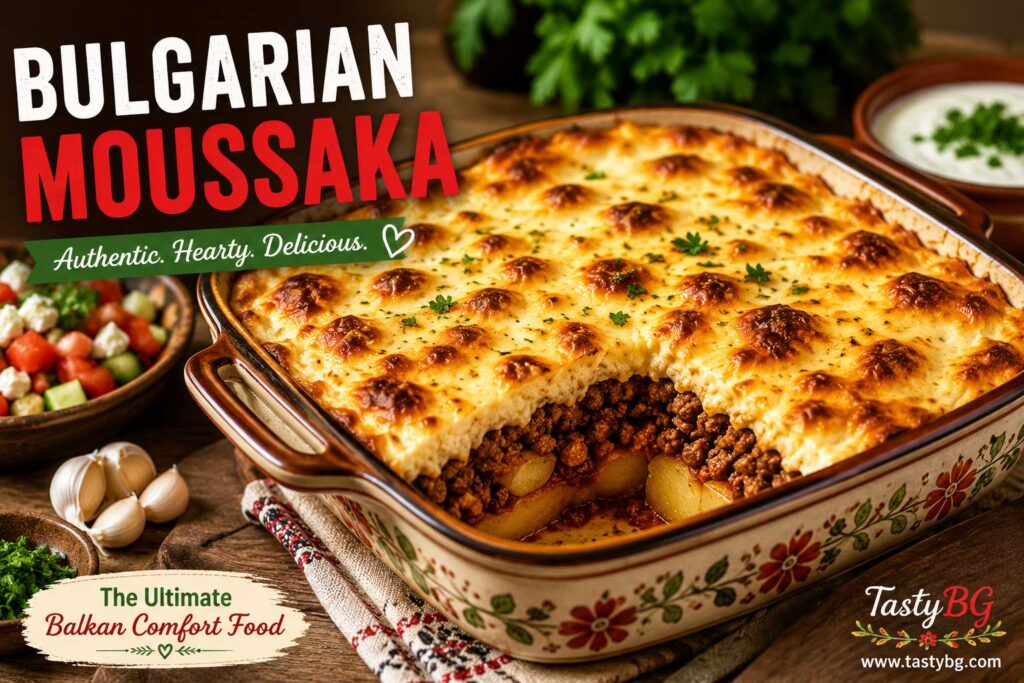
There is a reason the Bulgarian Moussaka recipe has remained a favorite in Bulgarian households for generations. It transforms a handful of simple, affordable ingredients into a deeply satisfying meal packed with comforting flavor and texture.
As the musaka bakes, the potatoes absorb the savory juices from the seasoned meat, onions, and spices, becoming tender and incredibly flavorful. The traditional yogurt topping then creates a light, fluffy, golden crust that contrasts beautifully with the soft filling underneath. Every bite delivers the perfect balance of creamy, hearty, and comforting textures.
This traditional Bulgarian casserole is especially popular because it is incredibly practical for everyday cooking. It is family-friendly, budget-conscious, easy to customize with different meats or vegetables, and ideal for meal prep. It also makes excellent leftovers, which is one reason many Bulgarian families intentionally prepare a larger batch.
In fact, many people believe musaka tastes even better the following day. After resting overnight in the refrigerator, the flavors have more time to blend together, creating an even richer and more balanced casserole. It is the kind of homemade comfort food that often disappears quickly, even when everyone claims they are already full.
Ingredients for Bulgarian Musaka
One of the reasons this Bulgarian Moussaka recipe has remained a staple in Balkan kitchens is its simplicity. Most of the ingredients are affordable pantry and refrigerator staples, yet together they create a rich and comforting meal that feels far more special than the individual ingredients suggest.
For the Filling
- 2 pounds potatoes, peeled and diced
- 1 pound ground pork, beef, or a combination of both
- 1 medium onion, finely chopped
- 2 tablespoons oil
- 1 tablespoon tomato paste
- 1 teaspoon sweet paprika
- 1 teaspoon dried savory (or oregano)
- Salt, to taste
- Freshly ground black pepper, to taste
- 1 cup water
For the Traditional Yogurt Topping
- 1 cup Bulgarian yogurt
- 2 large eggs
- 2 tablespoons all-purpose flour
Ingredient Notes
For the most authentic Bulgarian musaka, many home cooks prefer a mixture of pork and beef because it produces a richer flavor and a juicier casserole. Starchy potatoes such as Yukon Gold or Russet potatoes work particularly well because they absorb the savory cooking juices while becoming soft and tender during baking.
If you can find authentic Bulgarian yogurt, it will provide the traditional tangy flavor that makes the topping so distinctive. However, full-fat plain Greek yogurt can be used as a substitute when Bulgarian yogurt is unavailable. The dried savory herb is another ingredient commonly used in Bulgarian cooking and contributes a subtle earthy flavor that many people associate with traditional homemade musaka.
The Secret to Authentic Bulgarian Flavor
What truly sets a traditional Bulgarian Moussaka recipe apart from other potato and meat casseroles is the signature yogurt topping. While the potatoes and seasoned meat provide the hearty foundation of the dish, it is the yogurt mixture that gives Bulgarian musaka its unmistakable character and authentic homemade flavor.
Traditional Bulgarian yogurt is known for its rich texture and pleasant tanginess. When combined with eggs and baked over the casserole, it transforms into a lightly puffed, golden layer that adds both creaminess and freshness. This topping helps balance the richness of the meat and potatoes, creating the comforting flavor contrast that makes Bulgarian musaka so memorable.
Another key element of authentic Bulgarian flavor is the seasoning. Sweet paprika adds warmth and depth, while dried savory—a beloved herb in Bulgarian cooking—contributes an earthy, slightly peppery aroma that many Bulgarians instantly recognize from traditional home-cooked meals. Together, these simple ingredients create the distinctive Balkan flavor profile that has made this Bulgarian Moussaka recipe a family favorite for generations.
Although the ingredient list is relatively simple, the combination of creamy yogurt, tender potatoes, savory meat, and traditional seasonings creates a dish that feels deeply comforting and unmistakably Bulgarian. It is proof that some of the best recipes rely on a few quality ingredients prepared with care rather than complicated techniques.
Using quality ingredients can make a noticeable difference in the flavor of this Bulgarian Moussaka recipe.
Affiliate Disclosure: This article may contain affiliate links. If you purchase through these links, I may earn a small commission at no additional cost to you.
Essential Ingredients for Authentic Bulgarian Flavor
| Product | Why We Like It | Check Price |
|---|---|---|
| Sweet Hungarian Paprika | Rich color and traditional Balkan flavor | Check Price on Amazon |
| Bulgarian Savory Herb | Classic seasoning used in Bulgarian cooking | Check Price on Amazon |
| Full-Fat Greek Yogurt | Great substitute when Bulgarian yogurt isn’t available | Check Price on Amazon |
Best Baking Dishes for Bulgarian Moussaka
A good baking dish helps Bulgarian musaka cook evenly while creating the beautifully golden yogurt topping that makes this traditional recipe so special.
| Product | Why We Like It | Check Price |
|---|---|---|
| Ceramic Baking Dish | Traditional presentation and even heat distribution | Check Price on Amazon |
| Deep Casserole Dish | Ideal for larger family portions | Check Price on Amazon |
| Cast Iron Baking Dish | Excellent heat retention and browning | Check Price on Amazon |
How to Make Bulgarian Moussaka

This Bulgarian Moussaka recipe is surprisingly simple to prepare, making it perfect for both weeknight dinners and relaxed weekend family meals. The process comes together in a few easy stages, allowing the potatoes, meat, and traditional yogurt topping to develop their classic homemade flavor.
Step 1: Cook the Meat Mixture
Heat the oil in a large skillet or sauté pan over medium heat. Add the finely chopped onion and cook for several minutes until softened and translucent. Stir in the ground meat and cook until fully browned, breaking it apart with a spoon as it cooks.
Once the meat is browned, add the tomato paste, paprika, savory, salt, and black pepper. Stir well to evenly distribute the seasonings and continue cooking for another 2–3 minutes until everything becomes fragrant and flavorful.
Step 2: Add the Potatoes
Add the diced potatoes directly to the pan with the meat mixture and stir until everything is well combined. Pour in the water and mix thoroughly so the potatoes begin absorbing the savory flavors.
Allow the mixture to cook for about 5 minutes, stirring occasionally. This brief cooking time helps the potatoes start softening while soaking up the seasonings before baking.
Step 3: Bake the Musaka
Transfer the potato and meat mixture into a lightly greased baking dish, spreading it into an even layer.
Place the dish into a preheated 375°F (190°C) oven and bake for approximately 40–45 minutes, or until the potatoes are tender when pierced with a fork and most of the liquid has been absorbed.
At this stage, your kitchen will be filled with the rich aroma of potatoes, paprika, and slow-cooked meat—the unmistakable smell of homemade Bulgarian comfort food.
Step 4: Prepare the Yogurt Topping
While the casserole is baking, prepare the signature topping that makes this Bulgarian Moussaka recipe so distinctive.
In a medium bowl, whisk together:
- Bulgarian yogurt
- Eggs
- Flour
Continue whisking until the mixture becomes completely smooth and creamy with no visible lumps.
Step 5: Add the Topping and Finish Baking
Carefully remove the baking dish from the oven and pour the yogurt mixture evenly over the surface of the casserole.
Return the musaka to the oven and bake for an additional 15–20 minutes, or until the topping is lightly puffed and beautifully golden brown.
Once finished, allow the musaka to rest for about 15 minutes before serving. This resting time helps the casserole set properly, making it easier to slice while allowing the flavors to settle together. The result is a rich, comforting Bulgarian Moussaka recipe with tender potatoes, savory meat, and the classic golden yogurt topping that has made this dish a beloved Balkan favorite for generations.
Bulgarian Moussaka Recipe

This authentic Bulgarian Moussaka recipe features tender potatoes, flavorful ground meat, and a creamy yogurt topping baked until golden brown. A classic Balkan comfort food that is perfect for family dinners, meal prep, and special gatherings.
- Ceramic baking dish
- Large skillet
- Mixing bowl
- Whisk
- Chef's knife
For the Filling
- 2 pounds potatoes (peeled and diced)
- 1 pound ground pork (beef, or a mixture of both)
- 1 medium onion (finely chopped)
- 2 tablespoons oil
- 1 tablespoon tomato paste
- 1 teaspoon sweet paprika
- 1 teaspoon dried savory (or oregano)
- Salt (to taste)
- Black pepper (to taste)
- 1 cup water
For the Yogurt Topping
- 1 cup Bulgarian yogurt
- 2 large eggs
- 2 tablespoons all-purpose flour
- Preheat your oven to 375°F (190°C).
- Heat the oil in a large skillet over medium heat. Add the chopped onion and cook until softened.
- Add the ground meat and cook until browned, breaking it apart as it cooks.
- Stir in the tomato paste, paprika, savory, salt, and black pepper. Cook for 2–3 minutes until fragrant.
- Add the diced potatoes and water. Stir well and cook for about 5 minutes.
- Transfer the mixture to a greased baking dish and spread evenly.
- Bake for 40–45 minutes or until the potatoes are tender.
- While the casserole bakes, whisk together the yogurt, eggs, and flour until smooth.
- Remove the baking dish from the oven and pour the yogurt mixture evenly over the top.
- Return to the oven and bake for another 15–20 minutes until the topping is puffed and golden brown.
- Let the musaka rest for 15–20 minutes before serving.
- Garnish with fresh parsley if desired and serve warm.
- A mixture of pork and beef creates the most traditional flavor.
- Full-fat yogurt produces the creamiest topping.
- Allowing the musaka to rest before serving improves texture and makes slicing easier.
- Leftovers often taste even better the next day.
Nutritional information should be considered an estimate only; please always consult with a nutritionist, a registered dietician or your physician for any specific health-related questions.
It is always better for your health to use clean ingredients if possible organic – with no pesticides, antibiotics and hormones.
Recommended Tools for This Recipe
The following kitchen tools and ingredients can help you achieve authentic Bulgarian musaka flavor and make preparation easier.
Before you start, make sure you have the right tools for perfect results every time.
- Ceramic baking dish for even cooking
- Sharp chef’s knife for preparing potatoes
- Mixing bowl for the yogurt topping
- Glass storage containers for leftovers
These simple kitchen essentials can make preparing authentic Bulgarian musaka easier and more enjoyable while helping you achieve the best possible texture and flavor.
Why Bulgarian Yogurt Changes Everything
If there is one ingredient that truly defines an authentic Bulgarian Moussaka recipe, it is Bulgarian yogurt. While it may seem like a simple addition, this traditional ingredient plays a major role in creating the distinctive flavor and texture that sets Bulgarian musaka apart from similar potato casseroles.
Bulgarian yogurt is known for its rich, creamy consistency and pleasantly tangy taste, which comes from the unique live cultures traditionally used in Bulgaria. These cultures give the yogurt a deeper flavor than many standard yogurts, adding a subtle brightness that balances the hearty richness of the potatoes and seasoned meat.
You can learn more about the traditional Bulgarian yogurt cultures from Bulgaropedia’s overview of Bulgarian yogurt.
When combined with eggs and baked over the casserole, the yogurt transforms into the signature golden topping that Bulgarian families have enjoyed for generations. The slight acidity helps cut through the richness of the dish, preventing it from feeling overly heavy while adding a fresh, creamy contrast to the savory filling underneath.
Ask any Bulgarian grandmother, and she’ll likely tell you that the yogurt topping is what transforms musaka from a simple casserole into something truly special. Without it, the dish is still delicious, but it loses much of the character that makes it instantly recognizable as traditional Bulgarian comfort food.
If you can find authentic Bulgarian yogurt, it is well worth using for the most traditional flavor. However, even with high-quality, full-fat plain yogurt, the topping still delivers the creamy texture and comforting finish that make this Bulgarian Musaka recipe such a beloved staple throughout Bulgaria.
Common Mistakes That Ruin Bulgarian Musaka

Even though this Bulgarian Musaka recipe uses simple ingredients and straightforward techniques, a few common mistakes can prevent the casserole from reaching its full potential. Paying attention to these small details can make the difference between a good musaka and one that tastes like it came straight from a Bulgarian family kitchen.
Using Potatoes That Are Too Large
One of the most common mistakes is cutting the potatoes into chunks that are too large. Oversized pieces often cook unevenly, leaving the centers firm while the outer portions become overly soft.
For the best texture, dice the potatoes into small, evenly sized cubes. Uniform pieces cook at the same rate and absorb the savory meat juices more effectively, creating the tender consistency that traditional Bulgarian musaka is known for.
Skipping the Yogurt Topping
The yogurt topping is not simply a garnish—it is one of the defining features of authentic Bulgarian musaka.
Without the mixture of yogurt, eggs, and flour, the casserole loses much of its traditional Balkan character. The topping provides the creamy contrast and golden finish that make this dish instantly recognizable throughout Bulgaria. Skipping it may save a few minutes, but it also removes one of the most beloved elements of the recipe.
Not Seasoning Enough
Potatoes naturally absorb a significant amount of flavor while cooking. If the meat mixture is lightly seasoned, the finished casserole can taste surprisingly bland despite using quality ingredients.
Be sure to season generously with salt, black pepper, paprika, and savory herb. Taste the meat mixture before baking whenever possible and adjust the seasoning as needed. A properly seasoned filling is essential for a flavorful Bulgarian Moussaka recipe.
Overbaking the Topping
The yogurt topping should emerge from the oven lightly puffed and beautifully golden—not dry, tough, or rubbery.
Once the topping begins developing a rich golden color, keep a close eye on it during the final minutes of baking. Overcooking can cause the topping to lose its creamy texture and become overly firm. The goal is a delicate golden crust that remains soft and tender underneath.
A little extra attention during these final stages will reward you with a Bulgarian musaka that is rich, comforting, and perfectly balanced from the first bite to the last.
Pro Tips for the Best Bulgarian Moussaka Recipe
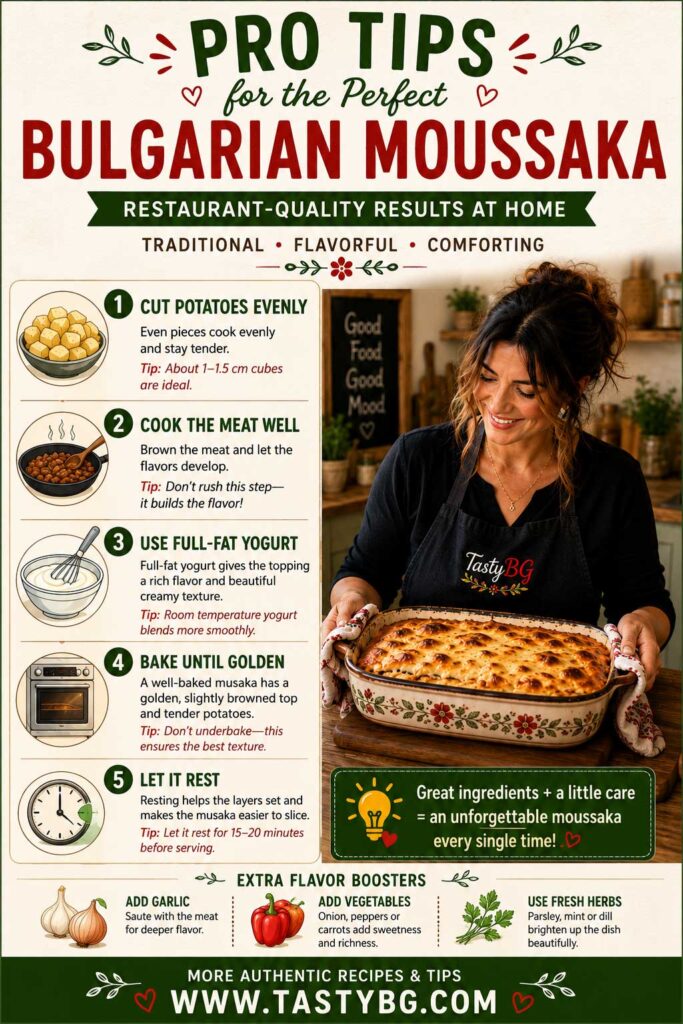
A few simple techniques can take your Bulgarian Moussaka recipe from good to truly exceptional. These are the same small details many Bulgarian home cooks rely on to achieve the rich flavor, creamy texture, and comforting character that make musaka such a beloved family meal.
Use Mixed Meat for Better Flavor
While musaka can be made with either pork or beef alone, many Bulgarian families prefer using a combination of both. The beef adds depth and savory flavor, while the pork contributes extra richness and moisture.
A mixture of the two often produces a juicier casserole with a more balanced flavor profile. If available, a 50/50 blend is an excellent choice for traditional homemade musaka.
Let the Musaka Rest Before Serving
It can be tempting to serve the casserole immediately after removing it from the oven, but allowing it to rest is one of the easiest ways to improve the final result.
Resting the musaka for about 15–20 minutes gives the filling time to settle and the yogurt topping time to firm slightly. This makes the casserole easier to slice and helps the layers hold together more neatly on the plate. As an added bonus, the flavors continue blending during this resting period.
Use Full-Fat Yogurt
The traditional yogurt topping is one of the highlights of an authentic Bulgarian Moussaka recipe, and full-fat yogurt delivers the best results.
Its richer texture creates a smoother, creamier topping that bakes beautifully into a golden crust. Lower-fat yogurts often contain more water and may separate during baking, resulting in a less appealing texture. For the most authentic flavor and consistency, choose a high-quality full-fat yogurt whenever possible.
Add Fresh Parsley Before Serving
A simple sprinkle of freshly chopped parsley just before serving can make a surprising difference.
The fresh herbal flavor adds brightness to the rich casserole and provides a beautiful color contrast against the golden topping. It is a small finishing touch that helps balance the hearty flavors and gives the dish a fresh homemade appearance.
These simple tips may seem minor, but together they help create the kind of Bulgarian musaka that people happily return to for seconds—and often look forward to enjoying again the next day.
Delicious Variations of Bulgarian Musaka
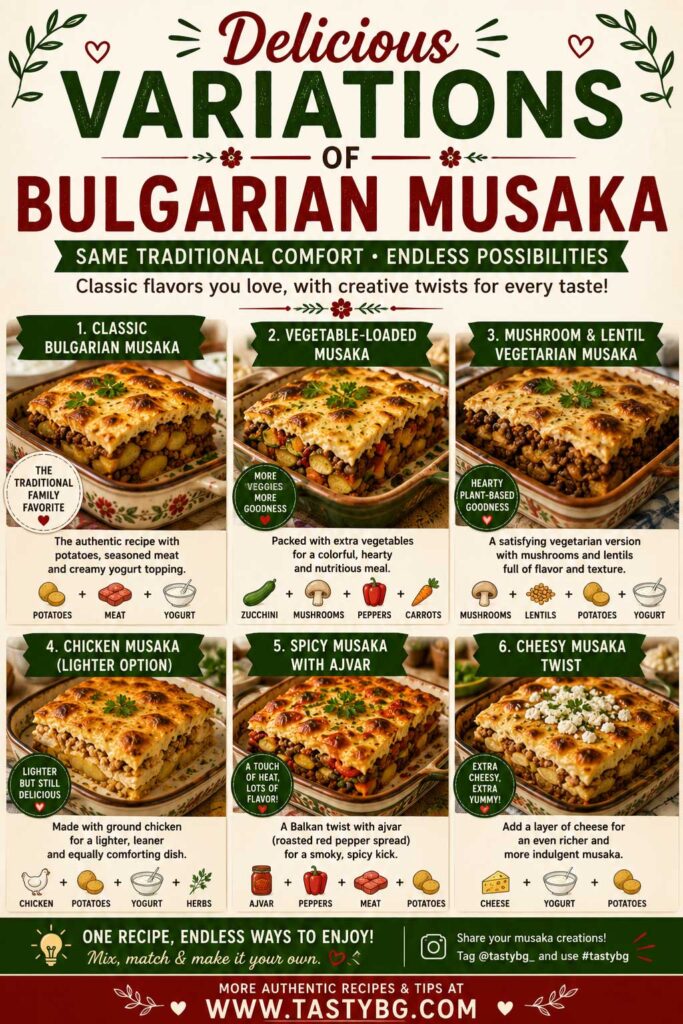
One of the reasons the Bulgarian Moussaka recipe has remained popular for generations is its versatility. While the traditional version made with potatoes, ground meat, and a yogurt topping is the most common, many families put their own spin on the dish depending on the season, available ingredients, or personal preferences.
Vegetarian Bulgarian Musaka
A meatless version can be just as satisfying as the traditional recipe. The potatoes and yogurt topping remain the foundation of the dish, while vegetables and legumes provide plenty of texture and flavor.
Popular vegetarian additions include:
- Mushrooms for a hearty, savory flavor
- Lentils for extra protein and substance
- Zucchini for a lighter summer version
- Eggplant for a richer Mediterranean-inspired variation
These ingredients can be used individually or combined to create a filling vegetarian musaka that still delivers the comforting qualities of the classic dish.
Spicy Balkan Musaka
Although traditional Bulgarian musaka is typically mild, some families enjoy adding a little heat.
A spicier version can be created by incorporating:
- Chili flakes
- Hot paprika
- Roasted hot peppers
These ingredients add warmth and depth without overpowering the familiar flavors of the casserole. The slight heat pairs particularly well with the cooling yogurt topping.
Cheesy Musaka
Cheese lovers often add an extra layer of richness by incorporating traditional Balkan cheeses.
Some Bulgarian households sprinkle grated sirene or kashkaval over the casserole before the final baking stage. As the cheese melts and browns, it creates an even more flavorful golden crust that complements the creamy yogurt topping beautifully.
Extra Vegetable Musaka
For a lighter and more colorful version, additional vegetables can be mixed into the potato and meat filling. Popular choices include diced carrots, peas, roasted peppers, or tomatoes. These additions bring extra flavor, texture, and nutrition while keeping the dish true to its comforting homemade roots.
No matter which variation you choose, the heart of a great Bulgarian Moussaka recipe remains the same: tender potatoes, comforting flavors, and a golden baked topping that brings everything together into one satisfying meal.
What to Serve With Bulgarian Moussaka
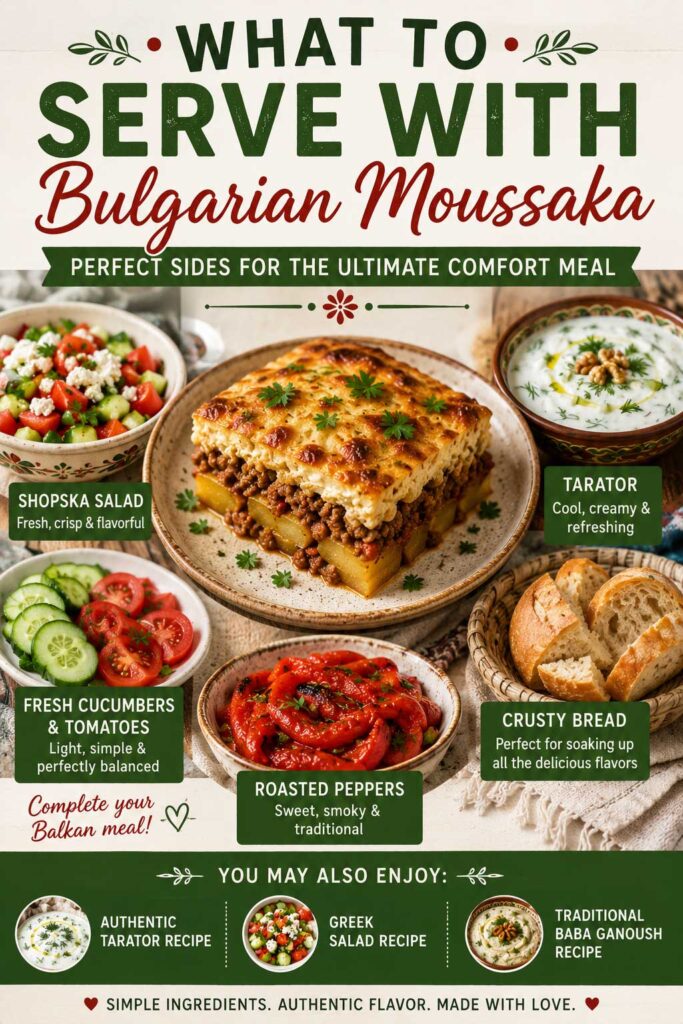
The rich, comforting nature of this Bulgarian Musaka recipe pairs wonderfully with lighter side dishes that add freshness and balance to the meal. Across Bulgaria, musaka is often served alongside crisp salads, cooling yogurt-based dishes, and simple vegetable sides that complement the hearty potato and meat casserole without overwhelming it.
Shopska Salad
One of the most traditional pairings is a fresh Shopska salad. The combination of tomatoes, cucumbers, peppers, and sirene cheese provides a bright contrast to the warm, savory musaka. The fresh vegetables help balance the richness of the casserole while adding color and texture to the meal.
Tarator
Another classic accompaniment is tarator, Bulgaria’s famous cold yogurt and cucumber soup. Its refreshing flavor and creamy texture complement musaka perfectly, especially during warmer months. Many Bulgarian families consider tarator and musaka one of the most authentic meal combinations in Bulgarian cuisine.
Fresh Cucumbers and Tomatoes
Fresh sliced cucumbers and tomatoes are another simple and traditional side dish often found on Bulgarian tables. Their natural freshness keeps the meal light while enhancing the hearty flavors of the casserole.
Crusty Bread
Crusty bread is a popular addition to Bulgarian musaka because it is perfect for soaking up the flavorful juices from the potatoes, meat, and yogurt topping. A slice of fresh bread helps turn an already satisfying meal into an even heartier dining experience.
Roasted Peppers
Roasted peppers pair exceptionally well with musaka thanks to their natural sweetness and smoky flavor. Many Bulgarian families serve roasted peppers alongside musaka during late summer and early autumn when peppers are at their seasonal best.
More Balkan Recipes to Serve Alongside Musaka
For a complete Balkan-inspired meal, consider serving your musaka with some of these popular recipes from TastyBG:
Together, these dishes create a satisfying Mediterranean and Balkan-style spread that highlights fresh vegetables, traditional flavors, and the comforting homemade character that makes Bulgarian cuisine so beloved.
How Bulgarians Traditionally Serve Musaka
In Bulgaria, musaka is usually served warm rather than straight from the oven. Allowing the casserole to rest for a short time after baking helps the flavors settle and gives the potatoes and yogurt topping a chance to firm up slightly, resulting in a better texture and cleaner slices.
A common tradition is to serve musaka with an extra spoonful of yogurt on the side. The cool, tangy yogurt pairs beautifully with the rich potatoes and savory meat, creating the balance of flavors that many Bulgarians associate with homemade comfort food. Some families also enjoy serving fresh seasonal vegetables alongside the dish, especially tomatoes, cucumbers, or roasted peppers.
Across Bulgaria, musaka remains one of the most commonly prepared homemade meals, especially during the cooler months when hearty comfort food is most appreciated.
Bulgarian musaka is a meal that brings people together and is often associated with family gatherings and relaxed home cooking. It frequently appears on the table for:
- Family dinners
- Weekend lunches
- Holiday gatherings
- Cold-weather comfort meals
- Meal prep for busy weeks
Many Bulgarians have fond memories of coming home to the aroma of musaka baking in the oven, knowing a hearty family meal was waiting. Because it reheats so well and often tastes even better the next day, it remains one of the most practical and beloved dishes in Bulgarian home kitchens.
Whether served for a casual weeknight dinner or a large family gathering, this Bulgarian Musaka recipe represents the simple, comforting style of cooking that has been passed down through generations.
Kitchen Tools That Make Musaka Easier
These kitchen tools can make preparing, storing, and serving Bulgarian musaka much easier.
| Product | Why We Like It | Check Price |
|---|---|---|
| Vegetable Chopper | Speeds up potato and onion prep | Check Price on Amazon |
| Glass Food Storage Containers | Perfect for leftovers and meal prep | Check Price on Amazon |
| Instant Read Thermometer | Helps ensure the casserole is heated properly when reheating | Check Price on Amazon |
Storage and Reheating Tips
One of the best things about this Bulgarian Moussaka recipe is how well it stores. In fact, many people believe musaka tastes even better the next day after the flavors have had time to meld together. Whether you’re meal prepping for the week or saving leftovers from a family dinner, proper storage helps maintain the dish’s flavor and texture.
Refrigerating
Allow the musaka to cool completely before transferring it to an airtight container or covering the baking dish tightly.
Stored properly in the refrigerator, Bulgarian musaka will stay fresh for up to 4 days. The potatoes continue absorbing flavor during storage, which is one reason leftovers are often especially delicious.
For more food safety guidance, see the FoodSafety.gov cold food storage chart.
Freezing
Bulgarian musaka freezes surprisingly well, making it a great option for preparing meals in advance.
For best results:
- Allow the casserole to cool completely.
- Divide it into individual portions.
- Store portions in freezer-safe containers or freezer bags.
- Freeze for up to 3 months.
Individual portions make reheating easier and help prevent unnecessary thawing of the entire casserole.
Reheating
For the best texture, reheat musaka in the oven. Place the casserole in an oven-safe dish, cover loosely with foil, and warm at 350°F (175°C) until heated through. This method helps preserve the creamy topping while keeping the potatoes tender.
Microwaving is also a convenient option for individual servings. While it heats the casserole quickly, the yogurt topping may remain softer and won’t regain the lightly crisp golden texture that oven reheating provides.
If reheating from frozen, thaw overnight in the refrigerator whenever possible before warming. This helps the casserole heat more evenly and maintains the best overall texture.
With proper storage and reheating, this Bulgarian Moussaka recipe can provide several days of comforting homemade meals with very little extra effort.
Is Bulgarian Moussaka Healthy?
Bulgarian musaka can absolutely be part of a balanced diet when enjoyed as part of an overall healthy eating pattern. While it is considered a comfort food, it is made from simple, whole-food ingredients that provide a variety of important nutrients.
The dish offers several nutritional benefits, including:
| Nutrient | Main Source | Benefit |
|---|---|---|
| Protein | Ground meat and eggs | Helps support muscle maintenance and keeps you feeling satisfied |
| Potassium | Potatoes | Supports normal muscle and nerve function |
| Calcium | Yogurt | Important for bone health |
| B Vitamins | Meat and eggs | Supports energy metabolism |
| Carbohydrates | Potatoes | Provides energy and helps make the meal filling |
For general guidance on building balanced meals, visit the USDA MyPlate guide.
One reason this Bulgarian Moussaka recipe is so satisfying is its balance of protein, carbohydrates, and dairy. The combination of potatoes, meat, and yogurt creates a hearty meal that can help keep you full for longer than many lighter dishes.
If you’d like to make the recipe lighter, there are several easy adjustments. Using lean ground turkey, chicken, or extra-lean beef can reduce the overall fat content while still providing plenty of flavor. You can also increase the vegetable content by adding ingredients such as zucchini, carrots, mushrooms, or roasted peppers to the filling.
Another simple option is to pair musaka with a large fresh salad, such as a traditional Shopska salad or sliced cucumbers and tomatoes. This adds extra vegetables to the meal while maintaining the authentic Balkan dining experience.
Like many traditional homemade dishes, Bulgarian musaka is less about being a “diet food” and more about providing nourishing, satisfying ingredients prepared from scratch. When made with quality ingredients and enjoyed in reasonable portions, it can be a wholesome and comforting addition to your meal rotation.
Nutritional information should be considered an estimate only; please always consult with a nutritionist, a registered dietician, or your physician for any specific health-related questions.
Whether you’re discovering Bulgarian cuisine for the first time or recreating a family favorite, this Bulgarian Moussaka recipe offers a delicious way to experience one of the country’s most beloved comfort foods. With simple ingredients, rich flavors, and a traditional yogurt topping, it’s a meal that has stood the test of time in Bulgarian kitchens.
Frequently Asked Questions
What is the difference between Greek and Bulgarian moussaka?
Although they share the same name, the two dishes are quite different. Greek moussaka is typically layered with eggplant and topped with a rich béchamel sauce, while the Bulgarian Moussaka recipe uses diced potatoes and a traditional yogurt-and-egg topping. The Bulgarian version is generally lighter and focuses on simple, comforting flavors.
Can I make Bulgarian musaka ahead of time?
Yes. Bulgarian musaka is an excellent make-ahead meal. You can assemble the casserole several hours in advance and keep it refrigerated until you’re ready to bake. Many people also prepare it the day before serving because the flavors often become even better after resting overnight.
What meat is traditionally used?
Ground pork is the most traditional choice in Bulgaria, although many families use a mixture of pork and beef for a richer flavor and juicier texture. Both options work wonderfully in an authentic Bulgarian Moussaka recipe.
Can I use sour cream instead of yogurt?
You can substitute sour cream if necessary, and the casserole will still be delicious. However, traditional Bulgarian musaka is made with yogurt, which provides the distinctive tangy flavor and characteristic baked topping that make the dish authentic.
Why is my musaka watery?
Excess moisture is usually caused by adding too much liquid or by potatoes that have not fully cooked during baking. Allowing the casserole to rest for 15–20 minutes after removing it from the oven can also help excess liquid settle and improve the texture.
Can I make it vegetarian?
Absolutely. A vegetarian version can be just as satisfying as the traditional recipe. Mushrooms and lentils are particularly popular substitutes because they provide hearty texture and savory flavor. Zucchini, eggplant, and other vegetables can also be added to create a delicious meat-free musaka.
Can I freeze Bulgarian musaka?
Yes. Bulgarian musaka freezes very well. Allow it to cool completely, portion it into freezer-safe containers, and freeze for up to 3 months. Thaw overnight in the refrigerator before reheating for the best results.
What kind of potatoes work best?
Starchy potatoes such as Russet or Yukon Gold are excellent choices because they become tender during baking and absorb the flavorful juices from the meat and seasonings.
Do Bulgarians serve musaka with yogurt?
Very often, yes. Many Bulgarian families serve an extra spoonful of plain yogurt alongside musaka. The cool, tangy yogurt complements the rich casserole and is considered a classic pairing.
Why does Bulgarian musaka taste better the next day?
As the casserole rests, the flavors continue to blend together and the potatoes absorb even more of the savory juices. This is why many people feel that leftover musaka is every bit as delicious—if not better—than when it is freshly baked.
More Bulgarian Recipes You May Enjoy
If you enjoy traditional Bulgarian comfort food, you may also enjoy:
- Traditional Bulgarian Lutenitsa Recipe
- Traditional Ajvar Recipe
- Authentic Tarator Recipe
- Healthy Shopska Salad Recipe
- Bulgarian Cottage Cheese Breakfast
- Crispy Air Fryer Banitsa Chips
A Taste of Bulgarian Home Cooking
This Bulgarian Moussaka recipe is the kind of meal that perfectly captures the heart of Bulgarian home cooking. With its tender potatoes, savory seasoned meat, and signature golden yogurt topping, it transforms a handful of simple ingredients into a dish that feels warm, comforting, and deeply satisfying.
What makes Bulgarian musaka so special is that it doesn’t rely on complicated techniques or expensive ingredients. Instead, it showcases the traditional Balkan approach to cooking—simple foods prepared with care and shared around the family table. Whether you’re making it for a busy weeknight dinner, a cozy weekend lunch, or a holiday gathering, it is a recipe that consistently brings people together.
It’s often the dish waiting on the stove after school, the centerpiece of a Sunday lunch, or the recipe everyone requests when the family gathers together. It’s a recipe tied to family gatherings, childhood memories, and the simple pleasure of sharing homemade food around the table.
If you’re looking to explore authentic Bulgarian cuisine, this Bulgarian Moussaka recipe is one of the best places to start. After one bite of the creamy yogurt topping and flavorful potato filling, you’ll understand why this beloved casserole has remained a staple of Bulgarian kitchens for generations.
For more Balkan-inspired recipes, explore this Traditional Bulgarian Lutenitsa Recipe and this Traditional Ajvar Recipe.
Did You Make This Bulgarian Moussaka Recipe?
If you enjoyed this Bulgarian Moussaka recipe, be sure to explore more Mediterranean and Balkan-inspired dishes here on TastyBG. From fresh salads and hearty soups to traditional Bulgarian favorites and modern healthy meals, you’ll find plenty of recipes inspired by the flavors of the Balkans.Recommended Tools For This Recipe
If you make this Bulgarian Moussaka recipe, tag @tastybg_ on Instagram and use #tastybg. We’d love to see your homemade version and how you bring this classic Bulgarian comfort food to your table.