
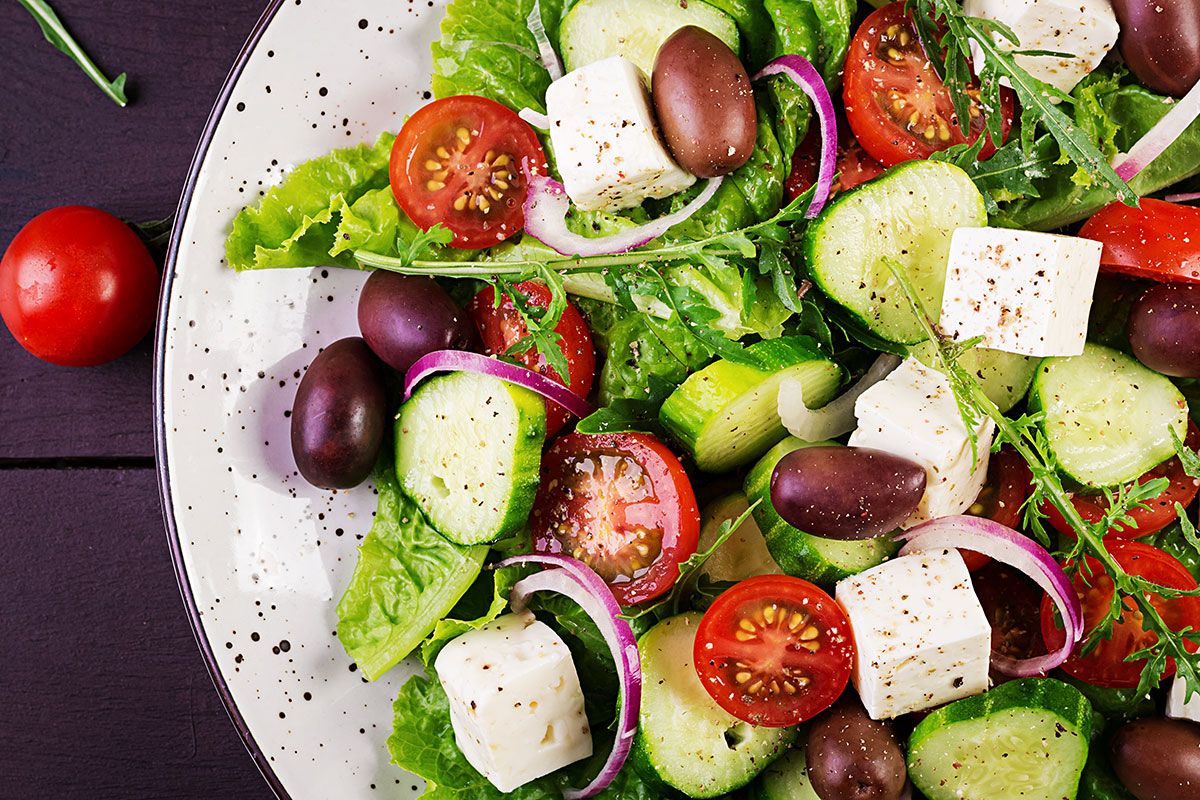
This authentic Greek salad recipe is fresh, colorful, and packed with classic Mediterranean flavors. Made with crisp cucumbers, juicy tomatoes, red onion, olives, feta cheese, and a light homemade dressing, this traditional Greek salad is one of the most popular dishes in Mediterranean cuisine.
Greek salad is loved for its simplicity and refreshing taste. The combination of fresh vegetables, creamy feta cheese, oregano, and olive oil creates a healthy salad that feels both light and satisfying.
While many restaurant versions can feel overly heavy or overdressed, homemade Greek salad allows the fresh ingredients to truly shine. Using quality olive oil, ripe tomatoes, and authentic feta cheese makes a noticeable difference in flavor.
This easy Greek salad recipe comes together in just minutes and pairs perfectly with grilled meats, seafood, pita bread, or other Mediterranean-inspired dishes. Whether served as a quick lunch, a healthy side dish, or a refreshing summer salad, it always brings bright, vibrant flavors to the table.
Why This Fresh Mediterranean Salad Never Goes Out of Style
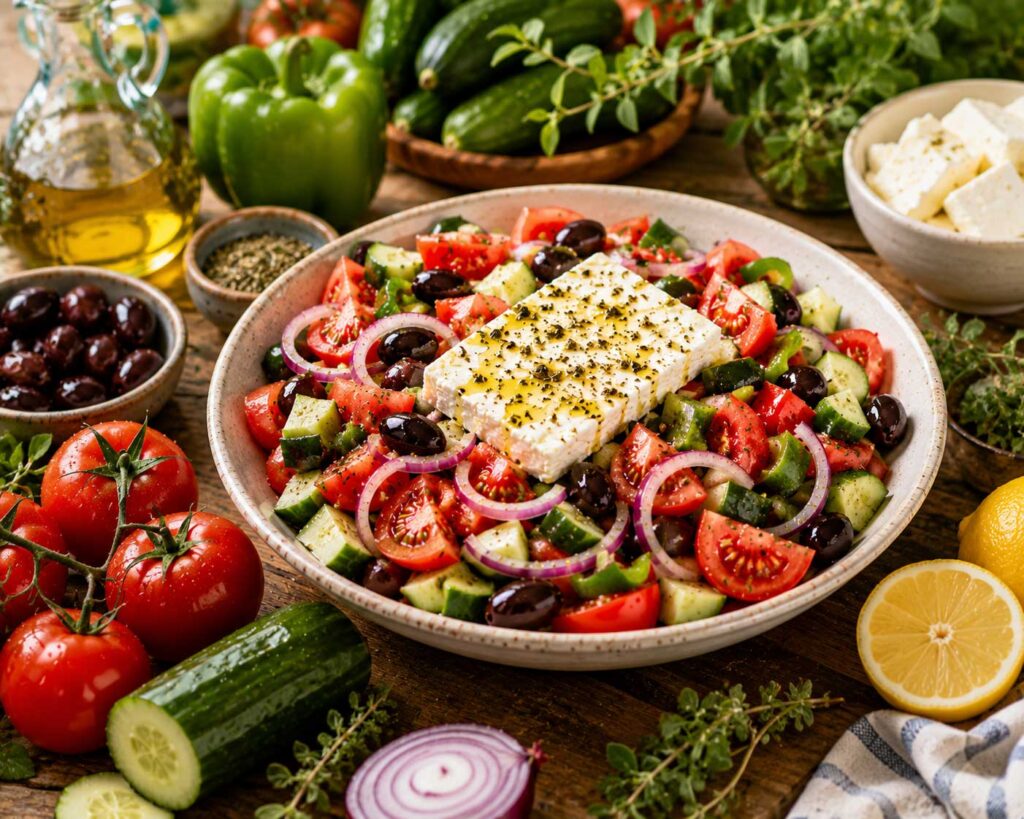
There is a reason Greek salad has remained one of the most loved Mediterranean dishes for generations. Its combination of fresh vegetables, creamy feta cheese, olives, herbs, and olive oil creates a meal that feels simple, vibrant, and incredibly satisfying at the same time.
Unlike heavy salads covered in thick dressings, Greek salad allows the natural flavors of the ingredients to shine. Juicy tomatoes, crisp cucumbers, briny olives, and rich olive oil come together in a way that tastes refreshing in every season, especially during warm summer months.
Another reason this Mediterranean favorite never goes out of style is its versatility. Greek salad works beautifully as a quick lunch, healthy side dish, light dinner, or part of a larger Mediterranean-style table shared with family and friends.
It is also one of those timeless recipes that feels both healthy and comforting. With simple whole ingredients and bold Mediterranean flavors, Greek salad fits perfectly into modern lifestyles while still honoring traditional Greek cuisine.
Whether served at a backyard summer dinner, alongside grilled meats, or as part of a relaxed outdoor gathering, Greek salad continues to bring people together around fresh food and simple flavors.
This authentic Greek salad recipe remains a favorite because it combines simple ingredients with fresh Mediterranean flavor.
The Traditional Greek Village Salad Everyone Knows and Loves

Greek salad, known in Greece as Horiatiki, is a traditional Mediterranean salad made with fresh vegetables, olives, feta cheese, olive oil, and herbs. The name Horiatiki translates to “village salad,” reflecting its simple rustic ingredients and traditional countryside origins.
A classic Greek salad typically includes tomatoes, cucumbers, red onions, olives, green peppers, and thick slices or chunks of feta cheese finished with olive oil and oregano. Unlike many modern salads, traditional Greek salad usually does not contain lettuce, allowing the fresh vegetables and bold Mediterranean flavors to stand out naturally.
Authentic feta cheese is a protected product traditionally produced in Greece using specific methods and ingredients.
What makes Greek salad special is the quality of the ingredients rather than complicated preparation. Ripe tomatoes, crisp cucumbers, briny olives, creamy feta cheese, and good olive oil create a refreshing dish that has become popular all around the world.
Today, Greek salad is enjoyed throughout the Mediterranean, the Balkans, and far beyond, with many regions adding their own local touches while preserving the fresh and vibrant character of the original dish.
Learning how to make an authentic Greek salad recipe at home is one of the easiest ways to enjoy traditional Mediterranean cuisine.
Why You’ll Keep Making This Greek Salad All Summer Long

This authentic Greek salad recipe is one of those simple dishes that never goes out of style. It is fresh, flavorful, easy to prepare, and works beautifully for everything from quick lunches to summer dinners and Mediterranean gatherings.
One of the best things about Greek salad is how quickly it comes together. With only a handful of fresh ingredients and a light homemade dressing, you can prepare a healthy and satisfying salad in just minutes.
The combination of juicy tomatoes, crunchy cucumbers, briny olives, creamy feta cheese, and olive oil creates a balance of textures and flavors that feels refreshing without being heavy.
You will also love how versatile this salad can be. It pairs perfectly with grilled chicken, seafood, pita bread, rice dishes, falafel, or roasted vegetables, making it easy to serve alongside many Mediterranean-inspired meals.
Because it uses simple whole ingredients, Greek salad naturally fits into Mediterranean diet meal plans and is a great option for warm weather meals, meal prep lunches, or healthy side dishes throughout the year.
Simple Mediterranean Ingredients That Create Big Flavor
This authentic Greek salad recipe uses simple Mediterranean ingredients that come together to create fresh and vibrant flavor in every bite. While the ingredient list is short, each component plays an important role in creating the classic balance of flavors that makes Greek salad so popular around the world.
Tomatoes
Ripe tomatoes add natural sweetness, vibrant color, and juicy texture to the salad. Roma tomatoes, vine-ripened tomatoes, or cherry tomatoes all work well, but the fresher and riper they are, the better the final flavor will be.
Cucumber
Fresh cucumber adds crunch and refreshing flavor. English cucumbers are especially popular because they have fewer seeds and a thinner skin, making them ideal for salads.
Red Onion
Red onion brings a slightly sharp and savory flavor that balances beautifully with the sweetness of the tomatoes and the creaminess of the feta cheese.
Feta Cheese
Traditional Greek salad is made with feta cheese, which adds a creamy texture and salty Mediterranean flavor. For a delicious Balkan-inspired variation, Bulgarian sirene cheese can also be used.
Olives
Kalamata olives are the most traditional choice and provide the rich, briny flavor that authentic Greek salad is known for. Their bold taste pairs perfectly with the fresh vegetables and olive oil.
Olive Oil
Good-quality extra virgin olive oil is one of the most important ingredients in Greek salad because it ties all the flavors together. As a cornerstone of Mediterranean cooking, olive oil adds richness, aroma, and depth while helping the fresh ingredients shine.
Lemon Juice and Vinegar
A combination of lemon juice and vinegar adds brightness, freshness, and balance to the dressing while enhancing the natural flavors of the vegetables.
Garlic
Fresh garlic gives the dressing deeper Mediterranean flavor and adds a subtle savory note without overpowering the salad.
Oregano
Dried oregano provides the classic herbal flavor associated with authentic Greek cuisine and is one of the signature seasonings used in traditional Greek salad.
Salt and Black Pepper
Simple seasoning helps enhance the freshness of the vegetables and brings all the ingredients together. A small amount is usually all that is needed because the feta cheese and olives already contribute natural saltiness.
The beauty of Greek salad lies in its simplicity. When fresh ingredients are combined with quality olive oil and traditional Mediterranean seasonings, the result is a refreshing salad packed with flavor, texture, and color.
Affiliate Disclosure: This article may contain affiliate links. If you purchase through these links, I may earn a small commission at no additional cost to you.
Mediterranean Essentials for Better Greek Salad
The secret to an authentic Greek salad is using a few high-quality ingredients. Since this recipe relies on fresh vegetables, feta cheese, and olive oil rather than heavy sauces, the quality of each ingredient makes a noticeable difference in the final flavor.
| Product | Why It’s Helpful | Check Price |
|---|---|---|
| Extra Virgin Olive Oil | Essential for authentic Mediterranean flavor | Check Price on Amazon |
| Greek Oregano | Adds traditional Greek salad flavor | Check Price on Amazon |
| Kalamata Olives | Classic ingredient for authentic Greek salad | Check Price on Amazon |
| Sea Salt Flakes | Enhances the natural flavors of the vegetables | Check Price on Amazon |
| Feta Cheese Storage Container | Helps keep feta fresh longer | Check Price on Amazon |
How to Make the Best Greek Salad at Home

One of the reasons Greek salad has remained a Mediterranean favorite for generations is its simplicity. With a handful of fresh ingredients and a quick homemade dressing, you can create a colorful, refreshing salad in just a few minutes.
Prepare the Dressing
In a small bowl or mason jar, combine the olive oil, lemon juice, vinegar, garlic, oregano, mustard, salt, and black pepper. Whisk or shake until the dressing is smooth and fully combined.
Allowing the dressing to rest for a few minutes helps the flavors blend together and creates a more balanced Mediterranean taste.
Chop the Vegetables
Cut the tomatoes into large bite-sized pieces, slice the cucumber into thick chunks, and thinly slice the red onion. Drain the olives if necessary and prepare the feta cheese.
Traditional Greek salad is known for its rustic presentation, so avoid cutting the vegetables too small. Larger pieces provide better texture and a more authentic appearance.
Assemble the Salad
Add the tomatoes, cucumber, red onion, olives, and feta cheese to a large serving bowl.
Pour the dressing over the vegetables and gently toss everything together until lightly coated. Be careful not to overmix, as this can break apart the feta cheese and soften the vegetables.
For a complete Mediterranean-inspired spread, serve it alongside fresh herb and bulgur salad or other light Mediterranean dishes.
Garnish and Serve
Finish the salad with an extra sprinkle of oregano, freshly cracked black pepper, and a final drizzle of extra virgin olive oil.
Serve immediately while the vegetables are crisp and refreshing. For the best flavor, enjoy Greek salad slightly chilled, especially during warm summer months.
Once you’ve made this authentic Greek salad recipe a few times, you’ll see just how simple and versatile it can be.

Authentic Greek Salad Recipe with Feta and Mediterranean Flavors
Equipment
- A large bowl
- Cutting board
- Sharp knife
Ingredients
For the Salad
- 4 medium tomatoes chopped
- 1 large cucumber sliced
- 1 small red onion thinly sliced
- 1 cup feta cheese cubed or crumbled
- ½ cup Kalamata olives
- 1 tablespoon fresh coriander or parsley optional
For the Dressing
- ¼ cup extra virgin olive oil
- 1 tablespoon fresh lemon juice
- 1 tablespoon red wine vinegar
- 1 teaspoon Dijon mustard
- 1 garlic clove minced
- 1 teaspoon dried oregano
- ½ teaspoon sea salt
- ¼ teaspoon black pepper
Instructions
- In a small bowl, whisk together the olive oil, lemon juice, vinegar, mustard, garlic, oregano, salt, and black pepper until fully combined.
- Let the dressing rest for a few minutes while preparing the vegetables.
- Chop the tomatoes into bite-sized pieces and slice the cucumber and red onion.
- Add the tomatoes, cucumber, onion, olives, and feta cheese to a large serving bowl.
- Pour the dressing over the salad and gently toss until the ingredients are evenly coated.
- Garnish with fresh herbs if desired and finish with a light drizzle of olive oil.
- Serve immediately while fresh and crisp.
Notes
- Traditional Greek salad is often called Horiatiki or Greek village salad.
- For the best flavor, use ripe tomatoes and high-quality extra virgin olive oil.
- Bulgarian sirene cheese can be used instead of feta for a delicious Balkan variation.
- Greek salad is best served fresh but can be refrigerated for up to 1 day.
Nutritional information should be considered an estimate only; please always consult with a nutritionist, registered dietitian, or physician regarding any specific dietary or health-related questions.
It is always better for your health to use clean ingredients whenever possible, preferably organic and free from unnecessary pesticides, antibiotics, and hormones.
Simple Secrets for the Most Flavorful Greek Salad
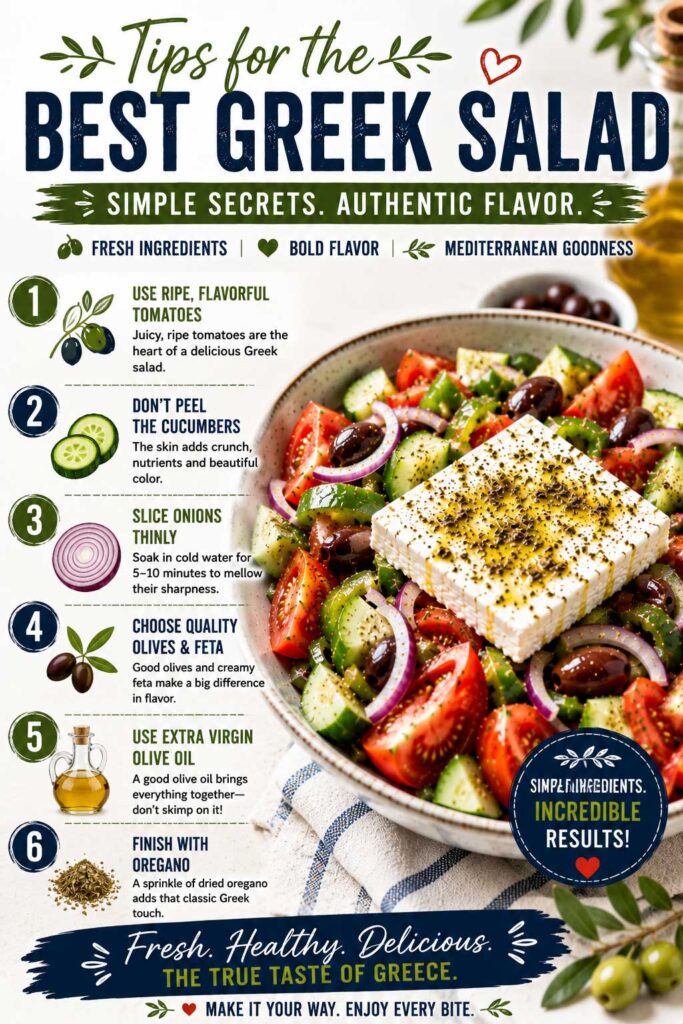
The beauty of Greek salad lies in its simplicity, which is exactly why ingredient quality matters so much. With only a handful of fresh vegetables, feta cheese, olives, and olive oil, every ingredient has a chance to shine. These simple tips will help you create a Greek salad that tastes fresh, vibrant, and authentically Mediterranean every time.
Use Ripe Tomatoes
Tomatoes are the heart of any Greek salad, so choosing ripe and flavorful ones makes a huge difference. Sweet, juicy tomatoes add natural freshness and help create the bright Mediterranean flavor this salad is known for.
Choose High-Quality Olive Oil
A good extra virgin olive oil can completely transform the dressing. Since Greek salad uses only a few ingredients, the flavor of the olive oil becomes one of the most important elements in the dish.
Keep the Vegetables Rustic
Traditional Greek village salad is not finely chopped. Larger pieces of cucumber, tomato, and onion create better texture and give the salad its classic rustic appearance.
Toss Gently
Greek salad should look fresh and vibrant, not heavily mixed. Gently tossing the ingredients helps keep the vegetables crisp while preventing the feta cheese from breaking apart too much.
Dress the Salad Just Before Serving
Adding the dressing immediately before serving helps preserve the crunch of the vegetables and prevents excess liquid from collecting at the bottom of the bowl.
Use Feta Packed in Brine
Authentic feta stored in brine usually has a creamier texture and richer flavor than pre-crumbled varieties. It also holds its shape better when mixed into the salad.
Serve Slightly Chilled
Greek salad is especially refreshing when served slightly chilled. During the warmer months, a few minutes in the refrigerator before serving can make the flavors even more enjoyable.
Finish with Extra Oregano
A light sprinkle of oregano just before serving adds the classic Mediterranean aroma that makes Greek salad instantly recognizable and even more flavorful.
These small tips can make a big difference when preparing an authentic Greek salad recipe from scratch.
Delicious Greek Salad Variations to Try
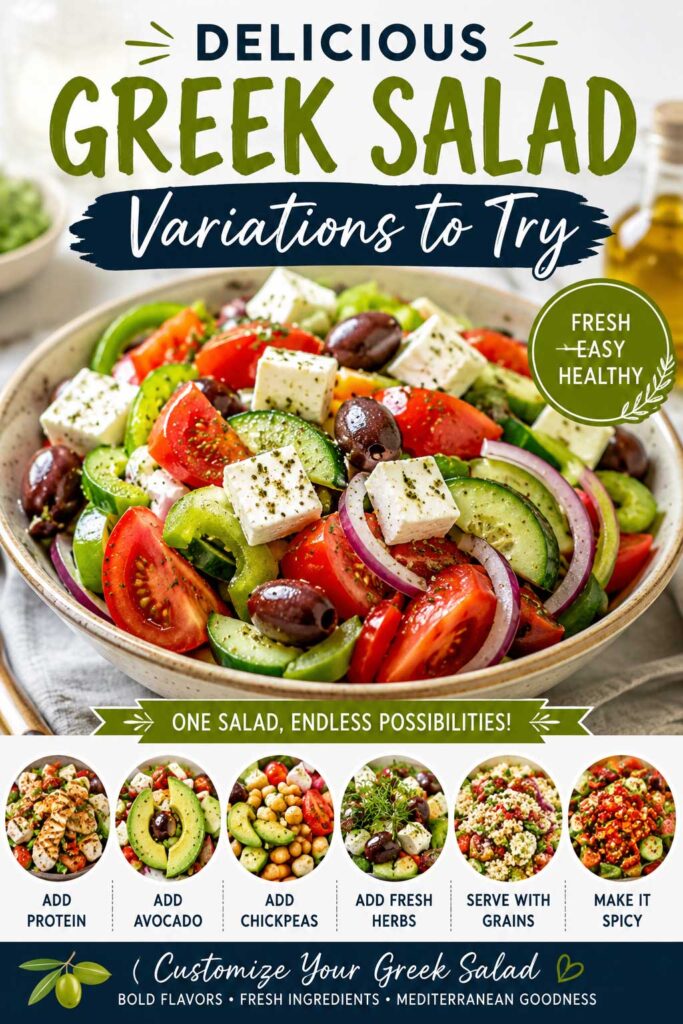
One of the reasons Greek salad has remained popular for generations is its versatility. While the traditional version is wonderfully simple, there are many ways to customize it while still preserving its fresh Mediterranean character. Whether you’re looking for extra protein, additional vegetables, or a unique Balkan-inspired twist, these variations can help you make the recipe your own.
Add Green Bell Peppers
Many authentic Greek village salad recipes include sliced green bell peppers. They add extra crunch, freshness, and a subtle sweetness that pairs beautifully with the tomatoes, cucumbers, and feta cheese.
Turn It Into a Complete Meal
Greek salad can easily become a satisfying lunch or light dinner. Add grilled chicken, shrimp, salmon, or chickpeas for extra protein while keeping the meal fresh and Mediterranean-inspired.
Try a Balkan Twist
For a delicious Balkan variation, replace traditional feta with Bulgarian sirene cheese. Sirene has a slightly different texture and flavor but works beautifully with the fresh vegetables and homemade dressing.
Add Fresh Mediterranean Herbs
Fresh herbs can bring even more flavor to the salad. Parsley, dill, mint, basil, or coriander all complement the vegetables and add an extra layer of freshness.
Serve It with Grains
For a heartier meal, pair Greek salad with quinoa, couscous, bulgur, or rice. These grains absorb the dressing beautifully and make the salad even more filling.
Add Creamy Avocado
Although not traditional, avocado adds a rich and creamy texture that pairs surprisingly well with the salty olives and feta cheese.
Give It a Little Heat
If you enjoy spicy flavors, add a pinch of red pepper flakes or a few thin slices of fresh chili peppers. The gentle heat contrasts nicely with the cool and refreshing vegetables.
Create a Mediterranean Mezze Plate
Serve Greek salad alongside hummus, baba ganoush, olives, roasted vegetables, and warm pita bread for a beautiful Mediterranean mezze-style meal that’s perfect for sharing with family and friends.
Even with these variations, the authentic Greek salad recipe remains the foundation for countless Mediterranean-inspired meals.
What to Serve with Greek Salad for a Complete Mediterranean Meal
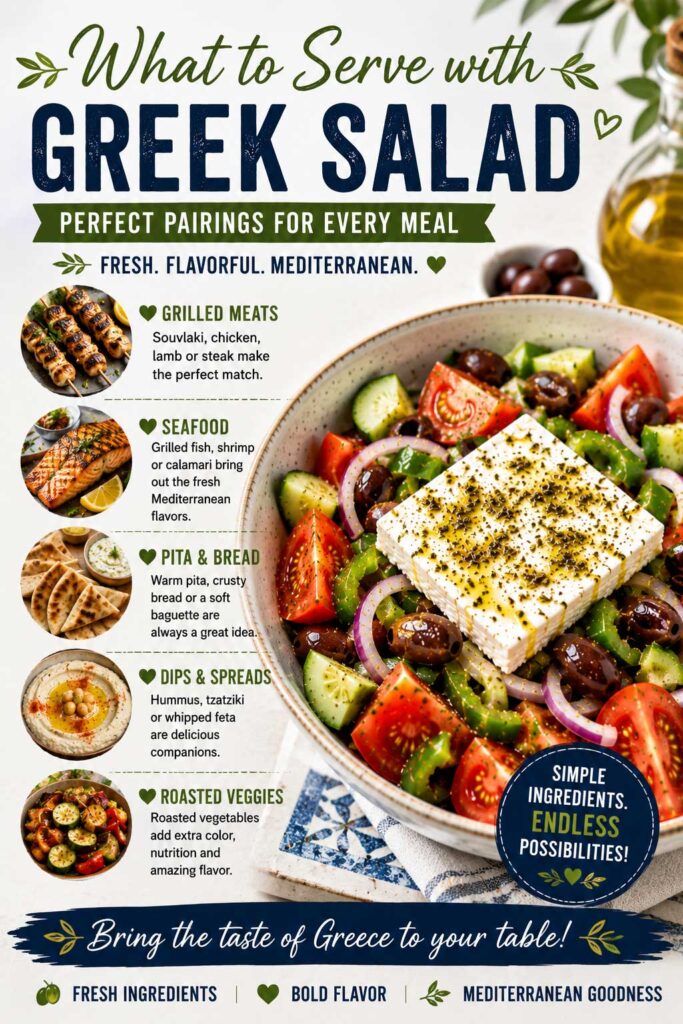
Greek salad pairs beautifully with many Mediterranean and Balkan dishes thanks to its fresh and refreshing flavor. Its crisp vegetables, creamy feta cheese, and bright dressing make it a versatile side dish that complements both light and hearty meals.
Grilled Chicken and Mediterranean Meats
Greek salad works wonderfully alongside grilled chicken, lamb, kebabs, or other Mediterranean-style meats. The fresh vegetables and tangy dressing help balance richer flavors while adding a refreshing contrast to the meal.
Fresh Seafood and Fish
The bright flavors of Greek salad pair naturally with grilled shrimp, baked salmon, sea bass, or other seafood dishes. The combination creates a light and satisfying Mediterranean-inspired dinner.
Mediterranean Mezze Platters
For a classic Mediterranean spread, serve Greek salad with warm pita bread, hummus, olives, cheeses, and other small appetizers. It fits perfectly into a mezze-style meal designed for sharing.
Falafel and Vegetarian Favorites
Greek salad pairs beautifully with vegetarian dishes such as crispy homemade falafel, roasted vegetables, and grain-based meals. The fresh vegetables provide balance while adding extra color and texture to the plate.
Mediterranean Dips and Appetizers
For a flavorful appetizer spread, serve Greek salad alongside creamy roasted eggplant dip, hummus, or other Mediterranean-inspired starters.
Rice, Potatoes, and Grain Dishes
Greek salad is also delicious served with lemon potatoes, rice pilaf, couscous, quinoa, or bulgur. These simple sides absorb the flavors of the dressing and create a more filling meal.
Refreshing Summer Mediterranean Meals
During warmer months, Greek salad is often enjoyed with lighter dishes such as fresh herb and bulgur salad, refreshing Bulgarian cucumber soup, or grilled vegetables.
More Mediterranean Recipes You May Enjoy
- Baba Ganoush Recipe
- Authentic Falafel Recipe
- Fresh Tabbouleh Salad Recipe
- Mediterranean Shakshuka Recipe
- Authentic Tarator Recipe
The bright flavors of Greek salad make it one of the easiest Mediterranean dishes to pair with almost any meal, from simple lunches to large family gatherings.
Serving this authentic Greek salad recipe alongside other Mediterranean dishes creates a balanced and flavorful meal.
Favorite Kitchen Tools for Fresh Mediterranean Salads
While Greek salad is incredibly easy to prepare, a few simple kitchen tools can make chopping vegetables, mixing dressings, and serving salads faster and more enjoyable.
| Product | Why It’s Helpful | Check Price |
|---|---|---|
| Large Salad Bowl | Perfect for tossing ingredients evenly | Check Price on Amazon |
| Salad Servers | Makes serving easy and mess-free | Check Price on Amazon |
| Glass Dressing Shaker | Quickly mixes homemade dressings | Check Price on Amazon |
| Chef’s Knife | Ideal for slicing vegetables cleanly | Check Price on Amazon |
| Olive Wood Serving Bowl | Beautiful Mediterranean-style presentation | Check Price on Amazon |
Is Greek Salad Actually Healthy?
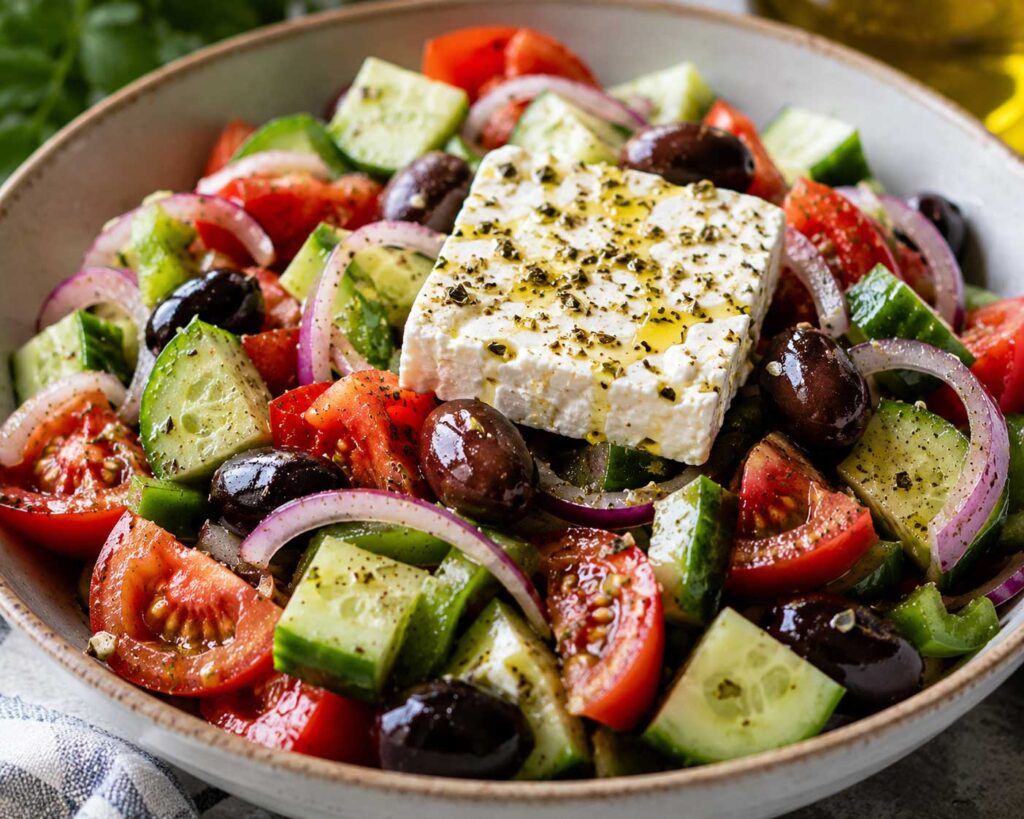
Greek salad is often considered one of the healthiest dishes in Mediterranean cuisine, and for good reason. It is made with fresh vegetables, healthy fats, and simple whole-food ingredients that provide both flavor and nutrition without relying on heavily processed foods.
Rich in Fresh Vegetables
Tomatoes, cucumbers, onions, and peppers provide vitamins, minerals, antioxidants, and fiber while adding vibrant color and freshness to every bite. These vegetables are naturally low in calories and help make the salad both refreshing and satisfying.
Healthy Mediterranean Fats
Extra virgin olive oil is one of the key ingredients in Greek salad and a cornerstone of the Mediterranean diet. The Mediterranean diet has been extensively studied for its potential health benefits and emphasis on whole foods, vegetables, olive oil, and minimally processed ingredients. It provides heart-healthy monounsaturated fats while contributing much of the salad’s rich Mediterranean flavor.
A Good Source of Calcium and Protein
Feta cheese adds calcium, protein, and a creamy texture that balances the fresh vegetables perfectly. While Greek salad is primarily vegetable-based, the feta helps make it more filling and satisfying.
Naturally Gluten-Free
Traditional Greek salad is naturally gluten-free, making it a great option for people avoiding wheat or gluten-containing foods. It can also be adapted to fit a variety of eating styles and dietary preferences.
Easy to Turn Into a Complete Meal
Adding grilled chicken, shrimp, salmon, chickpeas, or other protein-rich ingredients can transform Greek salad from a side dish into a balanced lunch or light dinner.
Light Yet Satisfying
One of the reasons Greek salad remains so popular around the world is that it feels both nourishing and refreshing. The combination of crisp vegetables, creamy feta cheese, olives, and olive oil creates a meal that satisfies without feeling heavy. If you enjoy fresh Mediterranean dishes, you may also love this refreshing parsley and bulgur salad.
When prepared with fresh ingredients and quality olive oil, Greek salad is a delicious example of how simple Mediterranean foods can be both healthy and incredibly flavorful.
This authentic Greek salad recipe proves that healthy food can also be simple, fresh, and incredibly satisfying.
Common Greek Salad Mistakes That Ruin the Flavor
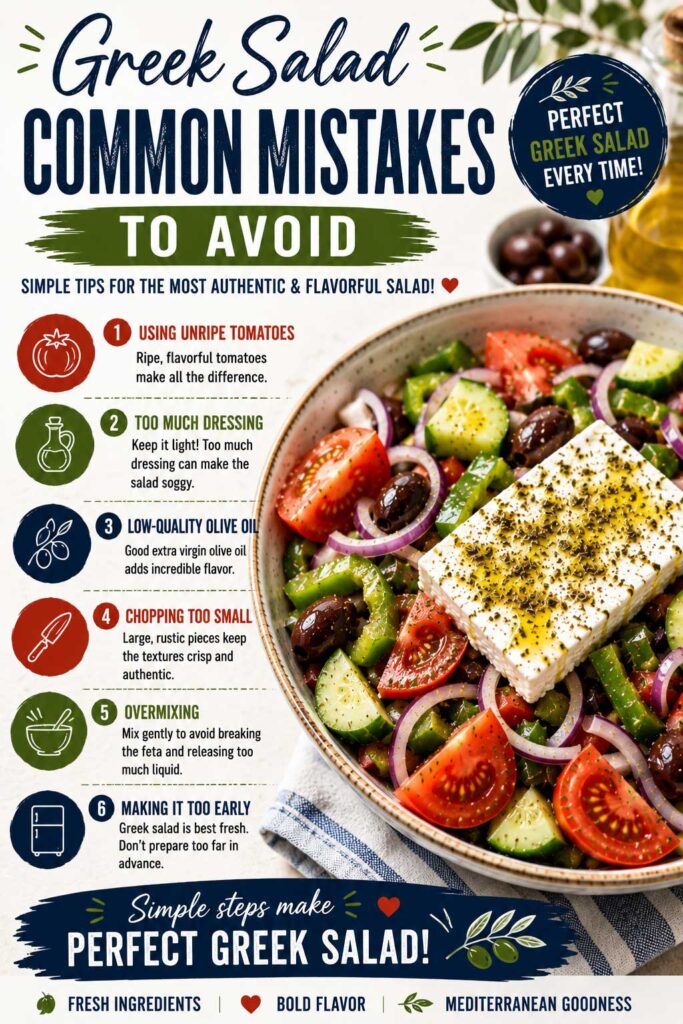
Greek salad may be one of the simplest Mediterranean dishes to prepare, but a few common mistakes can significantly affect the flavor, texture, and overall freshness of the final result. Avoiding these small errors will help you create a Greek salad that tastes bright, authentic, and delicious every time.
Using Underripe Tomatoes
Tomatoes are one of the most important ingredients in Greek salad. Using ripe, juicy tomatoes adds natural sweetness and freshness, while bland or underripe tomatoes can leave the salad tasting flat and lacking flavor.
Adding Too Much Dressing
Greek salad should feel light and refreshing rather than heavily coated. Too much dressing can overwhelm the vegetables, make the salad soggy, and mask the natural Mediterranean flavors.
Using Low-Quality Olive Oil
Because the dressing contains only a few simple ingredients, the quality of the olive oil matters greatly. A good extra virgin olive oil provides richness, aroma, and the signature flavor that authentic Greek salad is known for.
Cutting the Vegetables Too Small
Traditional Greek village salad is rustic and simple. Large chunks of tomatoes, cucumbers, onions, and feta cheese create better texture and a more authentic presentation than finely chopped vegetables.
Overmixing the Salad
Mixing too aggressively can break apart the feta cheese and cause the vegetables to release excess moisture. A gentle toss is all that’s needed to combine the ingredients while keeping their texture intact.
Preparing It Too Far in Advance
Greek salad tastes best when served fresh. If it sits for too long after being dressed, the vegetables begin releasing liquid and can lose their crisp texture. For the freshest results, add the dressing just before serving.
Skipping the Oregano
Oregano is one of the defining flavors of traditional Greek salad. Even a small sprinkle adds the classic Mediterranean aroma and flavor that helps make the dish instantly recognizable.
By focusing on fresh ingredients, quality olive oil, and simple preparation, you’ll enjoy a Greek salad that captures the bright and refreshing flavors that have made this Mediterranean favorite popular around the world.
The Best Way to Store Greek Salad

Greek salad is at its absolute best when enjoyed fresh, but leftovers can still be stored properly for a short period of time. Because the salad contains fresh vegetables and a simple dressing, a little care goes a long way in maintaining its flavor and texture.
Store Leftovers in an Airtight Container
Transfer any leftover Greek salad to an airtight container and refrigerate for up to 1 day. The vegetables will remain safe to eat longer, but their texture is best within the first 24 hours.
Keep the Dressing Separate When Possible
If you’re preparing Greek salad ahead of time, store the dressing separately and combine everything just before serving. This helps keep the vegetables crisp and prevents excess moisture from collecting in the bowl.
Prepare Ingredients Ahead for Meal Prep
For easy meal prep, chop the tomatoes, cucumbers, and onions ahead of time and refrigerate them separately from the feta cheese and dressing. When you’re ready to eat, simply combine the ingredients and toss with the dressing for maximum freshness.
Expect Some Natural Moisture
Tomatoes and cucumbers naturally release liquid as they sit. This is completely normal, but it can make the salad softer over time. Giving the salad a gentle stir before serving can help redistribute the flavors.
Do Not Freeze Greek Salad
Freezing is not recommended because fresh vegetables lose their crisp texture after thawing. The tomatoes, cucumbers, and onions become watery and soft, significantly changing the quality of the salad.
Best Enjoyed Fresh
While leftovers can certainly be enjoyed the next day, Greek salad tastes best when freshly prepared. The crisp vegetables, creamy feta cheese, and bright Mediterranean dressing are at their peak immediately after serving.
Proper storage helps preserve the fresh flavor and texture of your authentic Greek salad recipe.
Greek Salad Questions Answered
What is traditionally in a Greek salad?
An authentic Greek salad recipe, known as Horiatiki or Greek village salad, is typically made with tomatoes, cucumbers, red onions, Kalamata olives, feta cheese, olive oil, and oregano. Many authentic versions also include green bell peppers for extra freshness and crunch.
Does authentic Greek salad contain lettuce?
No. Traditional Greek salad is usually made without lettuce. Unlike many restaurant versions, authentic Greek salad focuses on fresh vegetables, olives, feta cheese, and olive oil rather than leafy greens.
What type of olives are best for Greek salad?
Kalamata olives are the most traditional choice because of their rich, slightly fruity flavor and meaty texture. They provide the classic Mediterranean taste that Greek salad is known for.
Can I make Greek salad ahead of time?
Yes, but for the best texture it is recommended to store the dressing separately and combine everything just before serving. This helps keep the vegetables crisp and prevents excess moisture from collecting in the bowl.
What cheese can I use instead of feta?
Bulgarian sirene cheese is an excellent alternative and creates a delicious Balkan-inspired variation. Other brined white cheeses can also work, but feta remains the traditional choice.
Is Greek salad good for meal prep?
Greek salad can work well for meal prep when the vegetables, feta cheese, and dressing are stored separately. Assembling the salad shortly before eating helps maintain its freshness and texture.
Can Greek salad be served as a main dish?
Absolutely. While Greek salad is often served as a side dish, adding grilled chicken, shrimp, salmon, or chickpeas can easily transform it into a satisfying lunch or light dinner.
What goes well with Greek salad?
Greek salad pairs beautifully with grilled meats, seafood, pita bread, falafel, hummus, roasted vegetables, rice dishes, and many other Mediterranean-inspired recipes. Its fresh flavor makes it one of the most versatile side dishes in Mediterranean cuisine.
Why is Greek salad considered part of the Mediterranean diet?
Greek salad contains many of the ingredients commonly associated with the Mediterranean diet, including fresh vegetables, olive oil, olives, and feta cheese. These simple whole foods help make the salad both nutritious and flavorful.
Final Thoughts on This Fresh Mediterranean Favorite
This authentic Greek salad recipe is proof that simple ingredients can create incredibly fresh and satisfying flavor. With crisp vegetables, creamy feta cheese, olives, and a light homemade dressing, it is one of the most refreshing dishes in Mediterranean cuisine.
Whether you serve it as a quick lunch, healthy side dish, or part of a larger Mediterranean-inspired meal, Greek salad is always easy to prepare and full of vibrant flavor.
Its combination of fresh ingredients, healthy fats, and simple preparation is one of the reasons this classic salad continues to be loved all around the world.
If you’re looking for an easy authentic Greek salad recipe, this traditional version is one you’ll return to throughout the year.
If you enjoy light Mediterranean recipes, refreshing summer salads, and healthy homemade meals, this Greek salad is a recipe you will want to make again and again.
Did You Make This Authentic Greek Salad Recipe?
If you enjoyed this authentic Greek salad recipe, be sure to explore more Mediterranean and Balkan-inspired recipes here on TastyBG. From refreshing summer salads and homemade dips to healthy breakfasts and traditional family favorites, you’ll find plenty of simple recipes made with fresh ingredients and bold flavors.
For a complete Mediterranean-style meal, try pairing this authentic Greek salad recipe with our Authentic Falafel Recipe, Traditional Baba Ganoush Recipe, Fresh Tabbouleh Salad Recipe, or Authentic Tarator Recipe. Together, these dishes create a colorful spread filled with fresh vegetables, Mediterranean flavors, and wholesome ingredients.
For more healthy Mediterranean-inspired recipes, be sure to explore our Mediterranean Shakshuka Recipe, Bulgarian Kyopolou Recipe, Brain Power Blueberry Smoothie, and Traditional Okroshka Recipe.
If you make this authentic Greek salad recipe, tag @tastybg_ on Instagram and use #tastybg to share your creation with us. We’d love to see your version of this fresh Mediterranean classic and how you make it your own.